The Watchman in Yechezkel (הצופה) for Kids: The Shofar & Speaking Up
Hashem tells Yechezkel HaNavi that he is a watchman for Bnei Yisrael. Here is the story, the lesson of caring enough to warn, and how to talk about it at home.
Published by Torah Tale.
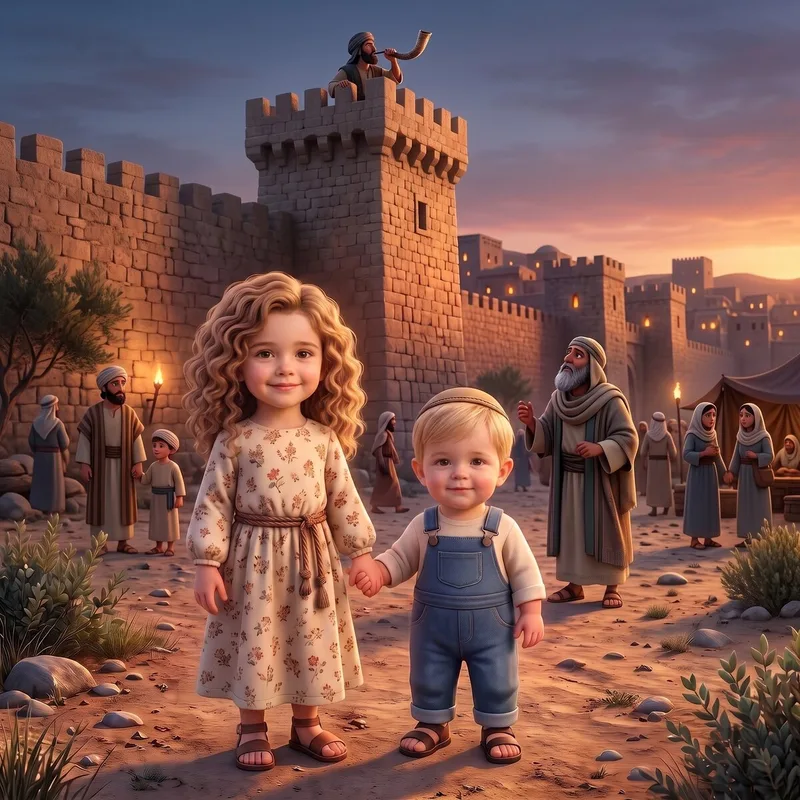
Create this book for your child
The watchman in Sefer Yechezkel is a picture Hashem gives Yechezkel HaNavi to explain his job: a lookout who sees danger coming, blows the shofar, and warns the people so they can be saved. Children understand a lookout right away, and the story gives them a simple idea to hold onto: when we care about someone, we speak up.
What is the story of the watchman in Sefer Yechezkel?
Yechezkel was among the Yidden in the golah in Bavel. The pasuk tells us that after he received his mission, he sat among the exiles for seven days, deeply shaken, before the word of Hashem came to him again (Yechezkel 3:15-16). The message about the watchman comes at that point, in chapter 3, and returns in chapter 33.
In chapter 33, Hashem gives Yechezkel a mashal. When a sword is coming to a land, the people take one man from among them and make him their watchman. If he sees danger coming and blows the shofar, and a person hears the shofar and does not listen, that person is responsible for what happens to him.
But if the watchman sees the danger and does not blow the shofar, so the people are not warned, he is held responsible for it. The one who listens to the shofar saves himself. A shofar is a simple sound, and the whole mashal rests on it.
Who was the watchman really?
Right after the mashal, Hashem speaks to Yechezkel directly: V'atah ben adam, tzofeh nesaticha leveis Yisrael (33:7). You, ben adam, I have made a watchman for Beis Yisrael. The navi will hear a word from Hashem and warn the people on Hashem's behalf.
So the shofar is Yechezkel's message. He is not guarding a wall with his eyes but guarding people by telling them what Hashem wants from them. For a child, this is a nice thing to notice: the story starts with a lookout on a wall and ends with the navi himself.
Does the watchman want people to be punished?
No, and this is worth making sure children hear. Later in the same chapter, Hashem says plainly that He does not desire the death of the wicked, but that the wicked return from their way and live. The pasuk then pleads: Shuvu, shuvu midarkeichem hara'im, u'lamah samusu beis Yisrael (33:11). Return, return from your evil ways, why should you die, Beis Yisrael?
That is the heart of the watchman's job. He does not blow the shofar to catch anyone. He blows it so people can turn back in time. Warning is an act of love, and it is meant to lead to teshuvah.
What is the lesson for children?
The lesson is caring enough to speak up, and doing it kindly. Children see small dangers constantly: a sibling about to touch something hot, a friend about to say something hurtful, a classmate about to take something that is not his. The watchman teaches that staying quiet is not always the nice thing to do.
It also protects against the opposite mistake. A watchman does not shout at everyone all day. He blows the shofar when there is something real to warn about, and he wants the people to be safe. A good rule for a child is: warn because you care, not because you want to be right.
If your child is learning about being responsible for friends, this fits well with guarding my tongue, since the same mouth that warns can also hurt, and children need to learn which is which.
How do I explain the watchman at different ages?
Ages 3 to 4. Keep it to a picture. A watchman stands up high, sees something that might hurt people, and blows the shofar so they know. Ask: who would you call out to if you saw them about to get hurt? Let them make the shofar sound.
Ages 6 to 7. Add the idea that the watchman has to speak up even when it is not comfortable. Ask what it feels like to tell a friend something they may not want to hear, and talk about how to say it nicely. You can also tell them that the people who listened were saved, so the warning was a gift.
Ages 9 to 12. Bring in the pesukim themselves. Read together that the watchman answers for staying silent, and then read 33:11, where Hashem says He wants people to return and live. Ask how both can be true, and why a warning without caring would miss the point. This is also a good age to talk about when to speak to a friend yourself and when to ask a parent or a rebbi for help.
What can we ask at the Shabbos table?
A talking-only conversation works well at the table. Try these:
- Who is the watchman in the mashal, and what does he do when he sees danger?
- Why is the shofar a good way to warn people?
- What does Hashem say He wants from people who have done wrong?
- Has someone ever warned you about something, and how did they say it?
- What is a kind way to tell a friend that something is a mistake?
For a parent, one gentle reminder: children who hear a warning from someone who clearly loves them are the ones who listen. That is the watchman's whole approach.

What is a personalized Torah Tale book of the watchman like?
Torah Tale makes personalized Torah storybooks for Jewish children. In each one, your child's name and, from one uploaded photo, their likeness appear on every page, illustrated in high-resolution 3D animated-film style. This story is part of the Nevi'im collection, one of ten categories in the story picker, and you can include up to eight siblings in the same book.
Every book is written with careful rabbinical guidance and strict tznius, and reviewed by our team before it goes to print. Every book ends with a discussion page of 10 questions about the story, mixing comprehension with middos: what happened, and what it asks of your child. That page is a good way to turn a read-aloud into a conversation at the table.
The formats follow age: a 6x6 board book with rounded safety corners (ages 0-4), an 8x8 softcover (ages 4-8), and an 8x8 hardcover (ages 5-18). The softcover and hardcover open with a dedication page. If you add parents and grandparents, they appear with the children on a closing family page in every format.
A storybook is welcome on Shabbos and Yom Tov. The optional matching coloring book is for a weekday, such as an afternoon or erev Shabbos, because coloring is melacha on Shabbos.

Softcover 8″×8″

Hardcover 8″×8″

Board book 6″×6″

Coloring book 8.5″×11″
Where does this fit with other stories from Yechezkel?
The watchman is one of several images in Sefer Yechezkel that children can learn from. After the warning comes the hope: see the Valley of Dry Bones and the two sticks that become one. For another navi who hesitated when called to speak, there is Yirmiyahu's call.
If you would like your child to see themselves in the story, it takes about five minutes: a free account and a few short questions, including each child's name, age and one photo, the story, your community, the language and the format. You can create the book whenever you are ready.
Frequently asked questions
What is the story of the watchman in Sefer Yechezkel?
Hashem tells Yechezkel HaNavi a mashal about a land in danger, where the people appoint a watchman from among themselves. If he sees the danger and blows the shofar, those who listen are saved; if he sees it and stays silent, he is responsible. Then Hashem tells Yechezkel that he has been made a watchman for Beis Yisrael, to hear Hashem's words and warn the people.
What is the lesson of the watchman for children?
The lesson is that when we care about people, we do not stay quiet about something that could hurt them. A warning given with love is an act of chesed. The same chapter also says that Hashem does not want the wicked to die but to return from their ways and live, so the warning is always meant to lead to teshuvah.
How do I explain the watchman to a 4-year-old?
Say that a watchman stands up high, sees if someone is in danger, and blows a loud shofar so everyone can get safe. Then connect it to something small: if you see your friend about to run into the street, you call out right away. Keep it short and concrete, and ask who they would warn.
Was Yechezkel a real watchman?
Yechezkel was a navi, and Hashem called him a watchman for Beis Yisrael in a figurative sense. The pasuk says Yechezkel would hear a word from Hashem and warn the people for Him. The watchman on the wall with the shofar is the picture Hashem uses to explain that job.
Can I read a book about Yechezkel's watchman on Shabbos?
Yes, reading a storybook is appropriate on Shabbos and Yom Tov, and a story from Nevi'im works well at the Shabbos table. The matching coloring book is a different matter, since coloring is melacha, so keep it for a weekday or erev Shabbos.
What age is a personalized Torah Tale book of this story for?
Torah Tale offers a 6x6 board book with rounded safety corners for ages 0-4, an 8x8 softcover for ages 4-8, and an 8x8 hardcover for ages 5-18. The child's age is one of the short questions when you create the book, and every book ends with a discussion page of 10 questions.