Guarding My Tongue for Kids: Shemiras HaLashon in Everyday Life
Shemiras halashon is the mitzvah of watching what we say about others. Here is what it asks of a child, how to explain it by age, and what the personalized Torah Tale book adds.
Published by Torah Tale.
Create this book for your child
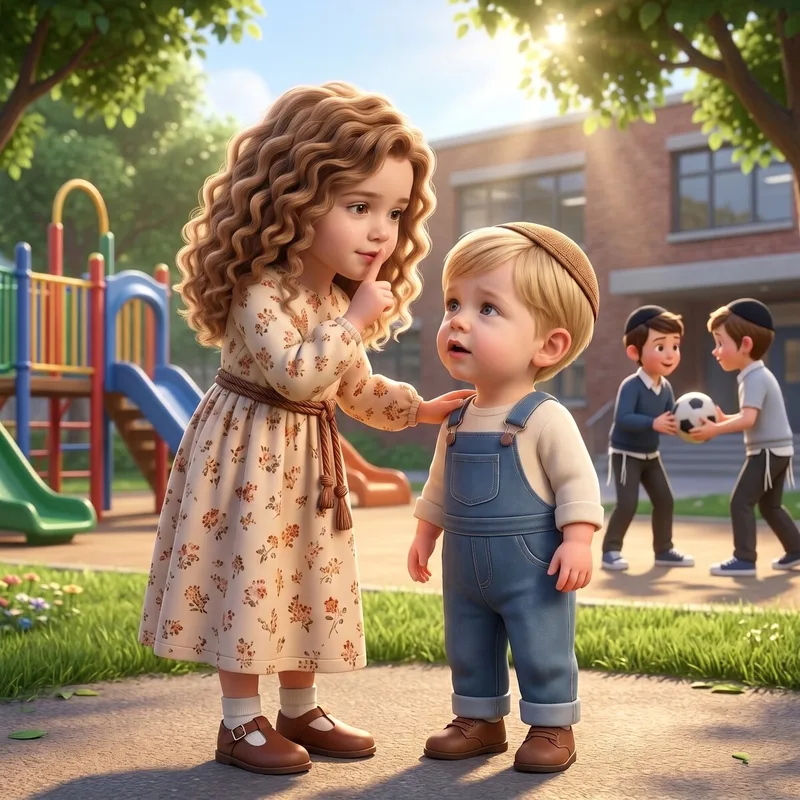
"Guarding My Tongue" is a story about shemiras halashon, the mitzvah of watching what we say about other people, and it lands with children because they live it all day long: at the lunch table, in the car, in the schoolyard. In this Torah Tale book, set in everyday life today, your child is the hero who learns what it looks like to keep a mitzvah that happens in the mouth.
What is the story "Guarding My Tongue" about?
This book belongs to the Mitzvos collection, the stories about mitzvos a child keeps, set in the world of today rather than in the times of the Torah. The mitzvah at its center is guarding our speech: pausing before we say something about another person, and choosing words that build instead of words that hurt.
Your child's name and likeness appear on every page, illustrated in 3D animated-film style, so the child who is learning the mitzvah is also the one living it in the story. Children take a mitzvah more seriously when they see themselves keeping it.
What does the Torah say about guarding your tongue?
The Torah tells us "lo seilech rachil b'amecha," do not go about as a talebearer among your people (Vayikra 19:16). Chazal and the poskim learn the laws of lashon hara and rechilus from this pasuk.
Tehillim adds the instruction in the words children can memorize: "netzor leshoncha meira u'sefasecha midabeir mirmah" (34:14), guard your tongue from evil and your lips from speaking deceit. And Mishlei says "maves v'chayim b'yad lashon" (18:21), death and life are in the hand of the tongue.
For older children, there is also the Torah's account of Miriam. The Torah tells us that Miriam and Aharon spoke about Moshe, that Miriam was struck with tzaraas, that Moshe davened "El na refa na lah," and that the people did not travel until she was brought back in. Later the Torah tells Yidden to remember what Hashem did to Miriam on the way (Devarim 24:9). Chazal connect tzaraas with lashon hara, and you can see that connection in Parshas Metzora for Kids.
What is the lesson for a child?
The core lesson is that words are powerful, and a child is allowed and able to choose them. Lashon hara means saying something true about a person that would hurt or embarrass them. That is the part children find hardest, because they think "but it is true" settles the matter.
Three small habits make the mitzvah concrete for a child:
- Pause first. Ask, "Would I say this if they were standing here?"
- Say something good instead. If there is a kind thing to say about the person, say that.
- Walk away from it. A child can change the subject or leave when others are speaking unkindly.
Halacha has details here, including when it is permitted to speak for a constructive purpose, such as when a child needs to tell a grown-up about real harm. When a real situation comes up, ask your rav.
How do I explain guarding your tongue to a 4-year-old, a 7-year-old and a 10-year-old?
Around 4: Keep it to kind words and unkind words. "Hashem gave us a mouth for davening, singing, saying nice things and talking to Mommy. We don't use it to make someone sad." Let your child tell you which words are kind, and praise the good choices you hear.
Around 7: Now you can add the idea that true words can still hurt. Give a simple example from their world, like telling the whole class about a friend's mistake in the spelling test. Ask, "Is that true? Is it kind? Did it help anyone?" Children this age enjoy having a short checklist.
Around 10: Older children can learn the sources: the pasuk in Vayikra, the pasuk in Tehillim and the account of Miriam. This is also the age to talk about how words spread, and how a sentence said once can be repeated many times. Invite them to notice how much of their day involves talking about people who are not in the room.
Whatever the age, children copy what they hear from us. A parent who says "let's not talk about that" at the right moment teaches more than a long explanation.
What is the personalized Guarding My Tongue book like?
You create it at torahtale.com/create. You open a free account and answer a few short questions: each child's name, boy or girl, age and one photo, any siblings, the story, your community (asked once), the language and the printed format. The whole flow takes about five minutes. Up to eight children, ages 0 to 18, can appear in the same book, so brothers and sisters can learn the mitzvah together.
Books come in English, Hebrew and Yiddish. The format depends on age: a 6x6 board book with rounded safety corners for ages 0-4, an 8x8 softcover for ages 4-8, or an 8x8 hardcover for ages 5-18. Softcover and hardcover books open with a dedication page. If you add parents and grandparents, they appear with the children on a closing family page in every format.

Softcover 8″×8″

Hardcover 8″×8″

Board book 6″×6″

Coloring book 8.5″×11″
Every book is written with careful rabbinical guidance and strict tznius, and reviewed by our team before it goes to print.
What questions can we ask at the Shabbos table?
Every Torah Tale book ends with a discussion page of 10 questions that mix comprehension with middos: what happened, and what it asks of the child. That page turns the book from something read to a child into something talked about as a family. A storybook is a good thing to read at the Shabbos table, because reading and talking are exactly right for Shabbos.
Here are some questions you can ask, with no book needed:
- What is something kind you said to someone this week?
- Can something be true and still be hurtful to say? What is an example?
- What can we do when other people start talking about someone in a bad way?
- Who do you know who always finds something good to say about people?
- Why do you think the pasuk says to guard our tongue, the way we guard something precious?
Parents, answer first. A child who hears a parent say "this week I almost said something I shouldn't have, and I stopped" learns that guarding speech is something everyone works on.
If you add the optional coloring book, treat it as a weekday activity, for an afternoon or erev Shabbos, never for Shabbos or Yom Tov itself. Coloring is melacha. The coloring book is a one-time add-on to a book and is 8.5x11 black-and-white line art.
Where does this fit with other stories about words and speech?
Children who meet shemiras halashon in a Mitzvos story can see the same theme in the parshiyos. Parshas Tazria for Kids touches on tzaraas and the power of words, and How to Create a Personalized Torah Storybook walks you through ordering step by step. You can also subscribe to a collection, either Monthly (4 books a month in one delivery) or Yearly (the whole collection, paid once, $30 off), if you want your child to keep meeting mitzvos in story form.
If you are ready, you can create the book with your child's name and photo, and give them a story about one of the hardest and most useful mitzvos there is: using their words well.
Frequently asked questions
What is shemiras halashon in simple words for a child?
Shemiras halashon means guarding our tongue, so that what we say helps people and does not hurt them. For a young child you can say, "Before I say something about someone, I stop and ask: is this kind?" Hashem gave us the gift of speech, and this mitzvah is how we use it well.
What is the difference between lashon hara and lying?
Lying is saying something that is not true. Lashon hara is saying something that is true but would hurt or shame the person it is about. This surprises many children, who think that if it is true it must be fine to say, so it is worth explaining slowly with a simple example.
At what age can I start teaching a child to guard their tongue?
Children can begin as soon as they can speak in sentences, with simple ideas like kind words and unkind words. Older children can learn more detail, including that the mitzvah covers words that are true. Halacha has fine points, including when speaking is permitted for a constructive purpose, so ask your rav about real situations.
What does the Torah say about guarding your tongue?
The Torah says "lo seilech rachil b'amecha" (Vayikra 19:16), and Chazal and the poskim learn the prohibition of lashon hara and rechilus from it. Tehillim 34:14 says "netzor leshoncha meira," guard your tongue from evil. Mishlei 18:21 says that death and life are in the hand of the tongue.
What is in the Torah Tale book Guarding My Tongue?
It is a personalized storybook in the Mitzvos collection, set in everyday life today, with your child's name and likeness on every page. Like every Torah Tale book, it ends with a discussion page of 10 questions mixing comprehension with middos. Each book is written with careful rabbinical guidance and strict tznius, and reviewed by our team before it goes to print.
Which format of the book is right for my child?
Torah Tale offers a 6x6 board book with rounded safety corners for ages 0-4, an 8x8 softcover for ages 4-8, and an 8x8 hardcover for ages 5-18. A matching 8.5x11 coloring book can be added as a one-time add-on. Coloring is a weekday activity, while the storybook itself is perfect to read at the Shabbos table.