Parshas Metzora for Kids: The Two Birds, the Kohen & Coming Back
Parshas Metzora is the parsha of coming back. A person who was sent outside the camp because of tzaraas is brought home again, with birds, cedar wood and hyssop, and the Kohen walking out to meet him. Here is how to tell it to children, what Chazal teach about why it happened, and how to turn it into a Shabbos table conversation.
Published by Torah Tale.
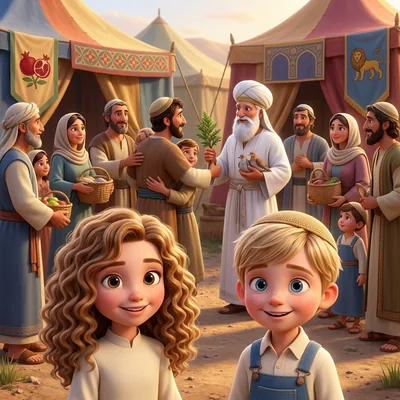
Parshas Metzora is the parsha of coming back. A person who had tzaraas was sent to live outside the camp for a while, and this parsha describes, step by step, how he becomes tahor again and walks home: the Kohen who comes out to meet him, two birds, a piece of cedar wood, a crimson thread, a branch of hyssop, seven days of waiting, and korbanos in the Mishkan. For children, the story lands because it is not about the punishment. It is about the way back.
What happens in Parshas Metzora?
Parshas Metzora opens with the words "zos tihyeh toras hametzora b'yom taharaso", this shall be the law of the metzora on the day he becomes tahor. The Torah does not wait for him to find his own way back. It gives him a procedure.
The Kohen goes out of the camp to look at him. If the tzaraas has healed, the Kohen gives instructions: two live kosher birds are brought, along with cedar wood, a thread of crimson wool and a branch of eizov, which is hyssop. One bird is brought as a korban. The other is dipped together with the wood, the thread and the hyssop, and then sent free over the open field.
Then comes a week. The metzora washes his clothes, shaves and immerses, and he may come into the camp, though he stays outside his own tent for seven days. On the eighth day he brings his korbanos in the Mishkan, and the Kohen places oil and blood on his right ear, his right thumb and his right big toe. The Torah adds that a poor person brings smaller korbanos, so that no one is kept out because he cannot afford the larger ones.
The second half of the parsha moves to houses. When Bnei Yisrael would come into Eretz Yisrael, tzaraas could appear on the walls of a house. The owner comes to the Kohen and says, carefully, "something like a mark has appeared to me in the house." The house is emptied, the Kohen looks, stones are removed, the walls are scraped, and if the mark returns the whole house is taken apart. The parsha ends with the laws of other kinds of tumah and taharah that a family kept in the days of the Mishkan and the Bais HaMikdash.
Why birds, cedar wood and hyssop?
This is the part children ask about, and Chazal give answers that a five-year-old can hold onto.
- The birds. Birds chirp and chatter all day long. The metzora's trouble started with chattering, with words that were let out without thinking.
- The cedar. The erez is one of the tallest trees there is. Chazal teach that it hints to a person who held himself high above everyone else.
- The eizov. Hyssop is a small, low plant, nothing impressive. It is the cure for the cedar. To come back, a person lowers himself.
- The crimson thread. The word for crimson wool, shani, is connected by Chazal to tolaas, a worm. Become small like a worm, they teach, and you will be healed.
Our article on Parshas Tazria covers the first half of this subject, how tzaraas is identified and why Chazal connect it to lashon hara. Metzora is the sequel, and it is the happier one.
What is the lesson of Parshas Metzora for children?
Two lessons, and they fit together.
The first is that words do real things. A child understands this faster than adults expect. He has been on both sides of a comment made in a hallway. The Torah treats careless speech seriously enough that a whole parsha is given to the repair.
The second is the one to spend the most time on: teshuvah works, and the Torah sends someone out to meet you. The Kohen does not stand at the edge of the camp waiting. He walks out. A person who made a mistake is not finished. He is brought home, with a process, with a week, with korbanos, and with his family waiting.
There is a well-known teaching of Chazal about the tzaraas on the houses. They relate that the Emori hid treasures inside the walls of their houses, and when the stones had to be taken out, the gold was found. The thing that looked like a loss turned out to contain a gift. That is a strong image for a child who is upset about something that went wrong.
How to explain Parshas Metzora at different ages
Ages 2 to 4
One sentence, no detail about the mark: "When somebody said unkind words, Hashem sent a sign so he would notice, and then the Kohen helped him come home to his family with two birds, and one bird flew away free." Let the flying bird be the picture they keep.
Ages 5 to 8
Tell the full sequence: outside the camp, the Kohen coming out, the birds, the cedar and the hyssop, the seven days, the korbanos. Add the explanation of the tall cedar and the low hyssop, because at this age children love a hint they can decode. Then ask them which tree they would rather be like.
Ages 9 to 12
Bring in the house. Ask why Hashem would send a sign on a wall first, then on clothing, then on a person. The standard answer taught in cheder is that Hashem gives warnings gradually, starting with something a person can afford to lose, to give him time to change. Then ask the harder question: who in your life would walk out of the camp for you?
Shabbos table questions and a weekday activity
Five questions that work on a Friday night with mixed ages:
- Why did the metzora have to stay outside the camp, and not just pay a fine?
- Why two birds and not one?
- What is the difference between a cedar tree and a hyssop bush, and which one is harder to be?
- The Kohen went out to meet him. What is one way we can go out to meet someone who feels left out?
- The Torah gave a cheaper korban for a poor person. What does that tell us about Hashem?
For a weekday afternoon or erev Shabbos, try a shmiras halashon jar. Every time someone in the house catches themselves about to say something about another person and stops, a coin goes in, and the family gives it to tzedakah. Children run this kind of project better than adults do. Torah Tale's optional coloring book, with black-and-white line art matching the story, is another good erev Shabbos or weekday table activity, though not for Shabbos or Yom Tov itself, since coloring is melacha.
What a personalized Torah Tale Parshas Metzora book is like
In a Torah Tale book, your child is the one in the story. Their name is in the text, and their face, generated from one photo you upload, is illustrated on every page in high-resolution 3D Pixar style. For Metzora that means your child is the one standing with the Kohen as he looks at the wall of the house, the one watching the second bird released over the open field, the one walking back into the camp with the family.

Up to four siblings can appear in the same book. Every book is written with careful rabbinical guidance and strict tznius, and reviewed by our team before it goes to print, which matters for a parsha like this one, where the material needs to be handled with care for young readers.
Every book closes with a discussion page of 10 questions, mixing what happened in the story with what it asks of the child. That page is what turns the book from something you read aloud at bedtime into something the family is still arguing about over the fish on Shabbos.
Which format and language should I pick?
Softcover 8″×8″
Hardcover 8″×8″
Board book 6″×6″
Coloring book 8.5″×11″
Board book, 6"x6" with rounded safety corners, for ages 2 to 4. Softcover photo book, 8"x8", for ages 4 to 8. Hardcover 8"x8" in square or landscape for ages 5 to 12, which is the one that survives being read every Shabbos for a year. Books come in English, Hebrew or Yiddish, and you can order the same story in more than one language.
The book creator suggests next week's parsha with a live countdown to the order deadline for delivery before that Shabbos, so a Metzora book is ordered the week before it is read. In years when Tazria and Metzora fall together, the double-parsha week produces a single book covering both. If you are planning a run of parsha books, the guide to choosing the weekly parsha and the Parshas Vayikra article are good places to start, since Sefer Vayikra reads best in order.
Creating a book takes eight short questions and about five minutes: name, boy or girl, age, one photo, siblings, story, language, format. You can order a single book or a Weekly, Monthly or Year Bundle subscription. US standard shipping is $3.00 and takes 5 to 8 business days; express is $6.00 and takes 3 business days; we ship worldwide, with rates shown at checkout. Create your child's Parshas Metzora book and let them be the one the Kohen walks out to meet.
Frequently asked questions
What is Parshas Metzora about, in simple words for children?
Parshas Metzora is about a person who had tzaraas, a special mark that Hashem sent, and who had to live outside the camp for a while. The parsha describes exactly how that person comes home: the Kohen goes out to see him, two birds are brought along with cedar wood, a crimson thread and a branch of hyssop, and after seven days and korbanos he is tahor again. The parsha also discusses tzaraas that appears on clothing and even on the walls of a house. The message children take away is that a person is never written off; there is always a way back.
Why did a person get tzaraas?
Chazal teach that tzaraas came mainly because of lashon hara, speaking badly about other people, and also because of haughtiness and stinginess. It was not an ordinary illness; it was a message from Hashem meant to make a person stop and think. Because the metzora had used words to separate people from each other, he himself was separated from the camp for a time. This is the standard way the parsha is taught in cheder and Bais Yaakov, and it is worth saying to children clearly.
What do the two birds, cedar wood and hyssop mean?
The Torah instructs that the metzora's purification include two live birds, a piece of cedar wood, a crimson thread and a branch of eizov, which is hyssop. Chazal explain the hints: birds chatter constantly, like a person who spoke carelessly; the cedar is a tall, proud tree, like a person who held himself above others; and the eizov is a low, small plant, showing the humility that brings him back. One bird is brought as a korban and the other is sent free over the open field.
How do I explain Parshas Metzora to a 5-year-old without scaring him?
Keep the focus on the coming-home part rather than on the mark itself. Say that long ago, when someone said unkind things about other people, Hashem sometimes sent a sign on his skin so he would notice and fix it, and that he stayed outside the camp for a little while. Then spend most of the time on the Kohen walking out to meet him, the birds, and the happy day he came back to his family. Children remember the ending you dwell on.
Is Metzora always read together with Tazria?
In many years Tazria and Metzora are read together as a double parsha, and in other years they are read on two separate Shabbosos, depending on the Jewish calendar. The two parshiyos belong together: Tazria describes how tzaraas is identified and declared, and Metzora describes how the person becomes tahor and comes home. When Torah Tale's book creator lands on a double-parsha week, it produces one book that covers both parshiyos.
What is a good Shabbos table question on Parshas Metzora?
Ask: if someone said something hurtful about another person, what would be a real way to fix it, not just to say sorry quickly? Another strong one is: why do you think the Kohen walked out to the metzora instead of making him wait at the edge of the camp? Both questions get children talking about words and about how we treat a person who made a mistake.