Parshas Vayikra for Kids: The Small Aleph, the Korbanos & Coming Close
The Mishkan is finished and standing, and Hashem calls Moshe Rabbeinu by name from inside it. Here is Parshas Vayikra retold for children: the five korbanos in plain words, the small aleph and what it teaches about anavah, how to explain it at different ages, and questions for the Shabbos table.
Published by Torah Tale.
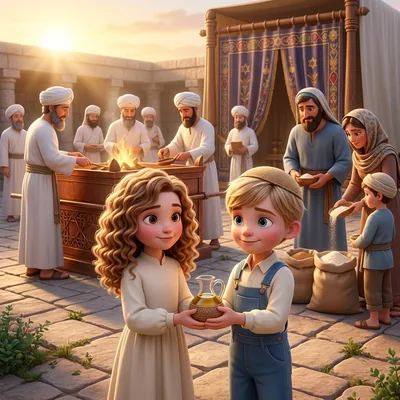
Parshas Vayikra opens Sefer Vayikra. The Mishkan is finished and standing, and Hashem calls Moshe Rabbeinu by name from inside it and teaches him the korbanos that Yidden will bring. For children the parsha comes down to one quiet idea: a person who wants to come close to Hashem brings something that is his own, and Hashem counts the heart, not the size of the gift.
What happens in Parshas Vayikra?
At the end of Parshas Pekudei the Mishkan was set up and the cloud of the Shechinah filled it. Moshe Rabbeinu did not walk in. He waited outside until he was invited, and Parshas Vayikra begins with that invitation: Hashem called to Moshe from the Ohel Moed.
Chazal teach that the voice was powerful, yet it stopped at the walls of the Ohel Moed, so that only Moshe heard it. Hashem called him by name, with affection, and then began to teach.
What Hashem taught was the korbanos. The word korban comes from karov, close. A korban was the way a Yid took something of his own, brought it to Hashem's house, and became closer to Hashem through it. The parsha lists them one at a time: the olah, the mincha, the shelamim, the chatas and the asham.
Along the way come details children remember well. Salt is placed on every korban. Chametz and honey are not brought on the Mizbeach. And a person who took something that was not his has to give it back, add a fifth of its value, and only then bring his korban. Saying sorry to Hashem starts with fixing what you did to a person.
Why is the aleph in "Vayikra" small?
Open a chumash to the first word of Sefer Vayikra and the aleph at the end of the word is printed smaller than the other letters. The seforim, most famously the Baal HaTurim, explain why. Moshe Rabbeinu was the humblest of men. He did not want to write that Hashem had called him with love and affection, and preferred to write "vayikar," without an aleph, as though Hashem merely happened to speak to him. Hashem told him to write the aleph. Moshe wrote it, but he wrote it small.
This is a rare thing to be able to show a child with his own eyes. The greatest human being who ever lived, the one who went up Har Sinai, made himself small in one letter of a whole sefer. Children who have been learning about the Luchos and the Mishkan all winter can hold the chumash, find the little aleph, and see anavah on the page.
The five korbanos, explained simply
Parents often get stuck here, because the korbanos sound technical. In a frum classroom they are taught by their purpose, and that is what a child holds onto.
| Korban | What it was | What it teaches a child |
|---|---|---|
| Olah | Brought entirely on the Mizbeach; the person kept none of it | Sometimes you give all of something, not a piece of it |
| Mincha | Fine flour with oil and levonah, not an animal; brought by a person who had little | A small gift given with a full heart is precious to Hashem |
| Shelamim | Shared: part on the Mizbeach, part for the kohanim, part eaten by the family | Simcha is meant to be shared with others |
| Chatas | Brought for an aveirah done by mistake | Even an accident is worth admitting out loud |
| Asham | Brought together with returning what was taken, plus a fifth | Teshuvah means fixing it, not only feeling bad |
About the mincha, Chazal say something worth repeating at the table. The pasuk uses the word nefesh, soul, for the flour offering of the poor man, because Hashem says it is as though he brought his own soul. The wealthy man's animal and the poor man's handful of flour stand side by side in the same parsha.
What is the lesson of Parshas Vayikra for children?
The middah of the parsha is anavah, and the small aleph carries it. Greatness and smallness are not opposites. Moshe waited outside the Mishkan until he was called, and then made his own name-calling look ordinary on the page.
The second lesson is about teshuvah, and it is very concrete. A chatas is brought for something done by mistake, which teaches a child that "I didn't mean to" is a beginning and not an ending. An asham for taking someone's property only works after the object goes back to its owner with a fifth added. Children who have learned the Yom Kippur story recognize the shape of this immediately: first you put it right, then you come close again.
And there is a lesson about learning itself. The Midrash relates that young children begin Chumash with Sefer Vayikra because pure children are fitting to learn about pure korbanos. For many children this parsha is the very first Chumash they ever know by heart.
How to explain Parshas Vayikra to a 4-year-old vs an 8-year-old
Ages 2 to 4. "Hashem's house was all finished. Hashem called Moshe inside, by name, and taught him about the presents Yidden would bring to Hashem." That is the whole parsha at this age. Skip the categories.
Ages 5 to 7. Add the word korban and what it means: karov, close. Name two korbanos, the olah that was given completely and the mincha of flour that a poor man brought, and say that Hashem loved them both. Then show the small aleph in a chumash.
Ages 8 to 12. Go through all five korbanos, the difference between a chatas for a mistake and an asham that requires paying back, and the idea that the Mishkan was built by everyone (Parshas Terumah) so that Hashem's voice could be heard from inside it. This is also the age to answer the honest question: we have no Beis Hamikdash today, so our tefillos stand in place of korbanos, and we learn the halachos so we will know them when it is rebuilt.
If a child asks about the animals, answer plainly and without detail. A korban meant giving up something valuable that was yours, the kohanim did the avodah in Hashem's house, and the person went home changed. There is no need to describe more than that.
What a personalized Torah Tale book of Parshas Vayikra is like
Torah Tale prints Parshas Vayikra as a personalized storybook from the Chumash collection, and your child is the one in the story. Their name appears throughout, and from one uploaded photo their likeness is illustrated in high-resolution 3D Pixar style on every page. Up to four siblings can be in the same book, standing together near the Mishkan as Hashem's voice calls Moshe inside.

Making it takes about five minutes and eight short questions: name, boy or girl, age, one photo, siblings, story, language and printed format. Books come in English, Hebrew or Yiddish, and you can order more than one language. Formats are a 6"x6" board book with rounded safety corners for ages 2 to 4, an 8"x8" softcover for ages 4 to 8, an 8"x8" hardcover in square or landscape for ages 5 to 12, and an optional matching black-and-white coloring book.
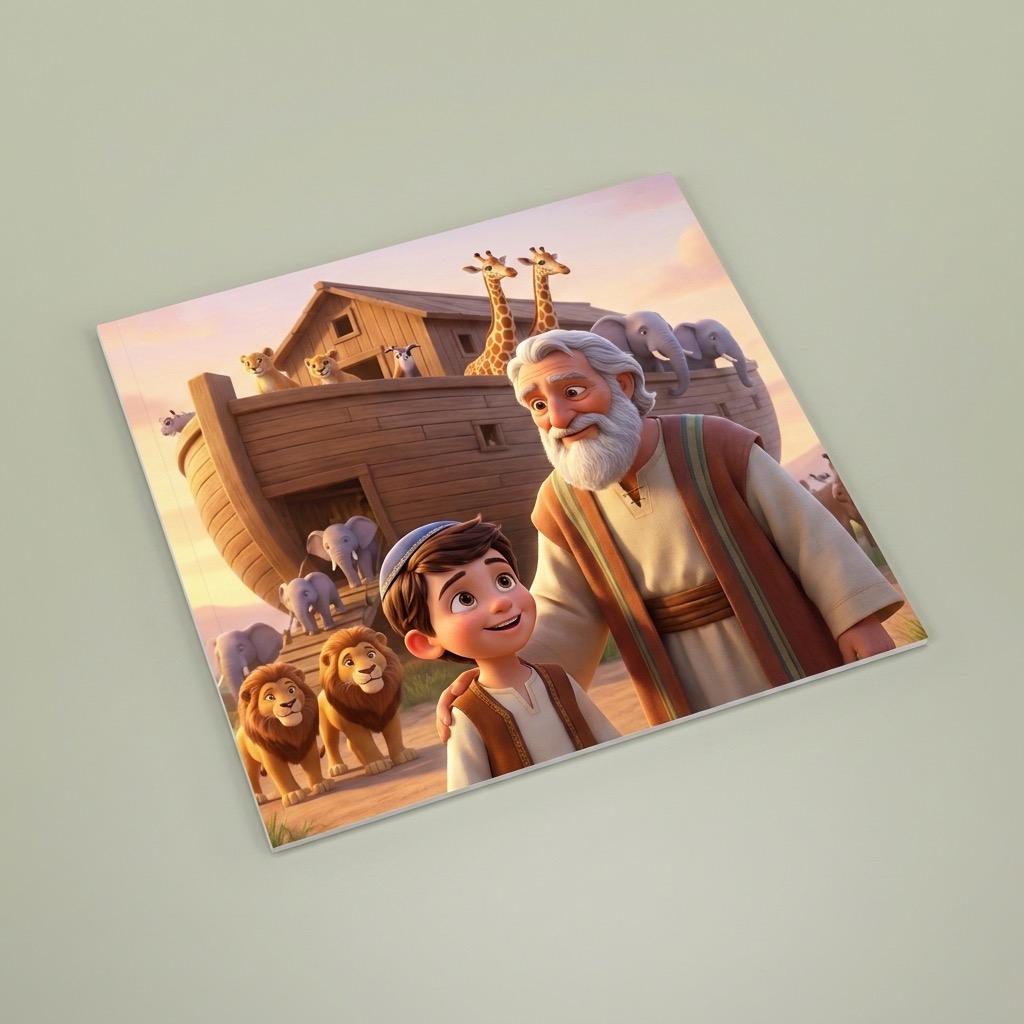
Softcover 8″×8″
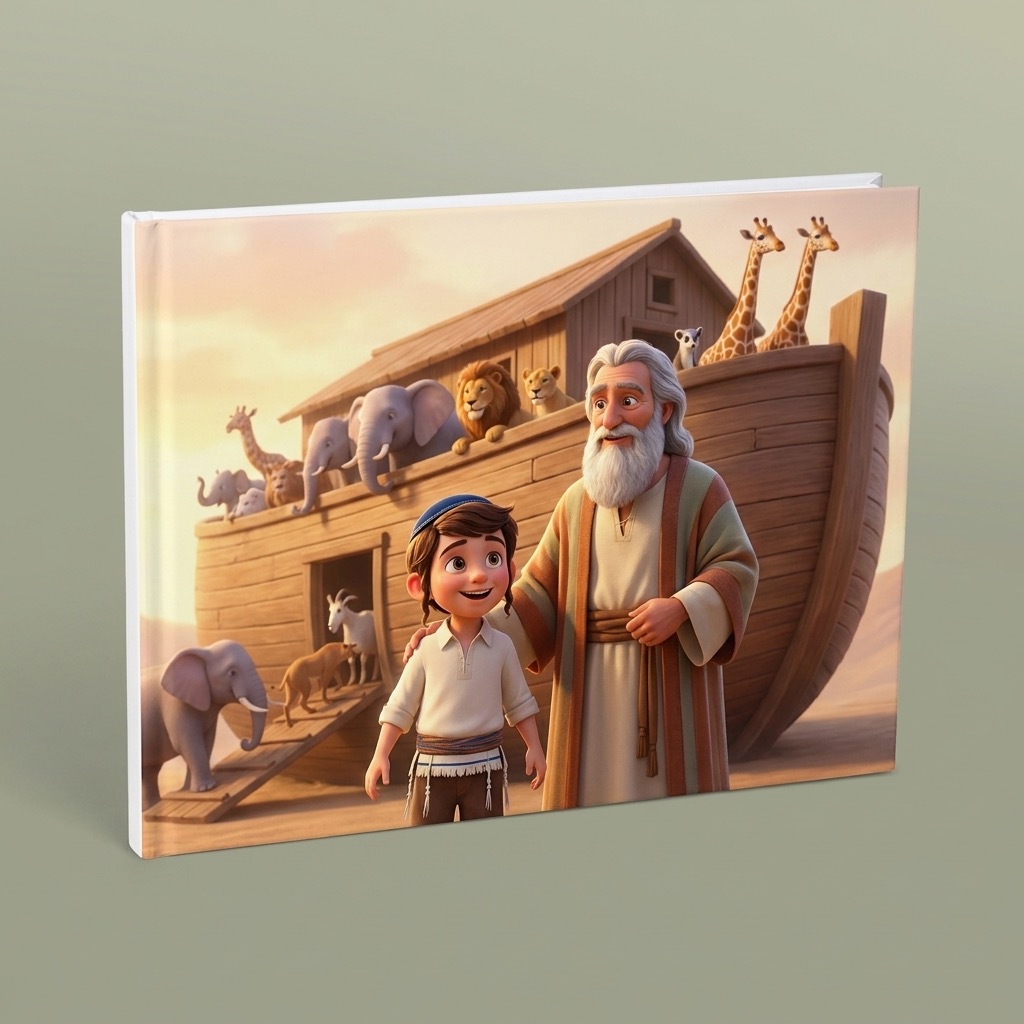
Hardcover 8″×8″
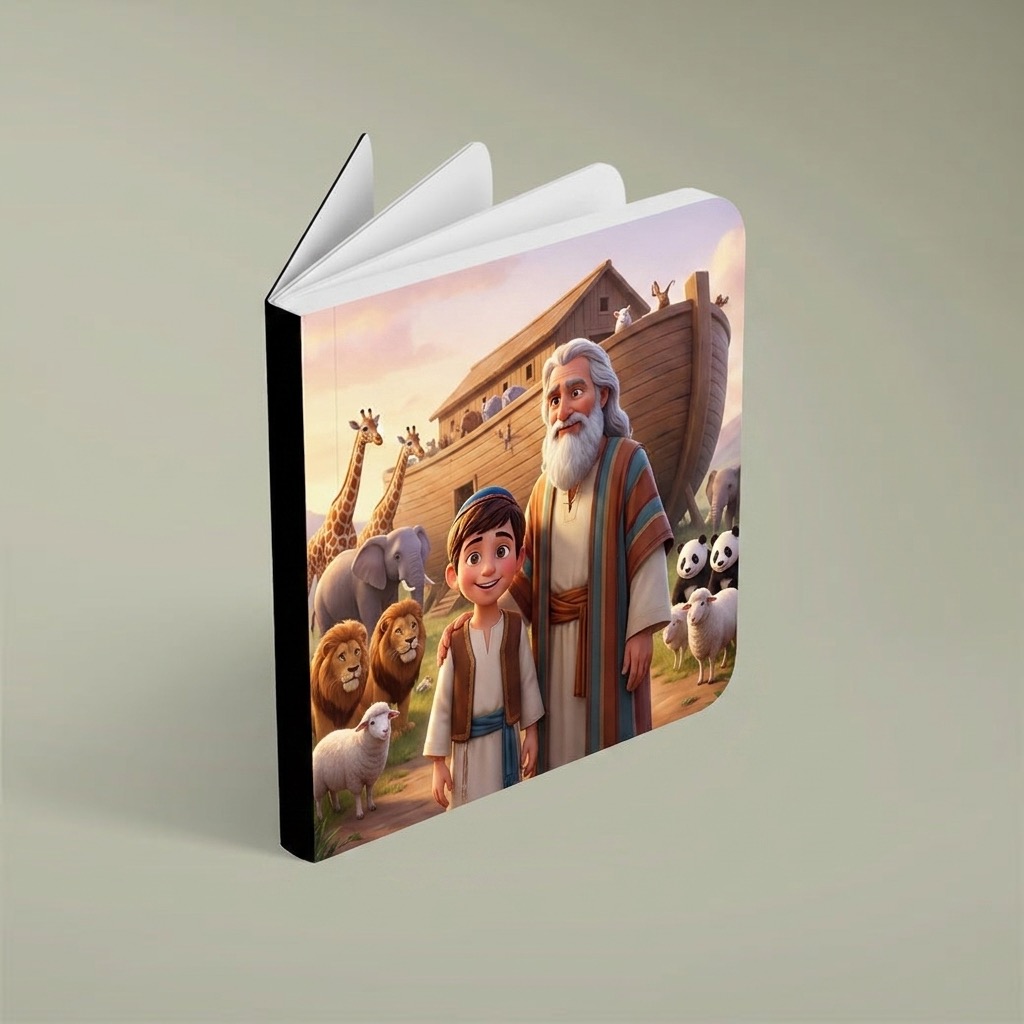
Board book 6″×6″
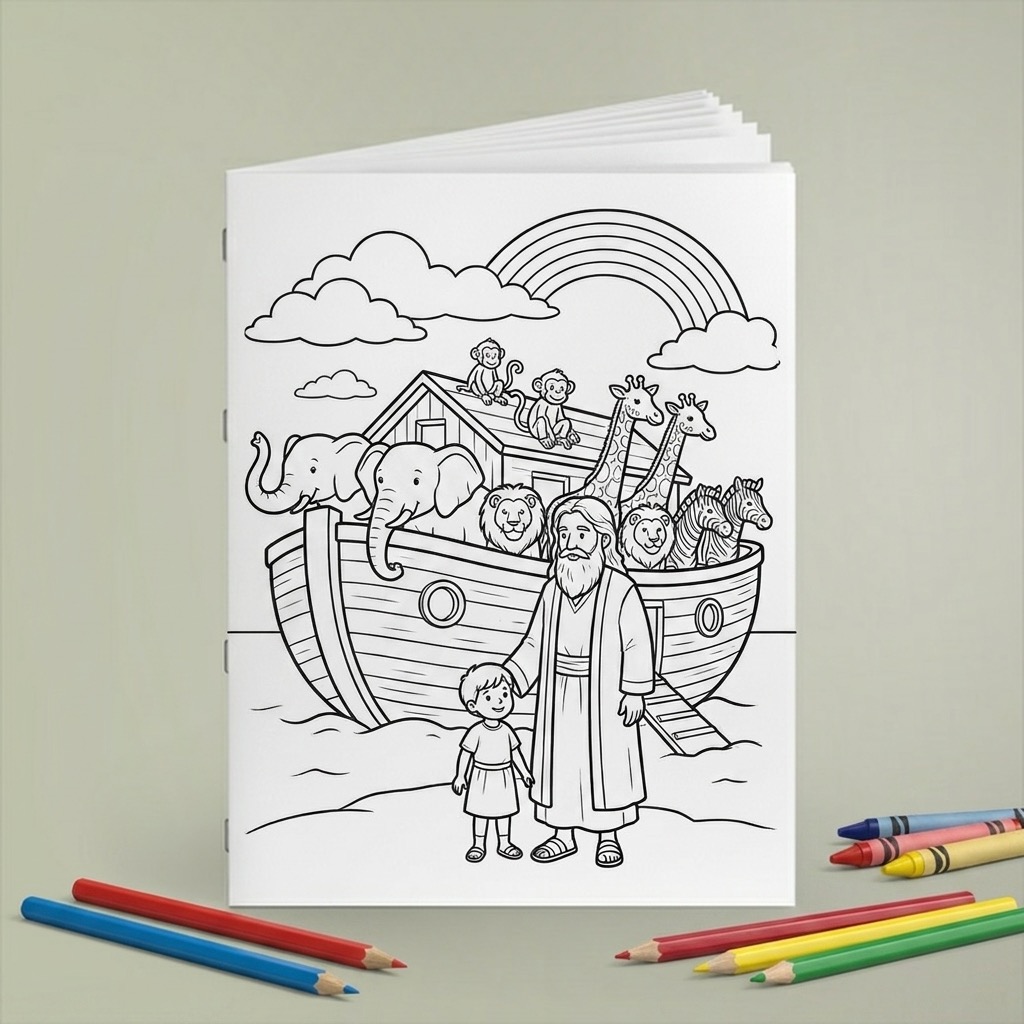
Coloring book 8.5″×11″
Every book ends with a discussion page of 10 questions about the story, mixing what happened with what it asks of the child. That page is what moves the book from something you read to a child into something the family talks about. A storybook is also exactly the right thing for a Shabbos afternoon, when a child can read it again on his own.
The book creator always suggests next week's parsha, with a countdown to the order deadline for delivery before that Shabbos, and a double-parsha week produces one book covering both. If you want to plan ahead for the weeks of Sefer Vayikra, see how to choose the weekly parsha for your child's book. Every Torah Tale book is written with careful rabbinical guidance and strict tznius and reviewed by our team before printing.
Shabbos-table questions and one weekday activity
Five questions that work for a wide range of ages:
- Why did Moshe Rabbeinu wait outside the Mishkan instead of walking in?
- Why do you think the aleph in "Vayikra" is written small?
- Which korban would you bring if you had lots of money? And if you had almost none?
- Why is giving back what you took part of saying sorry?
- What is something small you did this week that nobody noticed?
A one-sentence version for a child who asks in the middle of the meal: "Hashem called Moshe by name from inside the new Mishkan and taught him how a Yid brings Hashem a present to come close, and Moshe wrote his own name-calling with a small aleph because he did not want to sound important."
For a weekday afternoon or erev Shabbos, not on Shabbos itself: give each child a sheet and have them write the word ויקרא with a deliberately tiny aleph, then say one thing they are good at in the quietest voice they can manage. The matching Torah Tale coloring book fits the same weekday slot, or the days before a Yom Tov, or Chol HaMoed.
If you want your child to meet this parsha as someone standing inside the story rather than reading about it, create the book with their name, their photo and their siblings, and have it on the table for the Shabbos that Vayikra is read.
Frequently asked questions
What is Parshas Vayikra about, in simple words?
Parshas Vayikra is the first parsha of Sefer Vayikra. The Mishkan has just been finished, and Hashem calls Moshe Rabbeinu by name from inside it and teaches him about the korbanos that the Yidden will bring. The parsha goes through the olah, the mincha, the shelamim, the chatas and the asham, and also teaches that salt is placed on every korban.
Why is the aleph in the word Vayikra small?
In our printed chumashim the aleph at the end of the word "Vayikra" is written small. The seforim, most famously the Baal HaTurim, explain that Moshe Rabbeinu was so humble that he did not want to write that Hashem called him with affection, and he wanted to write the word without an aleph, as though it only happened. Hashem told him to write the aleph, and Moshe wrote it small. For children this is the clearest lesson of the parsha: the greatest person was also the smallest in his own eyes.
How do I explain korbanos to a young child?
Tell a four or five year old that a korban was a present a Yid brought to Hashem's house, and that the word korban comes from karov, close, because bringing it brought the person close to Hashem. Keep the details of the avodah general: it was brought to the Mizbeach and the kohanim did the avodah with it. Add that today we do not have the Beis Hamikdash, so our tefillos take the place of korbanos, and we learn about them so we will know them when the Beis Hamikdash is rebuilt.
What is the lesson of Parshas Vayikra for children?
Two lessons come through most clearly. First, anavah: Moshe Rabbeinu, who spoke with Hashem, made himself small, which is why the aleph is small. Second, that Hashem measures the heart and not the price tag. The parsha describes an expensive animal korban and also a simple mincha of flour and oil that a poor person brought, and Chazal teach that Hashem treats the small gift as though the person gave his very soul.
Why do children in cheder start Chumash with Vayikra?
The Midrash relates that pure children are fitting to learn about the pure korbanos, and so the custom in many chadarim is to begin a child's Chumash learning with Sefer Vayikra rather than with Bereishis. Practically, it also means Vayikra is often the first Chumash a child ever learns by heart, which makes it a meaningful parsha to give a child as a book of his own.
Can I get a personalized book of Parshas Vayikra for my child?
Yes. Torah Tale prints a personalized Parshas Vayikra storybook from the Chumash collection in which your child is the hero, with their name and their likeness from one uploaded photo illustrated on every page. Up to four siblings can appear in the same book, it comes in English, Hebrew or Yiddish, and formats range from a board book for ages 2 to 4 up to a hardcover for ages 5 to 12. Every book ends with a discussion page of 10 questions about the story.