Parshas Terumah for Kids: The Mishkan, the Gifts & the Golden Menorah
Parshas Terumah is the parsha where the Yidden are asked to give, and what they give becomes a home for the Shechinah. Here is the story retold for children, the middah behind it, and how to explain it at four and at eight.
Published by Torah Tale.
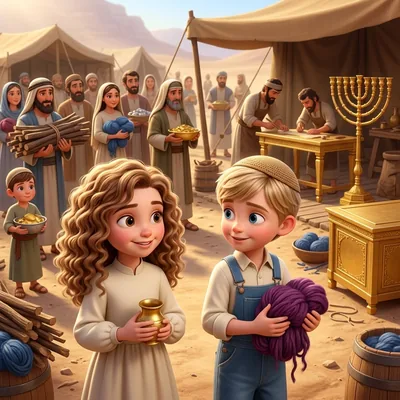
Parshas Terumah is the parsha where the Yidden are asked to give. Hashem tells Moshe Rabbeinu to collect gifts from anyone whose heart moves him to bring them, and out of those gifts the Yidden build the Mishkan, a beautiful travelling home for the Shechinah that goes with them through the midbar. For children it lands because it is the most hands-on parsha in Sefer Shemos: gold and silver and colored wool, curtains and beams and rings and poles, a golden box with the Luchos inside and a lamp hammered out of one single piece of gold.
What happens in Parshas Terumah?
The Yidden have left Mitzrayim, stood at Har Sinai and received the Torah, and heard the mitzvos of Parshas Mishpatim. Now Hashem tells Moshe: speak to the Yidden and let them bring Me a terumah, a gift, from every person whose heart moves him to give.
The Torah lists what they should bring. Rashi counts thirteen kinds of material: gold, silver and copper; techeiles, argaman and tolaas shani (wool dyed sky-blue, purple and crimson); fine linen and goat hair; ram skins and tachash skins; acacia wood, which the Torah calls atzei shittim; oil for lighting; spices for the ketores and the anointing oil; and precious stones for the clothing of the Kohen Gadol.
Then comes the pasuk that the whole parsha turns on: "v'asu li mikdash v'shochanti b'sochom", make Me a Mikdash and I will dwell among them. The rest of the parsha is the instructions, given in detail, for how to build it.
What was inside the Mishkan?
Children remember the Mishkan best through its keilim, the vessels, because each one has a shape they can picture and a job they can name.
| Kli | What it was | What it did |
|---|---|---|
| Aron | A wooden box covered with gold inside and out, with golden rings and poles for carrying | Held the Luchos, with the golden kapores and two keruvim on top |
| Shulchan | A gold-covered table | Held the lechem hapanim, the special bread, all week long |
| Menorah | Pure gold, hammered from one single block, with seven branches, cups, knobs and flowers | Was lit so there was light in the Mishkan |
| The Mishkan itself | Woven curtains over a frame of gold-covered beams, with a paroches dividing off the Kodesh HaKodashim | The building, made to be taken apart and carried |
| Mizbeach | Wood covered with copper, standing outside in the chatzer | Where the korbanos were brought |
A few points from Chazal that children always want to hear. The Midrash relates that Moshe Rabbeinu found the Menorah hard to picture, and Hashem showed him a Menorah of fire so he would know exactly how it looked. Chazal describe the keruvim on the Aron as having the faces of children, which is worth saying out loud to a child at the table. And Chazal tell us that the acacia wood was there because Yaakov Avinu had planted those trees in Mitzrayim and told his children to carry them out when the geulah came.
What is the middah of Parshas Terumah?
Nedivus lev, giving with a willing heart. The Torah does not set a tax in this parsha. It says to take from every person asher yidvenu libo, whose heart moves him, and that turns the Mishkan into something the Yidden wanted rather than something they were charged for.
There is a second point hidden in the list of materials. Gold sits on the list next to goat hair. A person who owned gold gave gold, and a person who owned nothing but goat hair gave goat hair, and both of them ended up in the same building. No child needs more than that to understand that a small contribution given fully is a real contribution.
And then the pasuk itself: Hashem says "I will dwell among them", not "in it". Chazal read it as within each Yid. The Mishkan was a lesson in how to build a place for Hashem in a person, which is the same idea children meet again in Parshas Ki Savo when a farmer carries his first fruits up to the Mikdash and says thank you.
How do I explain Parshas Terumah at different ages?
Ages 2 to 4. Keep it to the tent and the treasure. "The Yidden brought presents to Hashem. Gold, and shiny silver, and pretty blue and purple cloth. They built a beautiful tent so they could feel that Hashem was right there with them, and inside was a gold box with the Luchos, and a gold lamp with seven lights." Let them count the seven branches on their fingers.
Ages 5 to 8. Add the willing heart. Explain that Moshe did not go round demanding, he announced what was needed and people brought what they had. Ask what they would have brought. Add the detail of the poles that stayed in the Aron's rings so it was always ready to travel, and the wood Yaakov planted generations earlier.
Ages 9 to 12. This is the age for the harder question: why does Hashem, who fills the world, ask for a building? Learn "v'shochanti b'sochom" with them and show that the Mishkan was built for the Yidden's sake. Then connect it forward to the Bais HaMikdash, and back to Har Sinai in Parshas Yisro: at Sinai the Yidden came to Hashem, and in Terumah the Shechinah comes to live among them.
What is a personalized Parshas Terumah book like?
A Torah Tale book of Parshas Terumah puts your own child inside the story. Their name and their likeness, illustrated in high-resolution 3D Pixar style from one photo you upload, appear on every page: watching the gifts being brought, standing beside the golden Menorah, seeing the Aron carried on its poles. Up to four siblings can appear in the same book, which is what makes it work as a shared Shabbos-table read rather than one child's private volume.
Every book is written with careful rabbinical guidance and strict tznius and reviewed by our team before printing, and every book ends with a dedicated discussion page of ten questions on the story, mixing comprehension with middos: what happened, and what it asks of the child. That page is the reason a Terumah book tends to get talked about instead of just read. Reading it on Shabbos or on a long Yom Tov afternoon is exactly what it is built for.
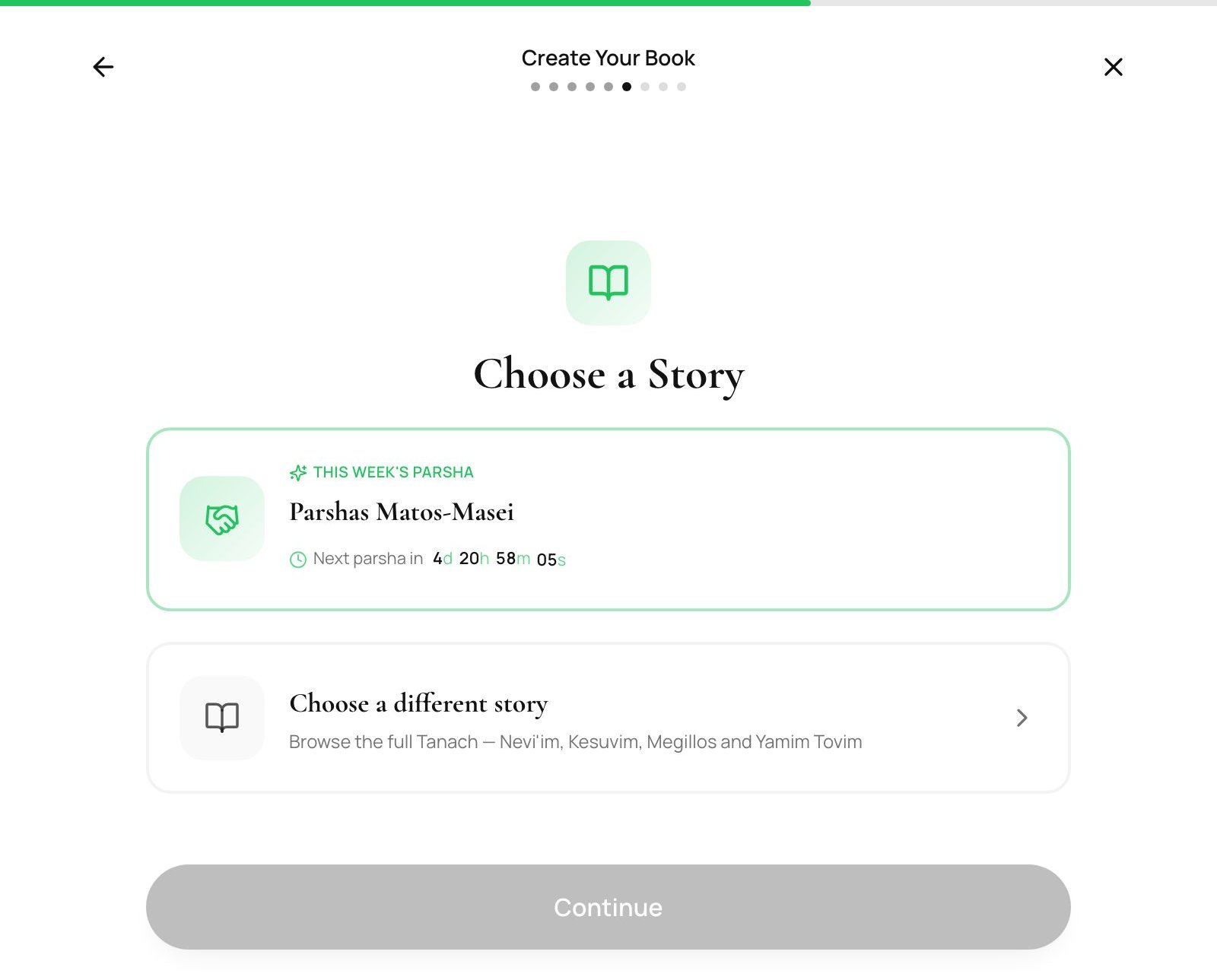
The book creator asks eight short questions: name, boy or girl, age, one photo, siblings, story, language and printed format. Books come in English, Hebrew or Yiddish, and you can order more than one language. For format, the board book 6"x6" with rounded corners suits ages 2 to 4, the softcover 8"x8" suits ages 4 to 8, and the hardcover 8"x8" in square or landscape suits ages 5 to 12. There is also an optional matching coloring book in black-and-white line art, which is a weekday project: erev Shabbos, a weekday afternoon, or Chol HaMoed, never on Shabbos or Yom Tov itself.
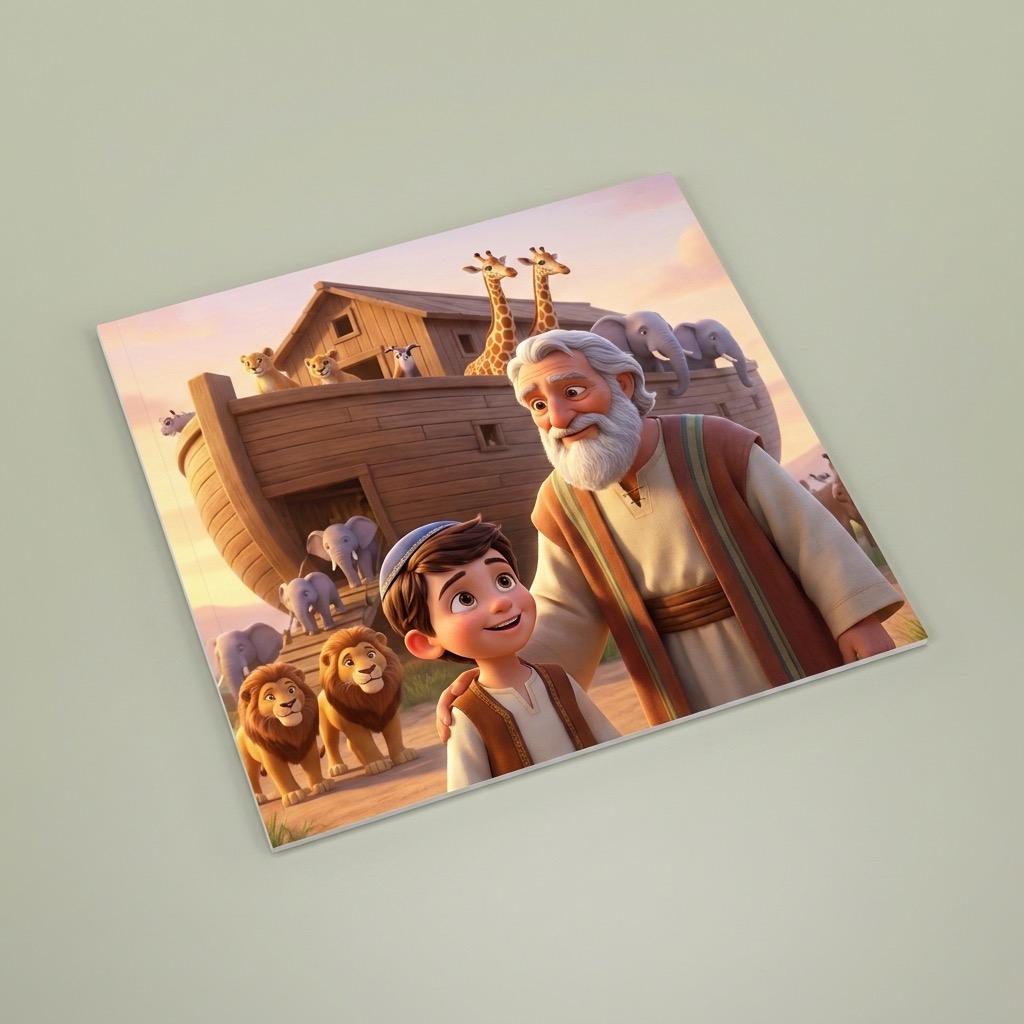
Softcover 8″×8″
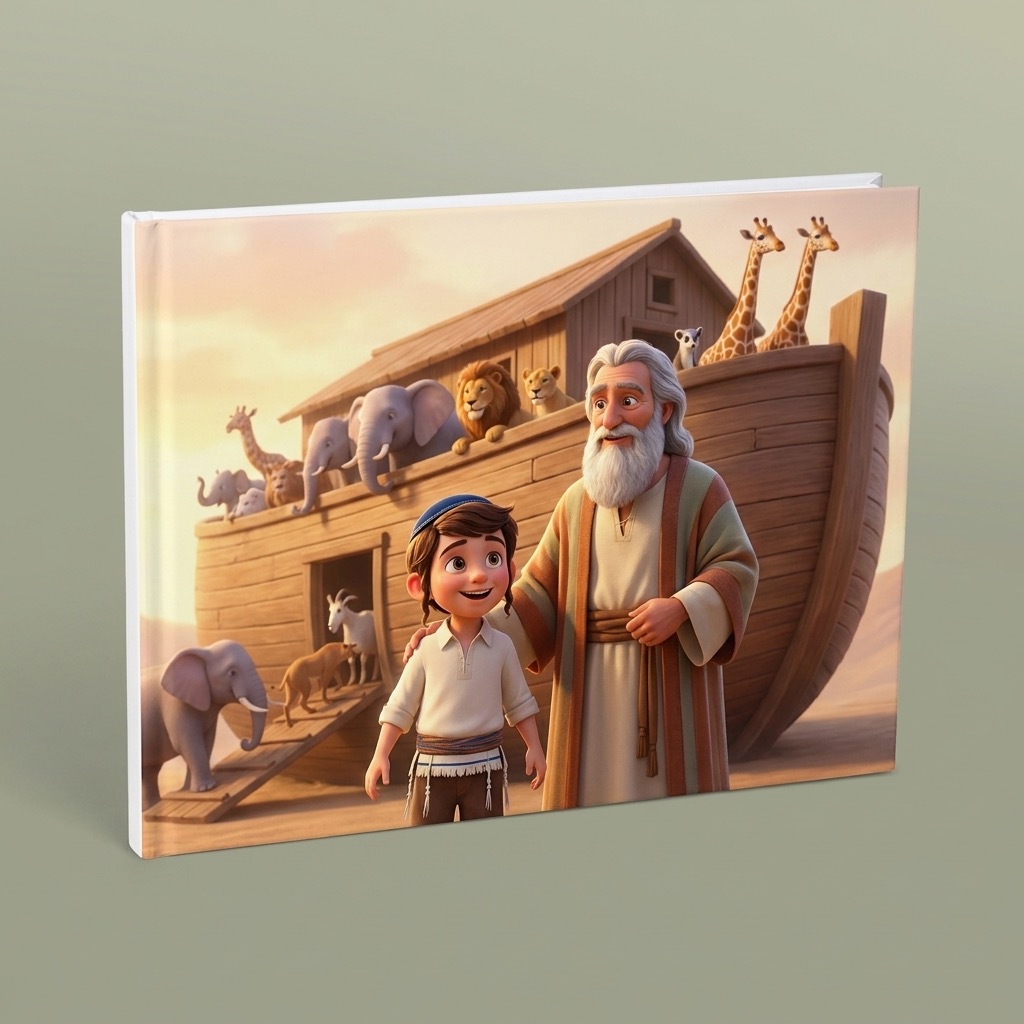
Hardcover 8″×8″
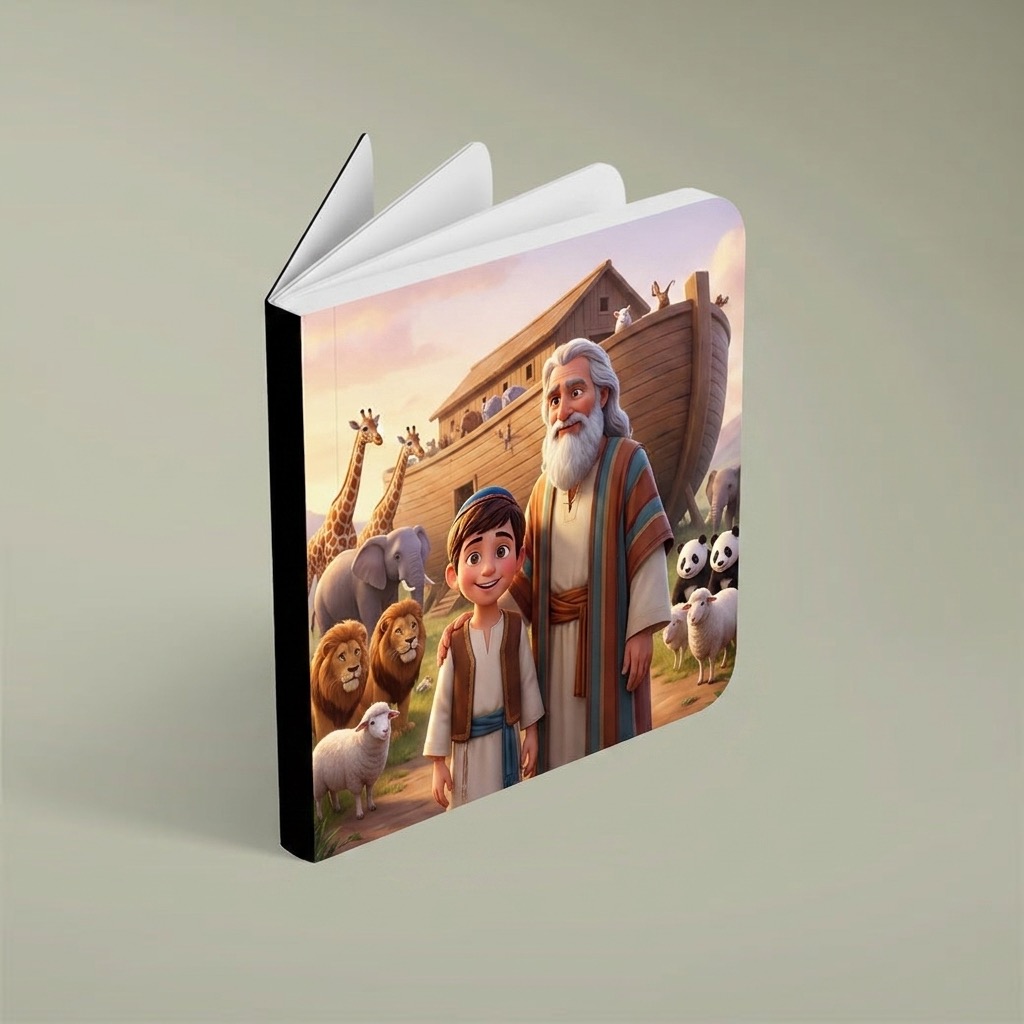
Board book 6″×6″
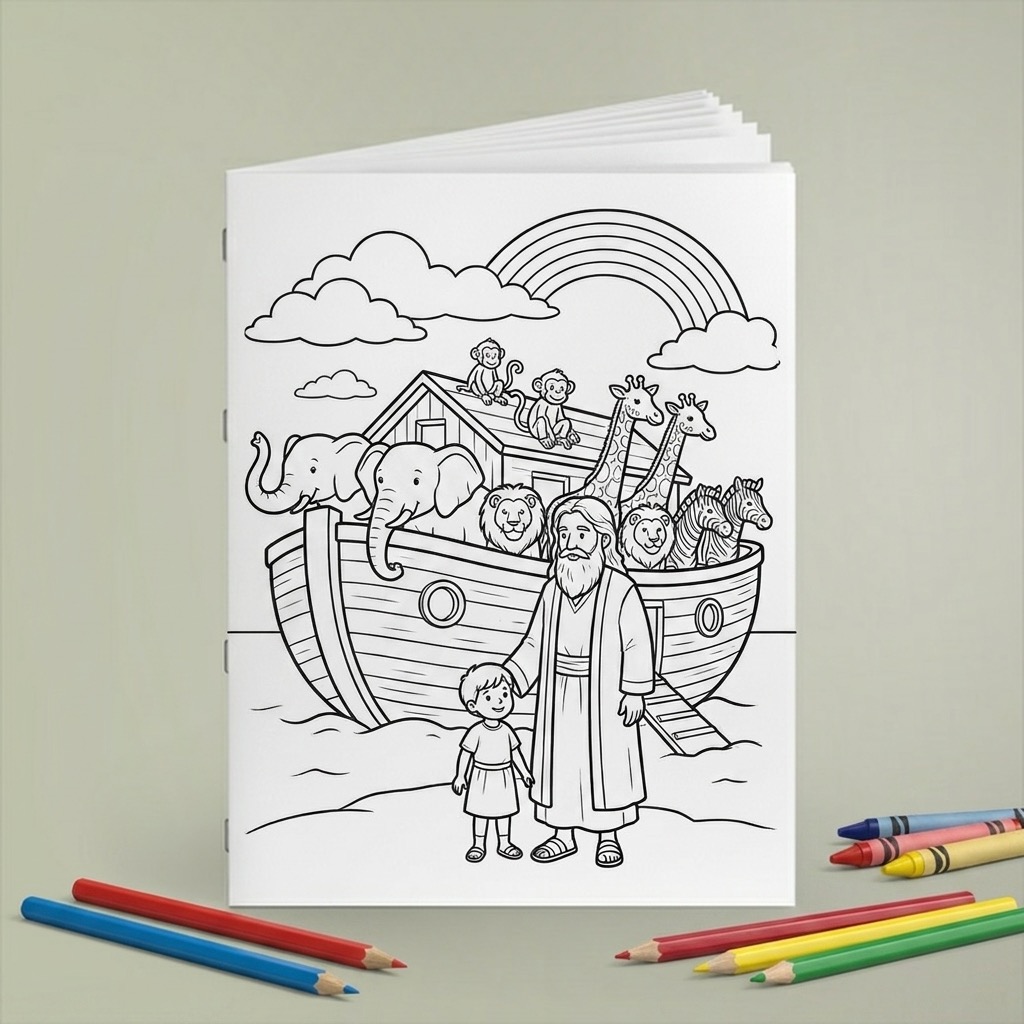
Coloring book 8.5″×11″
Shabbos table questions and a weekday Mishkan project
Five questions that work at almost any age:
- Hashem asked only for gifts that people wanted to give. Why does that matter?
- Someone brought gold and someone brought goat hair. Whose gift was bigger?
- Why do you think Hashem asked the Yidden to build something, instead of just telling them He was with them?
- The Aron's carrying poles were never taken out. What does that teach about the Torah?
- What is one thing in our house that makes it feel like a place Hashem is welcome in?
For a weekday afternoon, build a Mishkan. Shoeboxes for the beams, blue and purple scraps of fabric or paper for the curtains, a matchbox wrapped in gold foil for the Aron, two paper cut-outs for the keruvim, a pipe-cleaner Menorah with seven branches. Let each child be responsible for one kli and then explain it to the others before Shabbos.
And one tzedakah tie-in that takes two minutes: set out a pushke and let each child give something they chose to give, not something you handed them. That is the parsha in miniature.
Say it in one sentence
If you have thirty seconds in the car on the way to cheder: "Hashem told the Yidden to bring gifts from the heart, and with those gifts they built the Mishkan, so that Hashem's presence would live right in the middle of the camp."
You can put your own child into this parsha in about five minutes. Browse the seven collections, choose Parshas Terumah from Sefer Shemos, upload one photo and pick the format that fits your child's age, or read more about choosing the weekly parsha for your child's book first. When you are ready, create the book.
Frequently asked questions
What is Parshas Terumah about, in one sentence?
Parshas Terumah is about building the Mishkan: Hashem asks the Yidden to bring gifts of gold, silver, wood, cloth, oil and precious stones, and with them they build a portable home for the Shechinah that travels with them in the midbar. The parsha gives the instructions for the Aron with the Luchos inside it, the Shulchan, the Menorah, the curtains and beams of the Mishkan, and the Mizbeach in the courtyard.
What is the lesson of Parshas Terumah for children?
The main lesson is giving with a willing heart. The Torah asks for terumah only from a person whose heart moves him to give, which teaches children that a mitzvah done because you want to do it is worth more than one squeezed out of you. A second lesson is that everyone's gift counted: whoever had gold gave gold, and whoever had only goat hair gave goat hair, and both ended up in the Mishkan.
How do I explain the Mishkan to a 4-year-old?
Tell a young child that the Yidden wanted a special place where they could feel that Hashem was close to them, so Hashem told them exactly how to build one. Call it a beautiful tent made of gold and colored curtains that could be taken apart and carried wherever they went. Point out the pieces a child can picture: a golden box holding the Luchos, a golden lamp with seven branches, and a table with special bread on it.
Why did Hashem need a house if Hashem is everywhere?
Hashem does not need a house. The Mishkan was for the Yidden, so they would have a place that focused them on Hashem and reminded them He was among them. Chazal read the pasuk "v'shochanti b'sochom" as "I will dwell within them", meaning that the real place for the Shechinah is inside each Yid, and the building was there to teach people how to build that.
Where did the wood for the Mishkan come from in the desert?
Chazal tell us that Yaakov Avinu planted trees when he came down to Mitzrayim and told his children that one day their descendants would need the wood to build a Mishkan, so they should take it with them when they leave. That is why the Yidden had atzei shittim available in the midbar. It is a beautiful point to share with children about planning ahead for a mitzvah generations before it happens.
Can I order a personalized Parshas Terumah book even when it is not this week's parsha?
Yes. The Torah Tale book creator suggests next week's parsha with a countdown to the order deadline for delivery before that Shabbos, but the story picker lets you browse all seven collections and choose any story, including Parshas Terumah, at any time of year. Creating the book takes about eight short questions and roughly five minutes at torahtale.com/create.