Parshas Yisro for Kids: Har Sinai, the Aseres HaDibros & Yisro's Advice
Parshas Yisro is the parsha where Klal Yisrael stands at Har Sinai and hears Hashem give the Aseres HaDibros. Here is how to tell it to a four-year-old and to an eight-year-old, what the middos of the parsha really are, and questions that keep it going at the Shabbos table.
Published by Torah Tale.
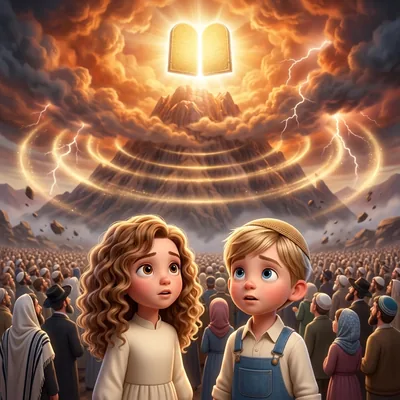
Parshas Yisro is the parsha of Matan Torah. It begins with Yisro, Moshe Rabbeinu's father-in-law, who hears what Hashem did for the Yidden and travels into the midbar to join them, and it ends with all of Klal Yisrael standing at the foot of Har Sinai and hearing Hashem give the Aseres HaDibros. For children it lands hard and fast, because it has a mountain, a cloud, a shofar that grows louder and louder, and ten short lines they will recognize for the rest of their lives.
What happens in Parshas Yisro?
Yisro was a Midyanite who had searched through every kind of avodah zarah in the world before he came to recognize Hashem. When he heard what had happened to the Yidden, he took Moshe's wife Tzipporah and their two sons and brought them out to the midbar, to the mountain of Hashem. Rashi tells us that what Yisro heard was Krias Yam Suf and the war with Amalek. Others heard the same news and stayed home. Yisro heard it and packed.
Moshe went out to greet him, and Yisro said Baruch Hashem, blessing Hashem for saving the Yidden from Mitzrayim.
The next day Yisro watched Moshe sit and judge the people from morning until evening while the whole nation stood in line waiting. Yisro told him plainly that this was not good, that he would wear himself out and wear the people out. He advised Moshe to choose men of truth who hate money taken wrongly, and to appoint them as judges over thousands, over hundreds, over fifties and over tens, so that only the hardest cases would come to Moshe. And Moshe listened to the voice of his father-in-law and did everything he said.
Then came the third month after leaving Mitzrayim. Klal Yisrael camped in front of Har Sinai, and Rashi points out that the Torah writes the word for "camped" in the singular: they were there like one person with one heart. Hashem told Moshe to tell the people that if they would listen and keep the bris, they would be a treasured nation, a kingdom of kohanim and a holy people. The people answered together: everything Hashem has spoken, we will do.
They prepared for three days. On the third day there was thunder and lightning, a heavy cloud on the mountain, and the sound of a shofar that kept getting stronger. The mountain smoked and the people stood trembling at its foot. And Hashem spoke the Aseres HaDibros.
Afterward the people asked Moshe to receive the rest from Hashem and teach it to them, because hearing directly was more than they could bear.
What are the Aseres HaDibros, explained for children?
Two luchos, five on each side. The first five are between a person and Hashem. The second five are between a person and other people. Saying it that way gives a child a shelf to put them on.
| First luach (Hashem and me) | Second luach (me and other people) |
|---|---|
| I am Hashem, who took you out of Mitzrayim | Do not kill |
| Serve no one else | Do not be unfaithful in marriage |
| Do not use Hashem's name for nothing | Do not steal |
| Remember Shabbos and keep it holy | Do not lie about another person |
| Honor your father and your mother | Do not want what belongs to somebody else |
Children usually notice on their own that honoring parents sits on the first luach, with the mitzvos about Hashem, and that is a conversation worth having at the table rather than closing off with an answer.
What is the middah of Parshas Yisro?
There are two, and they face each other.
The first is Yisro's: acting on what you hear. Yisro was a man with a position and honor in Midyan, and he gave it up because he heard something true. Chazal teach that the mountain chosen for Matan Torah was not the tallest one, precisely because Torah is given to those who make themselves small. A child can grasp that without any philosophy: Hashem did not pick the mountain that was showing off.
The second is Moshe Rabbeinu's: accepting good advice. Moshe was the greatest navi who ever lived and had just brought the Yidden out of Mitzrayim, and when his father-in-law told him his system was not working, he changed it. For a child who bristles at being corrected, this is the story to have on hand.
How do I tell Parshas Yisro to different ages?
Ages 2 to 4. Sound and sight only. "Hashem said: get ready, in three days I am going to talk to you. There was a big cloud on the mountain, and a shofar, and everyone stood very close together and listened. Hashem gave us the Torah." Then let him bang out a shofar sound with you and finish there.
Ages 5 to 7. Add the two luchos and the five-and-five split, and count them on fingers. Add Yisro coming from far away because he heard about Krias Yam Suf, which connects straight back to Parshas Beshalach, the parsha they learned the week before.
Ages 8 to 12. Now the questions get good. Why is the parsha of Matan Torah named after a man who was not born a Yid? Why did the people ask Moshe to listen on their behalf? Why does Rashi make a point of one word being singular? At this age a child can also handle Yisro's advice as a real management problem: one man, a whole nation, and a line that never ends.
What is a personalized Torah Tale book of Parshas Yisro like?
Torah Tale prints the parsha as a storybook in which your own child is the hero. Their name is in the text and their likeness, built from one uploaded photo, is illustrated on every page in high-resolution 3D Pixar style. In Parshas Yisro that means your child standing in the camp at the foot of Har Sinai on the third day, which is a very different experience from watching it happen to other people. Up to four siblings can appear in the same book together.
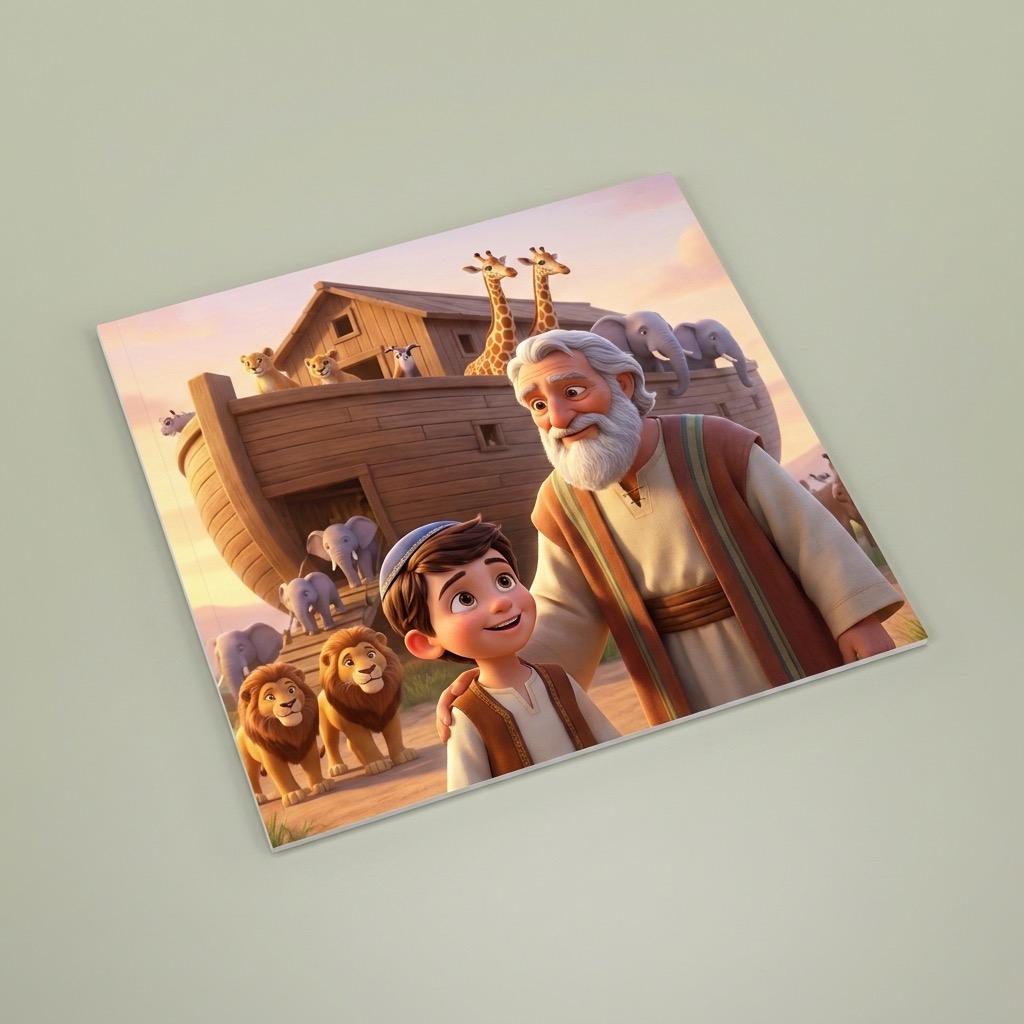
Softcover 8″×8″
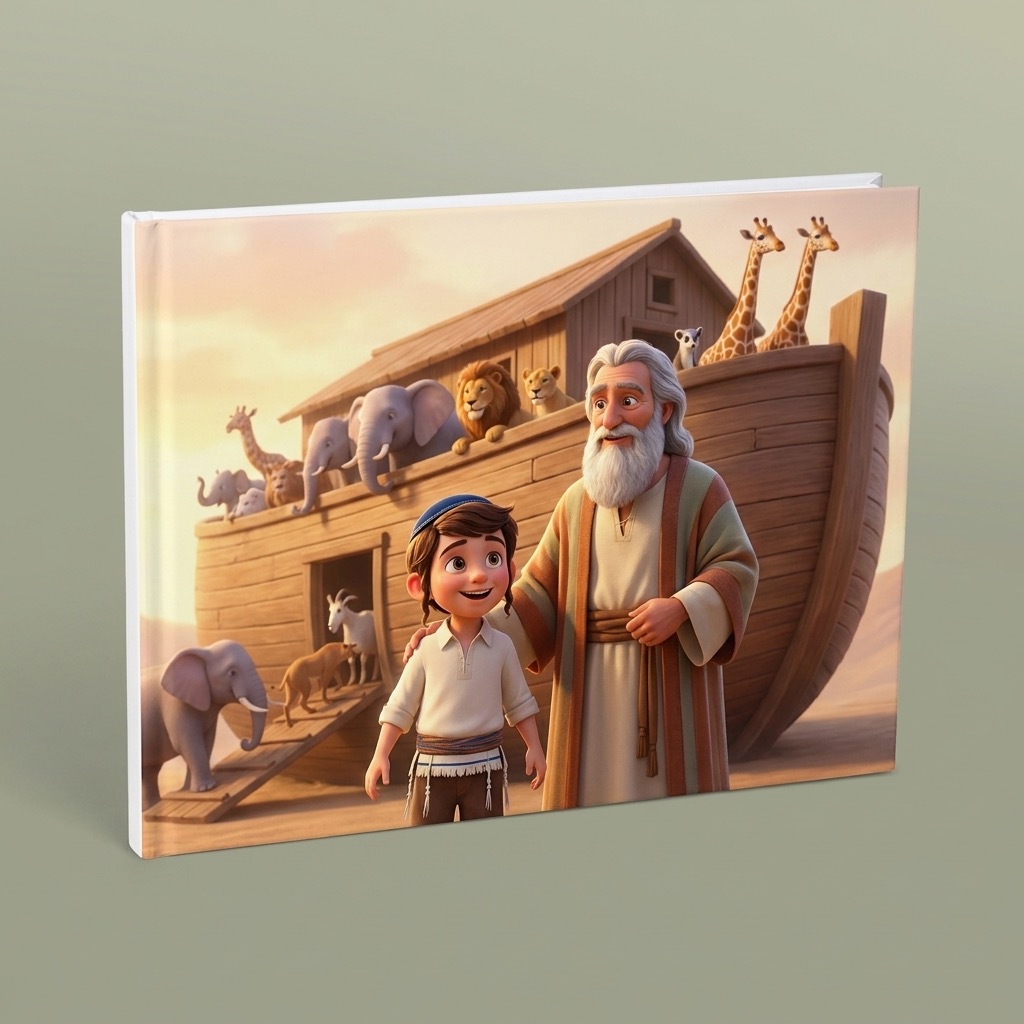
Hardcover 8″×8″
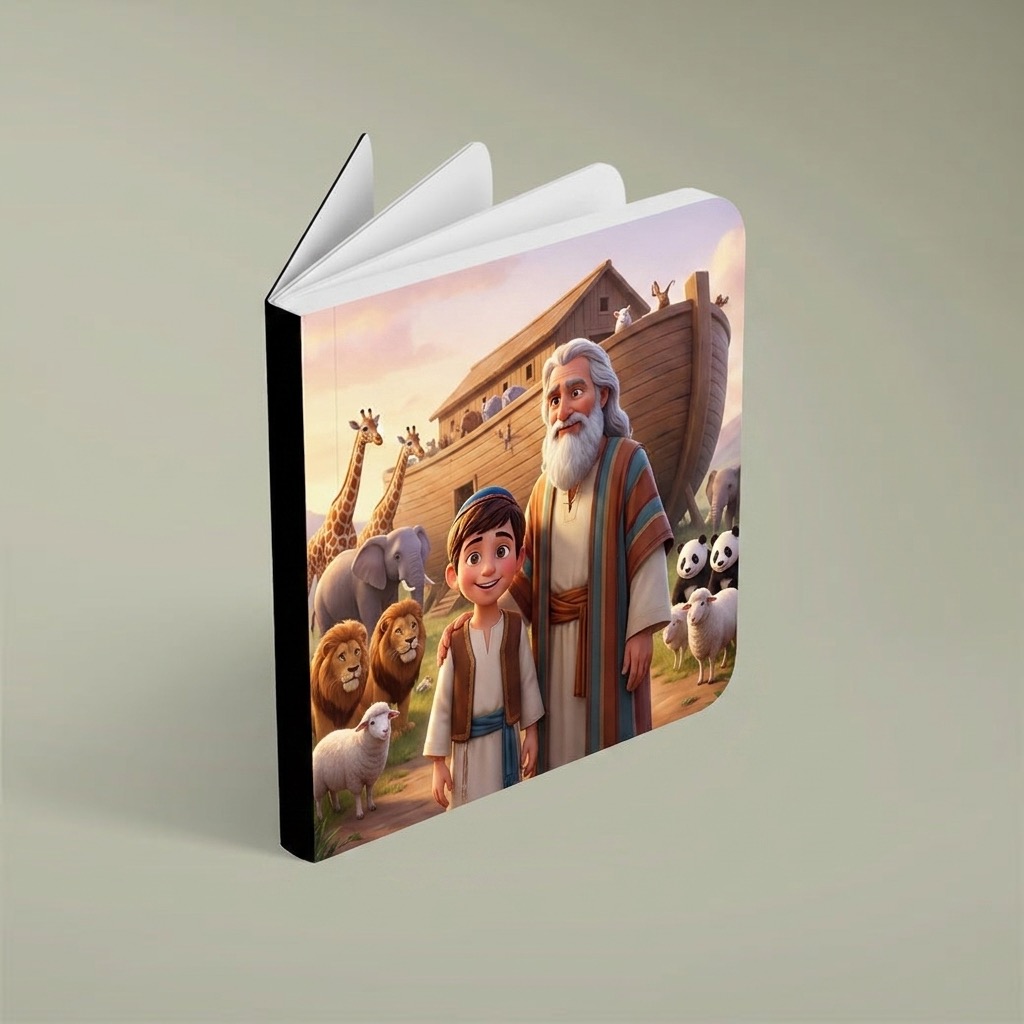
Board book 6″×6″
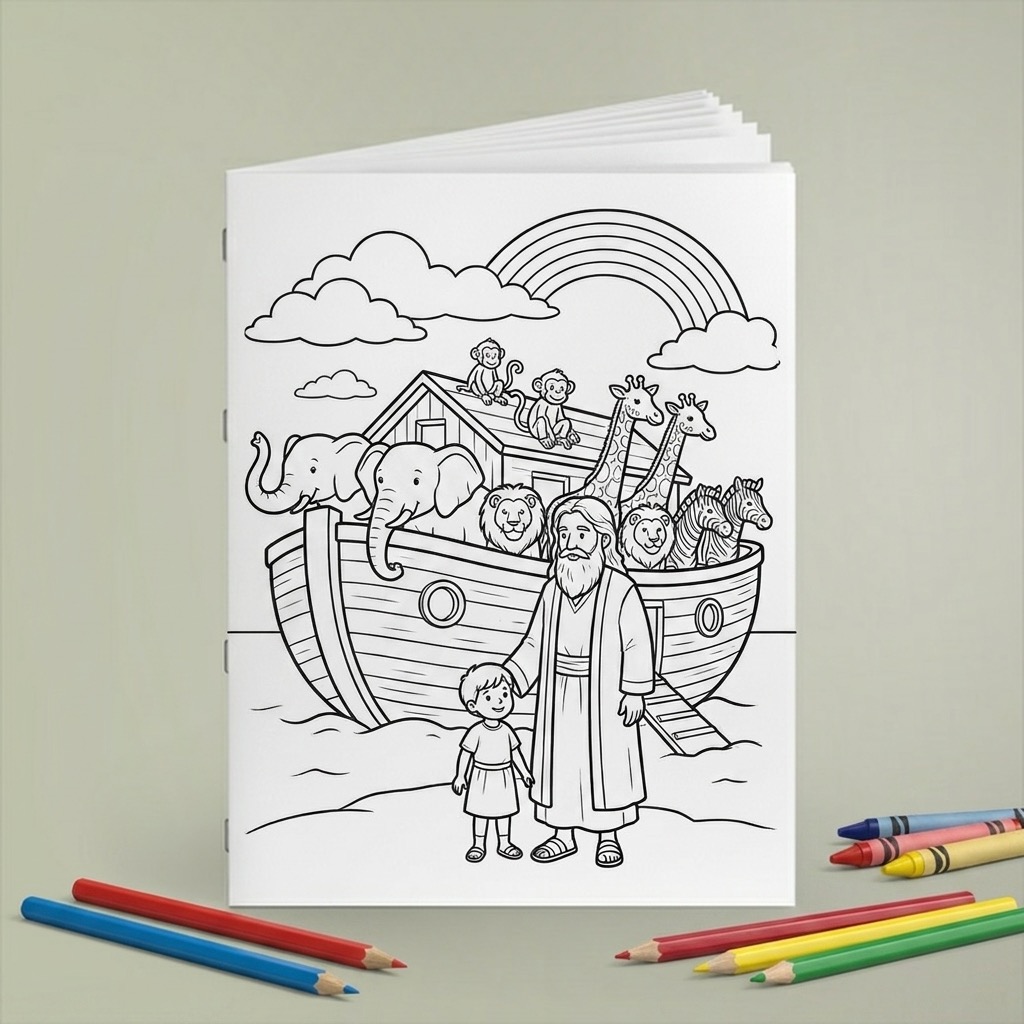
Coloring book 8.5″×11″
Format follows age: the 6"x6" board book with rounded safety corners for ages 2 to 4, the 8"x8" softcover for ages 4 to 8, the 8"x8" hardcover in square or landscape for ages 5 to 12. Books come in English, Hebrew or Yiddish, and you can order more than one language. There is also a matching black-and-white coloring book, which is a weekday project, erev Shabbos or a Sunday afternoon, never on Shabbos itself.
The storybook is the opposite: a parsha book is exactly right for the Shabbos table or a long Shabbos afternoon. Every book closes with a dedicated page of 10 discussion questions mixing comprehension with middos, so the book gets talked about rather than only read.
The book creator always suggests next week's parsha, with a live countdown to the order deadline for delivery before that Shabbos. If you want the reasoning behind choosing which week to start with, we walk through it in how to choose the weekly parsha for your child's book.
Shabbos table questions and one weekday activity
Six questions, in rising order of difficulty. Take whichever fit the children at your table.
- What did Yisro hear that made him decide to come? (Rashi: Krias Yam Suf and the war with Amalek.)
- What was Moshe doing all day that Yisro said was not good?
- How many days did the Yidden have to get ready for Matan Torah?
- Name three of the Aseres HaDibros. Which luach is each one on?
- Rashi says the Yidden were at Har Sinai like one person with one heart. What would that look like in our house this week?
- Moshe Rabbeinu took advice from his father-in-law. Who is someone you find it hard to take advice from, and why?
A weekday activity. Cut two luchos shapes from paper on a Sunday or a weekday afternoon and have each child write or draw one dibrah on each side, five and five. Younger children can draw a picture instead of writing: a Shabbos candle for the fourth, a child helping a parent for the fifth. Hang it where they eat breakfast, and by the time Shavuos comes around they will already own the list.
Parshas Yisro follows straight on from the makkos and the sea in Parshas Bo and Beshalach. Leaving Mitzrayim was the beginning. Har Sinai was the point of it.
To put your child inside this parsha by name and by face, in English, Hebrew or Yiddish, and to get it in hand before the Shabbos the parsha is read, create the book. The whole flow is eight short questions and takes about five minutes.
Frequently asked questions
What is Parshas Yisro about, in one sentence?
Parshas Yisro tells how Yisro, Moshe Rabbeinu's father-in-law, came to join the Yidden in the midbar and advised Moshe to appoint judges to help him, and then how all of Klal Yisrael stood at Har Sinai and heard Hashem give the Aseres HaDibros. It is the parsha of Matan Torah, the moment the Torah was given to the Jewish people. Everything that follows in Yiddishkeit begins here.
How do I explain Matan Torah to a 4-year-old?
Keep it to pictures and sounds. Say: Hashem told the Yidden to get ready for three days, and then there was a cloud on the mountain, thunder, and a shofar that got louder and louder, and every single Yid stood together and heard Hashem speak. Then tell him that the Torah we learn today is the same Torah from that day, which makes the whole thing feel close rather than long ago.
What are the Aseres HaDibros in kid-friendly words?
There were two luchos with five on each. The first five are between us and Hashem: Hashem took us out of Mitzrayim, we serve only Hashem, we do not use Hashem's name for nothing, we keep Shabbos, we honor our father and mother. The second five are between people: do not kill, do not be unfaithful, do not steal, do not lie about someone in court, do not be jealous of what belongs to somebody else.
What is the lesson of Parshas Yisro for children?
There are two that children can actually use. From Yisro: when you hear something true, do something about it, because Yisro heard and traveled rather than just being impressed. From Moshe Rabbeinu: a great person listens to good advice, even from his father-in-law, which is a real answer to a child who thinks being smart means never being told anything.
Why is the parsha named after Yisro and not after Matan Torah?
The parsha carries Yisro's name because it opens with him, and Chazal point to his praise: he heard what Hashem did for Klal Yisrael and he came, leaving behind the honor he had in Midyan. Naming the parsha of Matan Torah after a person who chose to come close is itself the message. It teaches children that Torah belongs to whoever comes to receive it.
Can I get a personalized book about Parshas Yisro for my child?
Yes. Torah Tale prints personalized Torah storybooks in which your child is the hero of the story, with their name and their likeness from one uploaded photo illustrated on every page. Parshas Yisro is available in the Torah collection, in English, Hebrew or Yiddish, in board book, softcover or hardcover, and every book ends with 10 discussion questions.