Parshas Beshalach for Kids: Krias Yam Suf, the Shirah & the Mann
Parshas Beshalach is the parsha where the sea splits. Here is the whole story retold the way it is taught in a frum home, plus how to explain emunah to a four-year-old and an eight-year-old, and ten minutes of Shabbos-table talk that actually works.
Published by Torah Tale.
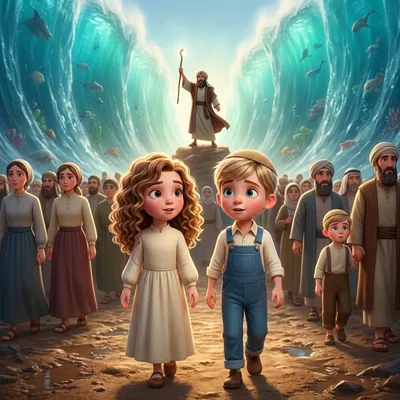
Parshas Beshalach is the parsha where the sea splits. It picks up the moment Pharaoh finally sends the Yidden out of Mitzrayim, follows them to the edge of the Yam Suf with an army behind them, and then tells what happened when Hashem made a path through the water. It also holds Shiras Hayam, the mann that fell every morning, water from a rock, and the war with Amalek. For children it is one of the most vivid parshiyos of the year, because the miracle is something they can picture in one second and never forget.
What happens in Parshas Beshalach?
Pharaoh sends the Yidden out, but Hashem does not lead them by the short road through the land of the Pelishtim. Instead they turn toward the midbar. A pillar of cloud goes before them by day and a pillar of fire by night, so they always know which way to travel. Moshe Rabbeinu takes along the bones of Yosef, keeping the promise the shevatim had made to him years earlier in Parshas Vayechi.
Then Pharaoh regrets letting them go and chases after them with six hundred chariots. The Yidden are at the sea, with water in front and Mitzrayim behind, and they cry out to Hashem. Moshe tells them not to be afraid. Hashem tells Moshe to lift his staff and stretch out his hand over the sea, an east wind blows all night, and the sea splits. The Yidden walk through on dry land with the water standing on both sides. The Egyptians follow them in, and the water returns over them.
On the far shore the Yidden sing Shiras Hayam, the song that begins "Az Yashir," which we still say every morning in davening. Miriam and the women take tambourines and sing too.
After that comes the midbar. At Marah the water is bitter, and Hashem shows Moshe a tree to put into the water to make it sweet. At Elim there are twelve springs and seventy date palms. When the Yidden have no food, Hashem sends the mann. When they have no water at Refidim, Hashem tells Moshe to strike the rock and water comes out. And at the end of the parsha Amalek attacks, Yehoshua leads the fighting, and Moshe sits on a hill with his hands raised, with Aharon and Chur beside him.
What did Chazal teach about the sea splitting?
The pesukim say the water was like walls on their right and their left. Chazal add details that children love and that are worth telling as Midrash rather than as pshat. The Midrash relates that the sea split into twelve separate paths, one for each shevet. Chazal also tell us that Nachshon ben Aminadav went into the water first, before it split, because he trusted Hashem.
Say these the way they are said in cheder: "Chazal tell us..." or "the Midrash relates..." Children absorb the difference in a single sentence, and it is a habit that pays off for years.
What is the mann, and why is it really a Shabbos story?
The mann is the quieter half of Beshalach, and often the half that stays with a child longer. Every morning food came down from the sky. Each person gathered exactly the amount they needed for that day. What was left over did not keep. So a family could not build up a pantry; they woke up each morning and found that Hashem had sent enough again.
On Friday a double portion fell, and it did keep. On Shabbos no mann fell at all. Some people went out on Shabbos to look anyway and found nothing. That is where the Yidden first learn, as a lived daily practice, that Shabbos is different and that you prepare for it before it comes. Moshe was also told to keep a jar of mann so later generations would see what Hashem had fed their grandparents in the midbar.
For a child who has ever watched a mother cooking on Friday afternoon, the double portion of mann is not an abstract idea. It is the reason the kitchen is busy before Shabbos.
What is the middah of Beshalach?
Emunah and bitachon, taught twice in two very different ways.
At the sea it is taught in a burst: there was no way through, and Hashem made one. That is the miracle a child will draw. But the mann teaches the same middah in slow motion, morning after morning, with no drama at all. You cannot hoard it. You have to trust that tomorrow it will come again.
There is a second middah in this parsha that is easy to skip and worth catching: gratitude that gets expressed out loud. The Yidden did not just feel saved, they sang. Shirah is what emunah sounds like when it comes out of a person's mouth. That is a direct line to a child's own bentching, Modeh Ani and thank-you.
How do I explain Beshalach to different ages?
Ages 2 to 4: one image and one feeling. "The Yidden came to a big sea. Hashem made the water stand up like walls, and they walked through, and then they sang to Hashem." Leave out the army. Add the mann as "Hashem sent food from the sky every morning, and extra on Friday for Shabbos."
Ages 5 to 7: now the trapped feeling can come in, because the rescue answers it. Water in front, Mitzrayim behind, and Moshe saying do not be afraid. This is the age for the twelve paths and for Nachshon going in first, told as Chazal's teaching. Point out that Az Yashir is in davening every single morning.
Ages 8 to 12: ask the harder questions. Why did the Yidden complain about food so soon after such an open miracle? What does the mann teach that the sea could not teach? Why did Moshe need Aharon and Chur to help hold up his hands during the war with Amalek? An older child can also connect this parsha backward to Parshas Bo and the night they actually left.
Ten minutes of Shabbos-table talk on Beshalach
- The Yidden were stuck between the sea and the army. What is something that felt impossible to you this week?
- Chazal tell us Nachshon walked in first. What is one small thing that takes courage to do first?
- The mann came fresh every morning and could not be saved up. Why do you think Hashem set it up that way?
- Why did a double portion fall on Friday? What do we do in our house before Shabbos because of that idea?
- The Yidden sang after the sea split. When do we sing to Hashem in our house?
- Moshe held his hands up and Aharon and Chur helped him. Who helped you this week, and who did you help?
The Shabbos on which Beshalach is read is called Shabbos Shira, after the song at the sea. Many families keep the minhag of putting out food for the birds in connection with that Shabbos. Arrange it erev Shabbos, together with the children, so the preparing itself becomes part of the story.
What is a personalized Torah Tale book of Beshalach like?
A Torah Tale book of Parshas Beshalach puts your own child inside the parsha. You upload one photo, and their likeness is illustrated in high-resolution 3D Pixar style on every page, with their name in the text. They are walking between the walls of water. They are gathering mann in the morning. Up to four siblings can appear in the same book, which is why it works as a shared Shabbos-table book rather than one child's private one.
Every book ends with a dedicated discussion page of 10 questions about the story, mixing comprehension with middos - what happened, and what it asks of the child. That is the page that turns a book from something read at a child into something the family talks about. Every Torah Tale book is written with careful rabbinical guidance and strict tznius, and reviewed by our team before printing. Books are available in English, Hebrew and Yiddish, and you can order more than one language.
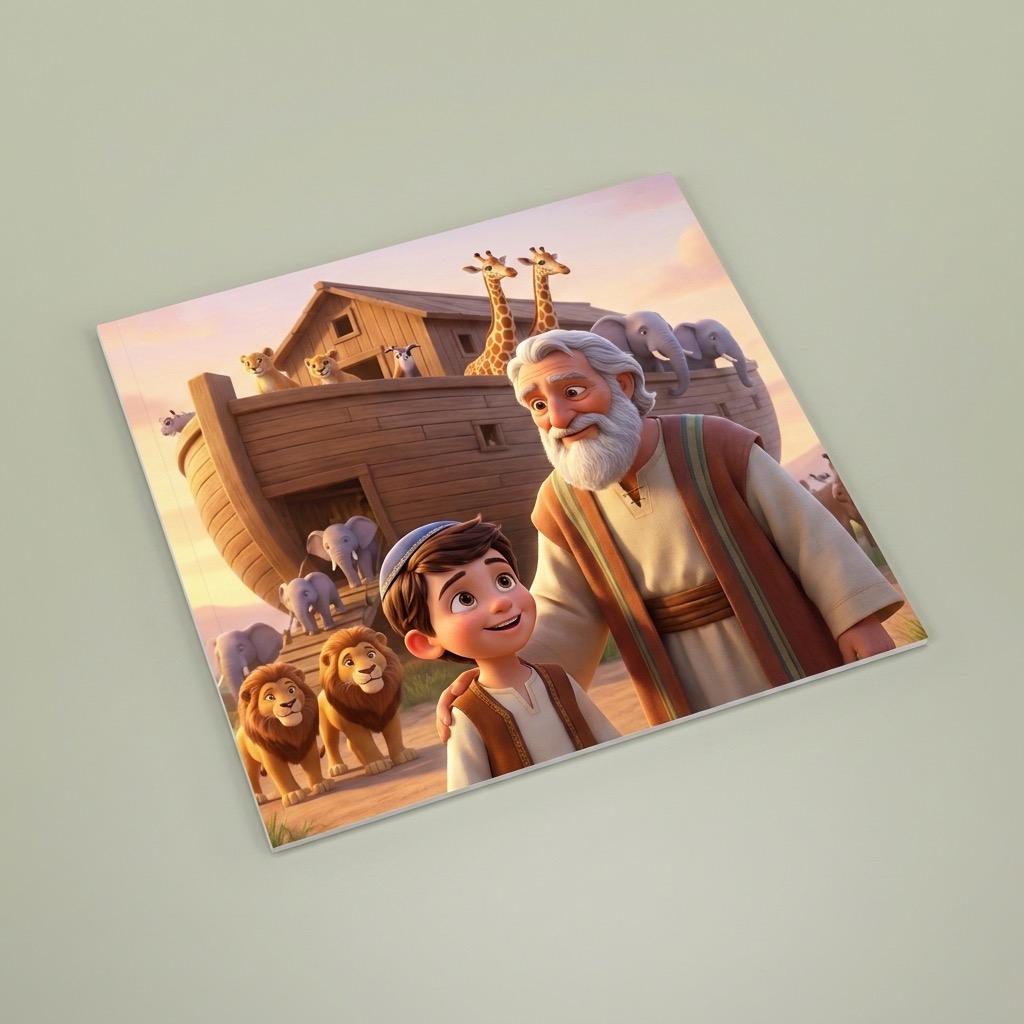
Softcover 8″×8″
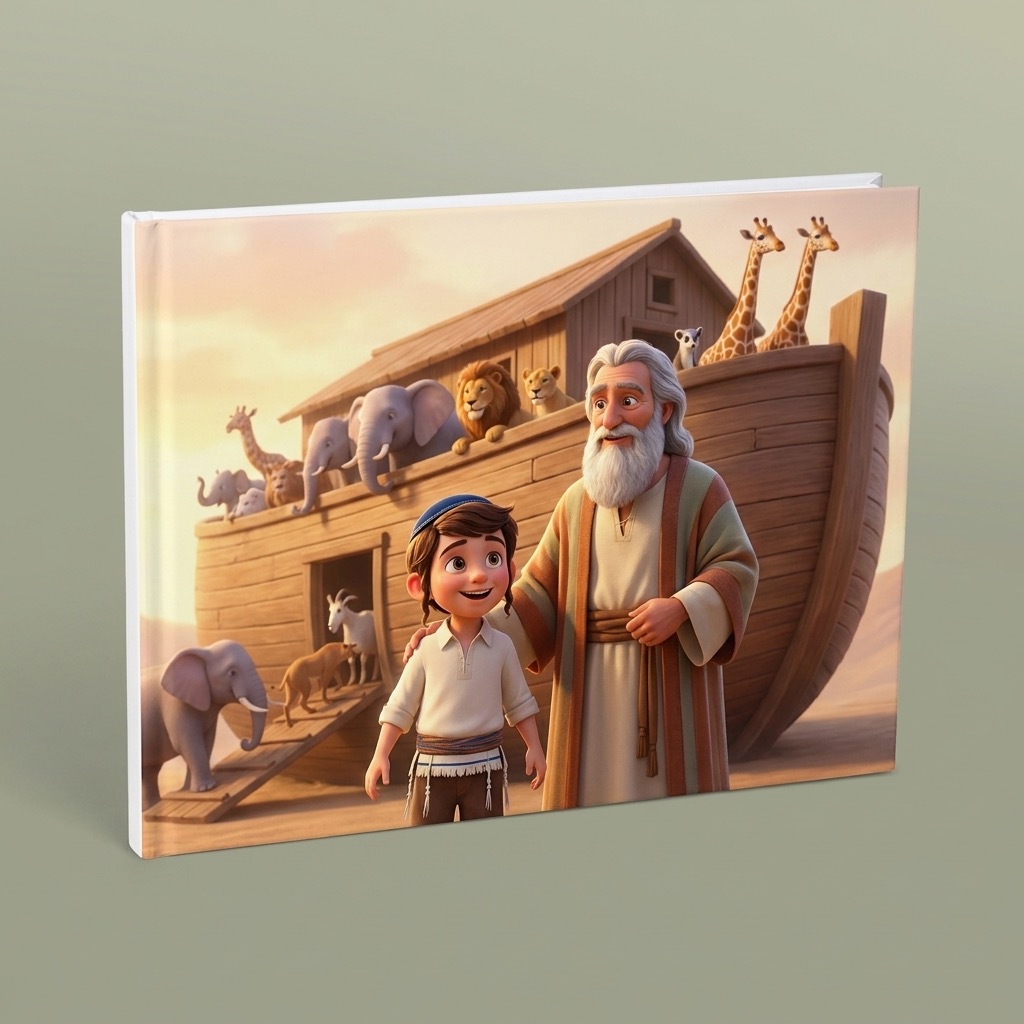
Hardcover 8″×8″
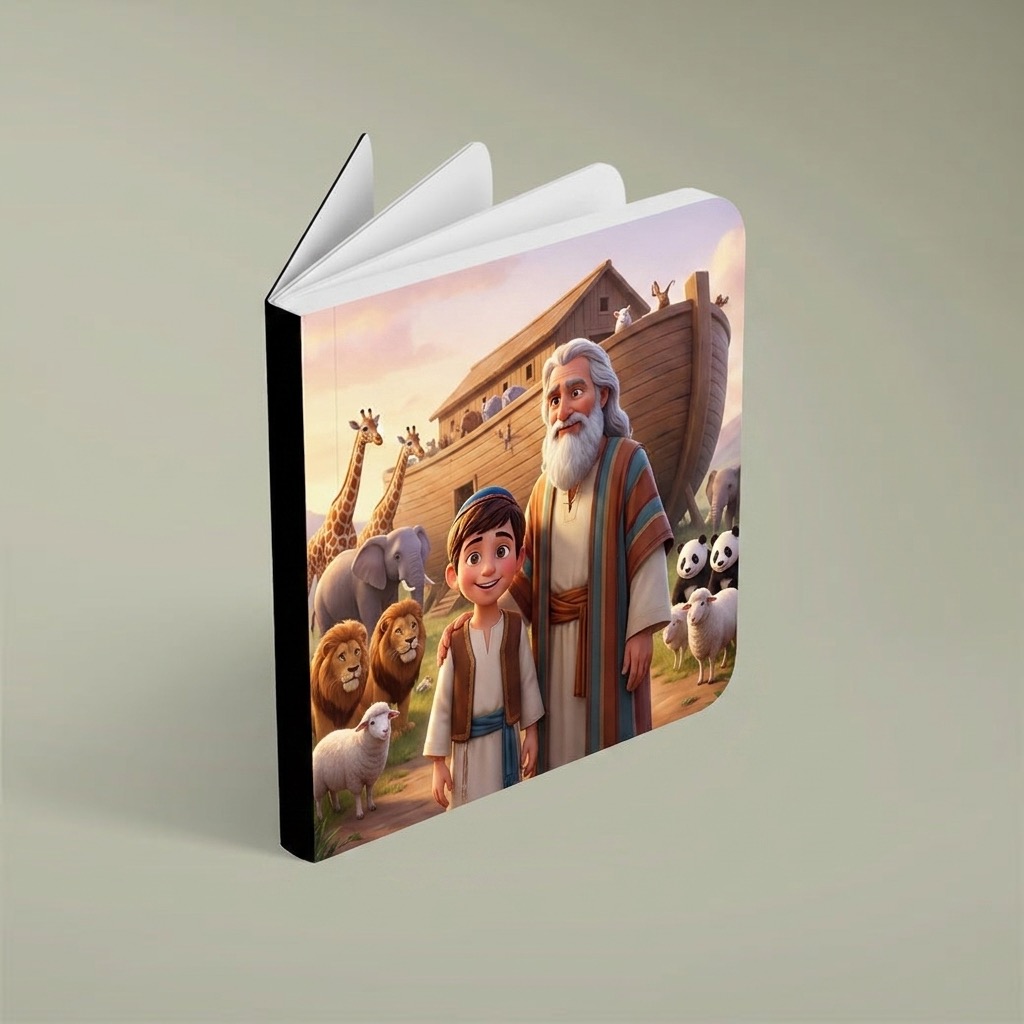
Board book 6″×6″
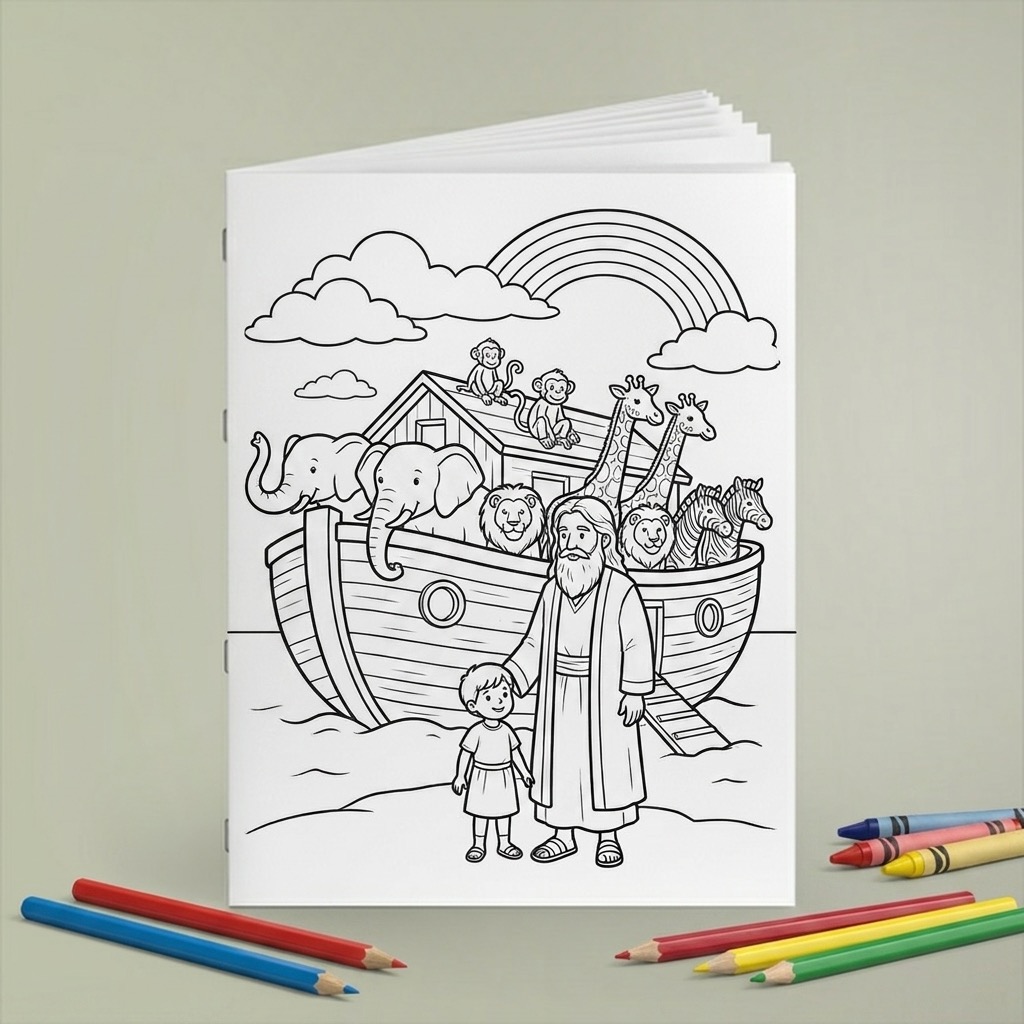
Coloring book 8.5″×11″
Match the format to the age: the 6x6 board book with rounded safety corners for ages 2 to 4, the 8x8 softcover photo book for ages 4 to 8, and the 8x8 hardcover in square or landscape for ages 5 to 12. There is also an optional matching 8.5x11 coloring book in black-and-white line art. Save the coloring book for a weekday afternoon or erev Shabbos, since coloring is melacha on Shabbos and Yom Tov. The storybook itself is exactly right for the Shabbos table.

The story picker browses seven collections - Torah, Nevi'im, Kesuvim, Holidays, Jewish Life, Mitzvos and Stories of Tzadikim - so Beshalach sits alongside the rest of Sefer Shemos and everything else you may want next. The book creator suggests next week's parsha with a live countdown to the order deadline for delivery before that Shabbos, and a double-parsha week produces one book covering both. If you are working out how to time a parsha book, this guide to choosing the weekly parsha walks through it.
Say it in one sentence
If you have thirty seconds at bedtime: "The Yidden were trapped at the sea, Hashem split the water and they walked right through, and then they sang. And every morning after that, Hashem sent them food from the sky - with extra on Friday, for Shabbos."
Creating a book takes about five minutes and eight short questions: name, boy or girl, age, one photo, siblings, story, language and printed format. Standard US shipping is $3.00 (5-8 business days), express is $6.00 (3 business days), and we ship worldwide with rates shown at checkout. You can order a single book or a Weekly, Monthly or Year Bundle subscription. Ready to put your child inside the splitting of the sea? Create the book.
Frequently asked questions
What is the story of Parshas Beshalach in simple words?
Pharaoh finally sent the Yidden out of Mitzrayim, then changed his mind and chased them with his army until they were trapped at the Yam Suf. Hashem split the sea, the Yidden walked through on dry land, and the water came back over the Egyptians behind them. The Yidden sang Shiras Hayam, and then travelled into the midbar, where Hashem gave them mann from the sky every morning, water from a rock, and where they fought Amalek.
What is the lesson of Parshas Beshalach for children?
The lesson is emunah and bitachon: Hashem takes care of us even when we cannot see how it will work out. At the sea the Yidden were trapped with water in front and an army behind, and Hashem made a way where there was no way. The mann taught the same idea slowly, one morning at a time, because nobody could store it up and everybody had to trust that tomorrow's portion would fall too.
How do I explain Krias Yam Suf to a 4-year-old?
Keep it to one picture and one feeling. Say: "The Yidden came to a big sea and they could not get across. Hashem made the water stand up on both sides like walls, and they walked through on dry ground, and then they sang a thank-you song to Hashem." A young child does not need the army, the fear or the water returning; the walls of water and the song are the whole story at that age.
Why is it called Shabbos Shira and what is the minhag with the birds?
The Shabbos when Beshalach is read is called Shabbos Shira because the parsha contains Shiras Hayam, the song the Yidden sang at the sea. Many families keep the minhag of putting out crumbs or seeds for the birds in connection with that Shabbos. Because putting out food is not a Shabbos activity for children to arrange on Shabbos itself, families generally prepare it erev Shabbos.
What was the mann and why does it matter to kids?
The mann was food that Hashem sent down from the sky every morning for the Yidden in the midbar for forty years. Each person gathered exactly what they needed for that day, and leftovers did not keep, so nobody could build up a supply. On Friday a double portion fell and on Shabbos none fell at all, which is how the Yidden first learned to prepare for Shabbos in advance.
Which Torah Tale format is best for a parsha book like Beshalach?
For ages 2 to 4 the 6x6 board book with rounded safety corners holds up to being carried around. Ages 4 to 8 usually get the 8x8 softcover photo book, and ages 5 to 12 the 8x8 hardcover in square or landscape. There is also an optional matching 8.5x11 coloring book in black-and-white line art, which is a weekday or erev Shabbos activity, since coloring is melacha on Shabbos and Yom Tov.