Parshas Vayechi for Kids: Yaakov's Brachos, Ephraim & Menashe
Vayechi closes Sefer Bereishis with a grandfather's hands on two boys' heads, twelve brothers who become twelve shevatim, and Yosef telling the brothers who threw him in a pit that he is not angry. Here is how to tell it to a 4-year-old and to a 10-year-old.
Published by Torah Tale.
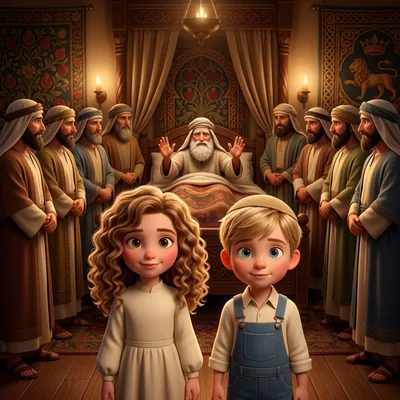
Create this book for your child
Parshas Vayechi is the last parsha of Sefer Bereishis, and it is the parsha of brachos. Yaakov Avinu, at the end of his life in Mitzrayim, gathers his sons and his two grandsons and gives each one words meant to last forever. Children connect to it immediately, because one of those brachos is the one they hear on their own head every Friday night.
What happens in Parshas Vayechi?
Yaakov Avinu lives seventeen years in Mitzrayim after the family is reunited. When he feels his time is coming close, he calls for Yosef and asks him to promise one thing: not to bury him in Mitzrayim, but to carry him up to Eretz Yisrael, to Me'aras HaMachpelah, where Avraham and Sarah, Yitzchak and Rivka, and Leah are buried. Yosef promises.
Then Yosef brings his two sons, Menashe and Ephraim, to their grandfather. Yaakov says something remarkable: these two boys, born and raised in Mitzrayim, are to him like Reuven and Shimon, full shevatim in their own right. He puts his hands on their heads, crossing his arms so that his right hand rests on Ephraim, the younger one. Yosef tries to move his father's hand, and Yaakov tells him that he knows what he is doing, that Menashe will also be great, but his younger brother will be greater.
And then Yaakov says the words we still use: with you Yisrael will bless, saying Yesimcha Elokim k'Ephraim v'chiMenashe.
After that Yaakov calls all twelve sons together and gives each one his own bracha, matched to who he is. Chazal tell us that Yaakov wanted to reveal to them when Mashiach would come, and it was hidden from him. Worried that one of his sons might not be worthy, he asked them, and they answered together: Shema Yisrael Hashem Elokeinu Hashem Echad. All twelve. Not one of them was left out, and that is the moment the family of Yaakov becomes Klal Yisrael.
Yaakov is niftar, and the whole of Mitzrayim mourns. A huge procession goes up to Eretz Yisrael, Yosef and his brothers and the elders of Pharaoh's court, and Yaakov is buried in Me'aras HaMachpelah exactly as he asked.
Why are the brothers afraid at the end?
Here is the part that stays with older children. On the way back to Mitzrayim, the brothers begin to worry. Maybe Yosef was only kind to them because their father was alive and watching. Maybe now he will finally pay them back for the pit and the sale.
They send him a message and then they come and fall before him and say they are ready to be his servants. Yosef cries when he hears it, that after all these years they still think this of him. He tells them he is not in the place of Hashem. They meant it for bad, and Hashem meant it for good, so that a whole family and a whole region would survive the famine. The pasuk says he comforted them and spoke to their heart.
That is the difference between saying "it's fine" and actually forgiving. Yosef does not only stop being angry, he works to make his brothers feel safe again. If your child has read Parshas Vayeishev and Parshas Vayigash with you, this is the closing of a circle they have been following for weeks.
Sefer Bereishis ends with Yosef living one hundred and ten years and making the Yidden swear that when Hashem takes them out of Mitzrayim, they will carry his bones up with them. Then the shul stands and says Chazak chazak v'nischazek.
What is the lesson of Parshas Vayechi for children?
Two things, and they fit together.
The first is that brachos are not generic. Yaakov did not give the same words to all twelve sons. He looked at each one and said something that fit only him. Children who feel measured against a sibling need to hear that a bracha can be tailored, and that being different from your brother is not the same as being less than him.
The second is that forgiveness has to reach the other person. The brothers were forgiven long before this, back in Vayigash. But they did not feel it, so Yosef said it again, plainly, and spoke to their heart. That is a usable middah for a seven-year-old: after you make up, check that the other one actually believes you.
How do I explain Vayechi at different ages?
| Age | What to tell them |
|---|---|
| Ages 2-4 | Yaakov Avinu was very old. He called his grandchildren close and put his hands on their heads and blessed them, just like Tatty blesses you on Friday night. Stop there. |
| Ages 5-7 | Add the crossed hands and Yosef trying to switch them, and add that Yosef told his brothers he was not angry. This age loves the hand detail because they can act it out. |
| Ages 8-10 | Add the twelve brachos, the shevatim answering Shema Yisrael together, and the promise to bury Yaakov in Me'aras HaMachpelah. Talk about why the brothers were still afraid. |
| Ages 11-12 | Add that Rashi notes this parsha is written closed, with no space before it, because the eyes and hearts of Yisrael were closing with the beginning of the galus in Mitzrayim. Add Yosef's line that they meant it for bad and Hashem meant it for good, and let them sit with what that means. |
Shabbos table questions for Parshas Vayechi
Pick two or three. These work from about age five up.
- Yaakov gave every son a different bracha. If you had to give your brother or sister one bracha, what would it be?
- Why do you think Yosef cried when his brothers asked him not to hurt them?
- The brothers were already forgiven, so why did they still feel scared? What could Yosef have done earlier?
- Ephraim and Menashe grew up in Mitzrayim, far away from Zaidy Yaakov. What do you think helped them stay part of the family?
- Yaakov asked to be buried with his parents and grandparents. Why was it so important to him not to stay in Mitzrayim?
- Is there someone you said sorry to, but you are not sure they believed you?
What a personalized Torah Tale book of Vayechi is like
In a Torah Tale book of Parshas Vayechi, your child is in the story. Their name is in the text and their face, illustrated in high-resolution 3D animated-film style from one photo you upload, appears on every page: standing near Yaakov's bed as the hands cross over Ephraim and Menashe, walking with the shevatim, hearing Yosef speak to his brothers. Up to eight siblings can appear in the same book, which is worth doing for a parsha whose whole subject is twelve brothers who stay one family.
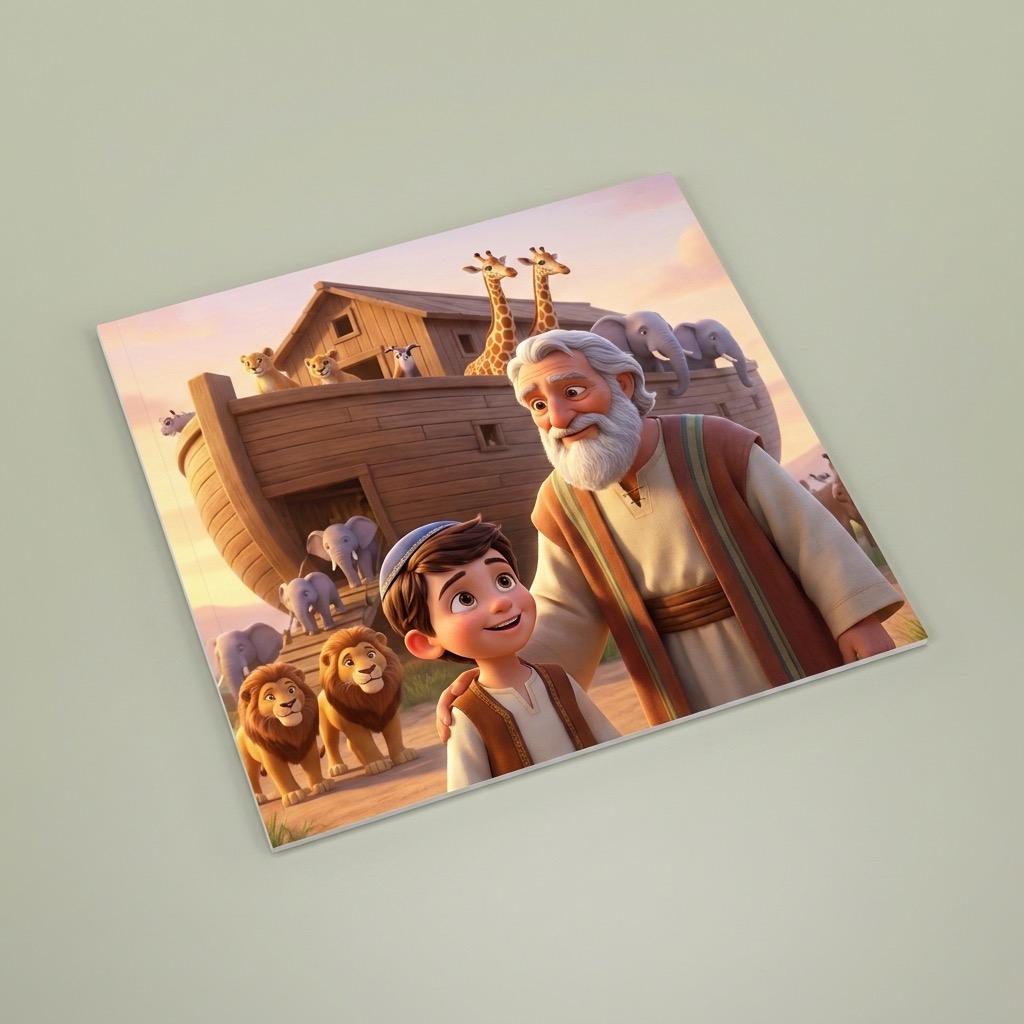
Softcover 8″×8″
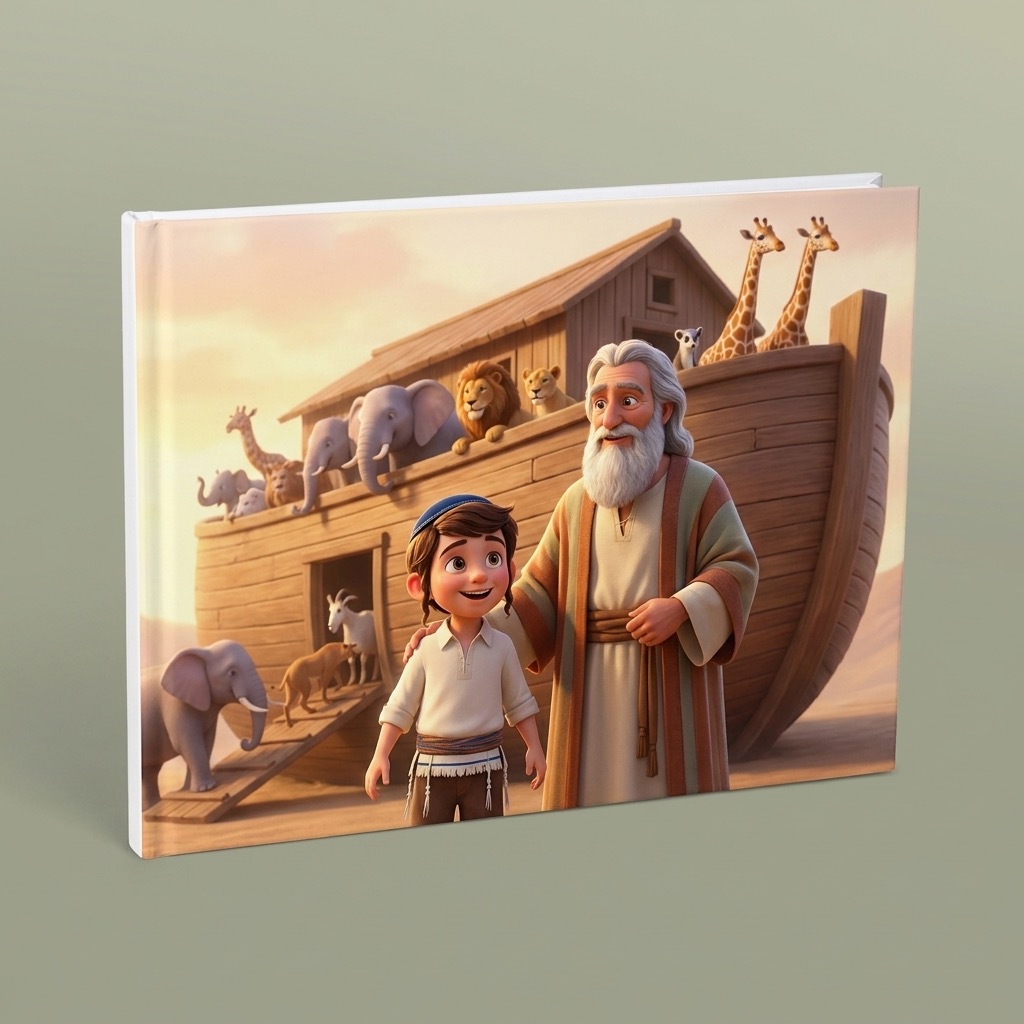
Hardcover 8″×8″
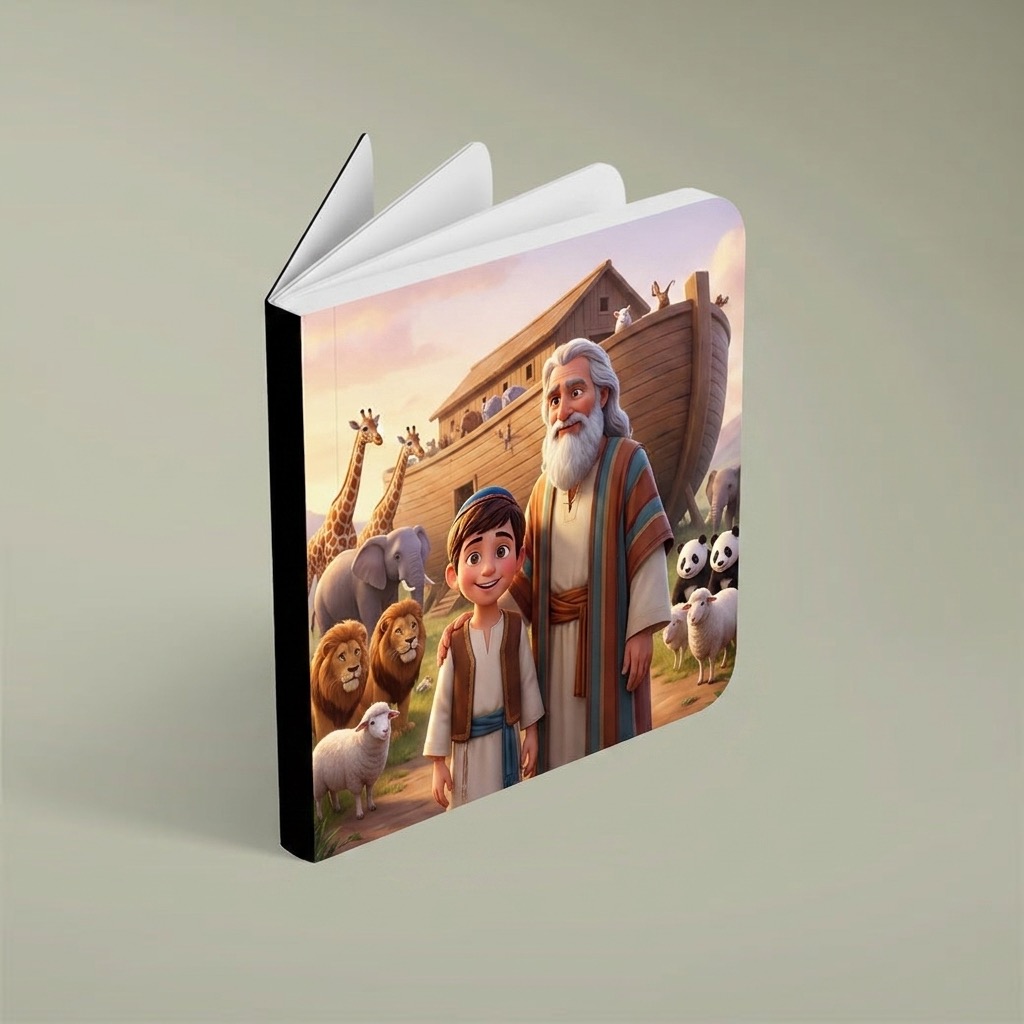
Board book 6″×6″
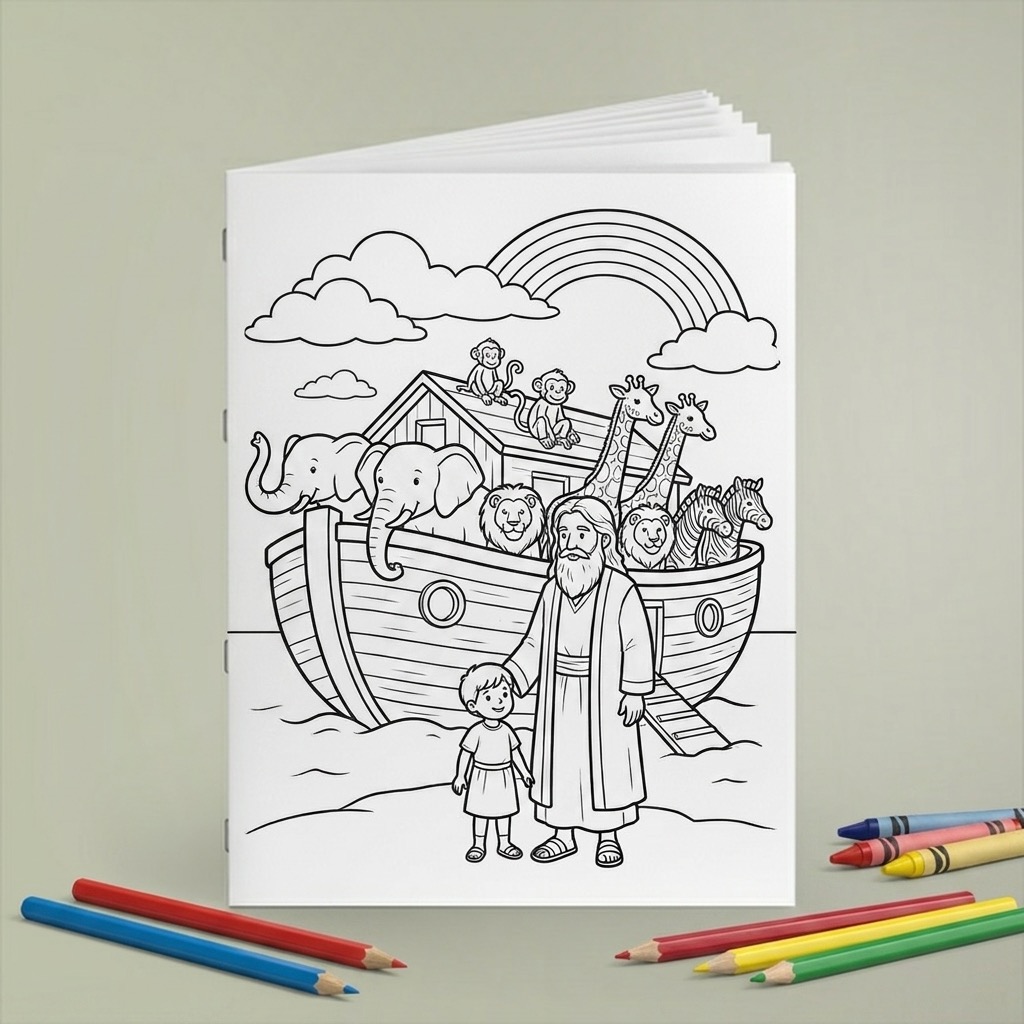
Coloring book 8.5″×11″
Choose the format by age: the 6"x6" board book with rounded safety corners for zero to four, the 8"x8" softcover for four to eight, the 8"x8" hardcover for five to eighteen. Books come in English, Hebrew or Yiddish, and you can order more than one language. Every book ends with a discussion page of 10 questions about the story, mixing comprehension with middos, which is what turns it from a book you read to your child into a conversation at the table.
A storybook is exactly the right thing for Shabbos afternoon. Reading it with a child after the seudah, when the parsha is fresh from cheder, is when the details actually stick.

A weekday activity: practice the bracha
Sometime midweek or on erev Shabbos, sit with your child and learn the words of the Friday night bracha by heart. Boys: Yesimcha Elokim k'Ephraim v'chiMenashe. Girls: Yesimech Elokim k'Sarah Rivka Rachel v'Leah. Then let them tell you which parsha those words come from. Most boys have never been told that the bracha on their own head is a pasuk from Vayechi.
If you order the matching coloring book, keep it for a weekday afternoon or erev Shabbos, since coloring is melacha and is not for Shabbos or Yom Tov. A page of Yaakov's crossed hands, colored on a Thursday, makes the Friday night bracha land differently.
Ordering it in time for the right Shabbos
The Torah Tale book creator always offers next week's parsha, with a live countdown to the order deadline for delivery before that Shabbos, so the book arrives while the parsha is still ahead of you rather than behind. If you want Vayechi specifically, or you are building a set through Sefer Bereishis, the story picker lets you choose any parsha directly from the Torah collection. Our guide on choosing the weekly parsha walks through both approaches, and a collection subscription keeps the books coming without you having to remember. US standard shipping is $4.99 (free on one-time orders over $60) and takes 5-8 business days.
Vayechi is the parsha where a family becomes a nation and where a brother finally makes his brothers feel safe. It is a good one to give a child with their own name in it. You can create the book in about five minutes, from a few short questions and one photo.
Frequently asked questions
What is Parshas Vayechi about?
Parshas Vayechi is the final parsha of Sefer Bereishis. Yaakov Avinu lives his last seventeen years in Mitzrayim, asks Yosef to swear to bury him in Eretz Yisrael, blesses Yosef's sons Ephraim and Menashe, and then gives each of the twelve shevatim his own bracha. After his petirah and burial in Me'aras HaMachpelah, Yosef reassures his brothers that he holds nothing against them, and the sefer closes with Yosef's request that the Yidden carry his bones up to Eretz Yisrael one day.
Why do we bless boys with Ephraim and Menashe on Friday night?
Because in Parshas Vayechi, Yaakov Avinu blesses Yosef's two sons and says that with them Yisrael will bless, saying may Hashem make you like Ephraim and like Menashe. Ephraim and Menashe grew up in Mitzrayim, far from their grandfather's home, and stayed fully part of the family of Yaakov. Girls are blessed with the names of Sarah, Rivka, Rachel and Leah.
How do I explain Parshas Vayechi to a 4-year-old?
Keep it to the hands and the brachos. Say that Yaakov Avinu was very old, and he called his children and grandchildren close so he could bless them, just like Tatty and Mommy bless you on Friday night. Then say that Yosef told his brothers he was not angry at them anymore. A four-year-old does not need the details of the petirah or the funeral procession.
What is the lesson of Parshas Vayechi?
That forgiveness has to be real, not just polite. The brothers were afraid that Yosef had only been kind while their father was alive and would now take revenge. Yosef told them that they had intended harm but Hashem had intended it for good, and the Torah says he comforted them and spoke to their heart. Children learn that saying I forgive you means also making the other person feel safe again.
Why does Sefer Bereishis end with Chazak chazak v'nischazek?
It is the minhag to say Chazak chazak v'nischazek when a sefer of the Chumash is completed, and Vayechi is the last parsha of Sefer Bereishis. For children it is a real moment. They have followed Adam, Noach, Avraham Avinu, Yitzchak, Yaakov and Yosef week by week, and now the whole shul stands and says be strong together.
Can a Torah Tale book cover Parshas Vayechi?
Yes. Vayechi is available in the Torah collection of the story picker, and your child appears in it by name and likeness, illustrated in 3D animated-film style from one uploaded photo. Up to eight siblings can appear in the same book, it can be ordered in English, Hebrew or Yiddish, and it comes as a board book, softcover or hardcover depending on your child's age.