Parshas Vayeishev for Kids: Yosef's Dreams, the Coat & the Pit
Parshas Vayeishev is the parsha where a family falls apart and Hashem is quietly holding it together. Here is how to tell it to a 4-year-old and to a 9-year-old, what to say about the brothers, and the questions that turn it into a real Shabbos-table conversation.
Published by Torah Tale.
Create this book for your child
Parshas Vayeishev is the parsha where Yaakov's family breaks apart. Yosef, seventeen years old, is given a striped coat by his father and tells his brothers two dreams in which they bow to him. Their jealousy ends with Yosef in a pit and then in a caravan heading down to Mitzrayim, while his father is shown a bloodied coat and believes his son is gone. Children feel this story immediately because it is about brothers, fairness, favorite children and being far from home, and because the one line the Torah keeps repeating is the line they need most: and Hashem was with Yosef.
What happens in Parshas Vayeishev?
Yaakov Avinu has settled in Eretz Canaan. Yosef is seventeen, shepherding with his brothers, and he brings reports about them back to his father. Yaakov loves him as the son of his older years and makes him a kesones pasim, a striped and colorful garment. The brothers see the coat, and they see what it means.
Then Yosef has a dream. Eleven sheaves of wheat bow down to his sheaf. He tells it to his brothers. He has a second dream, of the sun and the moon and eleven stars bowing to him, and he tells that one too. His father keeps the matter in mind. His brothers do not.
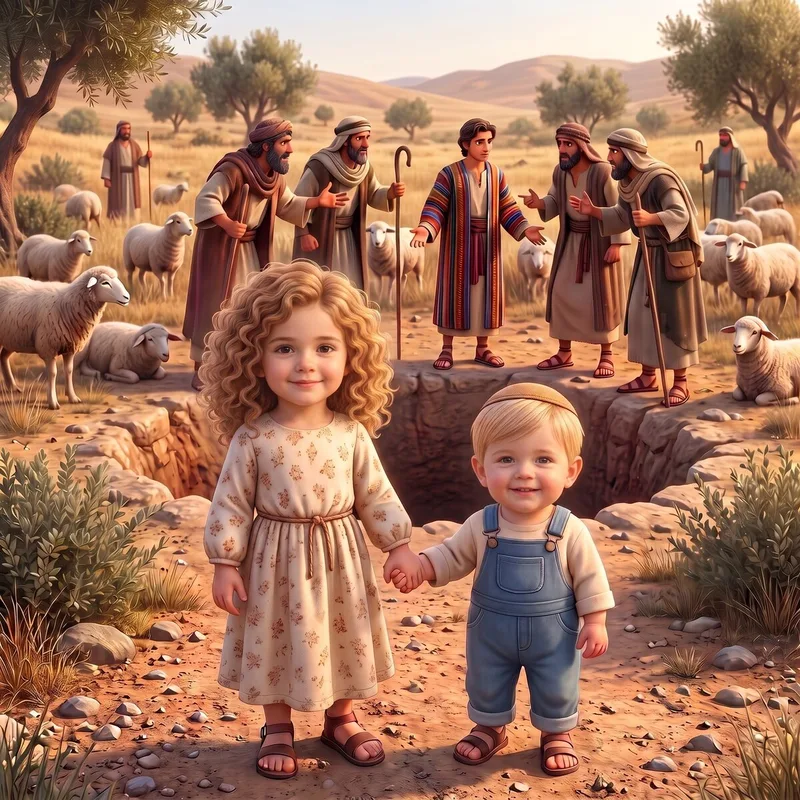
Yaakov sends Yosef to Shechem to check on his brothers. He cannot find them, and a man in the field tells him they have moved on to Dosan. Rashi brings that this was a malach, sent so that the story would go where it needed to go. When Yosef reaches his brothers, they take his coat and put him into an empty pit.
Reuven says not to harm him, planning to come back and bring him home. Yehuda says to sell him rather than leave him there. A caravan of merchants passes on its way to Mitzrayim, and Yosef is sold. The brothers dip the coat in goat's blood and send it to their father, and Yaakov, seeing it, mourns for his son and refuses to be comforted.
In Mitzrayim Yosef is bought by Potiphar, one of Pharaoh's officers. The Torah says plainly that Hashem was with Yosef, and everything he touched succeeded, until Potiphar put his whole household in Yosef's hands. There Yosef is tested. He is asked to do something a Yid may not do, and he refuses and runs out, and he is thrown into prison for it. This is where the name Yosef HaTzaddik comes from. Chazal relate that at that moment Yosef saw the image of his father's face, and that is what gave him the strength to walk away.
In prison, again, Hashem was with Yosef. Two of Pharaoh's officers, the cupbearer and the baker, each have a dream on the same night, and Yosef explains them. The cupbearer will be restored, the baker will not. Yosef asks the cupbearer to remember him to Pharaoh. The parsha ends with one of the saddest verses in Bereishis: the cupbearer did not remember Yosef, and forgot him. The rescue waits for Parshas Mikeitz.
What is the middah of Parshas Vayeishev?
The parsha runs on two middos at once, and both are worth naming out loud at your table.
The first is what jealousy does. Nobody in this story wakes up planning to sell a brother. It starts with a coat that made love visible, and words that were repeated, and dreams told to the wrong audience at the wrong moment. Chazal learn from the kesones pasim that a parent should not single out one child in a way the other children can see. From Yosef's side, children can learn something honest and useful: even something true does not always have to be said, and not to everyone.
The second is Yosef himself. He is taken from his father's tent, sold, and dropped into the most immoral place in the world, alone, with no community and no one watching. He stays who he is. He remembers whose grandson he is, he refuses when refusing costs him everything, and he keeps working honestly in a prison cell. That is the picture of a Yid holding on to himself when nothing around him is helping.
And behind both, the pasuk we keep hearing: Hashem was with Yosef. Not that nothing bad happened, but that Hashem never lost track of him for a single day of it. For a child who has had a hard week, that is the takeaway.
How do I explain Vayeishev to a 4-year-old and to a 9-year-old?
Same parsha, different amount of it.
Ages 2 to 4
Keep it to the coat, the dreams and Hashem. "Yaakov gave Yosef a beautiful striped coat. Yosef had dreams that he would be a very important person. His brothers were upset, and Yosef ended up far away in Mitzrayim, but Hashem was with him the whole time." No pit, no blood, no prison. If they ask how he got there, "his brothers sent him away, and that was wrong of them" is enough.
Ages 5 to 8
Now the pit and the sale belong in the story, told calmly and without lingering. Include Reuven trying to save him and the coat brought back to Yaakov, because children this age care intensely about fairness and about a father's grief. Say clearly that the brothers did something very wrong, and that later in Chumash they change and do teshuvah, so the story does not end with the label.
Ages 8 to 12
This age can carry the whole shape of it. Talk about Yosef's test in Potiphar's house in general terms: he was pushed to do an aveirah, he refused, he ran, and he paid for it with years in prison, and that is why he is called Yosef HaTzaddik. Talk about how a story that looks like disaster is actually how the family ends up saved from famine in Mikeitz and Vayigash. A ten-year-old who has learned Parshas Vayishlach and Parshas Vayeitzei can start seeing the whole arc of Yaakov's life.
One note on the middle of the parsha
Vayeishev also contains the account of Yehuda and Tamar, ancestors of Dovid HaMelech. It is not a children's story, and in cheder and Bais Yaakov it is left for later years. If an older child asks, tell them it is a serious perek about Yehuda that they will learn when they are older, and move on.
What is a personalized Parshas Vayeishev book like?
Torah Tale prints Parshas Vayeishev with your own child inside the story. You upload one photo, and their likeness and their name appear on every page, illustrated in high-resolution 3D animated-film style: standing in the field near the sheaves, watching the caravan go down to Mitzrayim, sitting with Yosef in the prison cell when the two officers describe their dreams. Up to eight siblings can appear in the same book, which suits this parsha particularly well, since it is a story about brothers.
Every book is written with careful rabbinical guidance and strict tznius, and reviewed by our team before it goes to print. For Vayeishev that matters: the hard parts are told truthfully, without graphic detail, and the test in Potiphar's house is handled at the level a child should hear it.
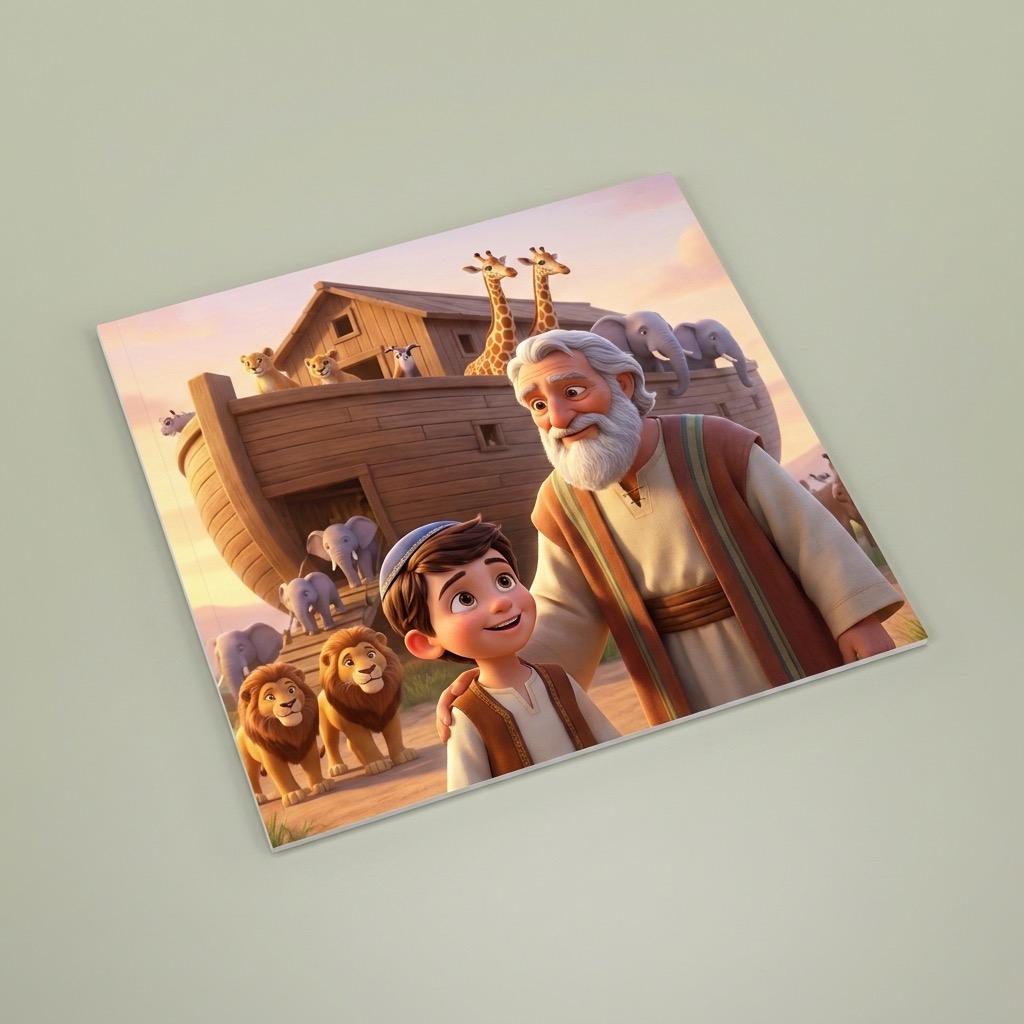
Softcover 8″×8″
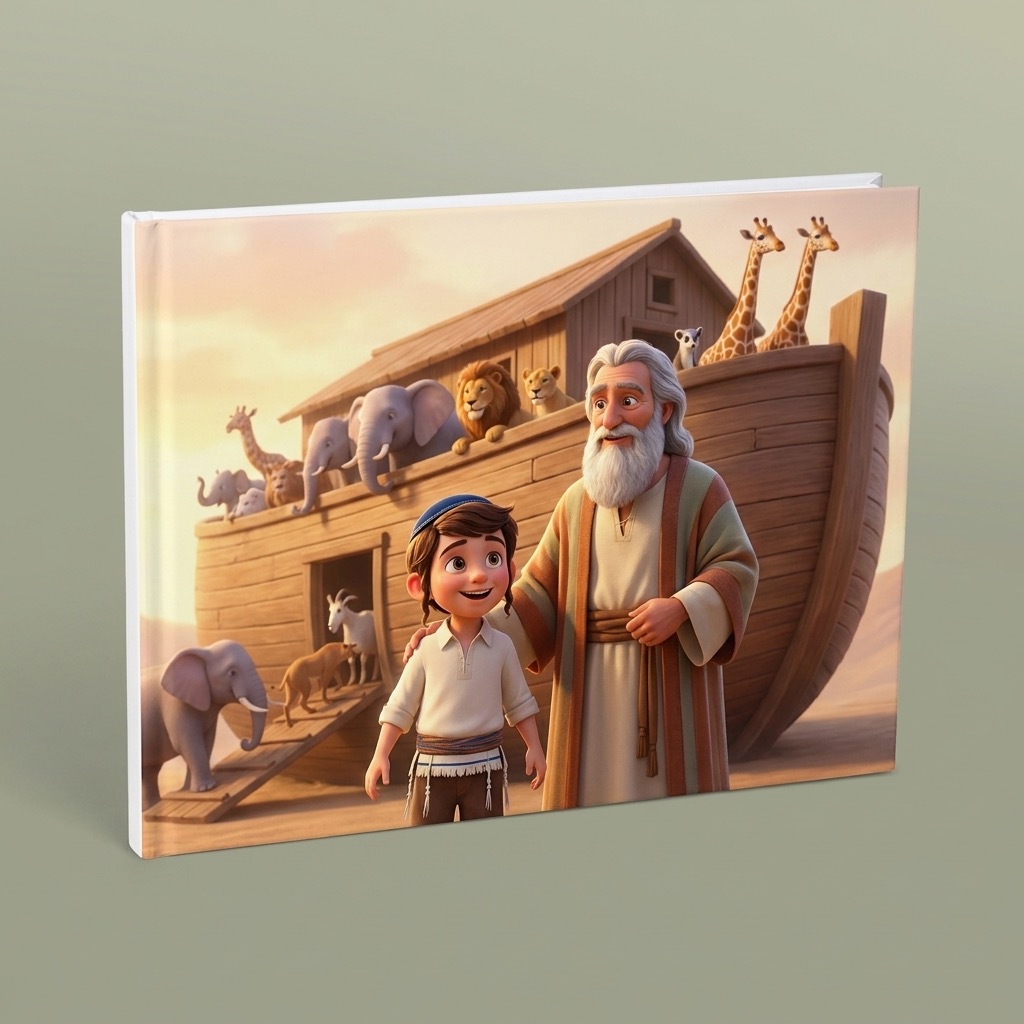
Hardcover 8″×8″
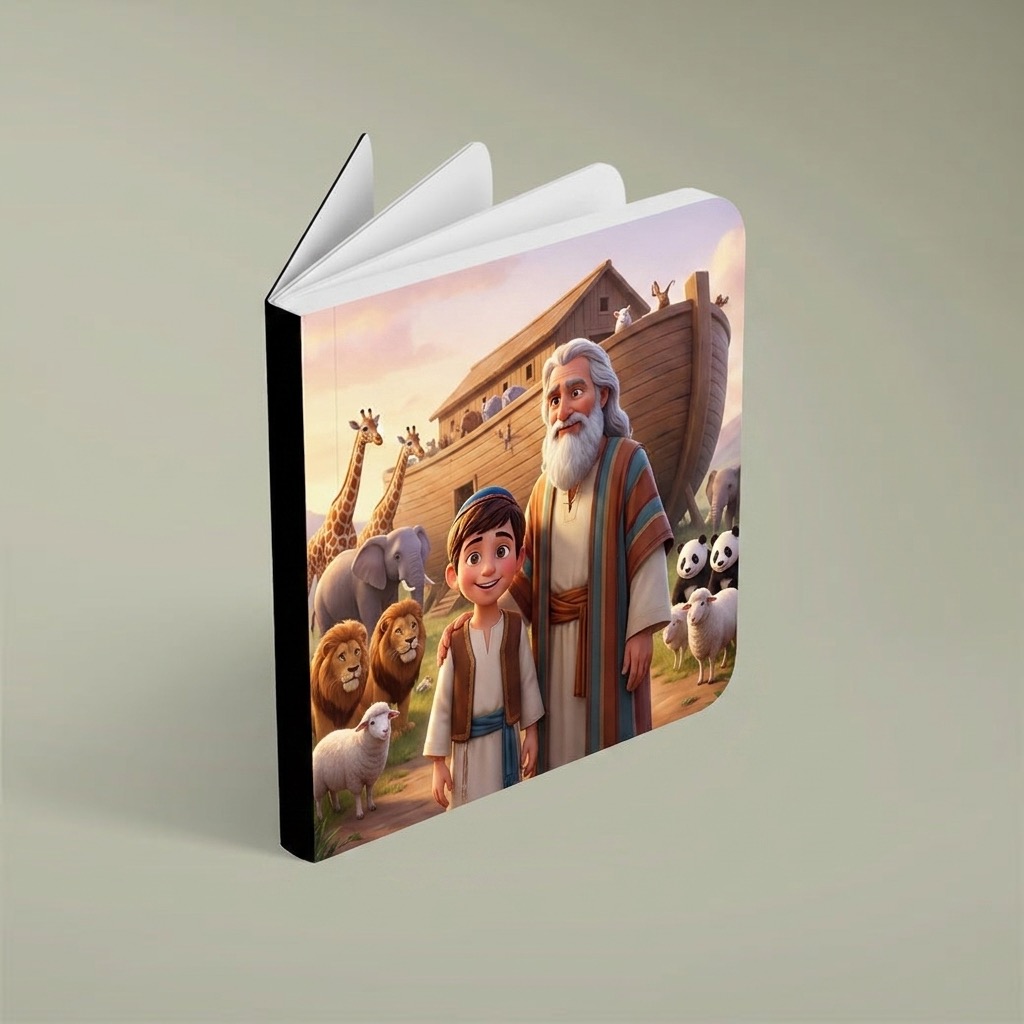
Board book 6″×6″
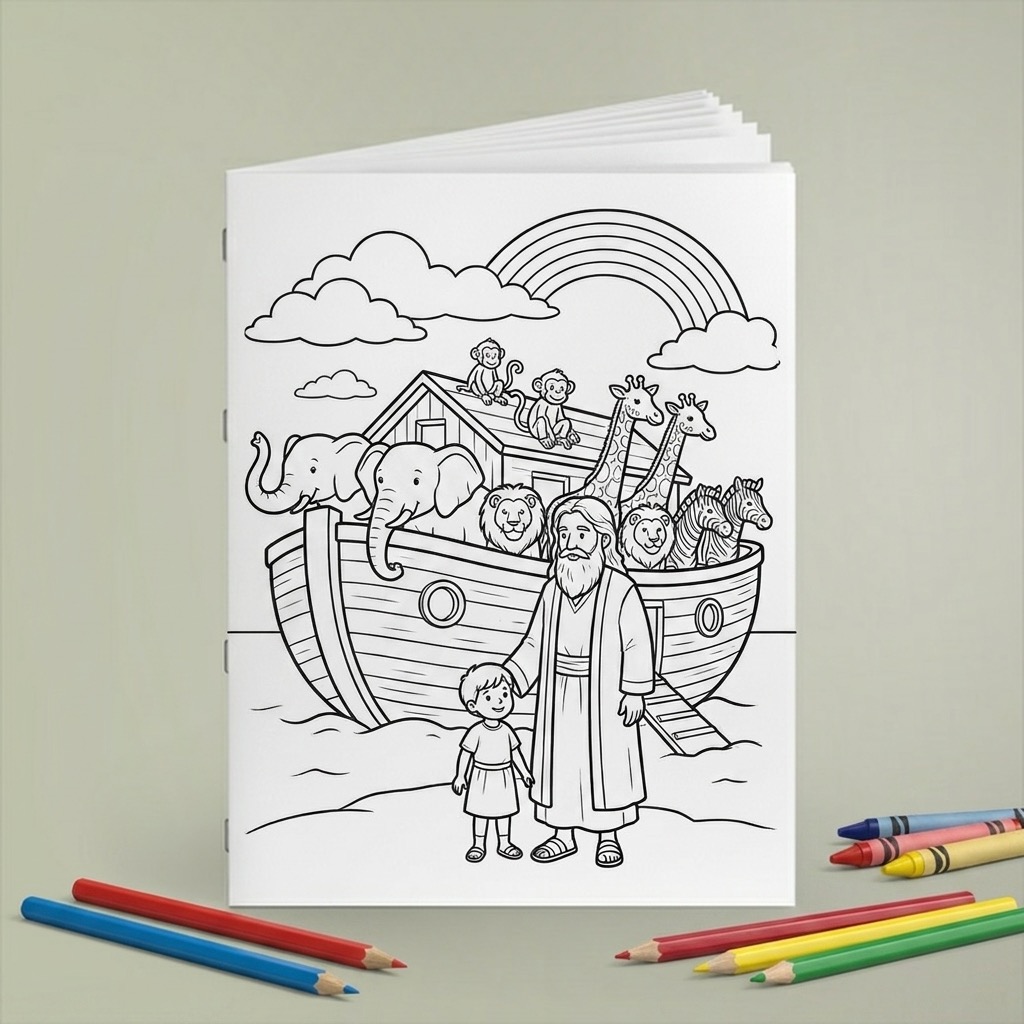
Coloring book 8.5″×11″
Three formats, plus an optional coloring book. The 6x6 board book with rounded safety corners for ages 0 to 4, the 8x8 softcover photo book for ages 4 to 8, and the 8x8 hardcover for ages 5 to 18, which is the one that survives being read every Shabbos for a year. There is also an optional matching 8.5x11 coloring book in black-and-white line art, for a weekday afternoon or erev Shabbos, never on Shabbos itself. Books come in English, Hebrew or Yiddish, and you can order more than one language.
Every book ends with a dedicated discussion page of 10 questions, mixing what happened in the story with what it asks of the child. That page is what turns the book from something read to a child into something the table talks about.
Shabbos-table questions for Parshas Vayeishev
Ask two or three, not ten. These work from about age five upward.
- Yosef had a dream that made his brothers upset. Was he wrong to tell it to them? Is there something true that you decided not to say this week?
- Why do you think Yaakov gave a special coat only to Yosef? What could he have done differently?
- Reuven wanted to save Yosef but did not tell his brothers straight out. What could he have said?
- The Torah says Hashem was with Yosef when he was a slave and when he was in prison. What does that mean, if hard things still happened to him?
- The cupbearer forgot Yosef. Has anyone ever forgotten to thank you? Who should you thank tonight?
- Yosef was in a place where nobody was watching him and he still did the right thing. When is it hardest for you to do the right thing?
A weekday activity that makes the parsha stick
Do this Thursday or erev Shabbos, not on Shabbos. Give each child a plain paper strip and have them color it as the kesones pasim, one stripe for each thing they are grateful their family gave them. Then hold the strips up together and talk about why a coat given to only one child caused so much trouble. Older children can instead draw the two dreams, the sheaves and the stars, and label which brother each one is.
If you want a second track, the matching coloring book pages work for the same slot in the week: the days before Shabbos, a weekday afternoon, or Chol HaMoed.
Where Vayeishev sits in the year
Vayeishev is the ninth parsha of the Torah, read in Kislev in the weeks around Chanukah, right after Parshas Vayishlach. It opens the Yosef story that runs for four parshios straight, which is why families who start ordering here often keep going with a collection subscription and let the story arrive week by week.

The book creator suggests next week's parsha, with a live countdown to the order deadline for delivery before that Shabbos, and a double-parsha week produces one book covering both. If you are deciding how to work with the weekly cycle, this guide to choosing the parsha lays out the options.
A few short questions, one photo, about five minutes: name, boy or girl, age, photo, siblings, story, language and format. Standard shipping is $4.99 (free on one-time orders over $60), and we ship worldwide. Create the Parshas Vayeishev book with your child in the field, in the caravan and beside Yosef in Mitzrayim, and let them hear "and Hashem was with Yosef" with their own face on the page.
Frequently asked questions
What is the story of Parshas Vayeishev in simple words?
Yaakov gave his son Yosef a special striped coat, and Yosef told his brothers two dreams in which they bowed down to him. The brothers became jealous, and when Yosef came to them in the field they threw him into a pit and then sold him to merchants traveling to Mitzrayim. They dipped his coat in goat's blood and let Yaakov believe his son was gone. In Mitzrayim Yosef worked in Potiphar's house, was put in prison after refusing to do something wrong, and there he explained the dreams of two of Pharaoh's officers.
How do I explain the brothers selling Yosef to a young child?
For a child under six, say that the brothers were very upset and jealous, that they did something very wrong to Yosef, and that Yosef ended up far away in Mitzrayim where Hashem watched over him. You do not need the pit, the blood on the coat, or the details of the plan. Older children can hear that Reuven stopped the brothers from doing worse and that Yehuda was the one who said to sell him, and that both of them later did teshuvah in the parshios that follow.
What is the lesson of Parshas Vayeishev for children?
Two lessons carry the whole parsha. The first is that jealousy and careless words between brothers can grow into something no one intended, which is why we work on ayin tovah and shemiras halashon at home. The second is that Hashem is with a person even when everything has gone wrong, because the Torah says "and Hashem was with Yosef" while he was a slave and again while he was in prison.
Why did Yaakov give Yosef the special coat?
The Torah says Yaakov loved Yosef more than his other sons because he was the son of his older years, and he made him a kesones pasim, a striped, colorful garment. The coat made the love visible, and Chazal teach from here that a parent should not single one child out in a way the others can see. The same coat is what the brothers later used to convince Yaakov that Yosef was gone.
Which Torah Tale format is best for Parshas Vayeishev?
For ages 0 to 4 choose the 6x6 board book with rounded safety corners, which keeps the story short and gentle. For ages 4 to 8 the 8x8 softcover photo book works well, and for ages 5 to 18 the 8x8 hardcover holds up to being read every Shabbos. An optional matching 8.5x11 coloring book in black-and-white line art can be added for weekday afternoons or erev Shabbos.
When is Parshas Vayeishev read?
Parshas Vayeishev is the ninth parsha of the Torah and the ninth in Sefer Bereishis. It is read in Kislev, in the weeks around Chanukah. In the Torah Tale book creator you order next week's parsha, with a live countdown to the deadline for delivery before that Shabbos.