Parshas Vayishlach for Kids: Yaakov Meets Eisav, the Malach & a New Name
Yaakov Avinu comes home after twenty years and has to face Eisav. He sends a gift, he davens, he prepares to protect his family, and on the night before he is left alone and struggles with a malach until dawn. Here is how to tell Parshas Vayishlach to a 4-year-old and to a 9-year-old, plus questions for the Shabbos table.
Published by Torah Tale.
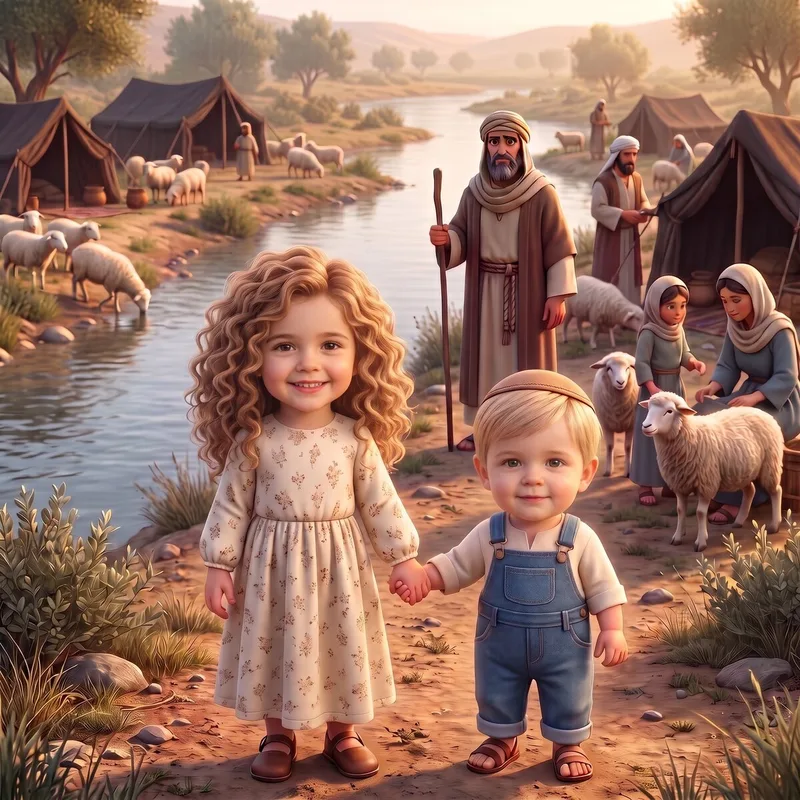
Create this book for your child
Parshas Vayishlach is the parsha where Yaakov Avinu comes home. After twenty years living by Lavan, he has to walk back into Eretz Yisrael and face his brother Eisav, who is coming toward him with four hundred men. Yaakov prepares in three ways: he sends a gift, he davens, and he gets his family ready to be protected. On the night before the meeting he is left alone and struggles with a malach until dawn, and he walks away limping, with a new name: Yisrael. Children connect to this parsha because it is honest about being afraid, and because it shows exactly what a person does about it.
What happens in Parshas Vayishlach?
Yaakov has just left Lavan (that was the end of Parshas Vayeitzei), and now he sends malachim ahead as messengers to Eisav. They come back with a short, worrying report: Eisav is on his way, and he has four hundred men with him.
Yaakov does three things, and Rashi points them out as three separate preparations: doron, a gift, tefillah, davening to Hashem, and milchamah, being ready to fight if he has to. He sends ahead herds of animals in wave after wave as a present. He davens the famous words Katonti mikol hachasadim, "I am too small for all the kindness You have done for me." And he splits the camp in two, so that if one is attacked the other can escape.
That night Yaakov brings his family across the Yabok river, and then he is left alone on the other side. Chazal tell us he had gone back for small jars that were forgotten, because tzaddikim do not waste what Hashem gives them. Alone in the dark, a man struggles with him until dawn. Chazal teach that this was the malach of Eisav, the spiritual force behind him. The malach cannot beat Yaakov, so he strikes Yaakov's thigh, at the gid hanasheh. As morning comes the malach must go, and he admits that Yaakov has prevailed and gives him the name Yisrael. The Torah tells us that this is why Bnei Yisrael do not eat the gid hanasheh, a mitzvah our kitchens still keep today.
In the morning, Yaakov goes ahead of his family and bows seven times as he comes near Eisav. Eisav runs to meet him and embraces him, and the meeting passes peacefully. Eisav offers to travel together; Yaakov politely takes his own road. The brothers part.
The parsha continues with more that is not easy. Dina is taken from the family, and her brothers Shimon and Levi rescue her. Hashem tells Yaakov to go up to Beis El, where he builds a mizbeiach and where the name Yisrael is confirmed to him. On the road to Beis Lechem, Binyamin is born and Rachel Imeinu passes away, and Yaakov buries her there rather than in Me'aras HaMachpelah. Rashi brings that this was so that when her children would one day pass by on their way to galus, she would daven for them. Kever Rachel is that place, and many children have heard their mother mention davening there. The parsha ends with the petirah of Yitzchak Avinu and the list of Eisav's descendants.
What is the middah of Parshas Vayishlach?
If you want one middah to carry through the week, take hakaras hatov together with humility, straight from Katonti. Yaakov is about to face real danger and his opening words to Hashem are not a demand. They are a recognition that he has already received far more than he deserves.
The second middah is right beside it: doing your hishtadlus. Yaakov davened, and he also sent a gift and prepared his camp. Children sometimes hear these as opposites. Vayishlach shows them as one plan.
A third, quieter one is in those small jars. Yaakov Avinu, a wealthy man with flocks and camels, crossed a river at night for a few small containers. Chazal use it to teach that a tzaddik treats every possession as something Hashem gave him on purpose. That is a thought worth having in a house with lost sweaters and abandoned water bottles.
How do I explain Vayishlach at different ages?
The same story, told three ways:
- Age 3 to 4: "Yaakov was going home. He was worried about his brother Eisav, so he sent him presents and he asked Hashem to help. At night a malach came and Yaakov was strong and did not give up, and the malach gave him a new name: Yisrael. That is our name too, Bnei Yisrael." Stop there. Skip Dina and keep Rachel Imeinu for later.
- Age 5 to 7: Add the three preparations by name and let them count them on their fingers: a present, a tefillah, getting ready. Add the small jars, which children love, and the gid hanasheh, which makes the story real at their own supper table. You can say gently that Rachel Imeinu passed away on the road and is buried there so she can daven for her children.
- Age 8 to 12: Now bring the Katonti tefillah and ask why a person who is scared starts by saying thank you. Discuss why Yaakov bowed seven times, why Chazal identify the malach as the koach of Eisav, and why Yaakov's limp is mentioned in the Torah at all. Older children can also handle the fact that a peaceful meeting is not the same as a friendship, and that Yaakov chose a different road.
If your child learned Parshas Toldos earlier in the year, remind them how the brothers parted. Vayishlach is the closing of that circle, twenty years later.
What is a personalized Torah Tale book of Parshas Vayishlach like?
Torah Tale prints the parsha as a storybook in which your child is inside the story. From one uploaded photo, their face and their name appear on every page, illustrated in high-resolution 3D animated-film style: standing with Yaakov as the herds of goats and camels are sent ahead, at the river's edge as the jars are gathered, watching the sky lighten at dawn.
Up to eight siblings can appear in the same book, which works nicely for a parsha with a large family in it. The text is written with careful rabbinical guidance and strict tznius, and reviewed by our team before printing, so the harder parts of Vayishlach are handled the way you would handle them at your own table.

Every book ends with a dedicated discussion page of 10 questions about the story, mixing comprehension with middos: what happened, and what it asks of the child. That is the page that turns a book read at bedtime into a conversation on Shabbos afternoon.
Which format should I order for my child?
Three printed formats, matched to age, plus an optional coloring book:
- Board book, 6"x6", rounded safety corners, for ages 0 to 4.
- Softcover photo book, 8"x8", for ages 4 to 8.
- Hardcover photo book, 8"x8" for ages 5 to 18.
- Matching coloring book, 8.5"x11", black-and-white line art, optional. Coloring is melacha, so this is an erev Shabbos, weekday afternoon or Chol HaMoed activity, never for Shabbos or Yom Tov.
The storybook itself is exactly right for Shabbos. A hardcover Vayishlach book on the table between the fish and the soup gives you something to talk about that is not the weather.
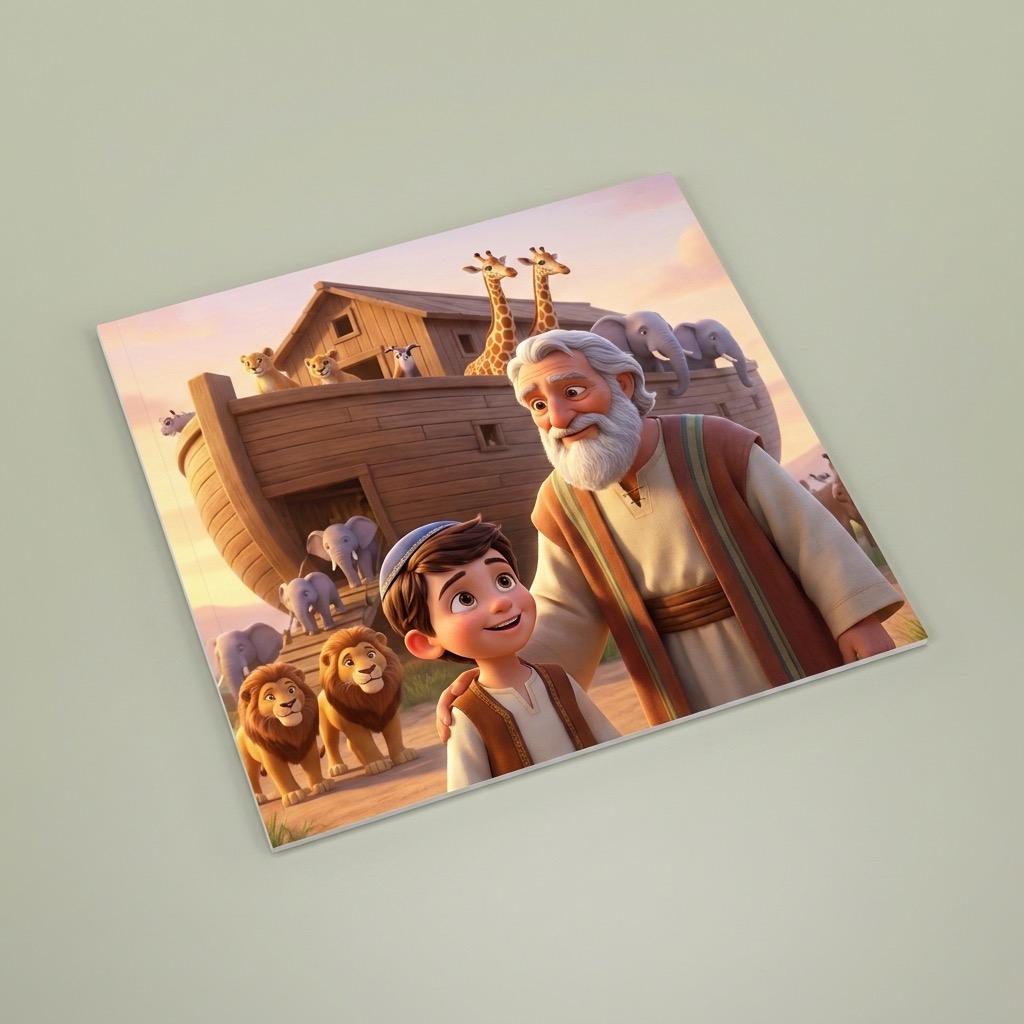
Softcover 8″×8″
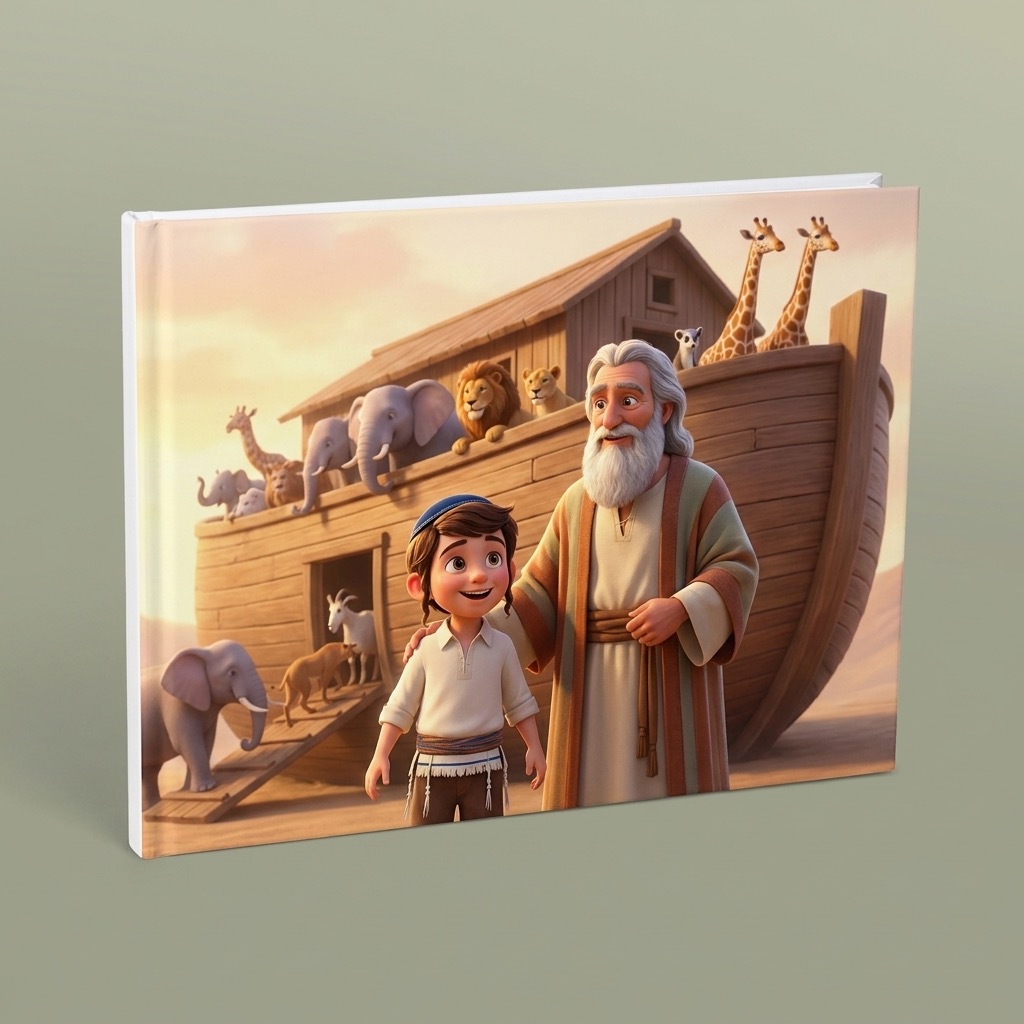
Hardcover 8″×8″
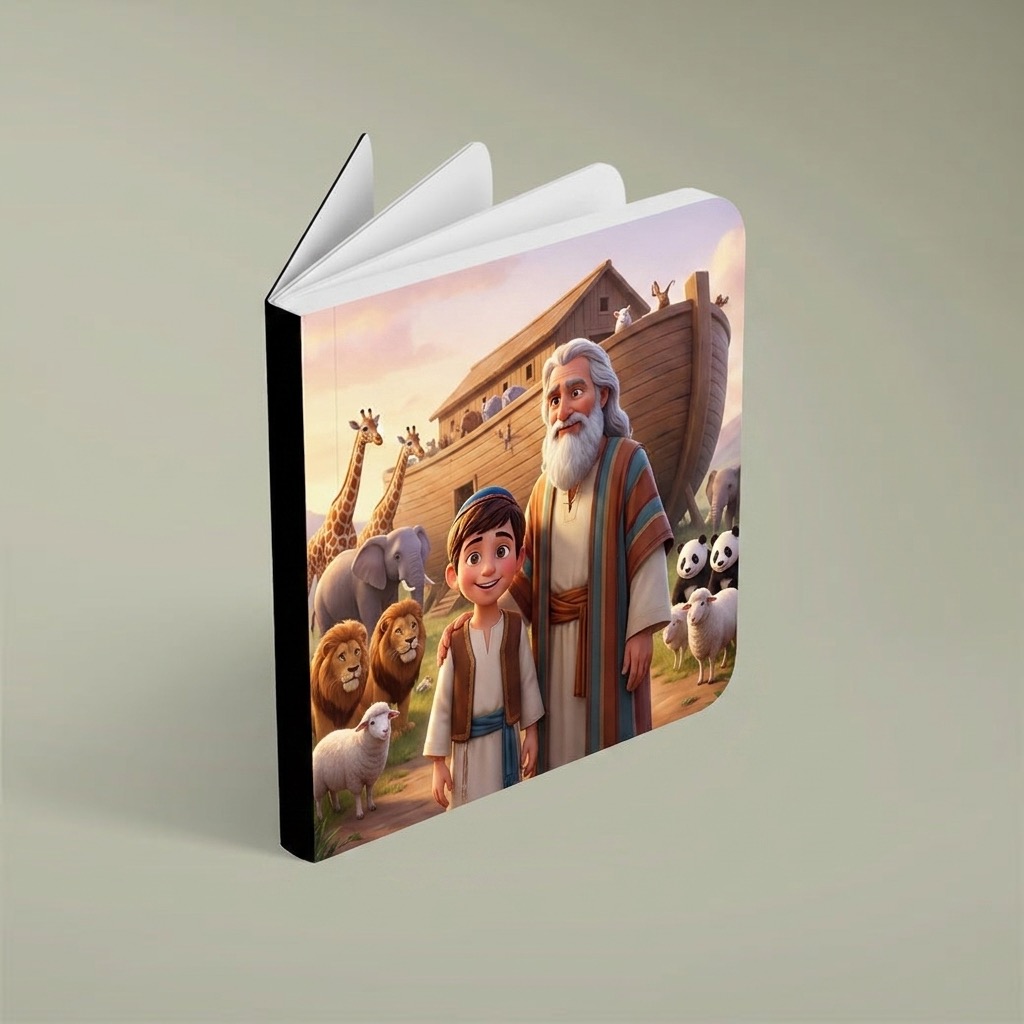
Board book 6″×6″
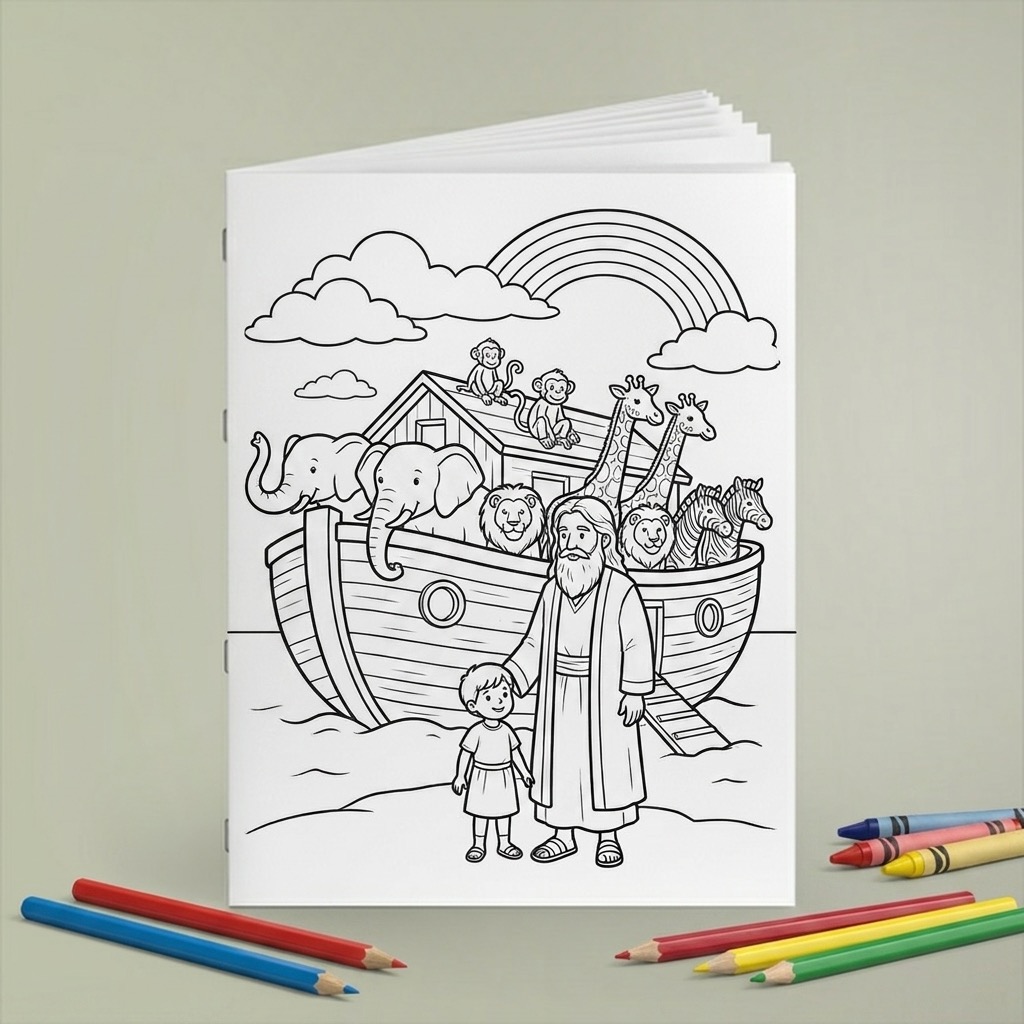
Coloring book 8.5″×11″
Shabbos table questions and one weekday activity
Pick two or three, not all six:
- Yaakov did three things before meeting Eisav. Can you name them?
- Why do you think he davened, if he had already sent a big present?
- Yaakov went back alone at night for small jars. What is something small in our house that we should take better care of?
- Katonti means "I am small from all the kindnesses." Name one chesed Hashem did for you this week.
- Yaakov got a new name, Yisrael. What do you think a new name is supposed to change?
- Why do we not eat the gid hanasheh? What does that mitzvah remind us of?
A weekday activity: before Shabbos, have your children set out the gift Yaakov sent, using whatever is around. Rows of small objects for the goats, the sheep, the camels, the cows, the donkeys, sent in separate groups with a gap between them, the way Yaakov arranged it. Then ask why he sent them in waves instead of all at once. Younger children can color the matching Torah Tale coloring book pages during the same weekday session, so the pictures are finished and admired before Shabbos comes in.
How do I get the Vayishlach book in time for Shabbos?
The Torah Tale book creator always suggests next week's parsha, with a live countdown to the order deadline for delivery before that Shabbos, so you are ordering ahead rather than chasing. A double-parsha week produces one book covering both. Standard shipping is $4.99 (free on one-time orders over $60), and we ship worldwide. If you are deciding between ordering one parsha or subscribing to the weekly cycle, our guide on choosing the weekly parsha for your child's book lays out how families usually do it.
Creating the book takes about five minutes and a few short questions: name, boy or girl, age, one photo, siblings, story, language (English, Hebrew or Yiddish, and you can order more than one), and printed format.
Yaakov Avinu came home changed, limping and renamed, after a night he faced alone. It is a strong thing for a child to carry into the week. Create the book with your child inside the story, and let the discussion page do the rest at your Shabbos table.
Frequently asked questions
What is the main lesson of Parshas Vayishlach for children?
The clearest lesson is how Yaakov Avinu handled fear. He did not freeze and he did not pretend everything was fine. He sent a generous gift to Eisav, he davened to Hashem, and he got his family ready, and Rashi teaches that these three preparations are the model for us. For a child the takeaway is simple: do your part, and ask Hashem for the rest.
How do I explain the story of Yaakov and the malach to a young child?
Tell it plainly and without frightening detail. Yaakov was alone at night and a malach struggled with him until the morning, and Yaakov did not give up. The malach touched Yaakov's leg and he limped afterwards, and the malach admitted that Yaakov had won and gave him a new name, Yisrael. Chazal explain that this malach was the koach of Eisav, so the message is that Eisav's strength could not defeat Yaakov.
Why don't we eat the gid hanasheh?
Because of what happened in Parshas Vayishlach. When the malach struggled with Yaakov Avinu, he injured the gid hanasheh, the sciatic nerve in the thigh. The Torah says that for this reason Bnei Yisrael do not eat the gid hanasheh, and it is one of the taryag mitzvos. It is a good detail to tell children, because it connects a story from Bereishis to something their own kitchen keeps today.
How should I handle the story of Dina with my kids?
Keep it very short and age appropriate. For young children it is enough to say that Dina was taken from the family and that her brothers Shimon and Levi went and rescued her, and that Yaakov later spoke to them about how it was done. Older children in cheder or Bais Yaakov will learn the details from their rebbi or morah at the age their school considers right. There is no need to add graphic detail at home.
What does Katonti mean and why do people quote it?
Katonti mikol hachasadim means "I am small from all the kindnesses" that Hashem has done for me. Yaakov said it while davening before he met Eisav: instead of feeling entitled to be saved, he felt that Hashem had already given him so much. It is one of the most quoted lines in the parsha because it teaches gratitude and humility in five words a child can memorize.
Which Torah Tale format is best for a parsha book?
For ages 0 to 4 choose the 6"x6" board book with rounded safety corners, for ages 4 to 8 the 8"x8" softcover, and for ages 5 to 18 the 8"x8" hardcover. Up to eight siblings can appear in the same book, and every book ends with 10 discussion questions. There is also an optional matching 8.5"x11" coloring book in black-and-white line art, which is a weekday or erev Shabbos activity, not a Shabbos one.