Parshas Toldos for Kids: Yaakov, Eisav, the Bechora & the Brachos
Two brothers born the same day who grew up to want completely different things. Here is how to tell Parshas Toldos to a four-year-old and to a ten-year-old, including the part parents dread being asked about.
Published by Torah Tale.
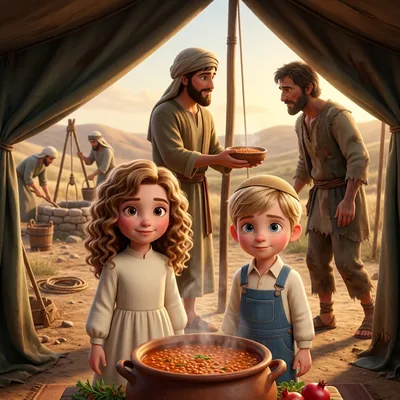
Parshas Toldos is the story of Yitzchak and Rivka's twin sons, Yaakov and Eisav: two brothers born on the same day, in the same house, who grew up wanting completely different things. It contains the sale of the bechora for a bowl of red lentil stew, Yitzchak digging wells that keep getting filled in, and the brachos Yitzchak gives before the end of his life. Children hold onto this parsha because it is about brothers, and because every child understands the feeling of wanting something right now versus waiting for something better.
What happens in Parshas Toldos? The story for children
Yitzchak and Rivka were married for twenty years and had no children. They stood and davened, and the Torah tells us Hashem answered Yitzchak's tefillah. Rashi explains that the tefillah of a tzaddik who is the son of a tzaddik is not like the tefillah of a tzaddik who is the child of a rasha, and this is why Yitzchak's tefillah was the one answered.
Rivka had twins. The Midrash relates that when she passed a beis midrash one baby pushed to get out, and when she passed a place of avodah zarah the other one pushed. She did not understand what was happening to her, so she went to ask, and she was told that two nations were inside her, and that the older would serve the younger.
Eisav was born first, red and already covered in hair. Yaakov was born holding onto Eisav's heel. As they grew, Eisav became a hunter, a man of the field. Yaakov was an ish tam yosheiv ohalim, a straight person who sat in the tents of learning.
One day Eisav came in from the field exhausted and saw Yaakov cooking red lentils. He demanded the food. Yaakov said: sell me the bechora, the rights of the firstborn. Eisav answered that he was going to die anyway, so what use was a bechora to him. He sold it, ate, drank, got up and left. The Torah closes the scene with four words that a child can carry for life: vayivez Eisav es habechora, Eisav treated the bechora as worthless.
Yitzchak's wells: the quiet middah in the middle of the parsha
Between the stew and the brachos, the Torah tells us about a famine. Hashem told Yitzchak not to go down to Mitzrayim, because he himself was a korban tamim from the Akeidah and Eretz Yisrael was where he belonged. Yitzchak stayed in Gerar, planted, and had extraordinary success.
Then he re-dug the wells his father Avraham had dug, which the Pelishtim had stopped up with dirt after Avraham passed away. He gave them back their old names. The shepherds of Gerar argued over the first well, so he named it Eisek, quarrel, and moved. They argued over the second, so he named it Sitnah and moved again. The third one nobody fought over, and he called it Rechovos: now Hashem has made room for us.
This is one of the most usable parts of the parsha for a child who fights with siblings. Yitzchak was not weak and he was not wrong. He simply refused to spend his life arguing, and he kept digging until he found water in a place where he could be left in peace. Families who read Parshas Vayeira with their children will recognize the same Yitzchak, quiet and steady, from the Akeidah.
The brachos: how to tell it honestly
Yitzchak grew old and his eyes dimmed. He called Eisav and asked him to hunt food and bring it, so that he could give him the brachos. Rivka heard, and she knew from her nevuah what Yitzchak did not know about Eisav. She told Yaakov to bring two young goats, prepared the food Yitzchak loved, and dressed Yaakov in Eisav's clothing with goat skins on his arms and neck.
Yaakov did not want to do it. He was afraid his father would feel him and he would appear to be a trickster. Rivka answered: alai kilelascha beni, the responsibility is on me, my son, only listen to me. Yaakov went in because his mother told him to.
Yitzchak was uncertain. The voice was Yaakov's voice, the hands were Eisav's hands. He blessed Yaakov with the dew of the heavens and the fat of the land, and with the promise that whoever blesses him will be blessed. Yaakov had barely left when Eisav came in, and Yitzchak trembled and said: I blessed him, and blessed he will remain. Eisav cried out a great and bitter cry.
Do not skip past that cry with your children, and do not turn it into a joke. It is real. But make sure they leave with the whole picture: Eisav had already sold the bechora and had called it worthless himself, and Rivka had been told before the twins were born which son the brachos were meant for. Yaakov received what was already his.
The parsha ends with Rivka sending Yaakov to her brother Lavan in Charan, and Yitzchak blessing him again, this time openly and by name, with the bracha of Avraham.
What is the lesson of Parshas Toldos?
The middah at the center of Toldos is knowing what is actually valuable. Two brothers were given the identical home. One looked at the bechora and saw an obligation he did not want; the other looked at the same bechora and was willing to give up a hot meal for it. Nothing about the parsha suggests Eisav was stupid. He simply wanted what he could have that minute.
There is a second middah, and it belongs to Yitzchak: not everything worth having is worth fighting for. Eisek, Sitnah, Rechovos. Keep digging, and Hashem will make room.
How to explain Parshas Toldos at different ages
Ages 2 to 4
Keep it to two brothers and one bowl of soup. "Yaakov loved to learn Torah. Eisav loved to run in the field. Eisav was hungry and gave away something very special, the bechora, just for soup. Yaakov knew the bechora was worth more than soup." That is the whole story at this age, and a board book with thick pages is the right home for it.
Ages 5 to 8
Add Yitzchak and Rivka's tefillos, the wells, and the brachos. At this age children ask the question directly, so answer it directly: Eisav sold it, Rivka was a nevi'ah, and Yaakov listened to his mother. Then move to the practical piece: what is something you wanted so badly right now that you almost gave up something better?
Ages 9 to 12
Bring in the pesukim. Look at vayivez Eisav es habechora and ask what the Torah is telling us by adding that word. Look at Rashi on ish tam and on the two nations. Look at Yitzchak naming three wells and ask why the Torah bothered to record the names of two wells he did not keep.
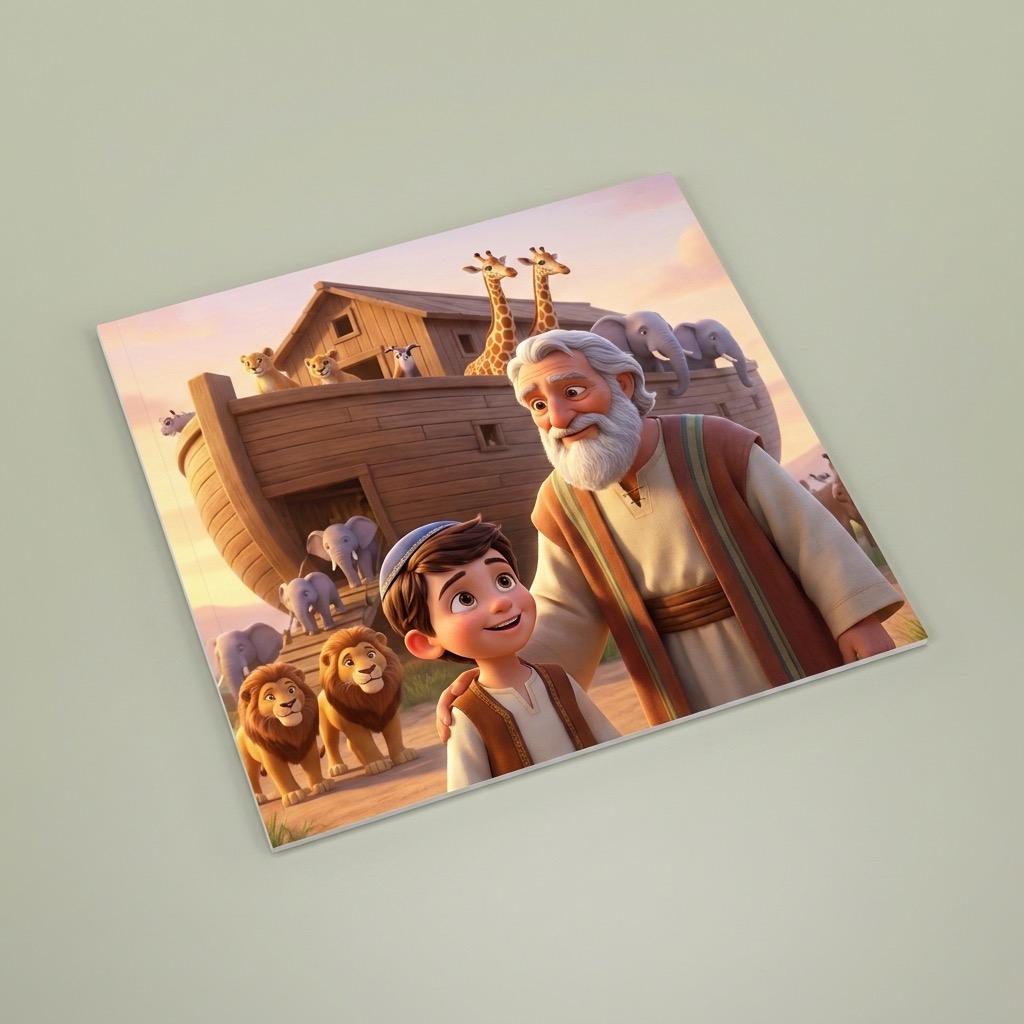
Softcover 8″×8″
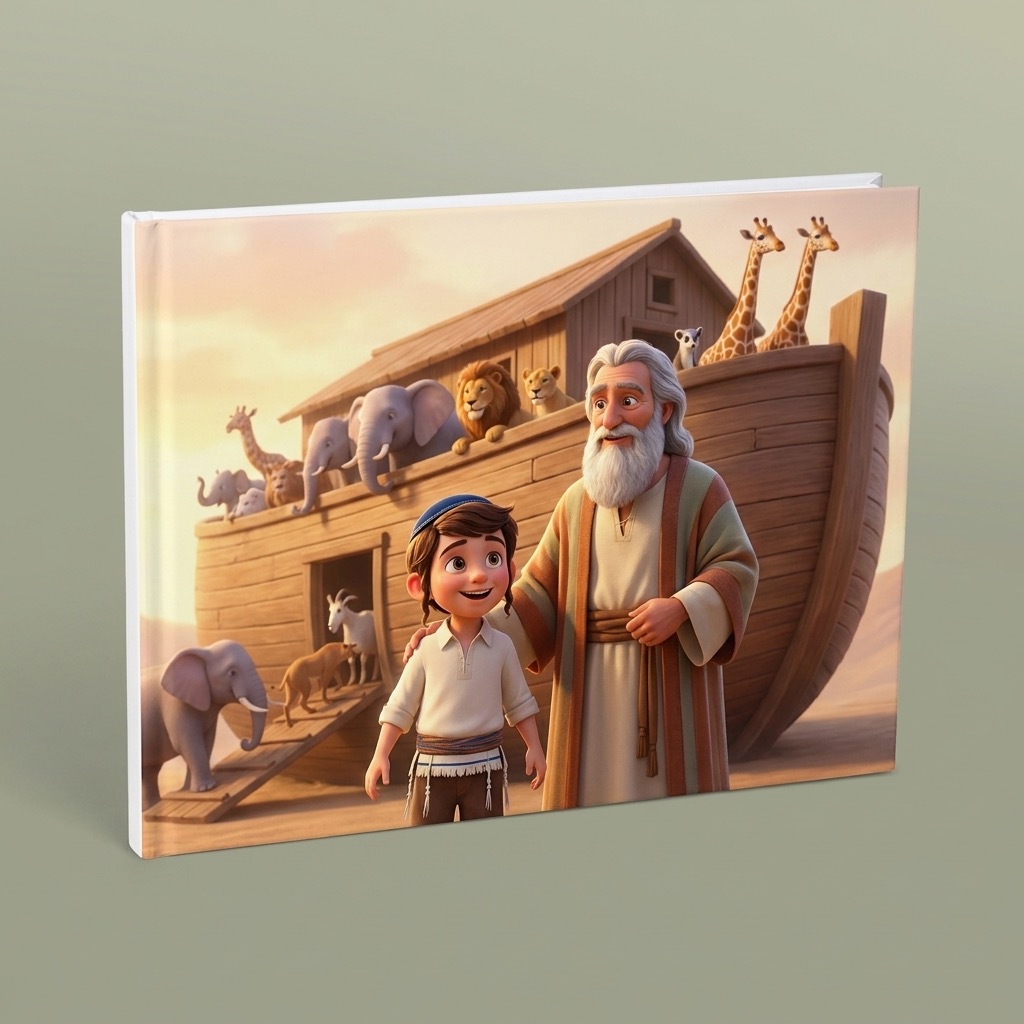
Hardcover 8″×8″
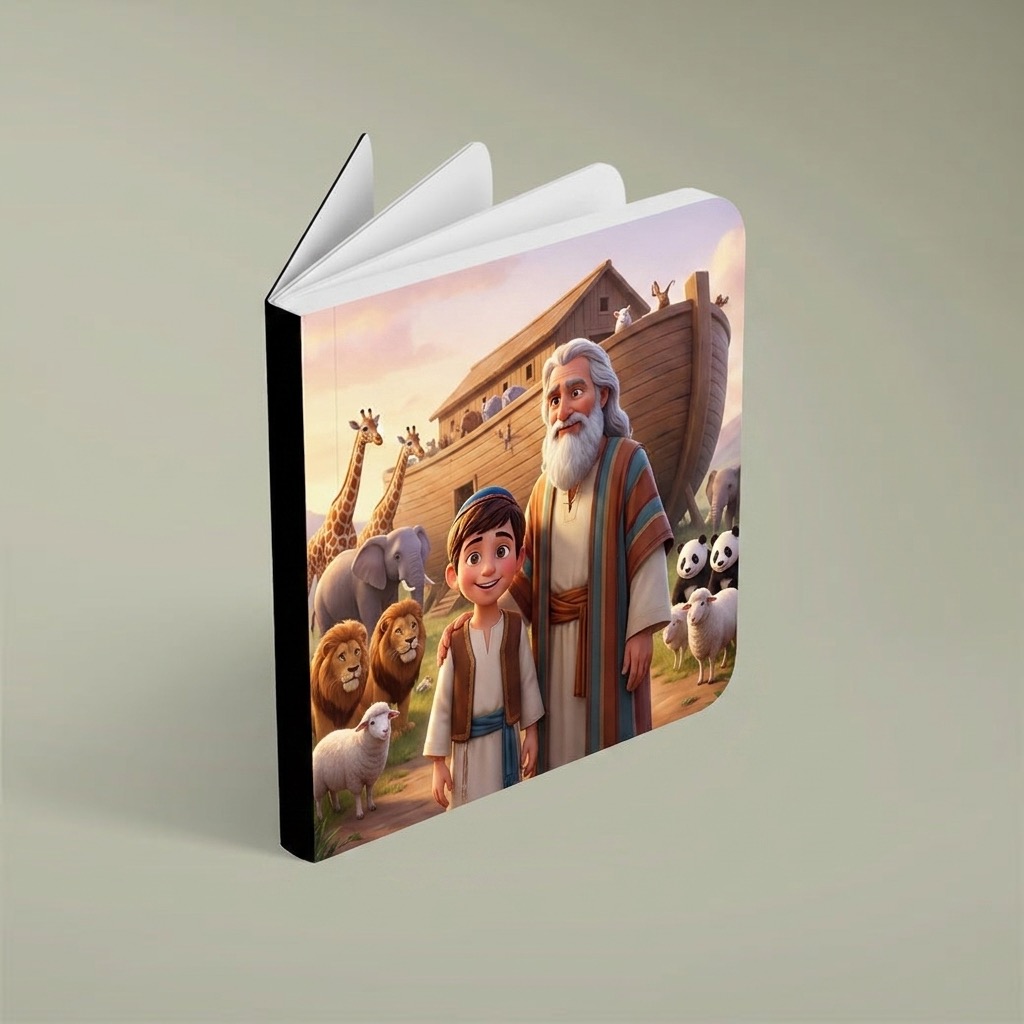
Board book 6″×6″
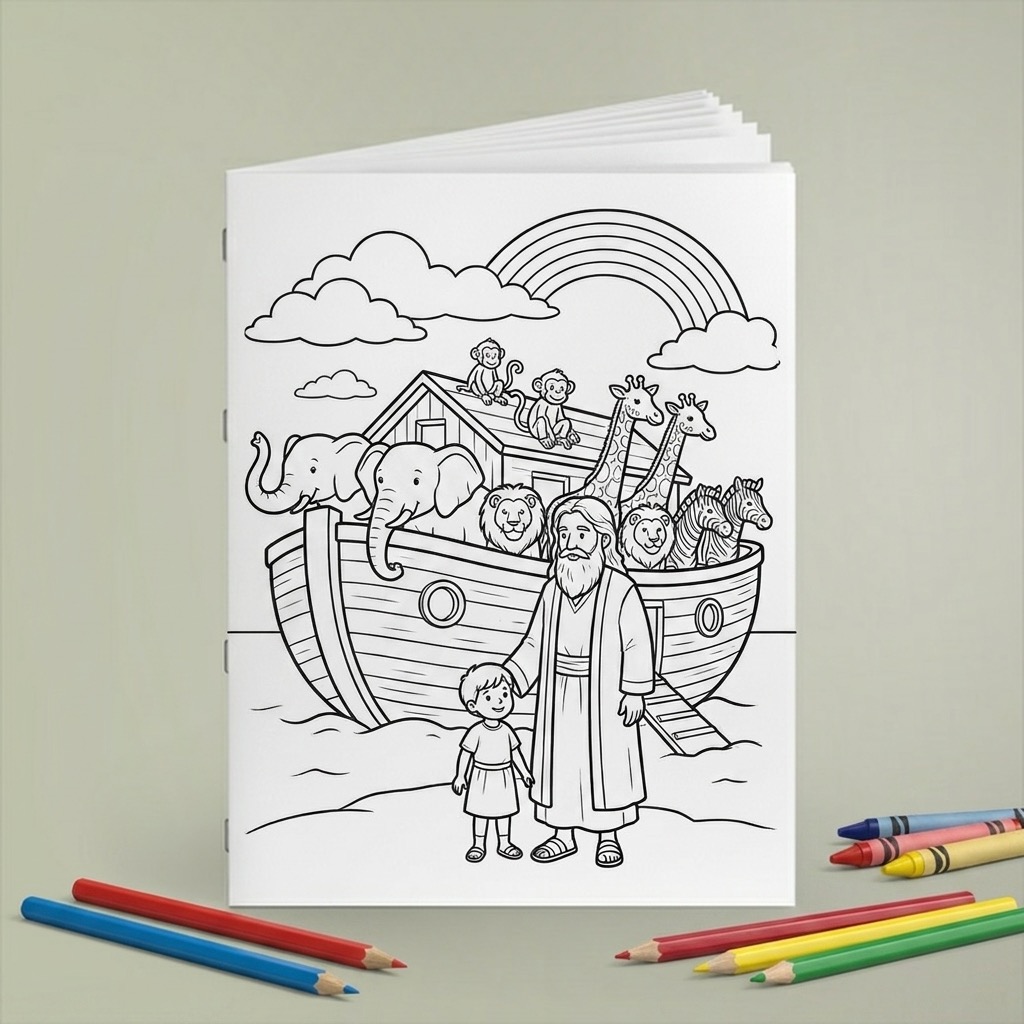
Coloring book 8.5″×11″
What a personalized Torah Tale book of Parshas Toldos is like
A Torah Tale book puts your child inside the parsha. You upload one photo, and from that photo the child is illustrated in high-resolution 3D Pixar style on every page, with their own name in the text. Instead of watching Yaakov and Eisav from a distance, your child is standing there when the lentils are cooking and when Yitzchak digs the third well.
Up to four siblings can appear in the same book, which is worth thinking about specifically for Toldos, since the parsha is about brothers. Books are available in English, Hebrew and Yiddish, and you can order the same story in more than one language.
Every book ends with a dedicated discussion page carrying ten questions about the story, mixing comprehension with middos: what happened, and what it asks of the child. That page is what turns a book that is read to a child into a conversation at the Shabbos table. Reading it on Shabbos afternoon is exactly what it is built for. The matching coloring book, if you add one, is a weekday project - erev Shabbos or a quiet afternoon, since coloring is melacha and not for Shabbos or Yom Tov.

Five questions for your Shabbos table this week
- Yaakov and Eisav had the same parents and the same house. What made them so different?
- Why does the Torah tell us that Eisav ate, drank, got up and left? What does that add?
- Yitzchak walked away from two wells. Was that giving up, or was it strength?
- Rivka told Yaakov "alai kilelascha beni." What does it mean for a parent to take responsibility like that?
- Name one thing you have that is worth more than a bowl of soup, even though soup is what you want right now.
If you want a one-sentence version to say in the car on the way to shul: "Eisav wanted what felt good now, Yaakov wanted what lasts forever, and that one difference is the whole parsha."
Ordering the Toldos book in time for Shabbos
The Torah Tale book creator always suggests next week's parsha, with a live countdown to the order deadline for delivery before that Shabbos. Practically, that means you order the Toldos book during the week you are reading Parshas Chayei Sarah, when Rivka has just come from the well and is about to become Yitzchak's wife. Families who want the parsha to arrive every week without thinking about it use the Weekly or Year Bundle subscription; there is more on choosing between them in our guide to choosing the weekly parsha for your child's book.
Creating the book takes about five minutes and eight short questions: name, boy or girl, age, one photo, siblings, story, language and printed format. Standard shipping is $3, express is $6, and we ship worldwide. Every book is written with careful rabbinical guidance and strict tznius and reviewed by our team before it goes to print.
Ready to put your child into Yitzchak's tent and next to Yaakov's cooking pot? Create the book and have it on the table before Toldos.
Frequently asked questions
What is the main story of Parshas Toldos?
Parshas Toldos tells how Yitzchak and Rivka davened for twenty years and were given twin sons, Yaakov and Eisav. Yaakov became a quiet man who sat and learned, while Eisav became a hunter who lived in the field. The parsha includes Eisav selling the bechora for a bowl of lentil stew, Yitzchak digging wells in the land of the Pelishtim, and Yitzchak giving the brachos to Yaakov before Yaakov leaves for Charan.
How do I explain to a child that Yaakov took the brachos?
Tell the child the two facts the Torah itself gives. First, Eisav had already sold the bechora to Yaakov and the pasuk says he despised it, so the blessing of the firstborn was legitimately Yaakov's. Second, Chazal teach that Rivka was a nevi'ah who had been told before the twins were born that the older would serve the younger, and Yaakov went in only because his mother instructed him to. Yaakov was not grabbing something that belonged to someone else; he was making sure the brachos of Avraham reached the son who would use them for Hashem.
Why did Eisav sell the bechora for soup?
Eisav came in from the field exhausted and wanted the red lentil stew immediately, and he told Yaakov that the bechora was of no use to him. The bechora at that time meant the responsibility of doing the avodah, serving Hashem on behalf of the family. Eisav wanted what he could have that minute, and Yaakov wanted what would last forever. The Torah sums it up in three words: vayivez Eisav es habechora, Eisav treated the bechora as worthless.
What is the lesson of Parshas Toldos for children?
The central lesson is that people choose what they value, and that choice shapes who they become. Yaakov and Eisav had the same parents, the same home and the same day of birth, and they turned out completely differently because one wanted the beis midrash and the other wanted the field. A second lesson comes from Yitzchak and the wells: when others filled in his wells and argued over them, he moved on and dug again rather than fight.
What age is a Parshas Toldos book right for?
Torah Tale prints a 6"x6" board book with rounded safety corners for ages 2 to 4, an 8"x8" softcover for ages 4 to 8, and an 8"x8" hardcover in square or landscape for ages 5 to 12. Younger children usually connect to the two brothers and the bowl of stew, while older children can handle the brachos and the wells. Every version ends with the same discussion page of ten questions.
When is Parshas Toldos read?
Parshas Toldos is the sixth parsha of Sefer Bereishis and is read in shul in late Cheshvan or Kislev, the Shabbos after Parshas Chayei Sarah. The Torah Tale book creator always suggests next week's parsha with a live countdown to the order deadline, so a Toldos book is ordered during the week that Chayei Sarah is being read.