Parshas Vayeira for Kids: Avraham's Tent, the Three Guests & the Akeidah
Vayeira is the parsha where Avraham Avinu, three days after his bris, runs out into the heat to bring guests into his tent. Here is how to tell it to a 3-year-old and to a 10-year-old, what to ask at the Shabbos table, and how to handle the Akeidah gently.
Published by Torah Tale.
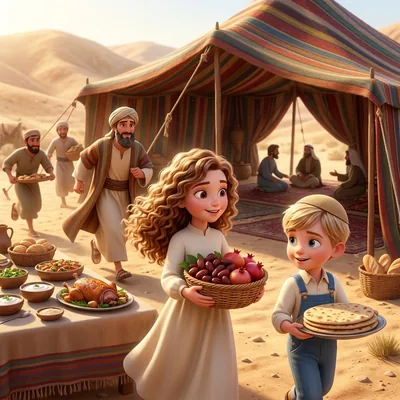
Parshas Vayeira is the parsha of the open tent. It begins three days after Avraham Avinu's bris milah, on a day so hot that nobody is traveling, with Avraham sitting at his tent entrance watching the road because he is pained that no guests have come. Then three travelers appear, and a ninety-nine-year-old man in pain runs to meet them. Children understand that picture immediately, long before they can follow the rest of the parsha, and it is the single strongest image a Jewish child can carry about what a Yiddishe home looks like.
What happens in Parshas Vayeira?
Hashem appears to Avraham as he recovers from his bris. Chazal tell us that Hashem made the day extraordinarily hot so that travelers would stay home and Avraham could rest, and that Avraham was distressed by the quiet, because a day with no guests was a day with no chessed.
Three men come into view. Avraham runs to them, bows, offers water for their feet and shade under a tree, and then hurries: he tells Sarah to bake, he runs himself to bring the meat, he stands over his guests while they eat. Chazal tell us these were malachim, each with one mission. One announced that Sarah would have a son within the year. Sarah laughed at the thought, and Yitzchak's name comes from that laughter.
Then Hashem tells Avraham that Sedom is to be overturned, and Avraham does something remarkable: he davens for a city of wicked people. Maybe there are fifty righteous people there, he asks. Forty-five? Forty? He goes down to ten. There were not even ten. Lot and his daughters are taken out by the malachim and told not to look back. Lot's wife looks back and becomes a pillar of salt.
After the episode with Avimelech in Gerar, Yitzchak is born, and Avraham gives him a bris on the eighth day and makes a great feast. Hagar and Yishmael leave the house, and when their water runs out in the midbar, Hashem shows Hagar a well.
The parsha ends with the Akeidah. Hashem tests Avraham and asks him to bring Yitzchak up on a mountain in the land of Moriah. Avraham gets up early, saddles his own donkey, and walks three days with Yitzchak. At the top, a malach calls out and tells him to stop. Avraham sees a ram caught in the thicket by its horns and brings it instead, and he and Yitzchak come down the mountain together. Chazal teach that this was the last of ten nisyonos with which Avraham was tested.
What is the middah of Parshas Vayeira?
Hachnasas orchim, welcoming guests, and it is taught here in a very specific way. The Torah does not just say Avraham fed the men. It says he ran. It says he stood over them. It says he asked Sarah for the best flour and went to the cattle himself instead of sending a servant.
Chazal tell us Avraham's tent was open on all four sides so that a traveler coming from any direction would see a door facing him and not have to walk around and feel like a beggar. That detail does more work with children than a hundred words about kindness. Chessed is not only giving. It is arranging things so the person receiving does not feel small.
The second middah in Vayeira is tefillah for other people. Avraham had every reason to be finished with Sedom, and he davened for them anyway. If your child is old enough to notice that, point it out: Avraham argued with Hashem on behalf of people who had never done a thing for him.
How do I explain Vayeira to a 4-year-old and to a 9-year-old?
The same parsha, told at very different depths. Here is roughly how we split it.
| Age | What to tell | What to leave out |
|---|---|---|
| 2 to 4 | Avraham's tent with four doors, running to bring the guests food and water, the good news that a baby will be born, Yitzchak's birth and simcha. | Sedom, Lot's wife, the Akeidah. |
| 5 to 7 | All of the above, plus Avraham davening for Sedom and the malachim saving Lot. Mention the Akeidah briefly: Hashem tested Avraham, Hashem stopped him, Yitzchak was fine. | Graphic detail about Sedom's destruction. |
| 8 to 12 | The full sequence, the ten nisyonos, why Avraham could daven for wicked people, what a nisayon is and why Hashem tests the people He loves most. | Nothing much, but keep the tone calm and unhurried. |
For the Akeidah with any age, the sentence that settles a child is this one: Yitzchak went up the mountain and Yitzchak came down the mountain. Say it early, before you tell the middle. Children can hear a hard story once they know how it ends.
Shabbos table questions for Parshas Vayeira
Pick two or three, not all of them.
- Why did Avraham build a tent with four doors instead of one?
- Avraham had just had a bris and was in pain. Why didn't he ask someone else to serve the guests?
- What is one thing in our house that makes a guest feel comfortable? What is one thing we could add?
- Avraham davened for people who were not nice at all. Is there someone we could daven for this week even though it is hard?
- Sarah laughed when she heard she would have a baby. Has Hashem ever done something for us that seemed impossible?
- What does it mean that Avraham got up early in the morning for the Akeidah?
If your child is in cheder or Bais Yaakov, ask what their morah said about the tent. Half the time they come home with a Midrash you had forgotten.
What a personalized Torah Tale book of Vayeira is like
Torah Tale prints the weekly parsha as a personalized storybook in which your own child is in the story. You upload one photo, and your child's likeness, illustrated in high-resolution 3D Pixar style, appears on every page: watching the road with Avraham, carrying the water jug to the guests, standing under the tree while the meal is served. Up to four siblings can appear in the same book, which is what most families with more than one child do.
Every book is written with careful rabbinical guidance and strict tznius, and reviewed by our team before it goes to print. For Vayeira that matters, because the parsha contains material that has to be told to children with judgment: Sedom is handled without frightening imagery, and the Akeidah is told as it is taught in a frum classroom, with the ending clear.
Every book closes with a dedicated discussion page carrying 10 questions about the story, mixing comprehension with middos. That page is the reason the book keeps going after the last picture. It is what turns Vayeira from something you read to a child into something the table talks about on Shabbos.
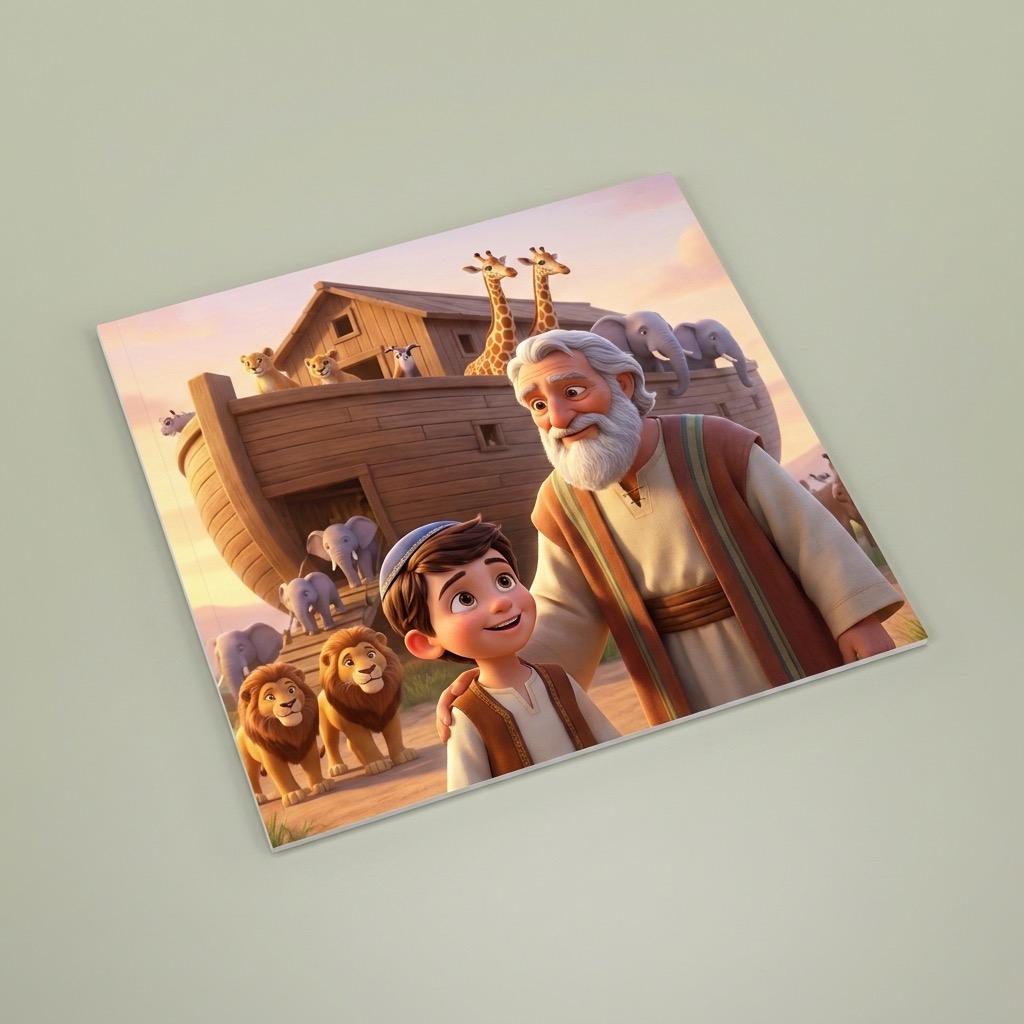
Softcover 8″×8″
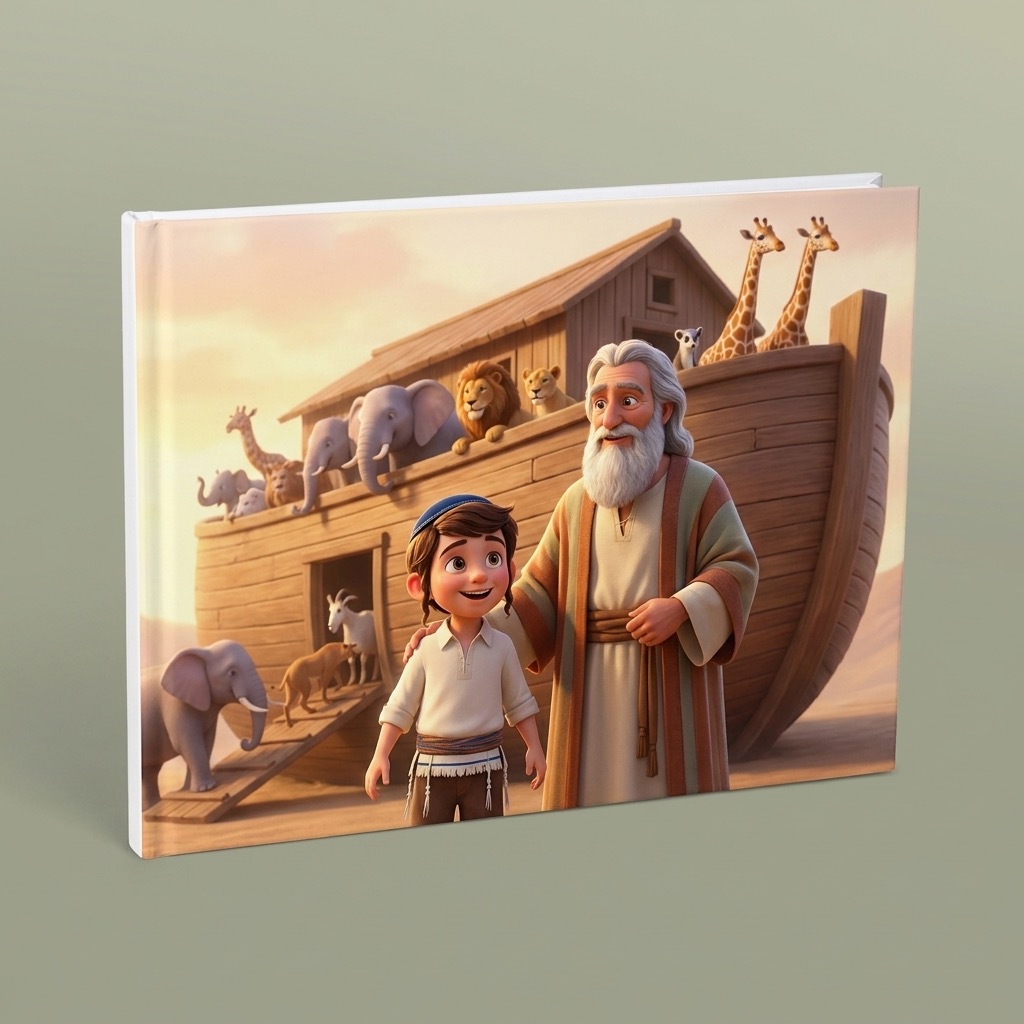
Hardcover 8″×8″
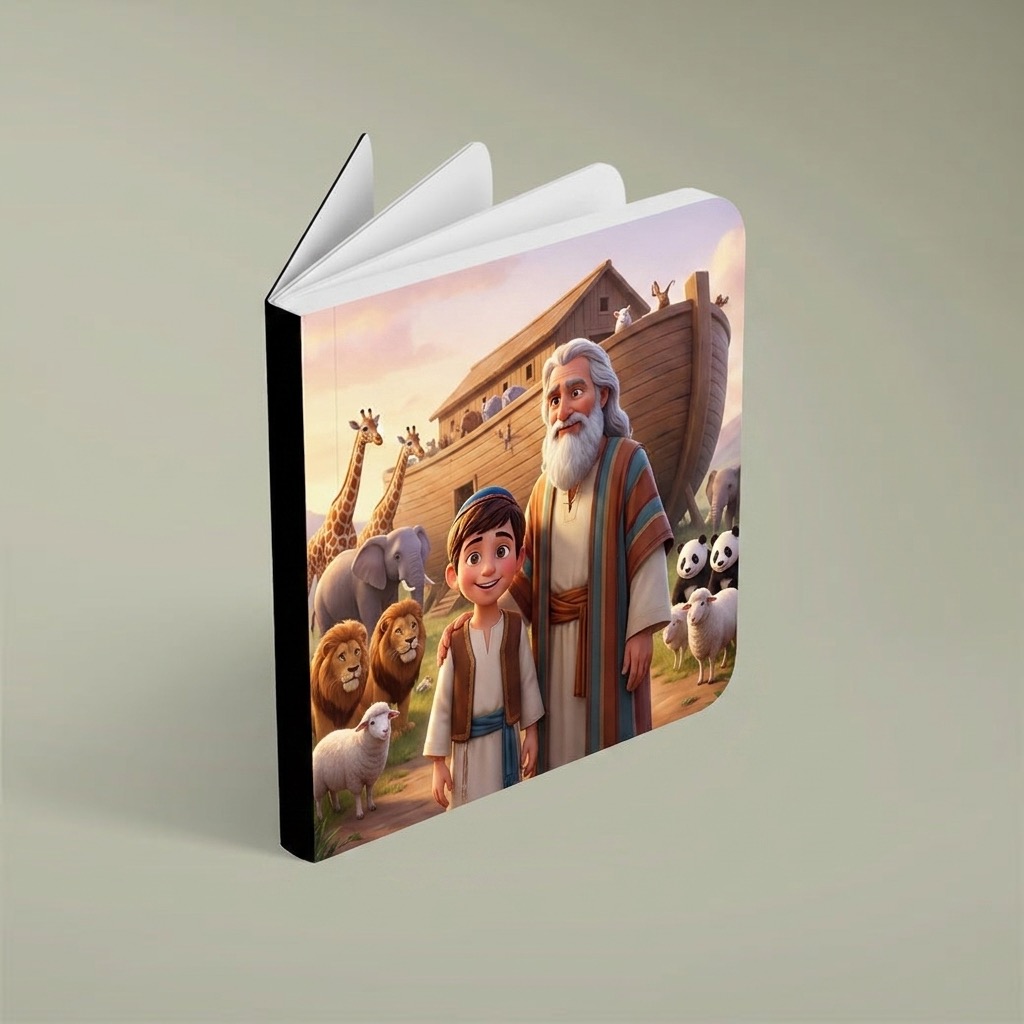
Board book 6″×6″
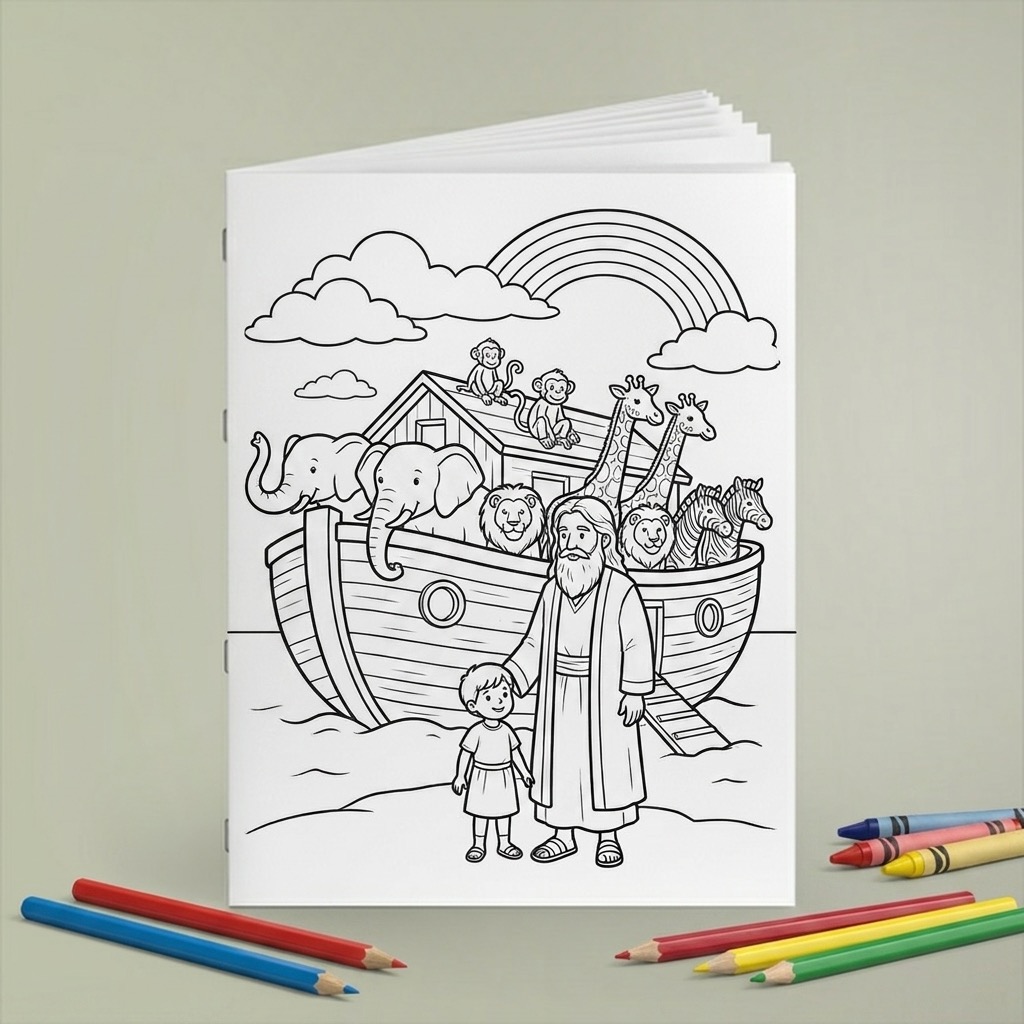
Coloring book 8.5″×11″
Choose the format by age: the 6"x6" board book with rounded safety corners for 2 to 4, the 8"x8" softcover for 4 to 8, the 8"x8" hardcover in square or landscape for 5 to 12. There is a matching 8.5"x11" coloring book in black-and-white line art as well, which belongs to a weekday afternoon or erev Shabbos, never to Shabbos or Yom Tov itself. Books come in English, Hebrew and Yiddish, and you can order more than one language.
An erev Shabbos activity: build a tent with four doors
Do this on a weekday afternoon or Friday before candle lighting. Drape a sheet over two chairs and a table, and open four ways in. Let the children take turns being the traveler who arrives hot and tired from a different direction each time, and being Avraham who runs out to meet them with a cup of water.
Then bring it into the real house. Ask each child to prepare one thing for guests this Shabbos: a folded napkin at the guest's place, a bencher set out, a drawing left on the pillow of the bed a guest will sleep in. Avraham's greatness was in the running, and small children can run.
How Vayeira fits with the parshiyos around it
Vayeira follows Parshas Lech Lecha, where Avraham leaves everything on Hashem's word and pitches the tent for the first time. Read together, the two parshiyos give a child a whole picture of Avraham Avinu: first the emunah to go, then the chessed to open the door once he has arrived.
If you are building a set of parsha books for a child through the year, the practical question is timing, and we wrote about it in how to choose the weekly parsha for your child's book. The creator suggests next week's parsha with a live countdown to the order deadline for delivery before that Shabbos, so a Vayeira book gets ordered during the week of Lech Lecha. A double-parsha week produces one book covering both. A Vayeira hardcover also makes a good upsherin or birthday gift, which we cover in our guide to personalized Jewish gifts for kids.

Creating a book takes about five minutes and eight short questions: name, boy or girl, age, one photo, siblings, story, language, printed format. Order a single book or a Weekly, Monthly or Year Bundle subscription. Standard shipping is $3 and takes 5-8 business days, express is $6 and takes 3, and we ship worldwide. Create the book and let your child be the one who runs out to bring the guests in.
Frequently asked questions
What is the main lesson of Parshas Vayeira for children?
The main lesson is hachnasas orchim, welcoming guests with real effort. Avraham Avinu is old, it is the third day after his bris milah, and the day is blazing hot, yet he sits at the tent door watching for travelers and then runs to serve them himself. Children learn that chessed is measured by what it costs you, not by how convenient it is.
How do I explain the Akeidah to a young child without frightening him?
Tell it as a test of love and trust that ends well. Say that Hashem asked Avraham to go up a mountain with Yitzchak, that Avraham got up early because he wanted to do whatever Hashem asked, and that at the last moment Hashem called out and told him to stop. Emphasize clearly that Yitzchak was never hurt, that a ram was brought instead, and that father and son walked back down the mountain together. For a child under six, many parents simply tell the guests, the birth of Yitzchak and the ram, and leave the details of the Akeidah for later years.
Who were the three visitors in Parshas Vayeira?
They were three malachim sent by Hashem, who appeared to Avraham as ordinary travelers. Chazal teach that each had one mission: one to tell Avraham and Sarah that a son would be born, one to save Lot, and one to overturn Sedom. Avraham did not know who they were and treated them like any dusty wayfarer, which is exactly what makes his chessed so great.
What happens in Parshas Vayeira in order?
Hashem appears to Avraham after his bris; three malachim arrive and Avraham serves them; Sarah is told she will have a son; Avraham davens for Sedom, asking Hashem to spare the city for the sake of righteous people; Lot is rescued and Sedom is overturned; Avraham and Sarah are in Gerar with Avimelech; Yitzchak is born and has his bris at eight days; Hagar and Yishmael leave and are saved at a well; Avraham makes a treaty at Be'er Sheva; and the parsha ends with the Akeidah.
What age is a personalized Parshas Vayeira book right for?
Torah Tale prints four formats so the book fits the child. A 6"x6" board book with rounded safety corners suits ages 2 to 4, an 8"x8" softcover suits ages 4 to 8, and an 8"x8" hardcover in square or landscape suits ages 5 to 12. There is also a matching 8.5"x11" black-and-white coloring book, which is a weekday or erev Shabbos activity, not a Shabbos one.
When should I order a Vayeira book so it arrives in time?
The Torah Tale creator suggests next week's parsha, not this week's, and shows a live countdown to the order deadline for delivery before that Shabbos. That means you order the Vayeira book during the week of Parshas Lech Lecha. Standard shipping is $3 and takes 5-8 business days, express is $6 and takes 3, and Torah Tale ships worldwide.