Parshas Chayei Sarah for Kids: Rivka at the Well, the Camels & Chesed
Parshas Chayei Sarah is the parsha where a young girl at a well waters ten thirsty camels for a stranger, and becomes a mother of Klal Yisrael. Here is how to tell it to a 4-year-old and to a 10-year-old, what the middah really is, and questions to bring to the Shabbos table.
Published by Torah Tale.
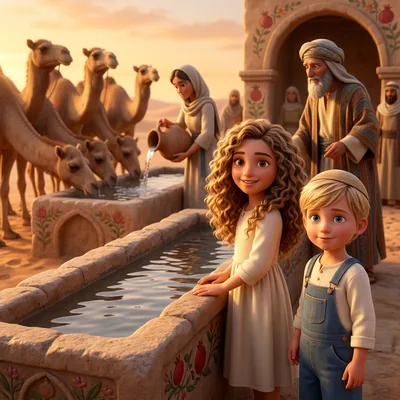
Parshas Chayei Sarah is the parsha where the Torah spends more than forty pesukim on a girl at a well. Sarah Imeinu passes away, Avraham Avinu buys the Me'aras HaMachpelah in Chevron as a burial place for his family, and then he sends his trusted servant Eliezer far away to find a wife for Yitzchak. Eliezer asks for a drink of water, and a young girl named Rivka draws water for him and for all ten of his camels. Children lock onto that scene immediately, because it is the one place in Chumash where being chosen by Hashem depends entirely on how somebody treats a thirsty stranger.
What happens in Parshas Chayei Sarah?
The parsha opens with the years of Sarah Imeinu's life and her passing in Kiryat Arba, which is Chevron. Avraham needs a proper burial place, and he approaches the local people to buy the cave of Machpelah from Ephron. Ephron makes a big show of offering it as a gift, and Avraham refuses. He weighs out four hundred shekel kesef in front of everyone, and the field and the cave become his forever.
Then Avraham calls Eliezer, his servant, and makes him swear that he will not take a wife for Yitzchak from the people of Canaan, but will go back to Avraham's own family. Eliezer loads ten camels and travels. Chazal tell us that his journey was shortened so that he arrived the same day.
At the well outside the city, Eliezer davens for a clear sign: the girl who is meant for Yitzchak will be the one who offers water not only to him but to his camels as well. Rivka comes out with her jug. Eliezer asks for a sip. She gives him to drink, and then says the words the whole parsha turns on, that she will draw for his camels too. She runs back and forth to the well until ten camels have drunk their fill. The Midrash relates that the water of the well rose up toward her, so that she would not have to keep lowering the jug.
Eliezer gives her gifts, learns that she is from Avraham's family, and is brought to her home. He tells her father Besuel and her brother Lavan the entire story of his mission and the sign at the well. Rivka is asked whether she will go, and she answers simply that she will. She travels back with Eliezer, marries Yitzchak, and Rashi tells us that with her arrival the three signs of Sarah's tent returned: the cloud above it, the blessing in the dough, and the lamp that stayed lit. The parsha ends with Avraham Avinu's passing at the age of 175 and his burial in the Me'aras HaMachpelah beside Sarah, with Yitzchak and Yishmael both there.
What is the middah of Parshas Chayei Sarah?
Chesed, and specifically chesed with two extra ingredients that are easy to point out to a child.
The first is going past what was asked. Eliezer asked for water for himself. One cup would have been a kind answer. Rivka thought about the animals nobody mentioned. The test Eliezer davened for was not "will she be polite" but "will she notice what else is needed."
The second is zerizus, doing it fast. The pesukim keep using the word ran. She ran to the well, she hurried, she emptied her jug into the trough and went back down again. Ten camels after a desert journey is a great deal of water. Rivka did not sigh, negotiate, or wait to be thanked.
There is a third middah sitting quietly at the front of the parsha, and older children love it: Avraham Avinu's honesty. He could have had the field for free and looked generous doing it. He paid full price, publicly, so that nobody could ever say the burial place of Sarah Imeinu was a favor. Between Rivka's water and Avraham's silver, a child gets both halves of a Yiddishe character in one parsha, generous with what is his and scrupulous about what is not.
How do I explain Chayei Sarah at different ages?
The story survives being simplified. What changes is how much of it you tell.
| Age | What to tell | The line to land |
|---|---|---|
| 2 to 4 | Only the well: a traveler, ten thirsty camels, a girl who kept filling the water until every camel had enough. | "Rivka helped even more than she was asked." |
| 5 to 7 | Avraham sends Eliezer to find a wife for Yitzchak. Eliezer davens for a sign. Rivka waters the camels and comes home with him. | "Hashem showed Eliezer who Rivka was by what she did, not by what she said." |
| 8 to 12 | Add Sarah Imeinu's passing, the purchase of the Me'aras HaMachpelah and why Avraham insisted on paying, Eliezer retelling the whole story to Rivka's family, and the three signs returning to the tent. | "Chesed and honesty are not two separate things. They are the same person from two sides." |
For the youngest children, one thing worth saying plainly and without drama: Sarah Imeinu lived a long, good life and then passed away, and Avraham took care of her properly. Children handle that fine when it is said calmly. It also connects straight back to the tent full of guests they met in Parshas Vayeira and the journey that started in Parshas Lech Lecha.
Shabbos table questions for Parshas Chayei Sarah
Pick two or three. They work from about age five up, and the last one usually gets the best answers.
- Eliezer only asked for water for himself. How did Rivka know the camels were thirsty?
- Why do you think Eliezer chose camels as his test, and not something like being polite or well dressed?
- Ephron offered Avraham the field for free. Why did Avraham say no?
- Rivka's family asked her if she would go with Eliezer. She said yes. What do you think that was like for her?
- What is something in our house that somebody needs and nobody has asked for out loud?
That last question is the whole parsha in domestic form. A cup someone left across the room, a sibling's shoes, the table not yet set. Rivka's greatness was noticing.
A weekday chesed activity that fits the parsha
Sometime during the week, before Shabbos, give each child a small jug or cup and count how many trips it takes to fill a large bucket. Then ask them to imagine doing that ten times over for ten camels, for a stranger, without complaining. It takes four minutes and it converts an abstract midrash into something their arms remember.
The matching Torah Tale coloring book is good for the same slot in the week, an erev Shabbos afternoon or a quiet weekday, since coloring is melacha and belongs to the weekdays. The storybook itself is exactly right for Shabbos, read at the table or during a long Shabbos afternoon.
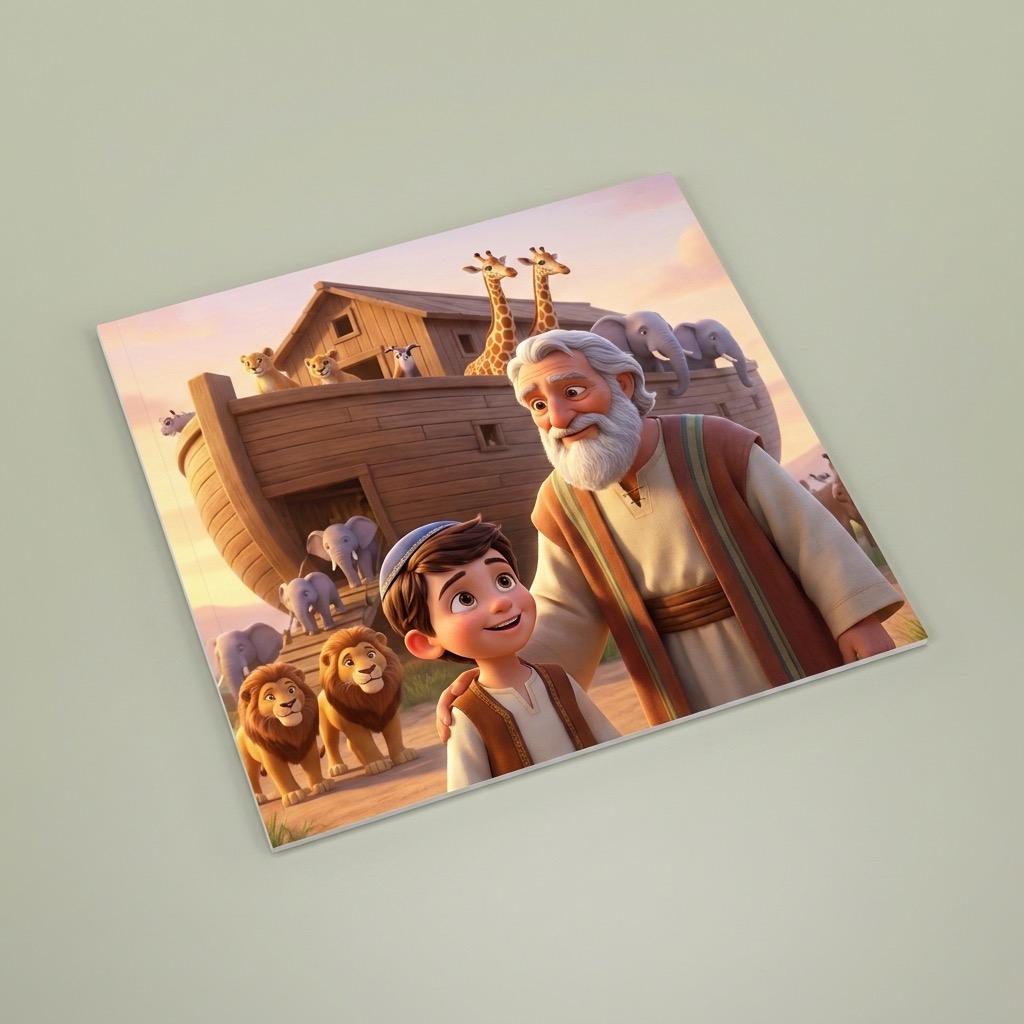
Softcover 8″×8″
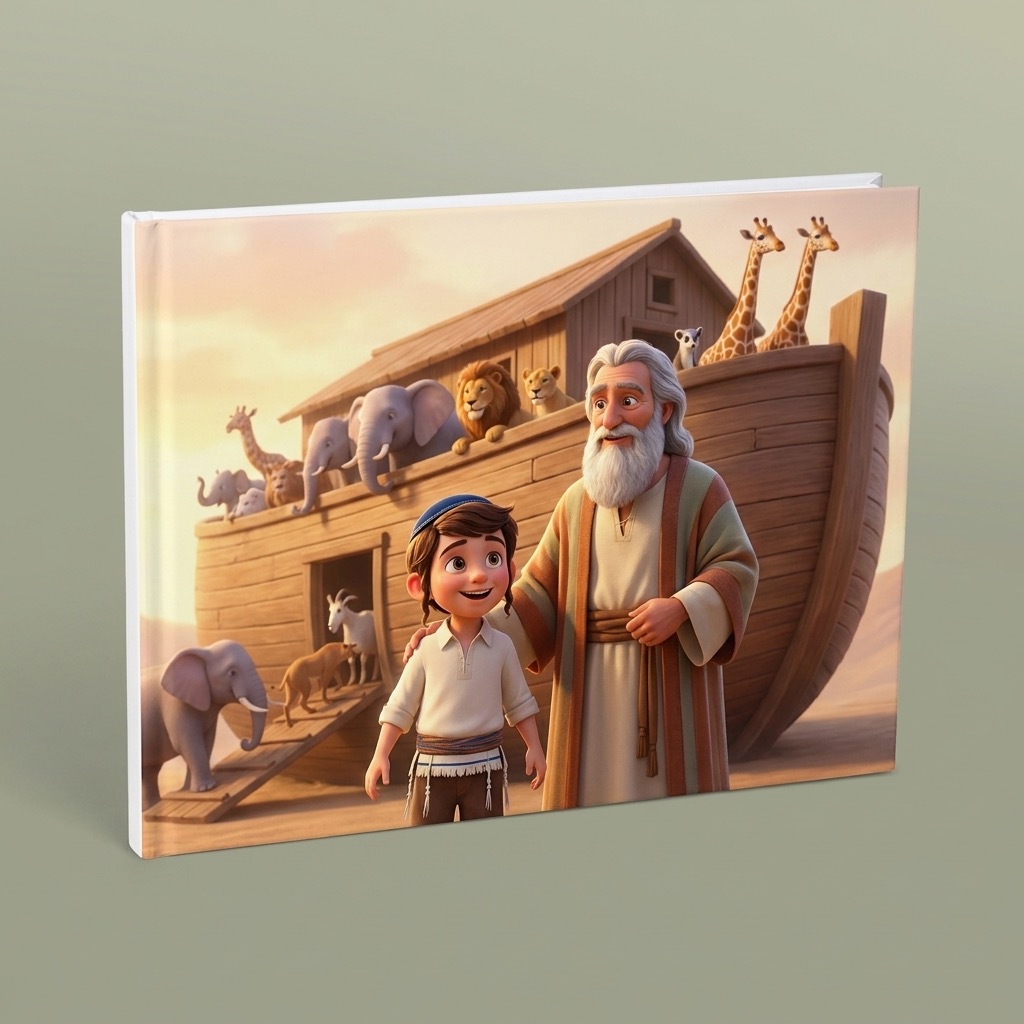
Hardcover 8″×8″
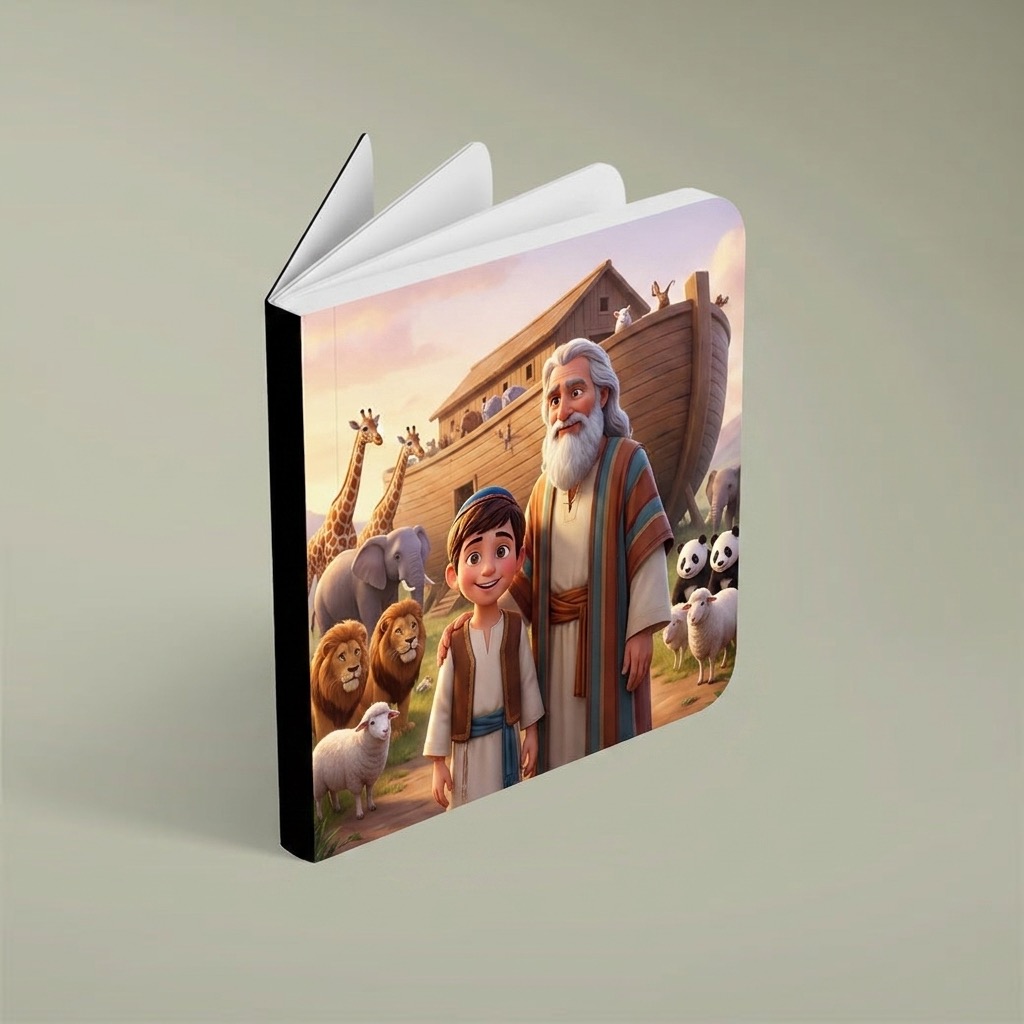
Board book 6″×6″
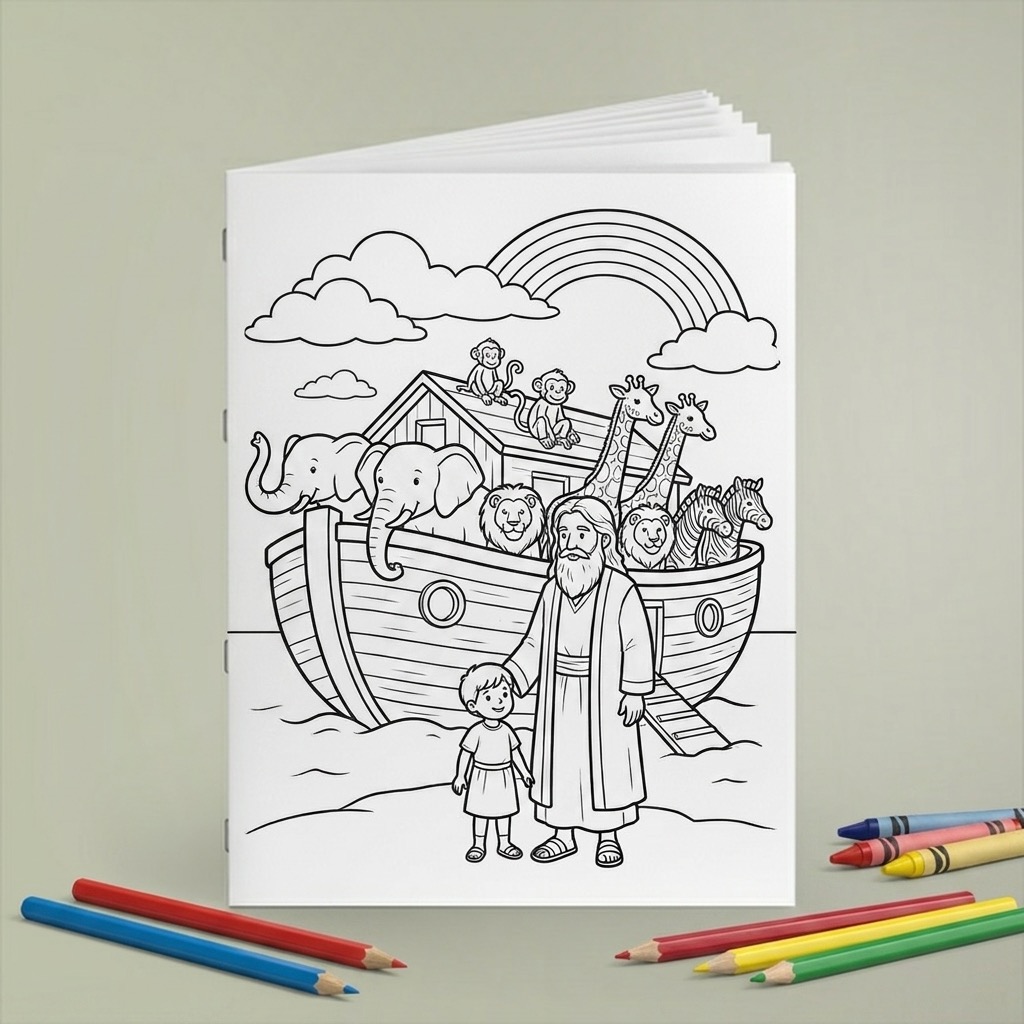
Coloring book 8.5″×11″
What is a personalized Torah Tale book of Chayei Sarah like?
Your child is in the story. Their name and their likeness, illustrated from one uploaded photo in high-resolution 3D Pixar style, appear on every page: standing with Eliezer as he loads the ten camels, at the well as Rivka runs back down with her jug, arriving at the tent as the lamp is lit again. Up to four siblings can appear in the same book, which is what most families with a few children do.
Creating it takes about five minutes and eight short questions: name, boy or girl, age, one photo, siblings, story, language, printed format. Books come in English, Hebrew or Yiddish, and you can order the same story in more than one language. Formats are a 6"x6" board book with rounded safety corners for ages 2 to 4, an 8"x8" softcover for ages 4 to 8, an 8"x8" hardcover in square or landscape for ages 5 to 12, and the optional 8.5"x11" coloring book in black-and-white line art.
Every book is written with careful rabbinical guidance and strict tznius, and reviewed by our team before it goes to print. And every book ends with a dedicated discussion page of 10 questions about the story, mixing comprehension with middos, what happened and what it asks of the child. That page is the reason a book gets talked about at the table instead of just read once at bedtime.

How do I get the Chayei Sarah book before that Shabbos?
The book creator always suggests next week's parsha, with a live countdown to the order deadline for delivery before that Shabbos, so the week to order Chayei Sarah is the week of Vayeira. A double-parsha week produces one book covering both parshiyos. Standard shipping is $3 and takes 5-8 business days, express is $6 and takes 3, and we ship worldwide.
You can order a single book, or a Weekly, Monthly (4 books) or Year Bundle subscription if you want the parsha to arrive on its own each week. If you are deciding between a one-off and keeping up with the cycle, this guide to choosing the weekly parsha walks through it.
Rivka's chesed was chosen because it was noticed, not announced. A child who sees themselves standing at that well, by name, tends to carry the picture into the next time somebody in the house needs something and has not asked. Create the book and have it on the table this Shabbos.
Frequently asked questions
What is Parshas Chayei Sarah about, in one sentence?
Parshas Chayei Sarah is about the end of one generation and the beginning of the next: Sarah Imeinu passes away, Avraham buys the Me'aras HaMachpelah in Chevron to bury her, and he sends his servant Eliezer to find a wife for Yitzchak, who returns with Rivka. The parsha closes with Avraham Avinu's own passing at 175 and his burial beside Sarah. Children usually remember it as the parsha of Rivka and the camels at the well.
What is the lesson of Parshas Chayei Sarah for children?
The lesson is chesed that goes further than what was asked for. Eliezer asked for one drink of water, and Rivka drew water for him and then for all ten camels, running back and forth to the well. The parsha teaches that Hashem chose Rivka not because of anything she said about herself, but because of what she did for a stranger when nobody was watching.
How do I explain Rivka and the camels to a 4-year-old?
Keep it to one picture: a man came from far away with ten very thirsty camels, and a girl named Rivka gave him a drink and then filled the water again and again until every single camel had enough. Then say the point out loud: Rivka helped more than she was asked, and that is why Hashem chose her. A 4-year-old does not need Ephron, the negotiation over the cave, or the shidduch details.
Why did Avraham pay money for the Me'aras HaMachpelah if it was offered for free?
Ephron publicly offered the field as a gift, but Avraham insisted on paying the full price, four hundred shekel kesef, in front of witnesses. He wanted the burial place of Sarah Imeinu to belong to him and to his children with no argument and no favors owed. For children this is the clearest lesson in honesty in the parsha: a Yid pays for what he takes.
Which Torah Tale format is best for the parsha of Chayei Sarah?
For ages 2 to 4, the 6"x6" board book with rounded safety corners holds up to being carried around. For ages 4 to 8 the 8"x8" softcover photo book is the usual choice, and for ages 5 to 12 the 8"x8" hardcover in square or landscape is the one that stays on the shelf for years. Many families add the matching 8.5"x11" coloring book for a weekday afternoon or erev Shabbos, never for Shabbos or Yom Tov itself, since coloring is melacha.
Can I get a Chayei Sarah book in time for that Shabbos?
The Torah Tale book creator always suggests next week's parsha, with a live countdown to the order deadline for delivery before that Shabbos. Standard shipping is $3 and takes 5-8 business days, and express shipping is $6 and takes 3 business days. If you order during the week of Parshas Vayeira, Chayei Sarah is exactly what the creator will offer you.