Parshas Vayigash for Kids: Yehuda Steps Forward & "Ani Yosef"
Vayigash is the parsha where the secret breaks open. Yehuda steps forward to save Binyamin, Yosef clears the room and says two words that change everything, and a father who mourned for twenty-two years hears that his son is alive.
Published by Torah Tale.
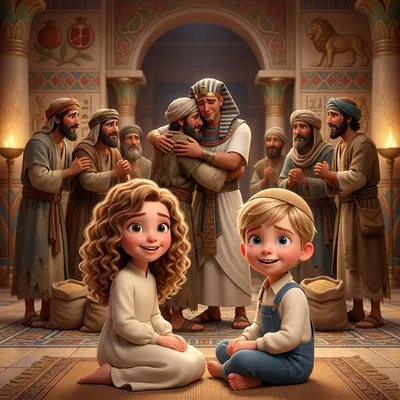
Create this book for your child
Parshas Vayigash is the parsha where the secret finally breaks. Yehuda steps forward and offers himself as a slave so that Binyamin can go home to their father, and Yosef, the Egyptian ruler the brothers have been bowing to for two parshiyos, clears the room and says two words: Ani Yosef. For children, this is the payoff of the whole Yosef story - the moment the reader has been waiting for since the pit in Vayeishev - and it lands because kids already know the secret and have been holding it the whole time.
What happens in Parshas Vayigash?
Binyamin has been caught with the viceroy's silver goblet, and the viceroy has announced that Binyamin will stay in Mitzrayim as his slave. Yehuda steps forward. He retells the whole story from the beginning: an old father, a son who is gone, a younger son the father cannot live without. Then he offers the trade. Take me instead of the boy, because I promised my father I would bring him back, and I cannot go up to my father if the boy is not with me.
Yosef cannot hold himself back. He orders every Egyptian out of the room, and alone with his brothers he says, "I am Yosef. Is my father still alive?" The brothers cannot answer him. They are stunned into silence. Yosef calls them closer and says the words that turn the whole story around: do not be pained and do not be angry at yourselves for selling me, because Hashem sent me here ahead of you to keep you alive.
Then come the wagons. Yosef sends his brothers home loaded with food and with wagons to carry the family down. Yaakov hears that Yosef is alive and does not believe it, until he sees the wagons - and Chazal tell us the wagons were a sign, because agalos hinted at eglah arufah, the last sugya Yaakov had learned with Yosef before he disappeared. Then, the pasuk says, the spirit of Yaakov their father came alive.
Yaakov travels to Be'er Sheva and brings korbanos, and Hashem speaks to him in a vision of the night: do not be afraid of going down to Mitzrayim, I will go down with you and I will also bring you up. Seventy nefashos go down. Yaakov sends Yehuda ahead, and Chazal tell us it was to set up a place of Torah learning in Goshen before the family even arrived. Father and son meet at last, Yosef falls on his father's neck and weeps, and Rashi tells us that Yaakov at that moment was saying Krias Shema. Yaakov is brought before Pharaoh and gives him a bracha, and the family settles in Goshen.
Why did Yosef send everyone out of the room?
This is the detail worth stopping on with children, because it is easy to skim past. Yosef was the second most powerful man in Mitzrayim. He could have revealed himself in front of a hall full of Egyptian ministers and let his brothers stand there exposed as the men who sold their own brother. Instead he cleared the room. He put himself in danger, alone and unguarded with eleven men who had once thrown him into a pit, rather than let them be shamed in public.
Ask a child: Yosef had every reason to be angry. What did he choose to protect instead? Kids get this immediately, because they know exactly what it feels like to be corrected in front of the whole class versus quietly in the hallway.
What is the lesson of Vayigash for children?
Two middos carry the parsha, and they belong to two different brothers.
Yehuda: keeping your word when it costs you. Back in Mikeitz, Yehuda personally guaranteed Binyamin's safety to his father. In Vayigash the bill comes due, and Yehuda pays it without bargaining. He does not say "I tried." He offers to spend the rest of his life as a slave. This is the same Yehuda who once suggested selling Yosef, and here he stands ready to be sold himself to protect Rachel's other son. That is what finished teshuvah looks like.
Yosef: seeing Hashem's hand instead of keeping score. Yosef had twenty-two years of grievance available to him and he put it down. "It was not you who sent me here, but Hashem." He is not pretending nothing happened; he is choosing what to do with it. For an older child that is a big idea worth naming out loud: things that felt terrible at the time were part of a plan we could not see yet.
If your child is coming to Vayigash cold, it helps enormously to read the earlier chapters first. Our pieces on Parshas Vayeishev and Parshas Mikeitz give you the pit, the dreams and the goblet in a form you can retell in two minutes at the table.
How do I explain Vayigash at different ages?
| Age | What to tell them |
|---|---|
| 2-4 | Yosef's brothers did not know it was him. Then Yosef said, "It's me, Yosef!" and everyone hugged. Then Yosef sent big wagons to bring Tatty Yaakov, and Yaakov hugged Yosef too. Keep it to hello and hugging. |
| 5-7 | Add Yehuda. Yehuda promised Tatty that he would take care of Binyamin, so when Binyamin was in trouble Yehuda said, "Keep me instead of him." A promise is a promise even when it is hard. Then Yosef told them who he was. |
| 8-10 | Add the room being cleared, and why. Add Yosef's line that Hashem sent him ahead to save the family. Ask them how Yosef managed not to be angry. |
| 11-12 | Add Hashem's promise at Be'er Sheva - "I will go down with you and I will bring you up" - and that this is the beginning of galus Mitzrayim. Add Yehuda being sent ahead to set up a place of Torah before the family arrived: even in a rush, the beis midrash comes first. |
What a personalized Parshas Vayigash book is like
Torah Tale prints Parshas Vayigash as a personalized storybook in which your child is a character in the story. You upload one photo, and their likeness is illustrated in high-resolution 3D animated-film style on every page - standing in the hall when Yehuda steps forward, in the room when Yosef says "Ani Yosef," riding along with the wagons that come back to Yaakov. Up to eight siblings can appear in the same book, which is a nice fit for a parsha whose whole subject is brothers.
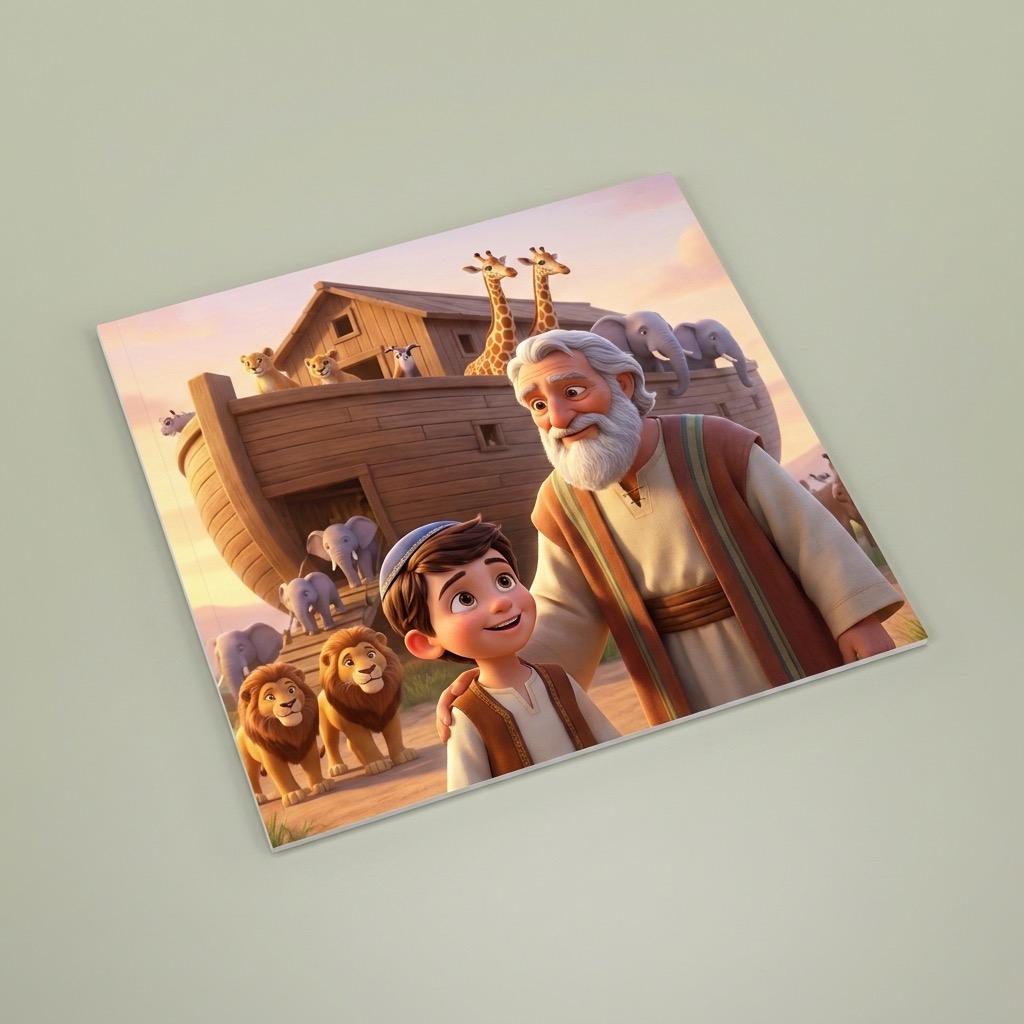
Softcover 8″×8″
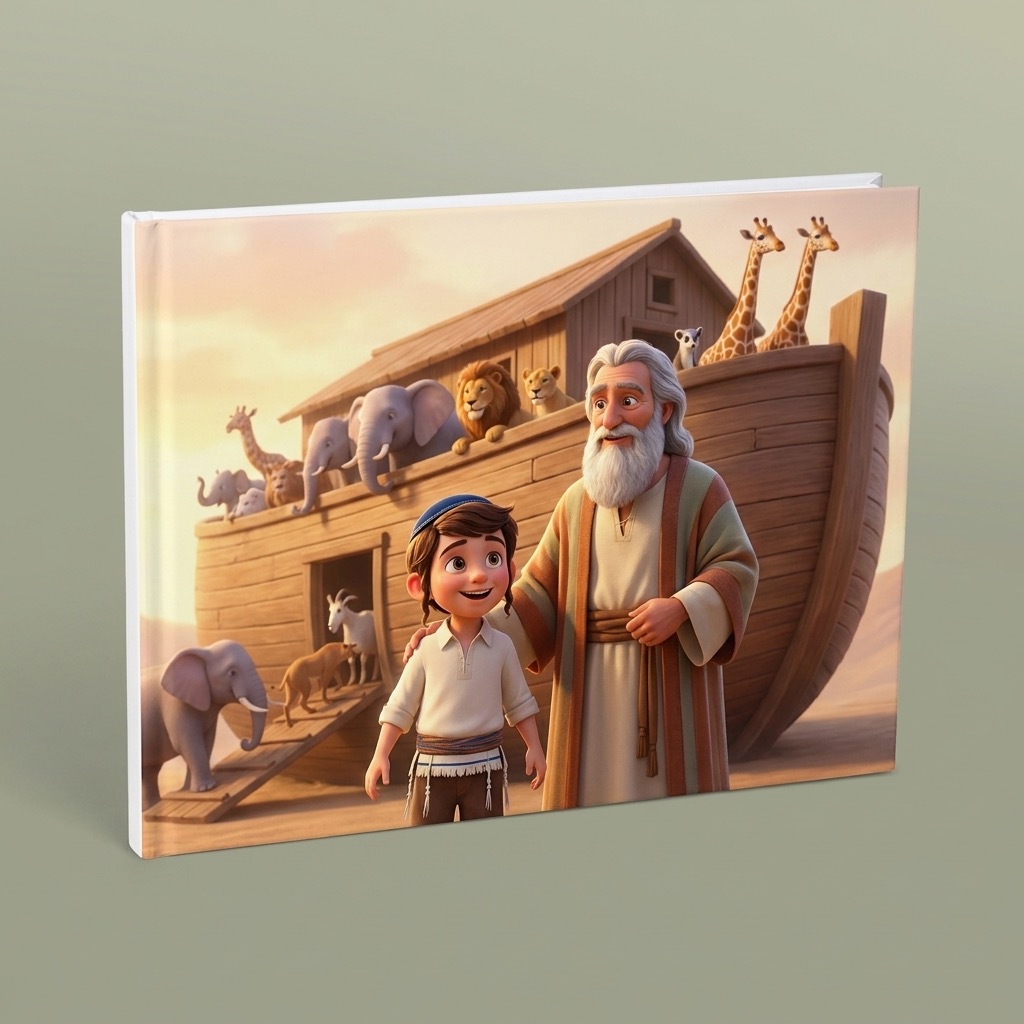
Hardcover 8″×8″
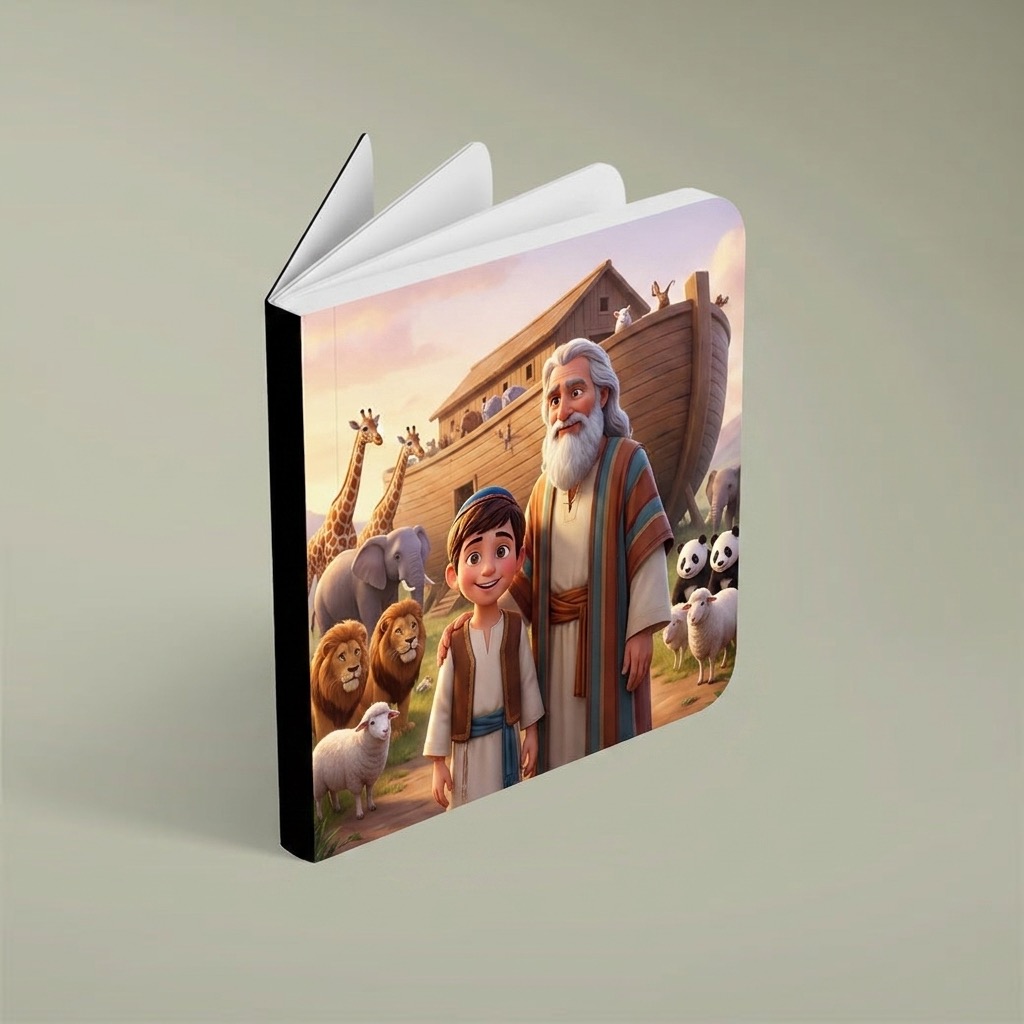
Board book 6″×6″
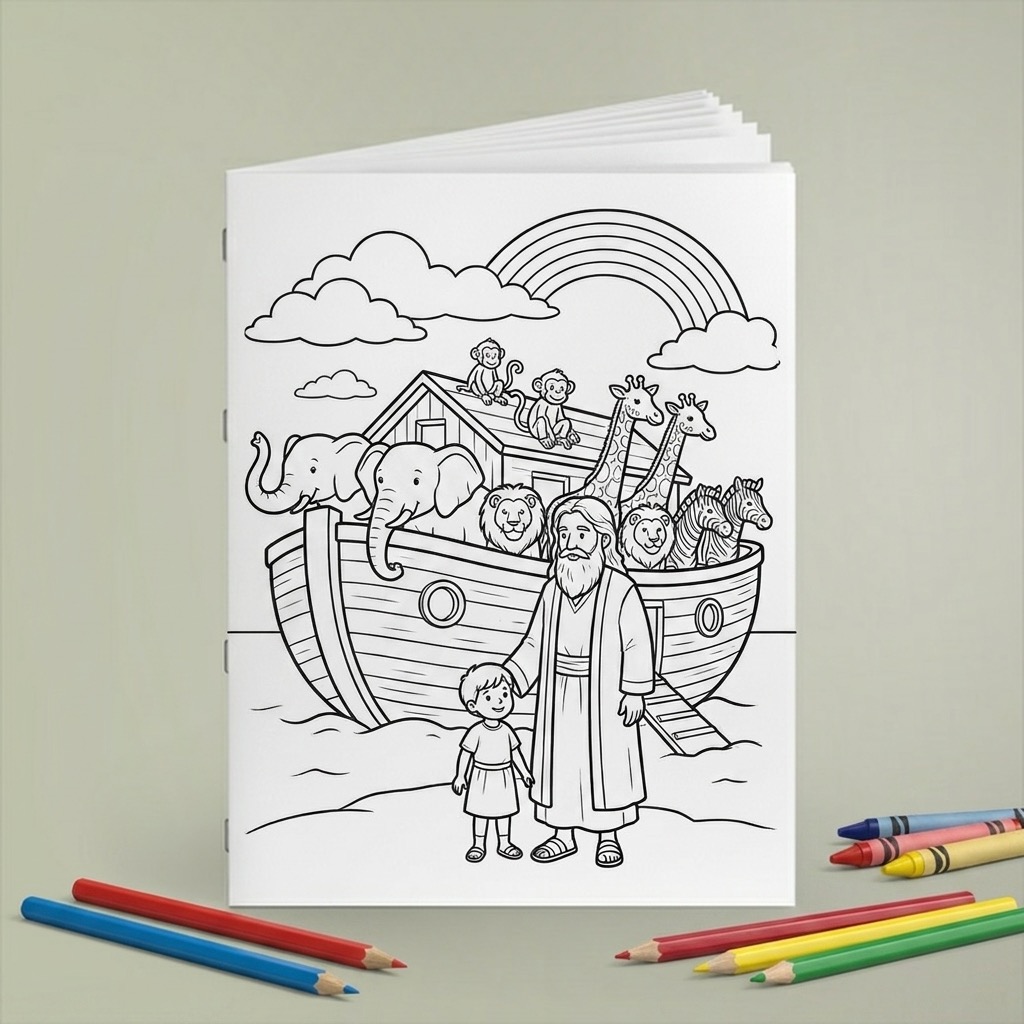
Coloring book 8.5″×11″
Choose the format by age: the 6"x6" board book with rounded safety corners for 0 to 4, the 8"x8" softcover for 4 to 8, or the 8"x8" hardcover for 5 to 18. Books come in English, Hebrew or Yiddish, and you can order more than one language. Every book is written with careful rabbinical guidance and strict tznius and is reviewed by our team before printing, and every book ends with a discussion page of 10 questions that mix comprehension with middos. That page is what moves the book from bedtime to the Shabbos table.
The book creator suggests next week's parsha, not this week's, with a live countdown to the order deadline for delivery before that Shabbos. If you are not sure how to plan which parsha to order when, we walk through it in how to choose the weekly parsha for your child's book.
Shabbos table questions and one weekday activity
Five questions that work for a mixed-age table:
- Yehuda promised his father he would bring Binyamin home. What did that promise end up costing him?
- Why did Yosef make all the Egyptians leave the room before he told his brothers who he was?
- The brothers could not answer Yosef. Why do you think they had nothing to say?
- Yosef said Hashem sent him to Mitzrayim to save the family. Has anything ever felt bad to you at first and turned out fine later?
- Yaakov sent Yehuda ahead to Goshen to set up a place to learn Torah before anyone arrived. What does that tell you about what mattered most to Yaakov?
A weekday activity, for erev Shabbos or a Sunday afternoon: give your child a small piece of paper and have them write one promise they can actually keep this week - clearing the table without being asked, davening without rushing, letting a younger sibling pick the game. Yehuda's greatness in this parsha is not a grand speech, it is a guarantee he honoured. If you order the matching 8.5"x11" coloring book, that is a weekday project too - coloring is melacha, so keep it for the days before Shabbos, a weekday afternoon or Chol HaMoed. The storybook itself is perfect Shabbos reading.
Vayigash is the parsha where a family that fell apart gets put back together, and a child who sees their own face in the room when Yosef says "Ani Yosef" remembers it differently than a child who only hears it. It takes about five minutes and a few short questions to make. Create the book and have it before Shabbos.
Frequently asked questions
What is the story of Parshas Vayigash in simple words?
Yehuda walks up to the Egyptian ruler and begs him to let Binyamin go home, offering himself as a slave instead so that his father Yaakov will not be broken by losing another son. The ruler cannot hold himself back any longer. He sends all his servants out of the room and tells his brothers, "I am Yosef. Is my father still alive?" Yosef comforts his brothers, sends wagons to bring Yaakov down to Mitzrayim, and the whole family is finally together again.
What is the lesson of Parshas Vayigash for children?
There are two main lessons. The first is Yehuda's achrayus: he gave his word to his father that he would bring Binyamin back, and when it cost him everything he kept it. The second is Yosef's kindness in how he told the truth. He cleared the room first so his brothers would not be embarrassed in front of strangers, and then he told them not to be pained, because everything had come from Hashem.
How do I explain Parshas Vayigash to a 4-year-old?
Keep it to the reunion and skip the courtroom tension. Say that Yosef's brothers did not know it was Yosef, and then Yosef told them, "It's me, Yosef, your brother!" and everybody hugged and cried happy tears, and then Yosef sent wagons to bring Tatty Yaakov to see him. A four-year-old understands a lost brother who is found, and that is the whole parsha for that age.
Why did Yosef cry when he revealed himself?
Yosef had not seen his father or Binyamin for twenty-two years, and he had just watched Yehuda risk his own freedom for Binyamin. The Torah says he could no longer hold himself back and he wept so loudly that Mitzrayim heard. Children understand tears of relief, and it is worth telling them that a tzaddik crying is not weakness - Yosef's heart was full.
What were the wagons Yosef sent to Yaakov?
Yosef sent wagons, agalos, to carry Yaakov and the family down to Mitzrayim. Chazal tell us that the wagons were a private sign between father and son: the last sugya Yaakov learned with Yosef before he disappeared was eglah arufah, and agalah sounds like eglah. When Yaakov saw the wagons, his spirit came back to life, because now he knew it was really his Yosef.
Which Torah Tale format is best for the Vayigash book?
For ages 0 to 4 choose the 6"x6" board book with rounded safety corners, for ages 4 to 8 the 8"x8" softcover, and for ages 5 to 18 the 8"x8" hardcover. Every format ends with the same discussion page of 10 questions. There is also an optional matching 8.5"x11" coloring book in black-and-white line art for weekday use.