Parshas Mikeitz for Kids: Pharaoh's Dreams & the Seven Cows
Mikeitz is the parsha where the waiting ends. Two dreams wake Pharaoh in the middle of the night, Yosef is rushed out of prison, and everything he dreamed years earlier begins to come true. Here is how to tell it to a 4-year-old and to a 10-year-old, plus questions for the Shabbos table.
Published by Torah Tale.
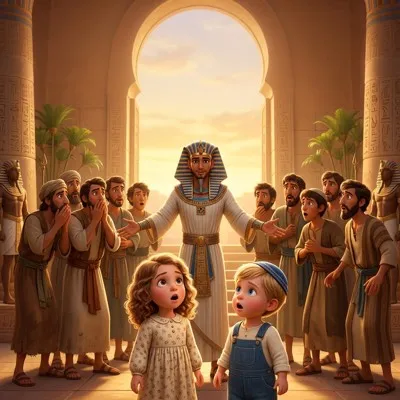
Create this book for your child
Parshas Mikeitz is the parsha where the waiting finally ends. Pharaoh wakes from two strange dreams, nobody in Mitzrayim can explain them, and Yosef is rushed out of prison to stand before the king. By the end of the day he is second to Pharaoh over the whole country. Children love this parsha because it turns so fast, and because everything Yosef dreamed about as a boy starts quietly coming true in front of brothers who have no idea who they are talking to.
What happens in Parshas Mikeitz? The story retold for children
The parsha opens with the word mikeitz, "at the end of." At the end of two more years in prison, after the royal wine steward walked out free and forgot all about Yosef, Pharaoh has a dream.
He sees seven healthy cows come up out of the Nile, and then seven thin, sickly cows come up and swallow them. He wakes, sleeps again, and sees seven full stalks of grain swallowed by seven thin, withered stalks. In the morning none of the wise men of Mitzrayim can give him an explanation that settles his heart.
Then the wine steward remembers the young Yid who explained his dream in prison. Yosef is brought up, washed and dressed, and stood before the king. Pharaoh says he has heard that Yosef can interpret dreams. Yosef answers that it is not from him, that Hashem is the One who gives the answer.
The two dreams, Yosef says, are one message. Seven years of plenty are coming to Mitzrayim, and then seven years of terrible famine that will swallow up all the good years, so completely that people will forget the plenty ever happened. And Yosef adds advice nobody asked him for: appoint a wise man to gather food during the good years and store it for the hungry ones.
Pharaoh looks at him and says there is no one wiser. He gives Yosef his ring, dresses him in royal clothing, gives him the name Tzafnas Paneach, and places him over all of Mitzrayim. Yosef travels the land, builds storehouses, and gathers grain year after year until the counting stops. Two sons are born to him, Menashe and Efraim.
Then the famine comes, and it reaches Eretz Canaan too. Yaakov sends ten of his sons down to Mitzrayim to buy food and keeps Binyamin home. They come and bow to the ruler who controls the grain, and they do not recognize him. Yosef recognizes them at once, and the Torah tells us he remembered his dreams.
He speaks to them harshly, through an interpreter, and calls them spies. He demands they bring their youngest brother down to prove they are telling the truth, and keeps Shimon behind. Their money is returned secretly into their sacks. Eventually the food runs out, Yehuda takes responsibility for Binyamin, and Yaakov lets him go.
At the second meeting Yosef feeds them and seats Binyamin beside him. Then he has his silver goblet hidden in Binyamin's sack, and sends his servant to catch them on the road. The goblet is found where nobody expected it, and the parsha ends right there, with the brothers standing in the palace and Binyamin condemned to stay. Yehuda's answer waits for next week. If you have not yet learned the beginning of Yosef's story with your children, the coat and the pit and the dreams are all in Parshas Vayeishev.
What is the lesson of Parshas Mikeitz?
The first middah in this parsha is the one hiding in its opening word. Two years passed in which nothing visibly happened to Yosef. Chazal teach that the wine steward's forgetting was itself part of the plan, because the yeshuah had a set time. When it arrived, it took one morning.
That is a real thing to give a child: the stretch where you are davening and nothing has changed yet is not the story failing, it is the story still going.
The second middah is smaller and easy to skip over. Pharaoh, the most powerful man in the world, compliments Yosef, and Yosef immediately says it is not mine, it is Hashem's. He is standing in front of the one person who could set him free, and he does not take the credit. Children who are told they are smart, fast, musical or good at learning are being handed the same test in a smaller size.
The third is Yosef's total lack of bitterness. He names a son Menashe, from the word for forgetting, because Hashem let him forget the pain of his father's house. He runs a kingdom for the king of the land where he had been sold as a slave.
How do I explain Mikeitz to a 4-year-old and to an 8-year-old?
The story is long, so let the age decide how much of it you tell.
Ages 2 to 4. Stay with the pictures and the counting. Seven fat cows, seven thin cows, seven full stalks, seven skinny stalks. "The king was scared of his dream. Only Yosef knew what it meant. So the king took Yosef out of jail and made him the boss of all the bread in Mitzrayim." End there. That is a complete, satisfying story for a three-year-old.
Ages 5 to 7. Add the storehouses and the brothers arriving. Ask the question they will ask anyway: how could the brothers not recognize him? Answer it plainly. Many years had passed, he was dressed like an Egyptian ruler, he spoke through an interpreter, and they were not looking for their brother in a palace.
Ages 8 to 12. Now the interesting part is Yosef's behavior. Why the harsh words? Why keep Shimon? Why plant the goblet on Binyamin of all people? Let them sit with it and suggest that Yosef was testing whether these were still the same brothers who let a younger one be taken away, or whether they had changed. An older child can carry that question all the way to Vayigash.
Why does Mikeitz land on Shabbos Chanukah?
In most years, Parshas Mikeitz falls on the Shabbos of Chanukah, which is why so many children learn it with a menorah on the windowsill. The two fit together without any forcing. Both are about a small light that keeps burning through a long dark stretch, and a rescue that arrives when it looks least likely.
It also means Mikeitz week is often a busy week at home, with latkes, guests and cousins. A parsha book that a child can read to himself on a long Shabbos afternoon, or bring to the table to read aloud, earns its place that week.
What is a personalized Torah Tale book of Parshas Mikeitz like?
Torah Tale prints Parshas Mikeitz as a personalized storybook in which your own child is the hero. You upload one photo, and their likeness is illustrated into every page in high-resolution 3D animated-film style, standing in the courtyard when Yosef is brought before Pharaoh, walking the storehouses, watching the brothers bow. Up to eight siblings can appear in the same book.

The parsha comes from the Torah collection in the story picker, alongside Nevi'im, Kesuvim, the Yamim Tovim, Yiddishe life, the mitzvos a child keeps, and the stories of the tzadikim. Every book is written with careful rabbinical guidance and strict tznius and reviewed by our team before printing, and it is available in English, Hebrew or Yiddish.
Every book closes with a dedicated discussion page of 10 questions on the story, mixing comprehension with middos. In Mikeitz those are the questions worth having: what Yosef said when he was praised, and what the brothers were being tested on. That page is what turns the book from something read at bedtime into something argued about at the Shabbos table.
The book creator suggests next week's parsha with a live countdown to the order deadline for delivery before that Shabbos, so if you want Mikeitz in hand for Shabbos Chanukah, order it the week before. Standard US shipping is $4.99 (free on one-time orders over $60) and takes 5 to 8 business days.
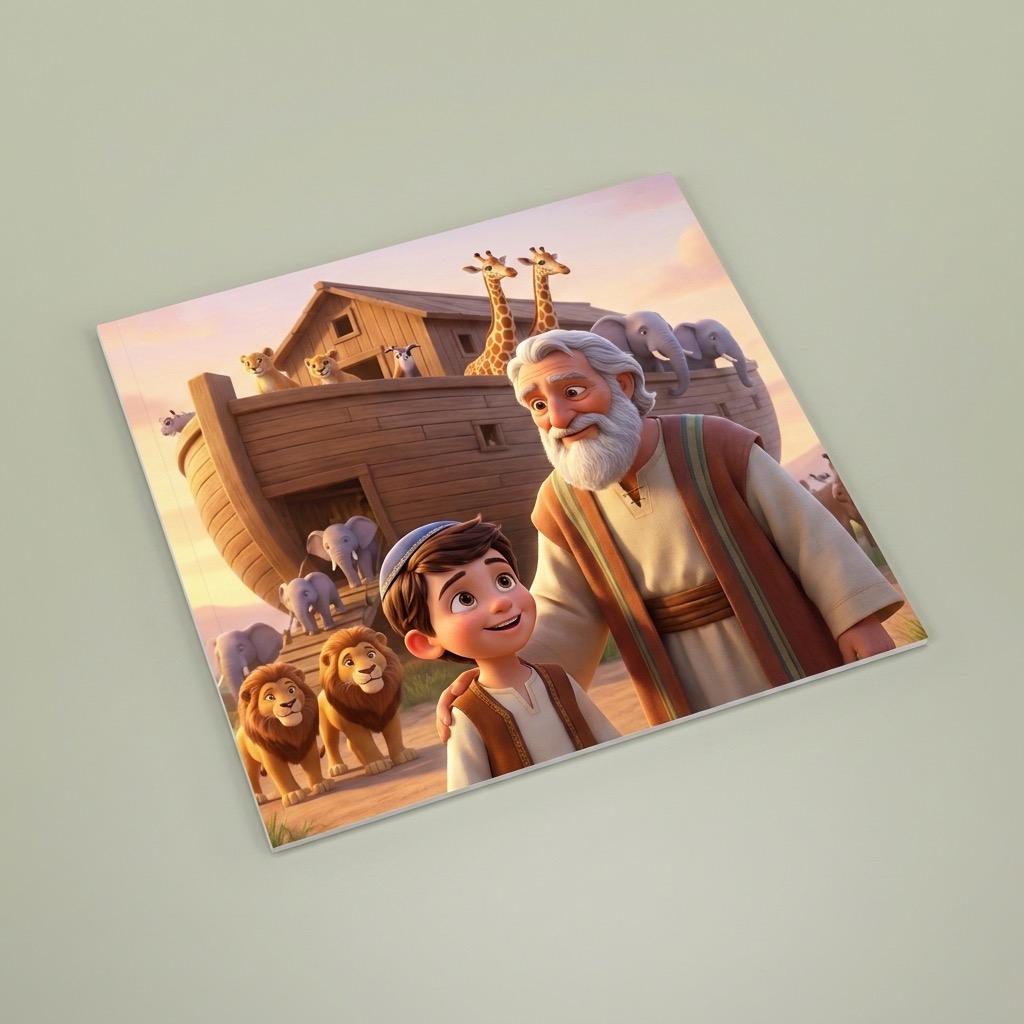
Softcover 8″×8″
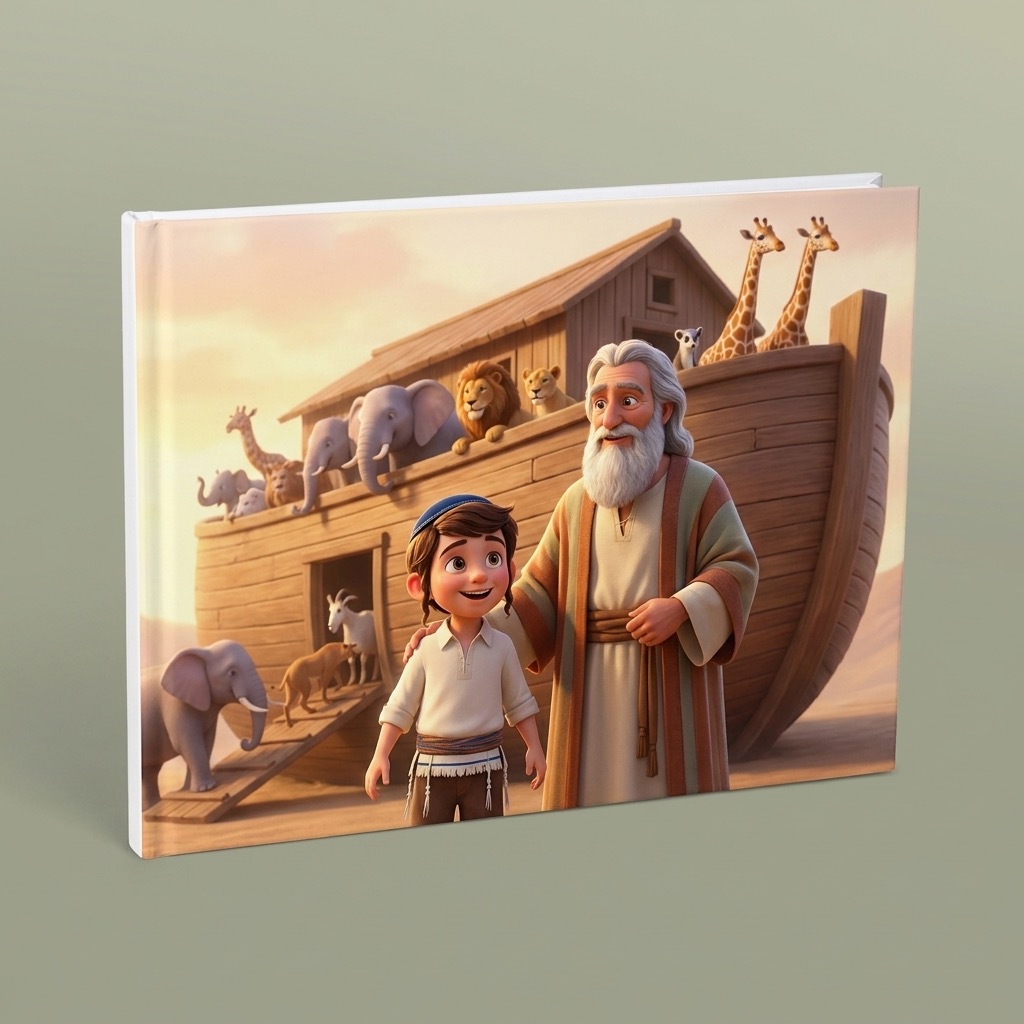
Hardcover 8″×8″
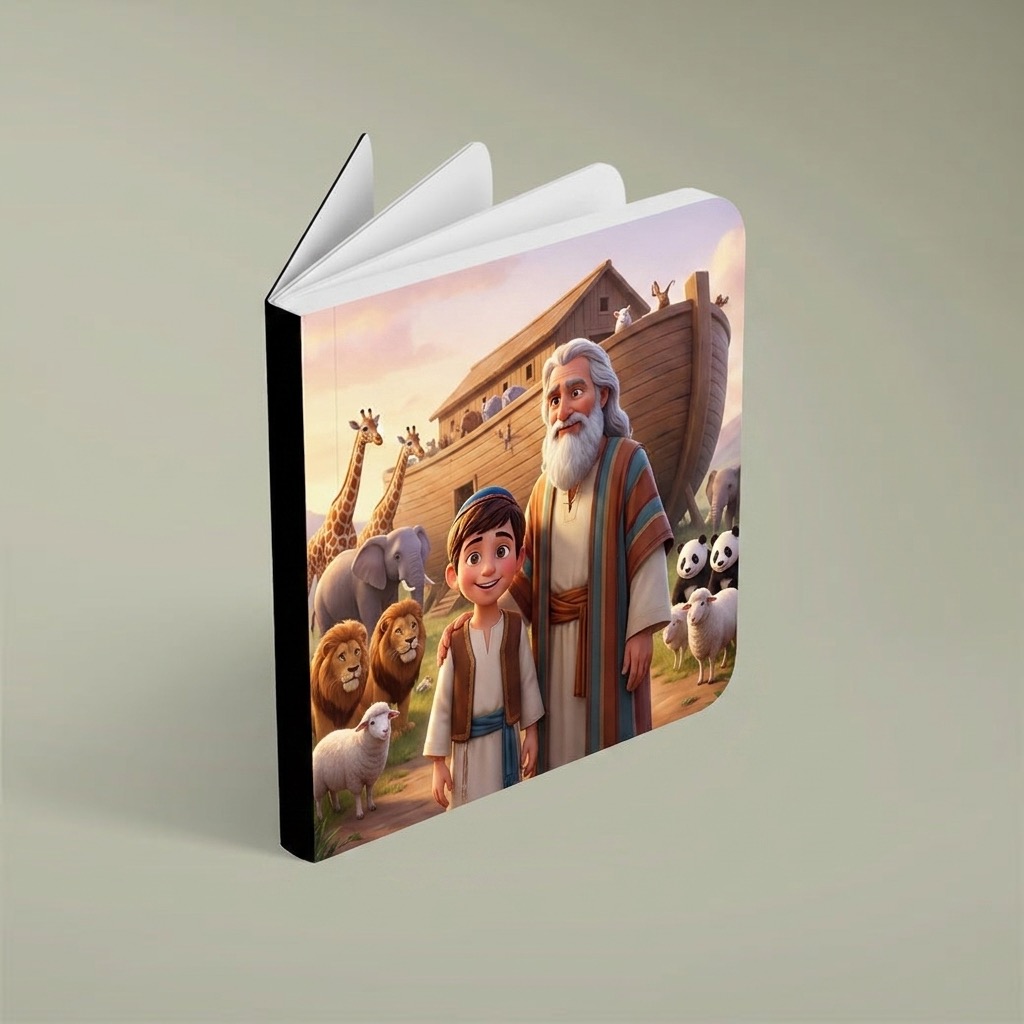
Board book 6″×6″
Coloring book 8.5″×11″
Shabbos-table questions and one weekday activity
Five questions that work at almost any age:
- Why do you think Hashem let the wine steward forget Yosef for two whole years?
- Pharaoh told Yosef he was clever. What did Yosef answer? Why is that hard to say?
- Nobody asked Yosef for advice about storing food. Was he right to give it anyway?
- Yosef had every reason to be angry at his brothers. What did he do instead of taking revenge on them?
- Is there something you are waiting for that has not happened yet? What can you do while you wait?
For a weekday activity, take an empty shoebox and let the children build Yosef's storehouse. During the week before, they "gather" seven small things a day into it, one for each good year. Then on the seventh day, count what is inside and talk about who thought ahead.
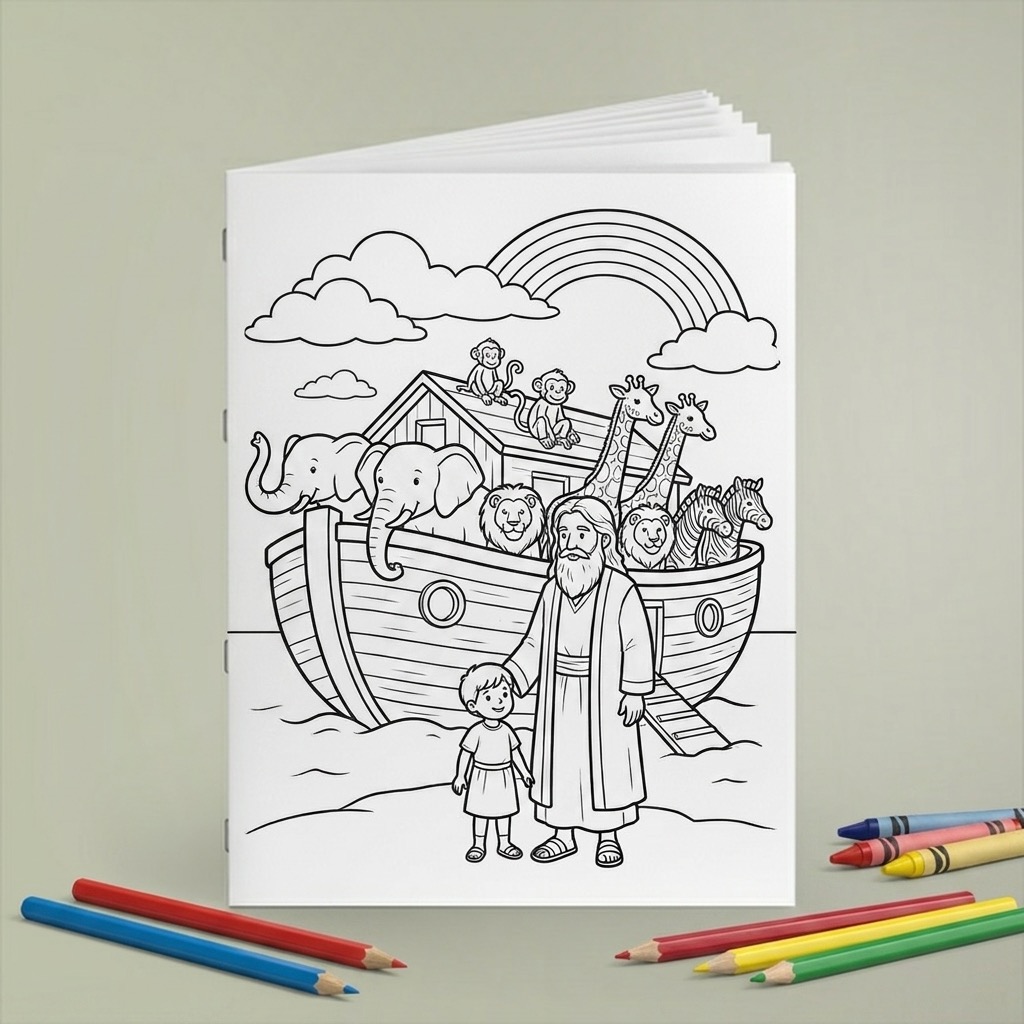
Younger children can color the seven cows and the seven stalks. Torah Tale offers an optional matching coloring book in black-and-white line art, and that is a weekday job, erev Shabbos afternoon or a quiet Sunday, since coloring is melacha and not for Shabbos or Yom Tov. The storybook itself is exactly right for Shabbos, and for Chanukah afternoons when the candles are burning and nobody wants to go outside.
If your child is learning Mikeitz in cheder or Bais Yaakov this year, having their own face in the palace when Pharaoh calls for Yosef changes how closely they listen. It takes about five minutes and a few short questions to make. Create the book before the order deadline for Shabbos, or browse a few more gift ideas first.
Frequently asked questions
What is the story of Parshas Mikeitz for kids?
Pharaoh dreams that seven thin cows swallow seven healthy cows, and that seven withered stalks of grain swallow seven full ones. Nobody in Mitzrayim can explain the dreams, so Yosef is brought up from prison, and he tells Pharaoh that there will be seven years with plenty of food followed by seven years of hunger. Pharaoh appoints Yosef to run the whole country and store the grain, and years later Yosef's brothers come down from Eretz Canaan to buy food and do not recognize the ruler standing in front of them.
What is the lesson of Parshas Mikeitz?
The main lesson is that Hashem's plan is working even during the long stretch when nothing seems to be happening. Yosef sat in prison for years after the wine steward forgot him, and then in a single day he was standing before the king. A second lesson is humility: when Pharaoh praised Yosef as a dream expert, Yosef answered that the explanations belong to Hashem, not to him.
How do I explain Parshas Mikeitz to a 5-year-old?
Say it in one sentence first: "The king had a scary dream, only Yosef could explain it, so the king took Yosef out of jail and made him the boss of all the food in Mitzrayim." Young children love the counting in this parsha, so count seven fat cows and seven thin cows on your fingers with them. Skip the goblet and the spy accusation for now and end on the happy turn, that Yosef went from prison to the palace in one day.
Why does Parshas Mikeitz usually come out on Chanukah?
Because of where Mikeitz sits in the yearly cycle of parshiyos, it almost always falls on the Shabbos of Chanukah. Many families notice the theme they share: the small light that keeps burning through a long dark stretch, and the yeshuah that arrives when it looks least likely. It is a good week to point out to children that Yosef's rescue and the neis of the menorah both came after waiting.
Why didn't Yosef's brothers recognize him in Mikeitz?
Years had passed since they last saw him, and the man in front of them was dressed as an Egyptian ruler, spoke to them through an interpreter, and carried an Egyptian name, Tzafnas Paneach. They were looking for a lost brother, not for the viceroy of Mitzrayim. Yosef recognized them immediately, and the Torah tells us he remembered the dreams he had dreamt about them as a boy.
Which Torah Tale format is best for the Mikeitz book?
For ages 0 to 4 choose the 6"x6" board book with rounded safety corners, which handles the counting of the cows and the sheaves well. Ages 4 to 8 usually suit the 8"x8" softcover photo book, and ages 5 to 18 the 8"x8" hardcover, which holds up to being read every Shabbos. Books can be ordered in English, Hebrew or Yiddish, and in more than one language if you like.