Parshas Bo for Kids: The Last Makkos, the Korban Pesach & Leaving Mitzrayim
Parshas Bo is the parsha where the makkos end and Yiddishkeit begins: locusts, darkness, makas bechoros, blood on the doorposts, matzah baked on shoulders, and the very first mitzvos Hashem gave Klal Yisrael as a nation. Here is how to tell it to a four-year-old and to a ten-year-old, and what to ask at the table.
Published by Torah Tale.
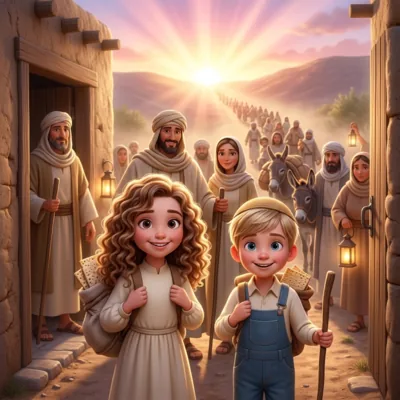
Parshas Bo is the parsha where Mitzrayim finally breaks. It brings the last three makkos - arbeh (locusts), choshech (three days of darkness) and makas bechoros - and then, on that same night, the Yidden eat the first korban Pesach and walk out of Mitzrayim with dough on their shoulders that had no time to rise. For children it lands hard and clean, because it is the ending they have been waiting for since Parshas Shemos, and because so much of it shows up on their own seder table every year.
What happens in Parshas Bo? The story retold for children
Hashem tells Moshe Rabbeinu, "Bo el Pharaoh" - come to Pharaoh. Moshe warns him that locusts are coming. Pharaoh's own servants have had enough by now and say to him, "Do you not yet know that Mitzrayim is lost?" Pharaoh offers a deal: the men may go and serve Hashem, but the children stay. Moshe refuses. We go with our young and our old, our sons and our daughters.
So an east wind blows all night and the arbeh arrive. They cover the ground until the land is dark with them, and they eat every green thing that the hail had left. Pharaoh calls for Moshe and Aharon in a hurry, admits he sinned, and Hashem sends a west wind that carries every last locust into the Yam Suf.
Then comes choshech. Rashi explains that the darkness was thick, not just an absence of light: for three days the Mitzriyim could not see one another, and for three more days nobody could stand up from where he was sitting. The Yidden, meanwhile, had light in their dwellings. Chazal tell us that during those days the Yidden could walk through Mitzri homes and see where the gold and silver was kept, so that later, when they asked their neighbors for it, no one could pretend to be poor.
Pharaoh offers one more partial deal, the animals stay behind, and Moshe answers that not a hoof will be left. Pharaoh throws him out. Moshe warns of the final makkah: at chatzos, exactly midnight, every bechor in Mitzrayim will die, from Pharaoh's own firstborn down to the firstborn of the maidservant.
Before that night, Hashem gives Moshe and Aharon mitzvos. Take a lamb on the tenth of the month, keep it until the fourteenth, bring it as the korban Pesach, and put its blood on the two doorposts and the lintel. Eat it roasted, with matzah and maror, and do not go outside until morning. That night Pharaoh runs through the streets looking for Moshe and tells the Yidden to go. They leave in such a rush that the dough on their shoulders bakes flat in the sun.
Why is Parshas Bo the parsha of "firsts"?
Before the Yidden leave, Hashem says "HaChodesh hazeh lachem rosh chodashim" - this month is for you the first of the months. That is Kiddush HaChodesh, and it is the first mitzvah given to Klal Yisrael as a nation. Before they have land, before they have the Torah at Har Sinai, they are given control of the calendar.
It is worth saying out loud to an older child: slaves do not own their time. Somebody else decides when they start and when they stop. The very first thing Hashem gives a nation of former slaves is a calendar of their own. Freedom in this parsha is not "now we do whatever we want." It is "now we have mitzvos."
The parsha then closes with two more mitzvos that a child will meet in real life: tefillin, and pidyon haben for a firstborn son. And in the middle of it all sits v'higadta l'vincha, the mitzvah to tell your child what Hashem did for us when we left Mitzrayim. The parsha that ends slavery hands the story straight to the next generation.
How do I explain Parshas Bo to a 4-year-old, a 7-year-old and a 10-year-old?
Same story, three different depths.
- Ages 2 to 4: stay with pictures and sounds. Hopping locusts everywhere. Dark, dark, dark for the Mitzriyim, and light in the Yiddishe houses. A sign on the door so Hashem's protection was there. Then everybody walking out with flat bread. Do not describe makas bechoros in detail; "Hashem punished Mitzrayim that night, and the Yidden were safe" is enough.
- Ages 5 to 8: add the back-and-forth with Pharaoh. He keeps trying to make a deal - only the men, only the people without the animals - and Moshe Rabbeinu keeps saying no, all of us. This is the age that enjoys the negotiation, and it teaches something: half a mitzvah on somebody else's terms is not the deal.
- Ages 9 to 12: go for the structure. Ask why the first mitzvah of a brand new nation is about the moon and the calendar. Ask why the Torah interrupts the makkos to give laws about matzah before the Yidden have even left. Bring in Chazal's count of 210 years in Mitzrayim, and let them notice that the parsha itself tells us to tell our children.
If your child has already heard the earlier chapters, the flow is easy to build: Parshas Shemos for the basket and the burning bush, Parshas Va'eira for the four promises and the first makkos, then Bo for the ending.
What is a personalized Parshas Bo book from Torah Tale like?
Your child is in the story. Their name is on the page and their face, illustrated in high-resolution 3D Pixar style from one photo you upload, appears throughout: standing in the lit-up Yiddishe home while Mitzrayim is dark outside, watching the blood placed on the doorpost, carrying dough out into the desert morning. Up to four siblings can be in the same book, which is how the walking-out-of-Mitzrayim pages tend to get read four times in a row.
Every Torah Tale book is written with careful rabbinical guidance and strict tznius, and reviewed by our team before it goes to print. Parshas Bo in particular needs a careful hand with makas bechoros, and it gets one.
Every book also ends with a dedicated discussion page of 10 questions about the story, mixing comprehension with middos: what actually happened, and what it asks of the child. That page is what turns the book from something you read at bedtime into something the table talks about on Shabbos.
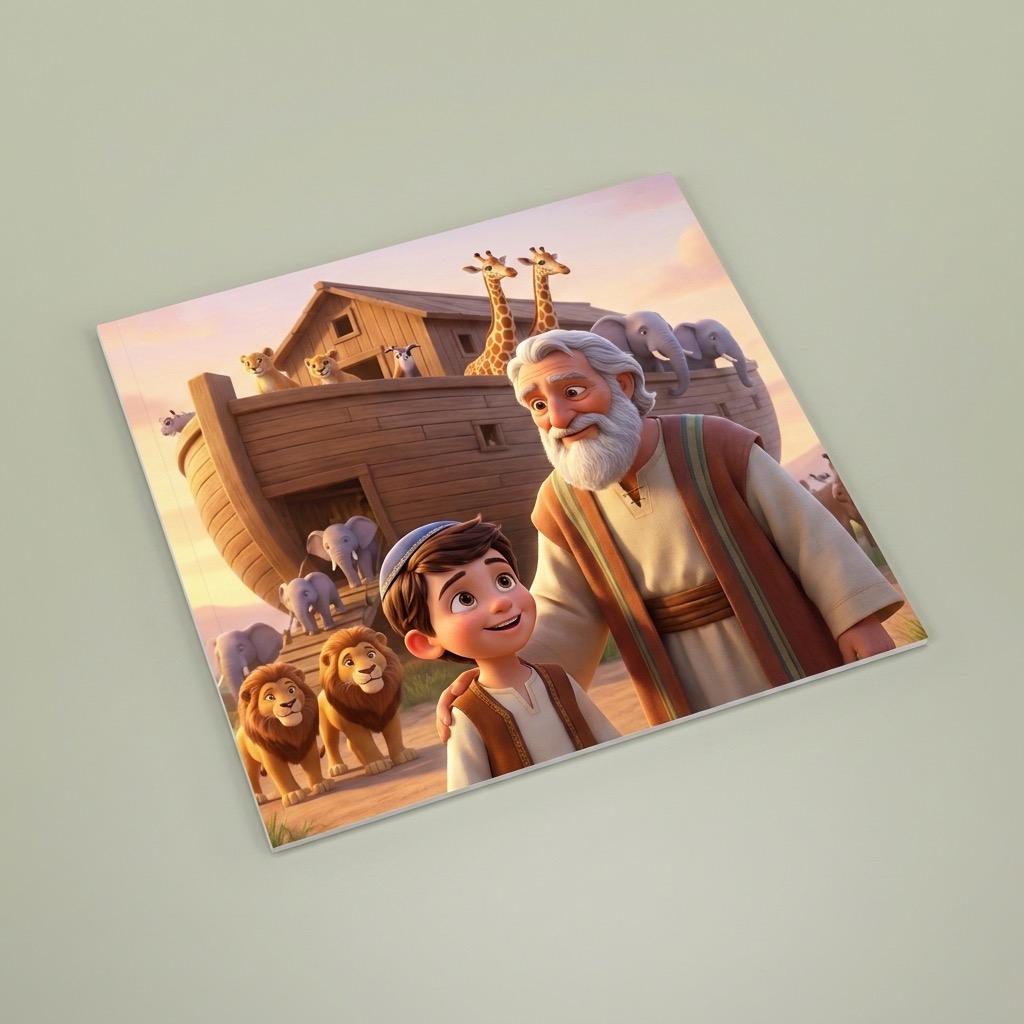
Softcover 8″×8″
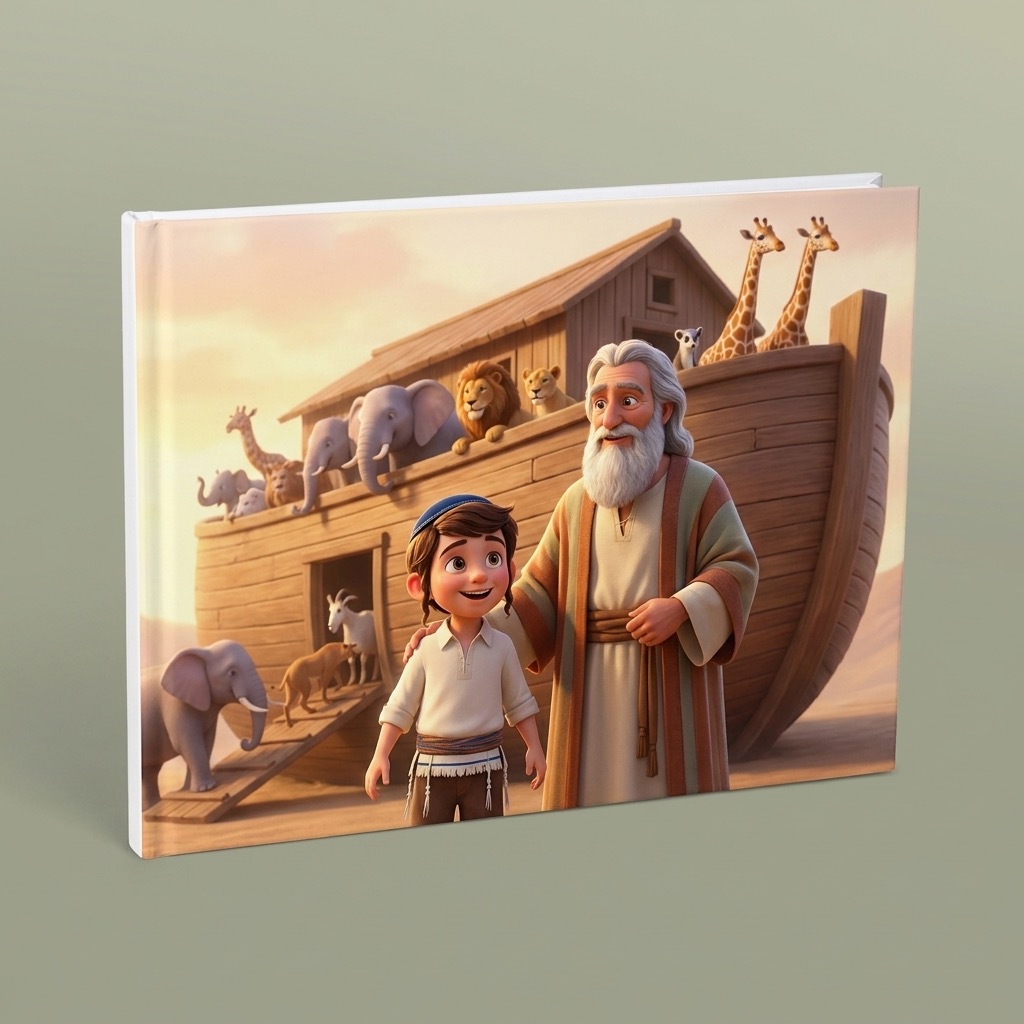
Hardcover 8″×8″
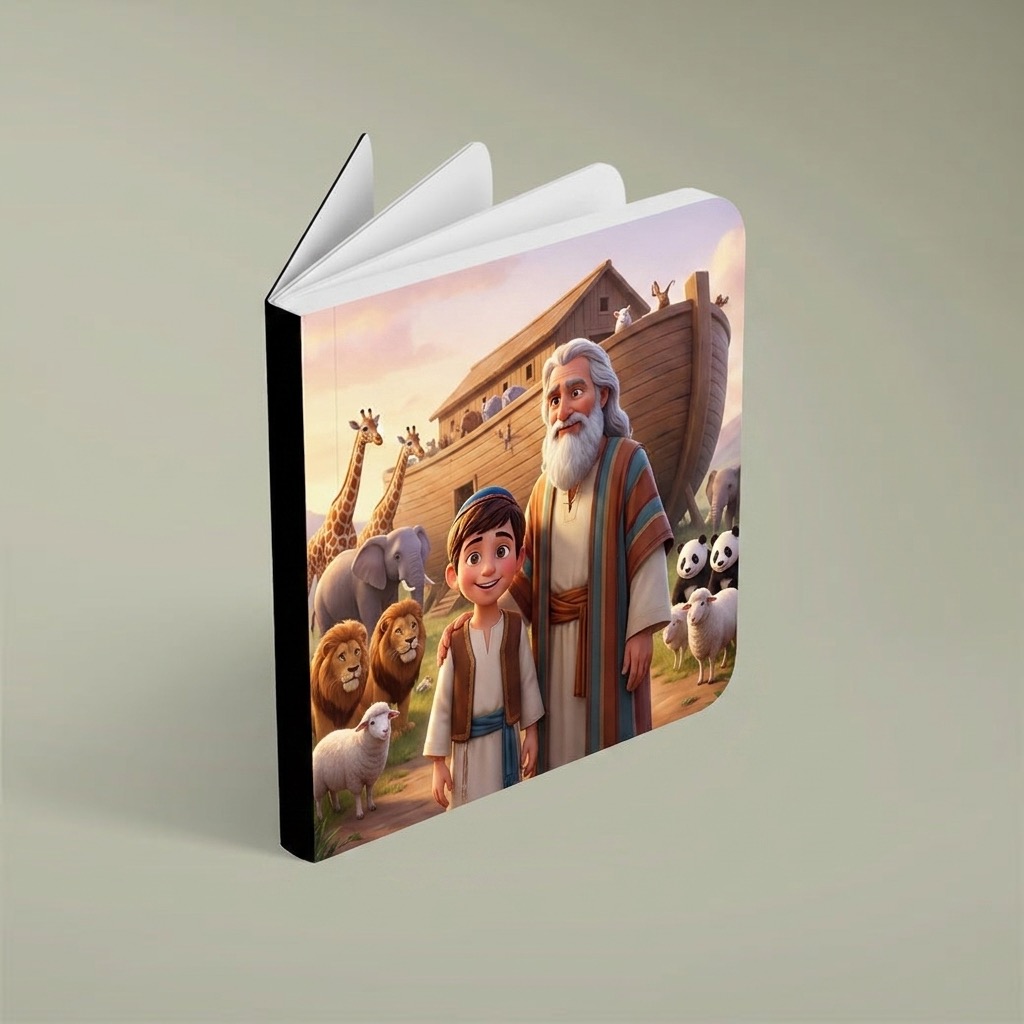
Board book 6″×6″
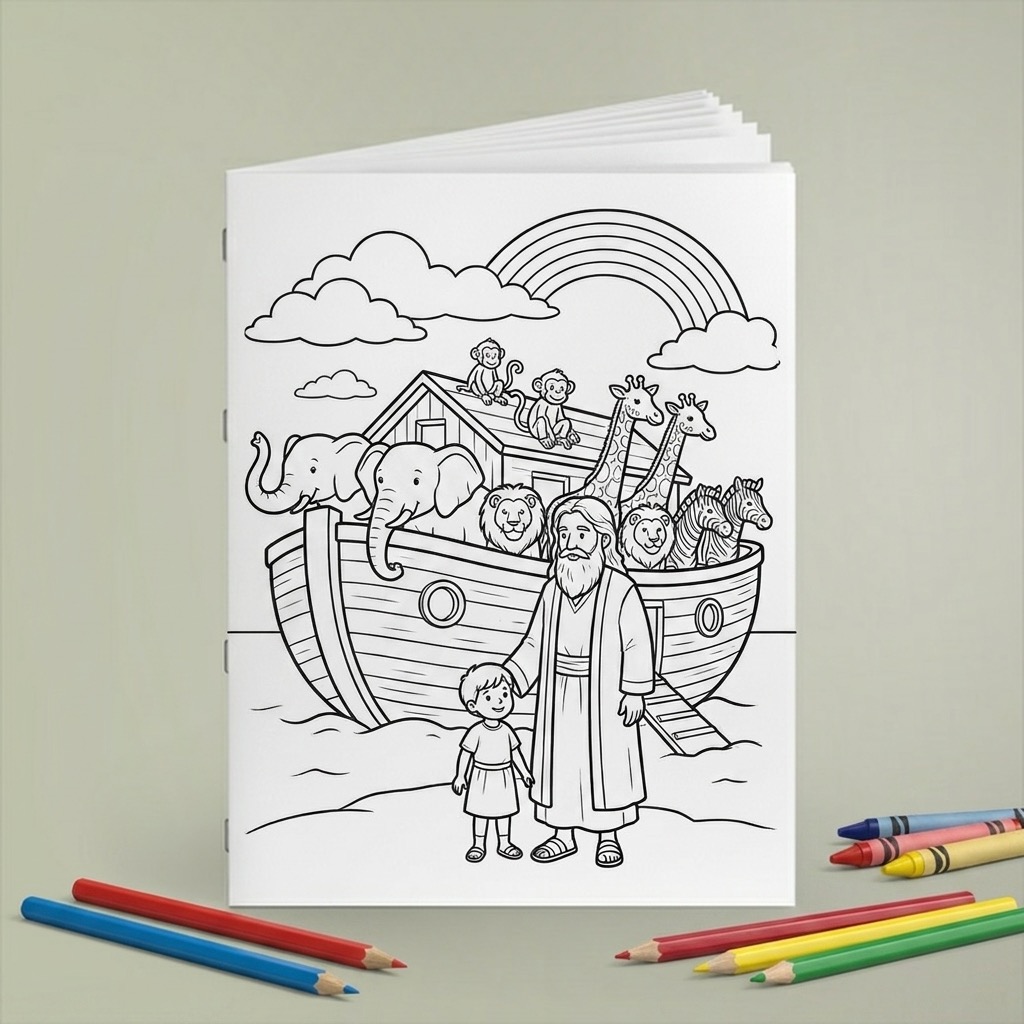
Coloring book 8.5″×11″
Choose the format by age: the 6"x6" board book with rounded safety corners for ages 2 to 4, the 8"x8" softcover for ages 4 to 8, the 8"x8" hardcover in square or landscape for ages 5 to 12. Books come in English, Hebrew or Yiddish, and you can order more than one language.
Shabbos-table questions for Parshas Bo
Pick two or three, not all seven. They work for a range of ages.
- Pharaoh said the men could go but the children had to stay. Why did Moshe Rabbeinu say no?
- During choshech the Yidden had light in their homes. What is it like to have light when everyone around you is in the dark?
- The very first mitzvah Klal Yisrael got was about the calendar. Why would Hashem start there?
- Why do we eat matzah? What does flat bread tell you about how fast they left?
- Pharaoh admitted he sinned more than once and then changed his mind. What makes a person actually change?
- The Torah says to tell the story to your children. Who told you this story first?
- The Yidden had to stay inside their houses all night. What was it like to wait?
A weekday activity: build the countdown
Parshas Bo is full of dates: the tenth of the month, the fourteenth, chatzos. On a weekday afternoon or erev Shabbos, draw a simple strip of squares with your child and label the days from when the lamb is taken until the night they leave, marking what happens on each one. It gives children a feel for the fact that Yetzias Mitzrayim ran on a schedule Hashem set in advance.
If you add the matching 8.5"x11" black-and-white coloring book to your order, this is exactly the slot for it: a weekday afternoon, erev Shabbos, the days before a Yom Tov, or Chol HaMoed. The storybook itself is made for reading at the Shabbos table or on a long Yom Tov afternoon, and that is where it earns its keep.
How do I order the Parshas Bo book?
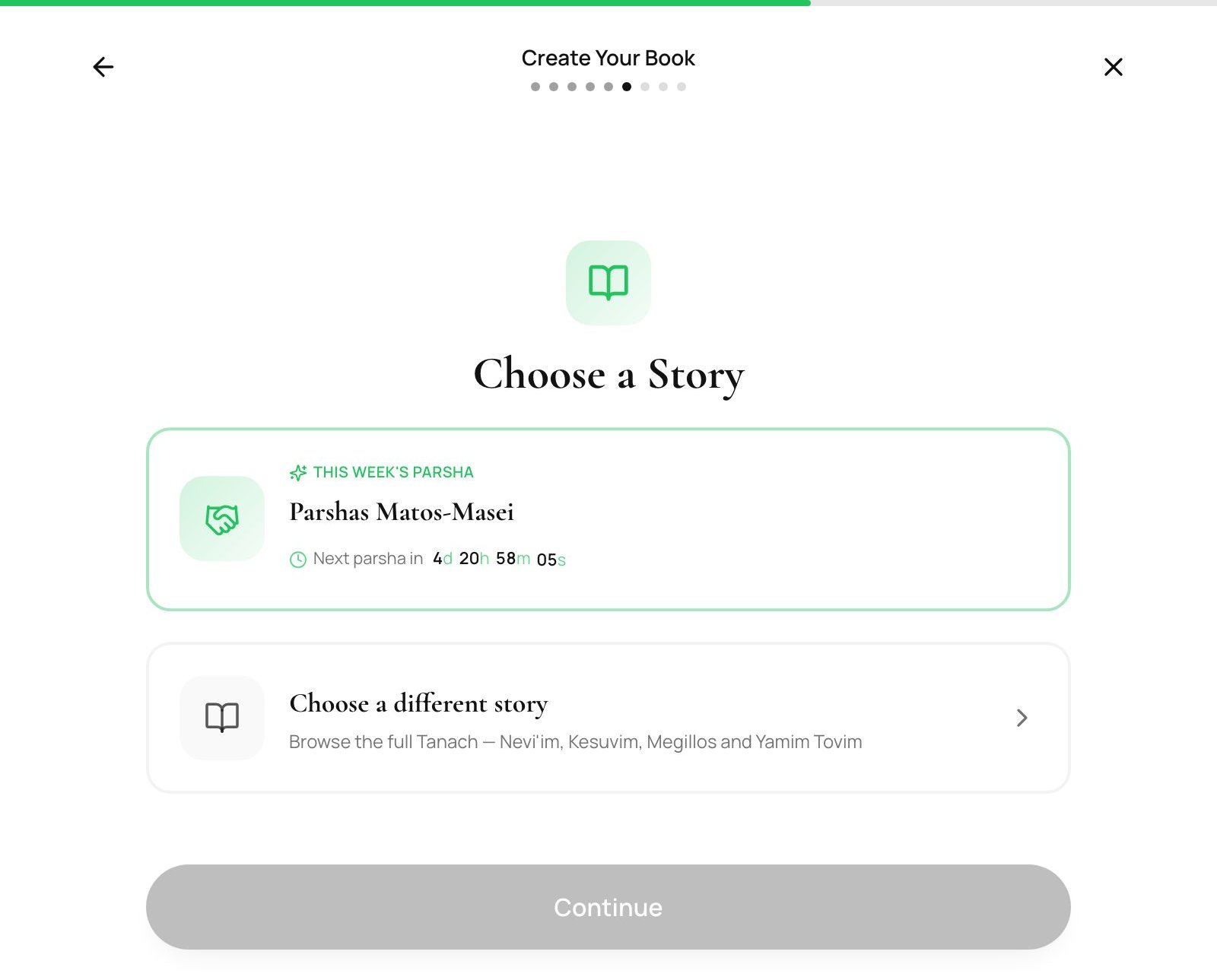
Creating a book takes about five minutes and eight short questions: name, boy or girl, age, one photo, siblings, story, language and printed format. A free account is required. The creator suggests next week's parsha with a live countdown to the order deadline for delivery before that Shabbos, and a double-parsha week produces one book covering both. If you want Bo out of sequence, the story picker lets you choose it directly.
You can order a single book, or a Weekly, Monthly (4 books) or Year Bundle subscription for families following the parsha cycle through the year. US standard shipping is $3.00 and takes 5 to 8 business days; express is $6.00 and takes 3 business days. We ship worldwide, with rates shown at checkout. If you are not sure which parsha to start with, this guide to choosing the parsha walks through it, and this step-by-step article shows the whole flow.
Parshas Bo hands us the mitzvah of telling our children the story. A book with your child's own name and face on the page is one good way to do it. Create the book and have it on the table before Shabbos.
Frequently asked questions
What is Parshas Bo about, in one sentence?
Parshas Bo is about the final three makkos that broke Pharaoh - locusts, three days of darkness and the death of the firstborn - and the night Klal Yisrael became a nation with its own mitzvos and walked out of Mitzrayim. It contains the first korban Pesach, the blood on the doorposts, the matzah that had no time to rise, and the command to tell the story to our children every year.
What does the word "Bo" mean and why is the parsha called that?
Bo means "come," and it is the first distinctive word of the parsha: Hashem tells Moshe Rabbeinu "Bo el Pharaoh," come to Pharaoh. Every parsha is named for an early word in it. The name is easy for children to remember because it is only two letters, bais and alef.
How do I explain makas bechoros to a young child without frightening him?
Keep it short and factual, and keep the focus on the Yidden being protected rather than on what happened in the Mitzri homes. You can say: "That night Hashem punished Mitzrayim, and every Yiddishe family was safe inside their house with the sign on the door." A four or five-year-old is satisfied with that and does not need graphic detail; older children can be told the pshat as the pesukim state it.
What is the main lesson of Parshas Bo for children?
Parshas Bo teaches that being free is not the goal by itself, it is the beginning of serving Hashem. The moment the Yidden were about to leave, Hashem gave them mitzvos: the new moon, the korban Pesach, matzah, and later tefillin. A second lesson, straight from the parsha, is v'higadta l'vincha, that remembering and retelling what Hashem did for us is itself a mitzvah.
Which Torah Tale format is best for a Parshas Bo book?
For ages 2 to 4, the 6"x6" board book with rounded safety corners holds up to small hands. For ages 4 to 8, the 8"x8" softcover photo book works well, and for ages 5 to 12 the 8"x8" hardcover in square or landscape is the one that stays on the shelf. A matching 8.5"x11" black-and-white coloring book can be added, and it is meant for weekday use, such as a weekday afternoon, erev Shabbos or Chol HaMoed.
Can I order a Parshas Bo book if it is not this week's parsha?
Yes. The Torah Tale book creator suggests next week's parsha with a live countdown to the order deadline for delivery before that Shabbos, but the story picker lets you choose any parsha in Chumash, plus Nevi'im, Kesuvim, the Yamim Tovim, Jewish life, mitzvos and stories of tzadikim, whenever you want.