Parshas Va'eira for Kids: Four Promises, the Frogs & the First Makkos
Va'eira is the parsha where Hashem's promise starts turning into action. Here is the story told the way children hear it in cheder, the middos inside it, and how to explain it to a four-year-old and an eight-year-old at the same table.
Published by Torah Tale.
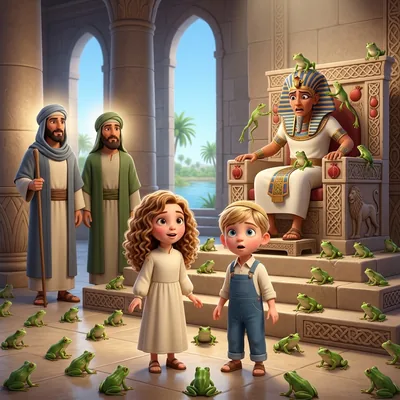
Parshas Va'eira is the parsha where Hashem's promise starts becoming action. Bnei Yisrael are still slaves, Pharaoh has just made the work harder, and Hashem tells Moshe four things He will do for His people. Then the makkos begin, seven of them in this parsha, one after another, each one showing Mitzrayim that there is a Creator who runs the world. For children it is one of the most vivid parshiyos of the year: frogs everywhere, a river that turns to blood, hail with fire burning inside it.
What happens in Parshas Va'eira, told for children
At the end of Parshas Shemos, things had gotten worse, not better. Moshe had come to Pharaoh, and Pharaoh had responded by ordering the Yidden to gather their own straw. Va'eira opens with Hashem speaking to Moshe and promising four things: v'hotzeisi, v'hitzalti, v'ga'alti, v'lakachti. I will take you out, I will save you, I will redeem you, I will take you to Me as a nation.
Moshe brings the message to Bnei Yisrael, but the pasuk says they did not listen, mikotzer ruach u'meavodah kasha - because their spirits were crushed and the work was so hard. Moshe says he is aral sefasayim, heavy of speech, and Hashem sends him and Aharon to Pharaoh anyway.
Aharon throws down his staff before Pharaoh and it becomes a tanin. Pharaoh's magicians do the same with their staffs, and then Aharon's staff swallows theirs. Pharaoh is not impressed. So the makkos begin.
- Dam - the water of the Nile turns to blood.
- Tzefardea - frogs fill Mitzrayim, in the houses, in the ovens, in the kneading bowls.
- Kinim - the dust of the land becomes lice. The magicians cannot copy this one and tell Pharaoh, "Etzba Elokim hi" - this is the finger of Hashem.
- Arov - wild animals overrun the country, but Goshen, where Bnei Yisrael live, is separated and spared.
- Dever - a sickness strikes the Egyptians' animals, and not one animal of Bnei Yisrael is harmed.
- Shechin - boils, so severe that the magicians cannot even stand before Moshe.
- Barad - hail, with fire burning inside it.
Rashi brings the well-known midrash that at first one frog came up, and when the Mitzrim struck it, it split into more and more. Chazal also teach about the barad that the fire and the ice, two things that normally cannot exist together, made peace with each other in order to carry out the will of their Creator. Before the hail, Moshe warned Pharaoh, and the Mitzrim who feared the word of Hashem brought their servants and animals indoors and were saved.
Va'eira ends mid-makkah. Pharaoh says he has sinned, Moshe goes out of the city and spreads his hands, and the hail stops. Then Pharaoh hardens his heart again. The last three makkos wait for Parshas Bo.
Why Aharon brings the first makkos: hakaras hatov
Here is the detail every cheder and Bais Yaakov teaches from this parsha. Moshe does not strike the water for dam, and he does not strike the dust for kinim. Aharon does. Rashi explains why: the river had protected Moshe when he was a baby in the teivah, and the sand had hidden him earlier. It was not right for Moshe to hit something that had done him a favor.
Water cannot feel anything. Dust does not know it is being thanked. That is exactly the point Chazal are making. If the Torah asks Moshe Rabbeinu to show hakaras hatov to a river, then a child who was given a snack, a ride, or a seat has something to say out loud.
This is the single most usable idea in Va'eira for a family. It turns a parsha full of makkos into a conversation about who in this house did something for you today.
The four promises and the four cups at the Seder
Children love finding out that something they do at the Seder comes from a specific pasuk. The four lashonos of geulah in Va'eira are the source for the four cups of wine or grape juice on Pesach night. One cup for each promise Hashem made here, months before the Yidden actually walked out.
It is worth saying to a child: Hashem made these promises when nothing looked like it was improving. The Yidden were too crushed to even listen. Hashem kept every one of them anyway. That is the emunah lesson of Va'eira in a form a nine-year-old can hold onto.
How to explain Va'eira to a 4-year-old and to an 8-year-old
Most Shabbos tables have both at once. The story is the same; the framing is not.
| Age | What to lead with | What to leave out |
|---|---|---|
| Ages 2-4 | The pictures: frogs jumping into the ovens, the river changing color, hail falling with fire inside. "Hashem showed Pharaoh who is really in charge." | Pharaoh's hardened heart. Keep it to Hashem sent, Pharaoh said no, Hashem sent again. |
| Ages 5-7 | The list of seven makkos in order, and the fact that Goshen was protected. Children this age love a countable sequence they can recite back. | Long explanations of why Pharaoh refused. "He was stubborn" is enough. |
| Ages 8-12 | The four promises, the magicians admitting etzba Elokim, and Rashi on why Aharon struck the water. Ask why Hashem sent warnings before most makkos. | Nothing much. This is the age to raise the harder question of why the geulah took so long. |
One sentence that works for any age at the table: Hashem promised, and Hashem kept the promise, even though it took longer than anyone wanted.
What a personalized Torah Tale book of Va'eira looks like
Torah Tale prints Parshas Va'eira as a personalized storybook in which your child is the hero of the story. You upload one photo, and their likeness is illustrated in high-resolution 3D Pixar style on every page, standing beside Moshe and Aharon as the makkos unfold. Up to four siblings can appear in the same book, which is what usually happens in a house where three children want the same parsha.
Va'eira is a parsha that benefits from being told carefully. Every Torah Tale book is written with rabbinical guidance and strict tznius and reviewed before printing, so the makkos come across as Hashem's power rather than as something frightening at bedtime.

The book creator suggests next week's parsha by default with a live countdown to the order deadline for delivery before that Shabbos, but you can pick Va'eira from the story picker at any point in the year. If you are deciding whether to follow the parsha cycle or choose stories freely, our guide on choosing the weekly parsha for your child's book walks through both approaches.
Formats follow the age: a 6"x6" board book with rounded safety corners for ages 2 to 4, an 8"x8" softcover for ages 4 to 8, and an 8"x8" hardcover in square or landscape for ages 5 to 12. Books come in English, Hebrew or Yiddish, and you can order more than one language. A storybook is exactly the right thing to bring to the Shabbos table or to open on a long Shabbos afternoon.
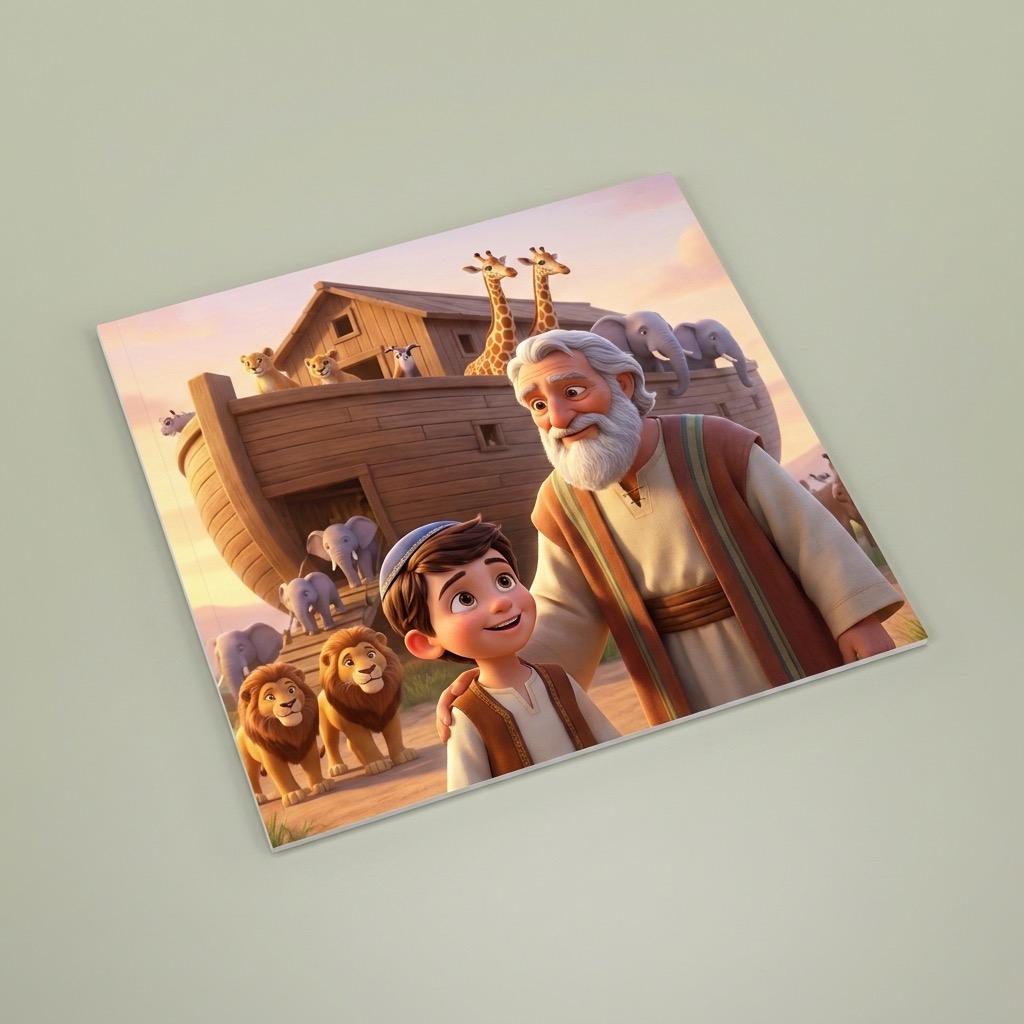
Softcover 8″×8″
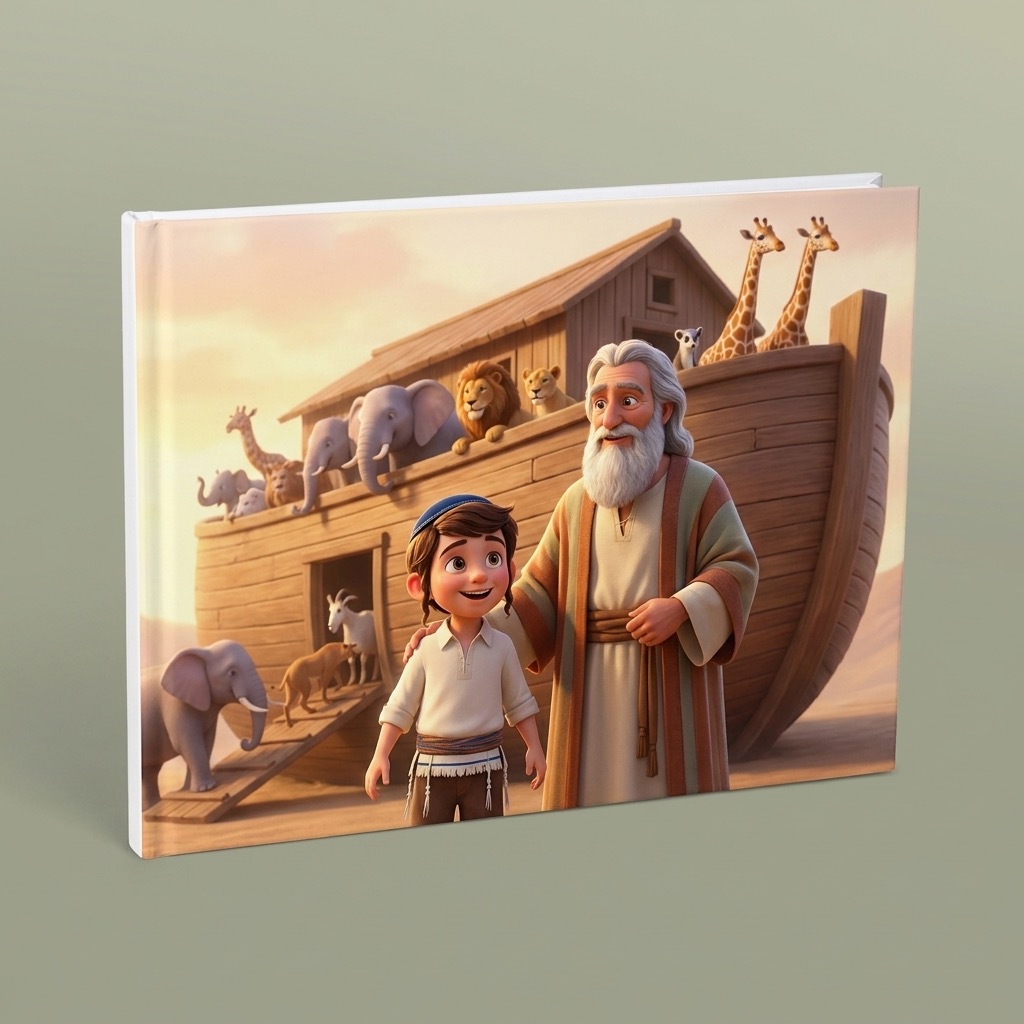
Hardcover 8″×8″
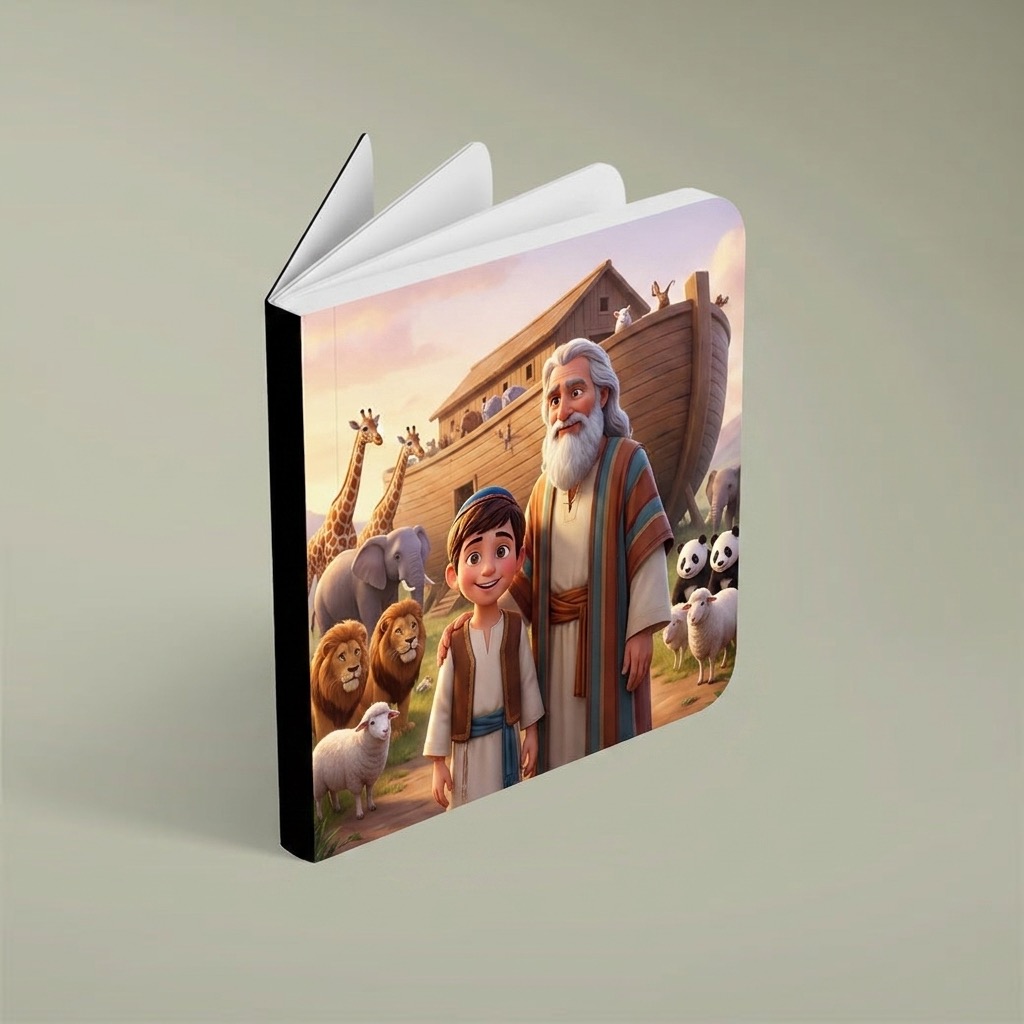
Board book 6″×6″
Coloring book 8.5″×11″
Shabbos-table questions and a weekday activity
Every Torah Tale book ends with a dedicated discussion page of 10 questions, mixing comprehension with middos. If you want to start tonight without a book in hand, these work on their own:
- What were the four things Hashem promised, and what do we drink four of on Pesach night?
- Why couldn't Moshe hit the water himself?
- Who in this house did something for you today that you never said thank you for?
- Which makkah do you think was the hardest for the Mitzrim, and why?
- The magicians said "this is the finger of Hashem." Why did they still not listen?
- Fire and ice came down together in the barad. What does it mean that they made peace to do Hashem's will?
- Moshe went back to Pharaoh again and again after being refused. When is it hard for you to try again?
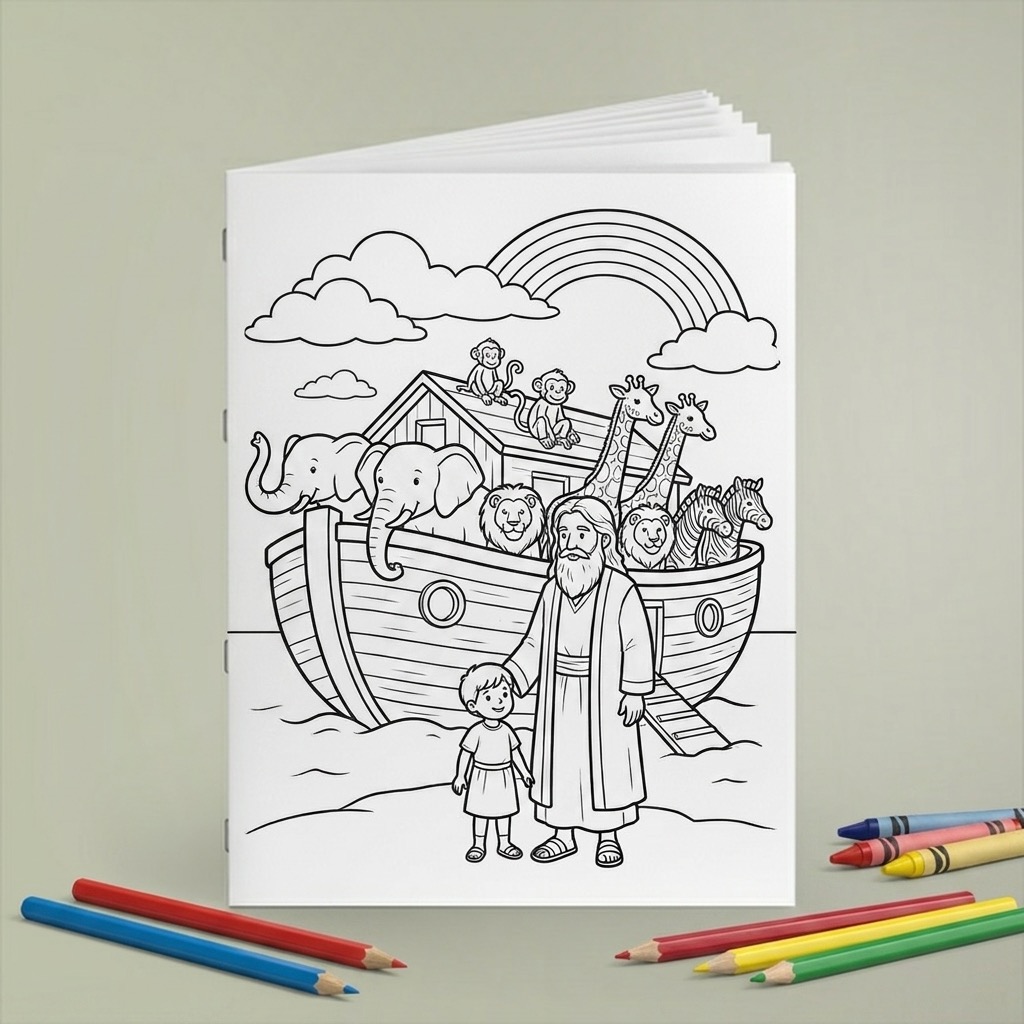
A weekday activity: during the week, before Shabbos, give each child a piece of paper and have them write or draw three thank-you notes for hakaras hatov - one to a person, one to something in the house they use every day, and one to Hashem. The matching Torah Tale coloring book, 8.5"x11" in black-and-white line art, is a good erev Shabbos or weekday-afternoon project alongside it. Coloring and writing are melacha, so keep both for a weekday and save the storybook itself for Shabbos.
Where Va'eira sits in the year
Va'eira is the second parsha of Sefer Shemos, read in the winter, right after Shemos and right before Bo. Reading the three in sequence gives children the whole arc: the slavery and the burning bush, the promises and the first seven makkos, and then the last three makkos and the actual leaving. If a child in your house is being given a book as a gift, a parsha they are learning that same week lands hardest; our roundup of personalized Jewish gifts for kids covers the timing of upsherin and birthday gifts too.
Va'eira is a good parsha to put in a child's hands, because it is the moment the story turns. If you would like your child standing next to Moshe and Aharon as Hashem's promises begin to come true, you can create the book in about five minutes: eight short questions, one photo, and a story that has their name on every page.
Frequently asked questions
What is Parshas Va'eira about, in one sentence for a child?
Parshas Va'eira is about Hashem promising to take the Yidden out of Mitzrayim, and then beginning to keep that promise by sending makkos on Pharaoh and his country. Moshe and Aharon go to Pharaoh again and again, and each makkah shows the world that Hashem runs everything. The parsha covers the first seven makkos and ends in the middle of the hail.
Which makkos are in Parshas Va'eira?
Seven makkos are in Va'eira: dam (blood), tzefardea (frogs), kinim (lice), arov (wild animals), dever (a sickness in the Egyptians' animals), shechin (boils) and barad (hail). The final three - arbeh, choshech and makkas bechoros - come in Parshas Bo. Children usually learn all ten together with the siman of Rabbi Yehuda, detzach adash b'achav, and Va'eira covers detzach plus adash.
Why did Aharon hit the water and the dust instead of Moshe?
Rashi explains that Moshe had been saved by the water of the Nile when he was a baby, and the sand had hidden him earlier, so it was not fitting for him to strike them. Aharon brought the first three makkos instead. Chazal learn from this how far hakaras hatov goes: if we owe thanks even to water and dust, how much more so to a parent, a rebbi or a friend.
How do I explain the four promises of geulah to a five-year-old?
Tell your child that Hashem made four promises to the Yidden: I will take you out of the hard work, I will save you from being slaves, I will redeem you, and I will take you to be My nation. Then say that at the Seder we drink four cups of wine or grape juice, one for each promise. Most children remember Va'eira best when they can connect it to something they already do at home.
What is the lesson of Parshas Va'eira for children?
The main lesson is that Hashem keeps His word even when it takes time and even when things look worse before they get better. A second lesson, taught to children every year, is hakaras hatov: Moshe did not strike the water that had saved him. A third is not giving up, since Moshe kept returning to Pharaoh after refusal after refusal.
What age is a Va'eira storybook right for?
A Torah Tale book of Parshas Va'eira can be ordered as a 6"x6" board book with rounded safety corners for ages 2 to 4, an 8"x8" softcover for ages 4 to 8, or an 8"x8" hardcover in square or landscape for ages 5 to 12. The text is written with careful rabbinical guidance, so the makkos are told clearly without frightening detail. Every book ends with a page of 10 discussion questions.