Parshas Ki Savo for Kids: Bikkurim, Two Mountains & Saying Thank You
Ki Savo is the parsha of saying thank you out loud. Here is the story retold for children, the middah of hakaras hatov, age-by-age explanations, Shabbos-table questions and a bikkurim activity you can do today.
Published by Torah Tale.
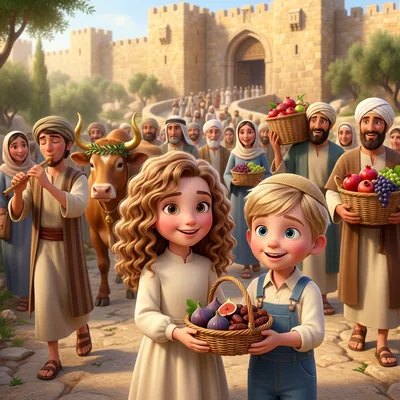
Parshas Ki Savo is the parsha of saying thank you out loud. It opens with a farmer in Eretz Yisrael carrying a basket of his very first ripe fruits all the way to the Beis Hamikdash, handing it to the Kohen, and telling the whole story of how the Yidden got there - from Lavan and Yaakov, down to Mitzrayim, out with Hashem's great hand, into the land. Children understand this instantly, because every child knows the feeling of wanting to keep the first and best thing for themselves. Ki Savo says: give that one away, and say why.
What happens in Parshas Ki Savo?
Moshe Rabbeinu is still speaking to the Yidden on the last day of his life, preparing them to enter Eretz Yisrael without him. He begins with bikkurim. When a Yid plants and harvests in the land, the first ripe fruits go to Hashem. Chazal teach that bikkurim are brought from the seven special fruits and grains of Eretz Yisrael - wheat, barley, grapes, figs, pomegranates, olives and dates.
The Mishnah describes how it looked: the farmer walking down to the field, seeing the first fig beginning to ripen, tying a reed around it and saying "this one is bikkurim." Later, families travelled together to Yerushalayim, an ox with decorated horns walking ahead, a flute playing, everyone singing. Craftsmen in Yerushalayim would stop their work and stand up for them. The wealthy brought their fruit in baskets of silver and gold; the poor brought theirs in woven wicker baskets, and the mitzvah was the same.
At the Mikdash the farmer said the words of the parsha out loud, beginning Arami oved avi - which Rashi explains as a reference to Lavan the Arami, who tried to destroy Yaakov Avinu. Then he continued with Mitzrayim, the crying out, the yetzias Mitzrayim, and the gift of the land. Next the parsha gives a second declaration, for the person who has finished separating all his terumos and maasros and can say honestly that he gave the Levi, the ger, the orphan and the widow everything that was theirs.
Moshe then gives instructions for what to do after crossing the Yarden. The Yidden are to set up large stones, plaster them, and write the words of the Torah on them baer heitev - very clearly. Chazal teach that it was written there in seventy languages, so that anyone could come and read it.
What are the two mountains in Ki Savo?
Moshe tells them that when they enter the land, six shevatim will stand on Har Gerizim for the brachah and six on Har Eival for the warning. Chazal describe the Leviim standing in the valley between the two mountains, turning toward one side to say the brachah and toward the other to say the warning, with all of Klal Yisrael answering Amen to each one.
For children this is one of the most vivid pictures in Sefer Devarim: an entire nation split across two mountains, hearing the same words from below, answering together. It teaches something worth naming out loud at the table - being a Yid is not a private arrangement. We stand together and we answer Amen for each other.
The parsha continues with the brachos that come when we keep the Torah, and then with the Tochacha, Moshe's long and serious warning about what happens when we walk away from it. In shul the Tochacha is read in a low voice. One line inside it is worth teaching even to young children: Moshe warns of trouble that comes "because you did not serve Hashem your G-d with simcha." Doing mitzvos happily is not an extra; it is part of the avodah.
Near the end, Moshe reminds them of forty years in the midbar: their clothing did not wear out on them and their shoes did not wear out on their feet. Chazal teach that the ananei hakavod kept their garments clean and pressed, and that the clothing grew along with the children who were wearing it. And Moshe tells them hayom hazeh - today you have become a nation to Hashem.
What is the middah of Ki Savo?
Hakaras hatov - recognizing the good and saying it. Notice what the Torah asks the farmer to do. It is not enough to feel grateful in the field. He has to pick up the basket, walk to Yerushalayim, stand in front of the Kohen, and say the whole story from Lavan to the land in his own mouth.
That is the practical lesson for a child. Gratitude that stays inside doesn't count for much. Saying "thank you, Mommy," saying a brachah slowly before eating, saying Modeh Ani in the morning - these are the child-sized version of the bikkurim basket. The second half of the middah is the first and best: not the leftover fruit, not the bruised one, but the one you were most excited about.
How do I explain Ki Savo to a 4-year-old versus an 8-year-old?
The parsha has more in it than any one child needs at once. Choose one thread and tell it well.
- Ages 2-4: Stay with the basket. "The farmer's first fig grew. He tied a ribbon on it and said, this one is for Hashem. He put it in a basket and walked to the Beis Hamikdash and said thank you to Hashem out loud." Nothing more is needed.
- Ages 5-7: Add the journey and the mountains. The singing on the road, the ox in front, the workers standing up - and then the whole nation on two mountains answering Amen together.
- Ages 8-12: Add the words. Learn Arami oved avi together and show them that the farmer is telling his family's whole history, and that we say the same pesukim at the Seder. Add the stones with the Torah written clearly in seventy languages, and the honest declaration about maaser - a person who can say "I gave everyone exactly what was theirs."
The say-it-in-one-sentence script, for the car or the walk to shul: "Ki Savo teaches that when Hashem gives us something good, we bring Him the very first and the best of it, and we say thank you with our mouth."
Shabbos table questions and a bikkurim activity
Five questions that work across a range of ages:
- Why did the farmer have to say the words? Wasn't bringing the fruit enough?
- The rich brought gold baskets and the poor brought wicker baskets. Why does the Torah tell us that?
- Why write the Torah on stones in seventy languages instead of just for the Yidden?
- What is one thing Hashem gave you this week that you never asked for?
- Moshe warned about not serving Hashem with simcha. Which mitzvah do you do most happily?
The activity: make a bikkurim plate. Put out the seven fruits and grains of Eretz Yisrael - grapes, figs, pomegranate, olives, dates, and something made of wheat and barley. Let each child choose the nicest single piece, set it aside first before anyone eats, say the brachah on it slowly and out loud, and say one sentence of thanks to Hashem. In Elul, with Rosh Hashanah coming, this doubles beautifully with the Rosh Hashanah themes your children are already learning in cheder.
For a younger child, tie a ribbon around one fruit on a plant or tree in your yard, the way the farmer tied a reed, and check on it together during the week.
What is a personalized Torah Tale book of Ki Savo like?
In the Torah Tale version of Ki Savo, your child is the one carrying the basket. Their name is in the text and their likeness - illustrated in high-resolution 3D Pixar style from one photo you upload - appears on every page: choosing the first fig, walking the road to Yerushalayim, standing with the shevatim and answering Amen. Up to four siblings can appear in the same book, which is what usually happens in families where nobody wants to be the one left out.

Every book is written with careful rabbinical guidance and strict tznius, and reviewed by our team before printing - which matters for a parsha like this one, where the Tochacha has to be handled gently and honestly for a child. Books come in English, Hebrew or Yiddish, and you can order the same story in more than one language.
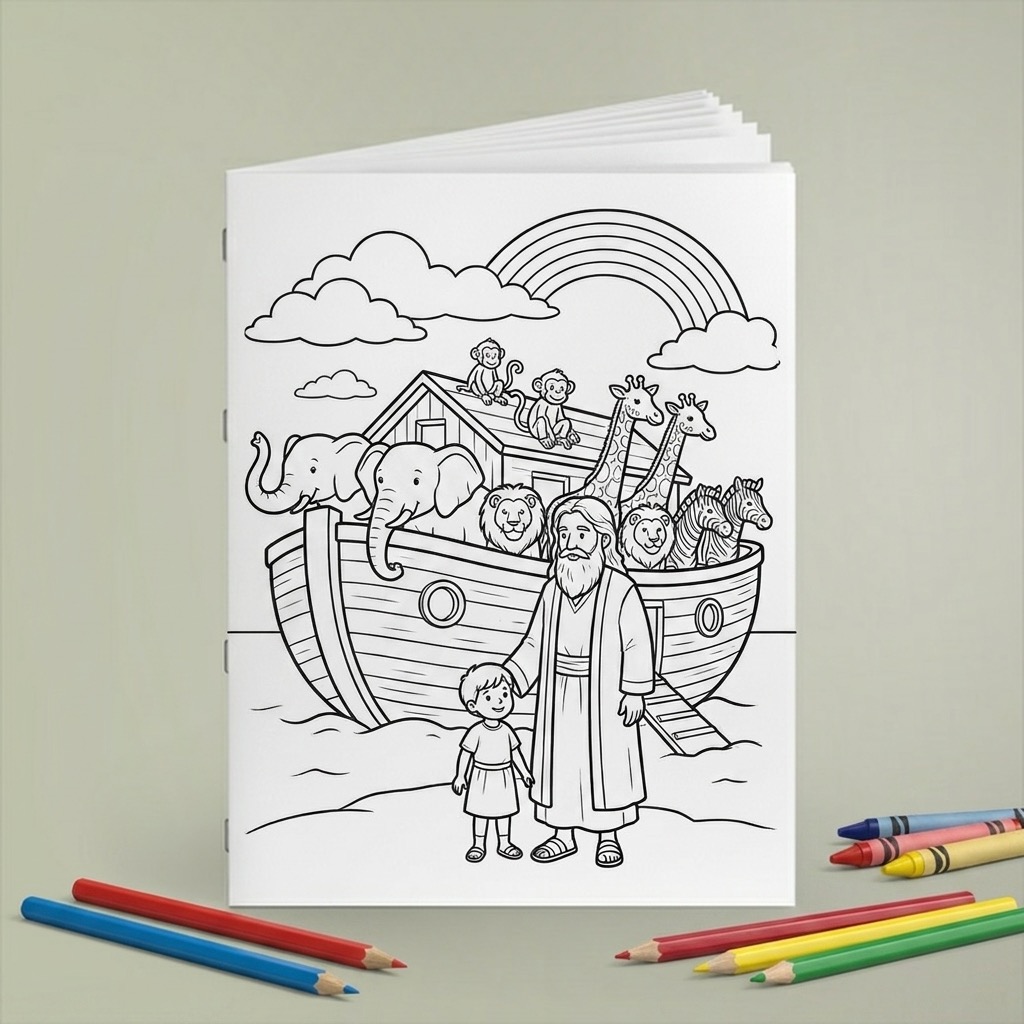
Formats follow the age: a 6"x6" board book with rounded safety corners for ages 2-4, an 8"x8" softcover for ages 4-8, and an 8"x8" hardcover in square or landscape for ages 5-12. There is also a matching 8.5"x11" black-and-white coloring book for weekday afternoons, so a child can color their own bikkurim basket. At the back there is a discussion page with ten questions about the story, half comprehension and half middos - the natural place to ask a child what they are grateful for, in a parsha about saying thank you out loud.
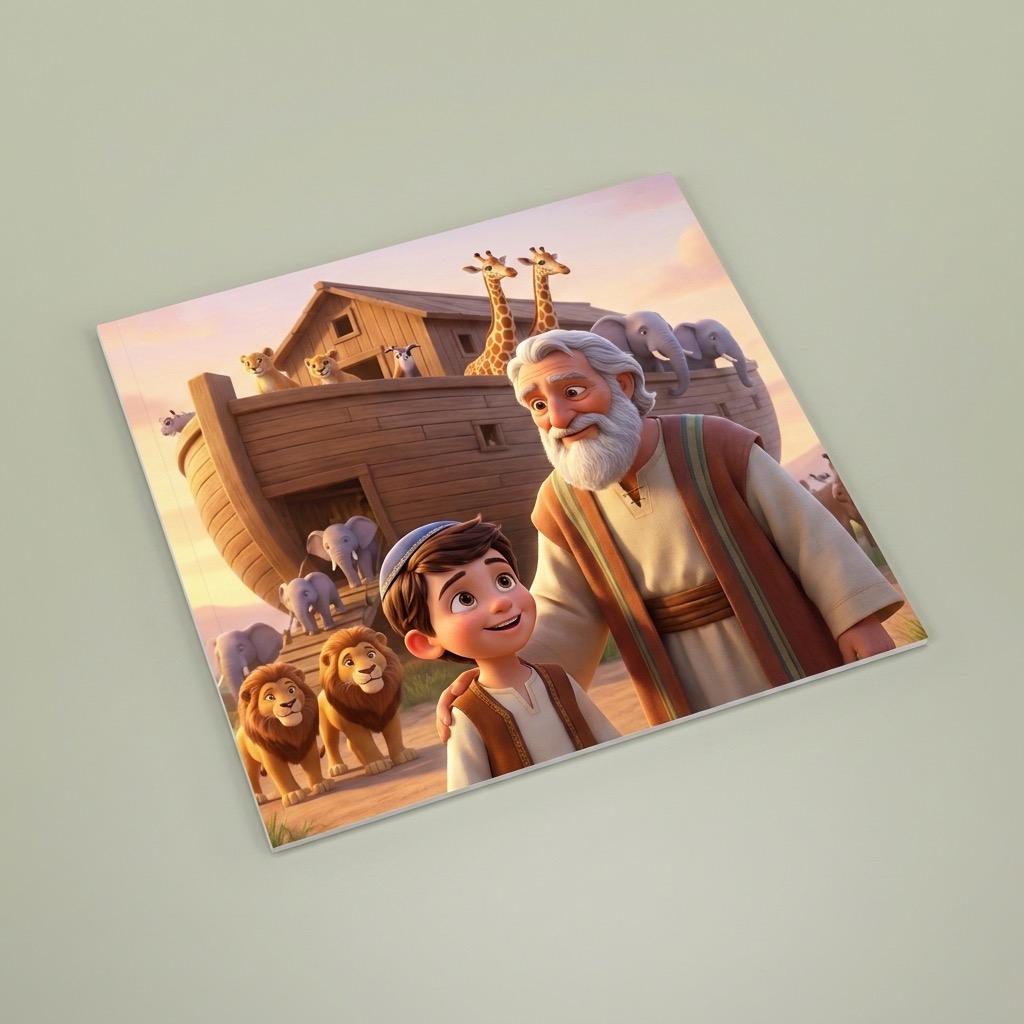
Softcover 8″×8″
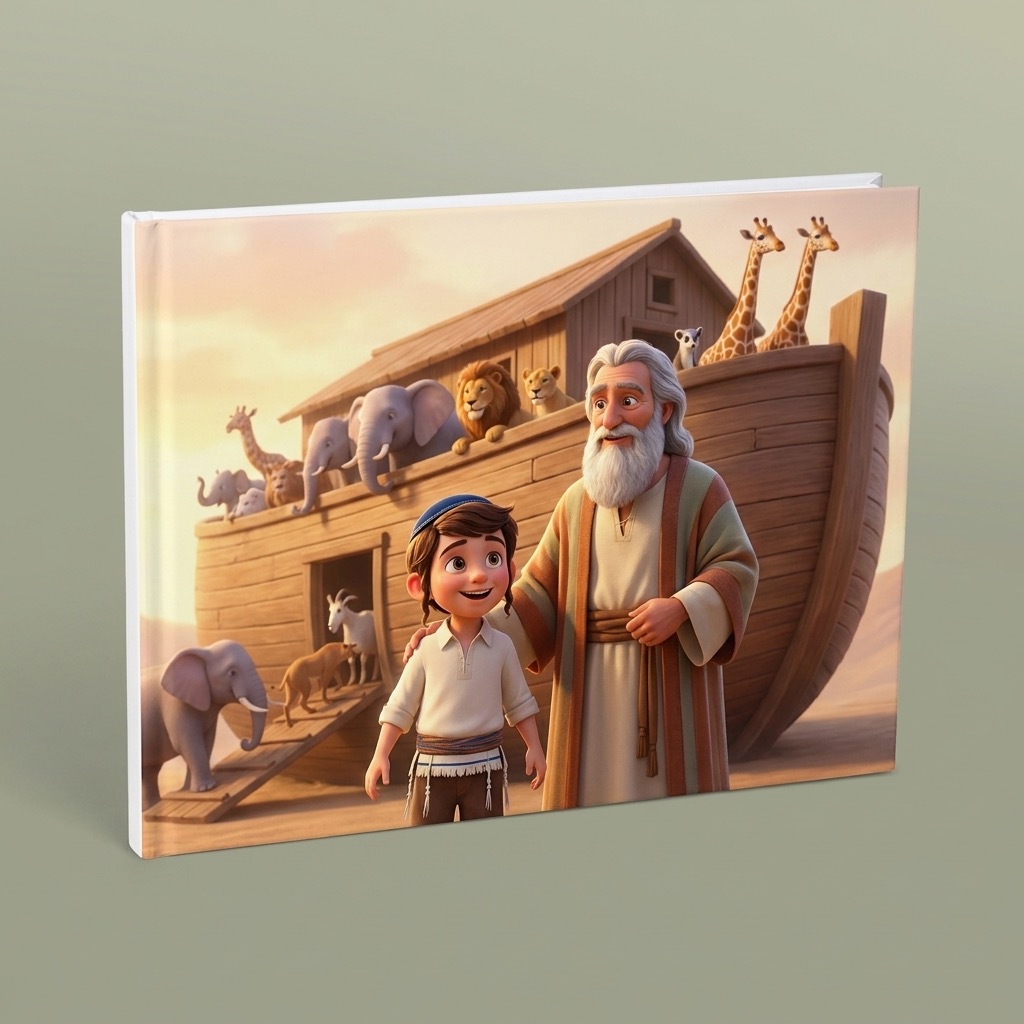
Hardcover 8″×8″
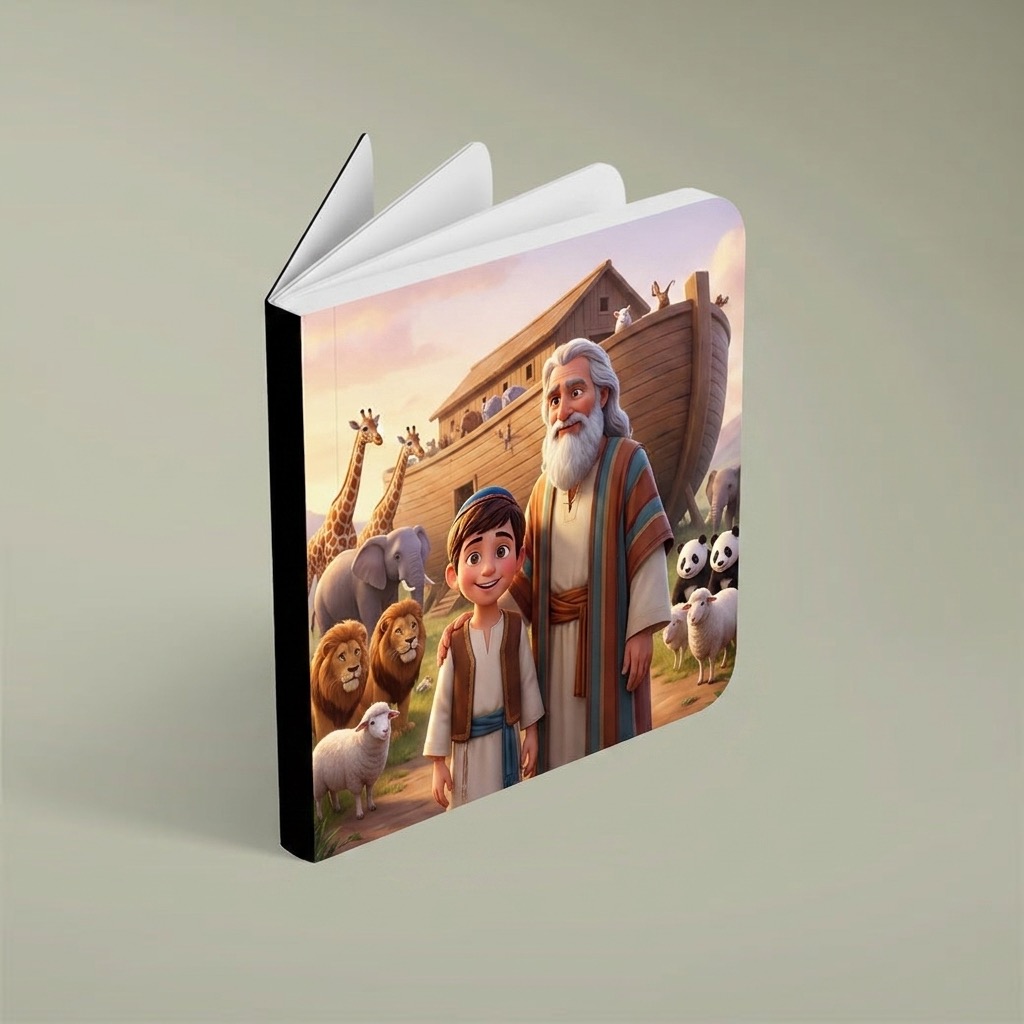
Board book 6″×6″
Coloring book 8.5″×11″
How do I order it in time for Shabbos Ki Savo?
The book creator suggests next week's parsha, not this week's, with a live countdown to the order deadline for delivery before that Shabbos. So the week before Ki Savo, Ki Savo is what the creator offers you by default - one click and you are building it. If two parshiyos fall together in a given week, that week produces one book covering both.
Creating a book takes about five minutes and eight short questions: name, boy or girl, age, one photo, siblings, story, language, printed format. If you want to see the flow before you start, we walk through it in how to create a personalized Torah storybook, and if you are deciding between a single parsha book and a weekly subscription, how to choose the weekly parsha lays out the options. US standard shipping is $3.00 and takes 5-8 business days; express is $6.00 in 3, and we ship worldwide.
Ki Savo is a good parsha to give a child their own copy of, because its message is one they can act on the same day: bring the first and the best, and say thank you out loud. Create the book with your child as the one holding the basket.
Frequently asked questions
What is Parshas Ki Savo about?
Ki Savo opens with two mitzvos of saying thank you: bringing bikkurim, the first ripe fruits, to the Beis Hamikdash, and declaring that all the maasros have been given properly. It then records Moshe Rabbeinu's instructions to write the Torah on large stones after crossing the Yarden and to hold the ceremony of blessings and warnings at Har Gerizim and Har Eival. The parsha also contains the Tochacha, Moshe's serious warning to the Yidden, and his reminder that for forty years in the midbar their clothing and shoes did not wear out.
What is the lesson of Parshas Ki Savo for children?
The main lesson is hakaras hatov - gratitude that gets said out loud. The farmer did not simply feel thankful for his fruit; he carried the very first figs and grapes all the way to Yerushalayim and told the whole story of where his good fortune came from. Children can practice the same thing by giving the first and best of what they have and by saying thank you in words to Hashem and to people.
How do I explain the bikkurim to a 5-year-old?
Say it like this: "A farmer waited a long time for his fruit to grow. When he saw the very first fig starting to ripen, he tied a ribbon around it and said, this one is for Hashem." Then explain that he put it in a basket, walked to the Beis Hamikdash with singing, gave it to the Kohen, and said thank you to Hashem out loud. Five-year-olds connect immediately to the idea of giving away the first and nicest one.
How do I handle the Tochacha with young children?
Keep it short, honest and non-frightening. You can say that Moshe Rabbeinu loved the Yidden so much that he told them the truth: wonderful brachos come when we keep the Torah, and hard things come when we walk away from it, and he warned them so they would choose well. Point out that in shul this part is read quietly, and that the parsha ends with Moshe reminding us that Hashem carried us through the midbar for forty years.
Why do we read Ki Savo in Elul?
Ki Savo falls in Elul, in the weeks leading up to Rosh Hashanah, when we are already thinking about how we have used the year Hashem gave us. The parsha's themes fit that season closely: gratitude for what we received, serving Hashem b'simcha, and standing together as a nation and answering Amen. For families building up to Rosh Hashanah, Ki Savo is a natural place to start conversations about thanking Hashem before asking Him for a good year.
Can I get a personalized Ki Savo book for my child before Shabbos?
Yes. The Torah Tale book creator suggests next week's parsha with a live countdown to the order deadline for delivery before that Shabbos, so during the week before Ki Savo it will be offered by default. Creating the book takes about five minutes and eight short questions, including one photo. US standard shipping is $3.00 and takes 5-8 business days; express is $6.00 and takes 3 business days. We ship worldwide, with rates shown at checkout.