Parshas Mishpatim for Kids: Everyday Mitzvos & "Naaseh V'nishma"
Mishpatim is the parsha that takes the thunder of Har Sinai and brings it into the kitchen, the classroom and the schoolyard. Here is how to tell it to a four-year-old and to an eight-year-old, what its middos really ask of a child, and ten questions to bring to the Shabbos table.
Published by Torah Tale.
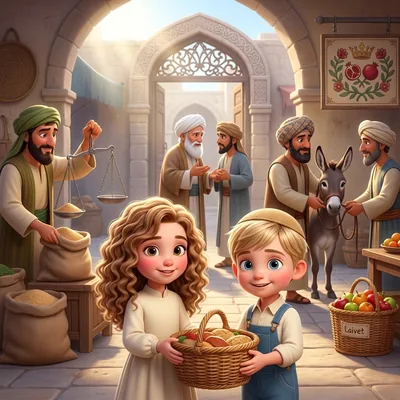
Parshas Mishpatim is the parsha of everyday rules. It comes immediately after the Aseres HaDibros at Har Sinai, and instead of more thunder and fire it gives Yidden laws about broken property, borrowed objects, lost objects, honest judges, kindness to a ger and an orphan, and even helping an animal that has collapsed under its load. Children connect to it faster than parents expect, because it is the one parsha that is openly about their own life: the toy that broke, the lunchbox someone found, the classmate nobody wants to help. And it ends with the line every child should know, when the Yidden answered "Naaseh v'nishma" - we will do and we will listen.
What happens in Parshas Mishpatim?
The parsha begins, "V'eileh hamishpatim asher tasim lifneihem" - and these are the laws you shall place before them. Moshe Rabbeinu is still at the mountain, and Hashem gives him law after law to teach the people.
Some of them are about money and property. If a person's animal damages someone else's, he pays. If someone digs a pit and an animal falls in, he is responsible. A thief does not just say sorry, he pays back. If you hand your friend something to watch and it gets lost or broken, the Torah spells out exactly who carries the loss.
Some of them are about people who have nobody to stand up for them. Do not hurt a ger with your words, the Torah says, because you know what it felt like to be strangers in Mitzrayim. Do not cause pain to a widow or an orphan. If you lend money to someone poor, do not press him like a creditor.
Some of them are about truth. Judges may not take a bribe, because a bribe blinds even a wise man. "Midvar sheker tirchak" - keep far away from a false word. Do not carry a false report, and do not follow a crowd into something wrong just because it is a crowd.
And some of them are simply about being a decent human being. If you see the animal of a person you cannot stand collapsing under its burden, you help him unload it. If his ox wanders off, you bring it back.
The parsha also gives Shabbos and the shemitta year, and commands the three Yamim Tovim when Yidden come up to be seen before Hashem. It includes bikkurim, and the words "lo sevashel gedi bachalev imo," from which we learn the separation of meat and milk.
Then Hashem tells Moshe that a malach will be sent ahead of the Yidden to bring them to the land. At the very end, Moshe builds a mizbeach with twelve matzevos, reads the Sefer HaBris aloud to the people, and they answer, "Kol asher diber Hashem naaseh v'nishma." Moshe goes up into the cloud on the mountain and stays there forty days and forty nights.
Why does a parsha of rules come right after Har Sinai?
This is the question a sharp eight-year-old asks on his own. Last week the whole nation heard Hashem speak. This week we are discussing a borrowed ox.
Rashi notices that the parsha opens with the word "v'eileh," and these, rather than "eileh," these. The extra letter joins Mishpatim to what came just before: these laws were also given at Har Sinai. Nothing here is a footnote.
That is the hashkafa to hand a child. A person can feel very inspired on Har Sinai and still be careless with someone else's property. The Torah refuses to let those be two separate worlds. If you would like to set the two parshiyos side by side at the table, our piece on Parshas Yisro for kids covers the mountain itself, and Parshas Beshalach covers what the Yidden had just come through before they got there.
What is the lesson of Parshas Mishpatim?
Three middos come out of this parsha cleanly enough to say out loud to a child.
Achrayus - responsibility. In Mishpatim, "I didn't mean to" is not the end of the conversation. If you caused the damage, you fix it or you pay for it. Children find this fair once it is explained, and it is a far better lesson than a vague apology.
Noticing who is alone. The Torah singles out the ger, the widow and the orphan, and gives the reason: you were strangers in Mitzrayim, you know what that feels like. A child can be asked directly who in his class has nobody sitting next to him.
A mitzvah does not wait for you to like someone. The donkey in the passuk belongs to a person you do not get along with, and you still stop and help. There is no stronger line in Chumash for a nine-year-old who has decided that a certain boy is not his problem.
And over all of it, naaseh v'nishma. The Yidden agreed to keep the Torah before they were shown the whole list. Chazal teach that with these words the Yidden said what the malachim say. A child who understands that we do a mitzvah because Hashem said so, and the understanding comes with time, has been given something that will hold him for years.
How to explain Mishpatim at different ages
Ages 2 to 4. Keep it to one idea and one picture: Hashem told Moshe Rabbeinu the rules for being kind. If you take your friend's toy, you give it back. If you find something, you return it. End with the Yidden all saying together that they will do what Hashem says.
Ages 5 to 7. Add the law of the shomer, the guardian, because it maps onto their life exactly. Your friend gives you his new marker to hold during recess. Now it is yours to guard, and the Torah has rules about what happens if you lose it. Then teach naaseh v'nishma as a two-word phrase they can repeat.
Ages 8 to 12. This is the age to raise the "v'eileh" of Rashi and let them argue with it. Ask why the Torah bothered to legislate a collapsing donkey the week after Har Sinai. Ask what it means that a bribe blinds a wise man, and whether a person can be bribed by something other than money. Mishpatim contains a large number of mitzvos - the Sefer HaChinuch counts fifty-three - and an older child enjoys the scale of that, much like Parshas Ki Seitzei.
Ten questions for the Shabbos table, and one weekday activity
Pick three, not ten, and let the conversation go where it goes.
- Why do you think Hashem gave these rules right after the Aseres HaDibros?
- What does naaseh v'nishma mean, and when have you done something before you fully understood it?
- Somebody breaks your game by accident. What does Mishpatim say should happen?
- Why does the Torah remind us that we were strangers in Mitzrayim?
- Is it harder to help someone you like or someone you do not like? Why does the Torah choose the harder one?
- What is the difference between keeping something safe for a friend and just having it?
- What would a classroom look like if everybody kept only the mitzvos in this parsha?
- Why is taking a bribe so serious for a judge?
- What does "keep far from a false word" add to "do not lie"?
- Name one mitzvah from Mishpatim you can do before next Shabbos.
A weekday activity: on an erev Shabbos afternoon, make a "Mishpatim house rules" chart with your children. Let them write three rules for your home that come from the parsha - we pay for what we break, we return what we find, we help even when we did not want to - and hang it in the kitchen. If you order the matching Torah Tale coloring book, that same afternoon is the time for it. Coloring is melacha, so it belongs to a weekday, erev Shabbos or Chol HaMoed, never to Shabbos or Yom Tov itself.
What a personalized Torah Tale Mishpatim book is like
Mishpatim is a parsha of laws, which is exactly why a child needs to see himself inside it. In a Torah Tale book, your child is the hero on every page, illustrated in high-resolution 3D Pixar style from one photo you upload, with his or her own name in the text. Instead of reading that a person must return a lost object, your child is the one standing there holding it.
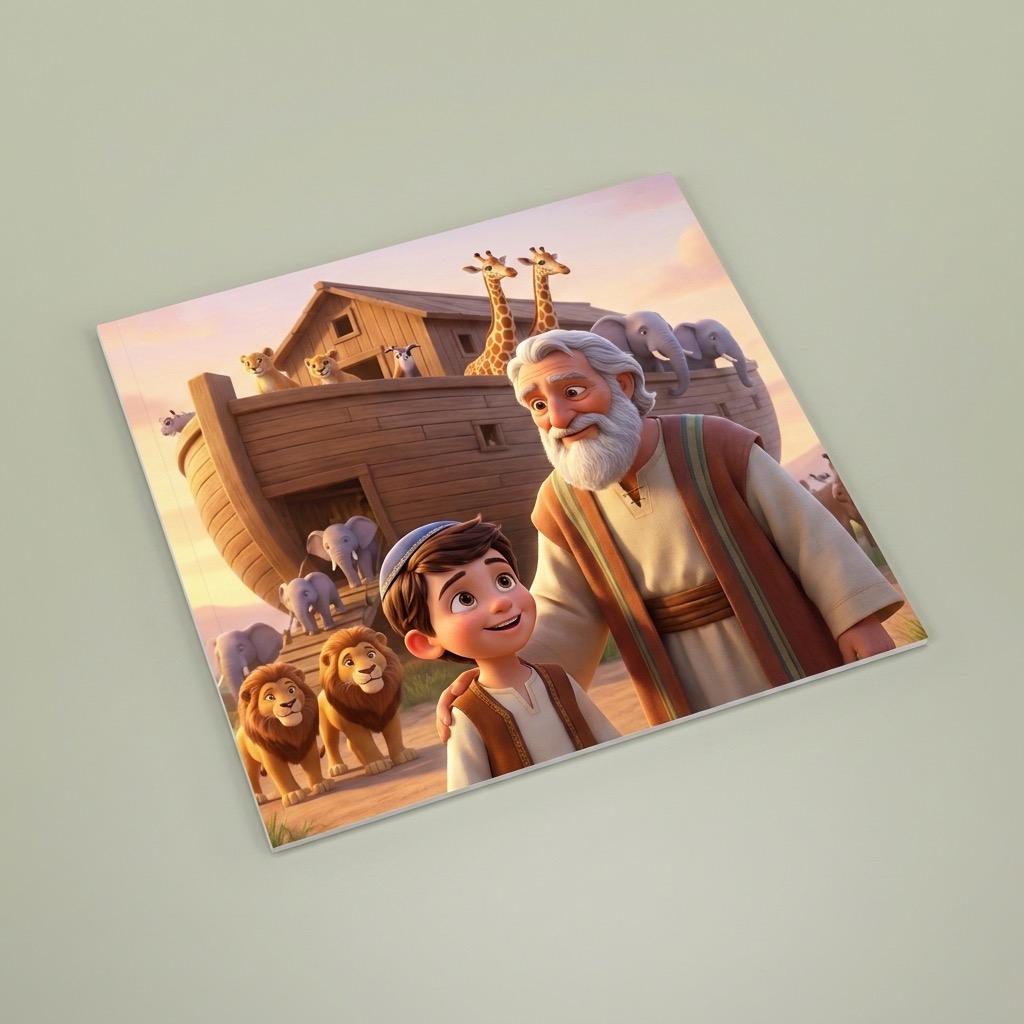
Softcover 8″×8″
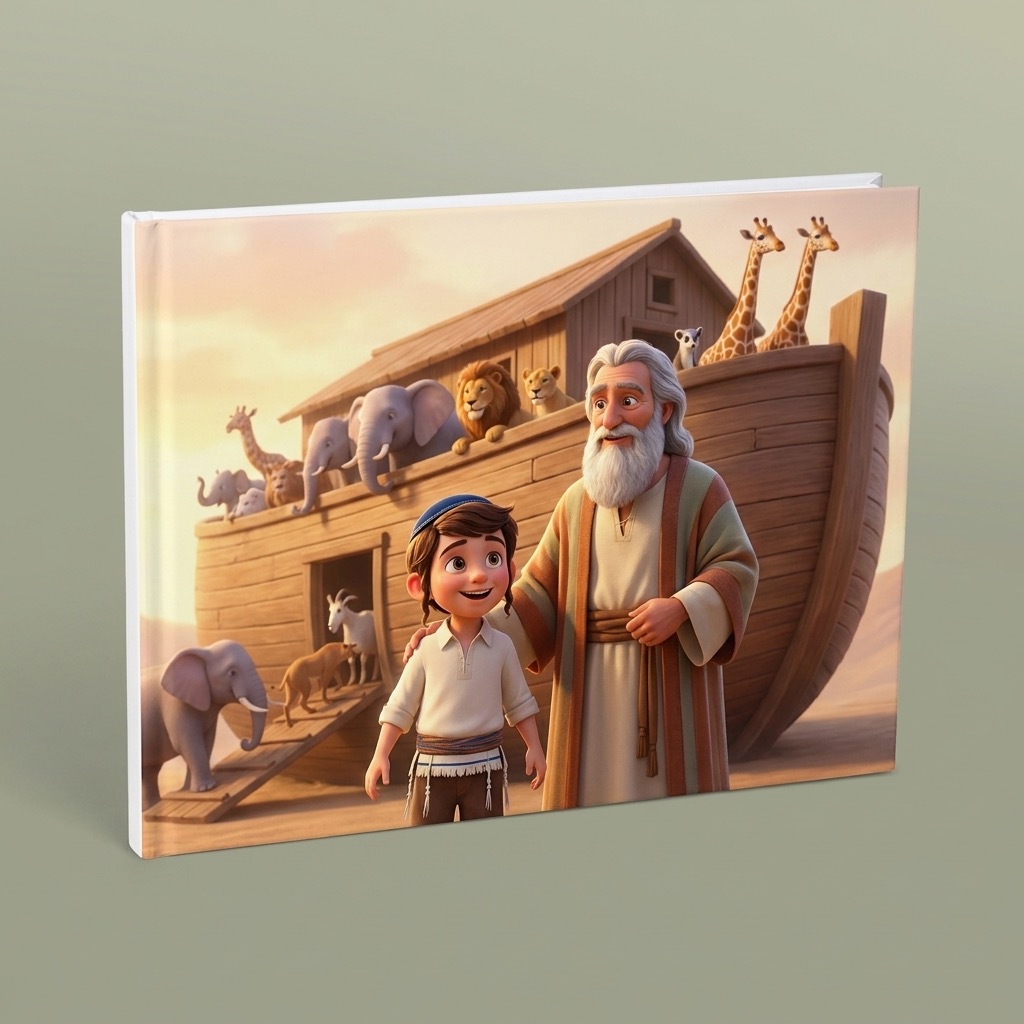
Hardcover 8″×8″
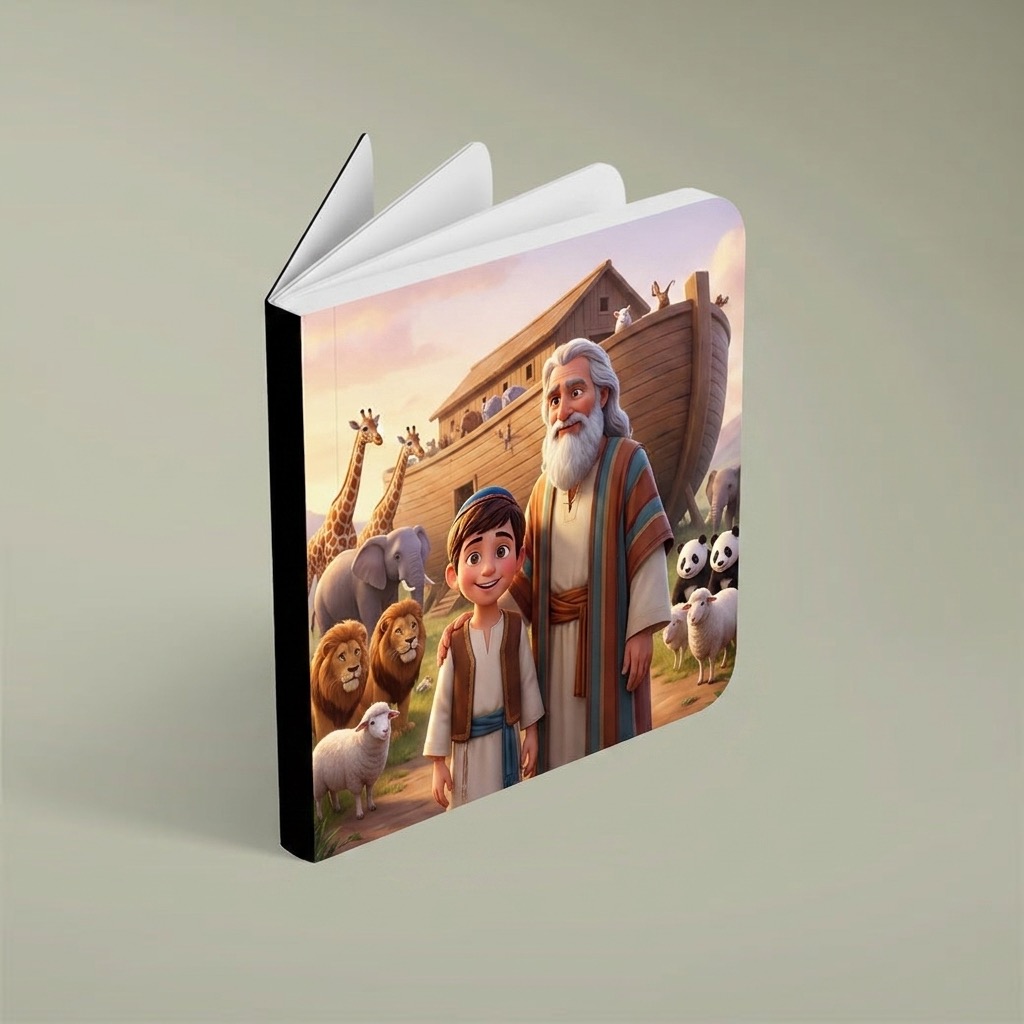
Board book 6″×6″
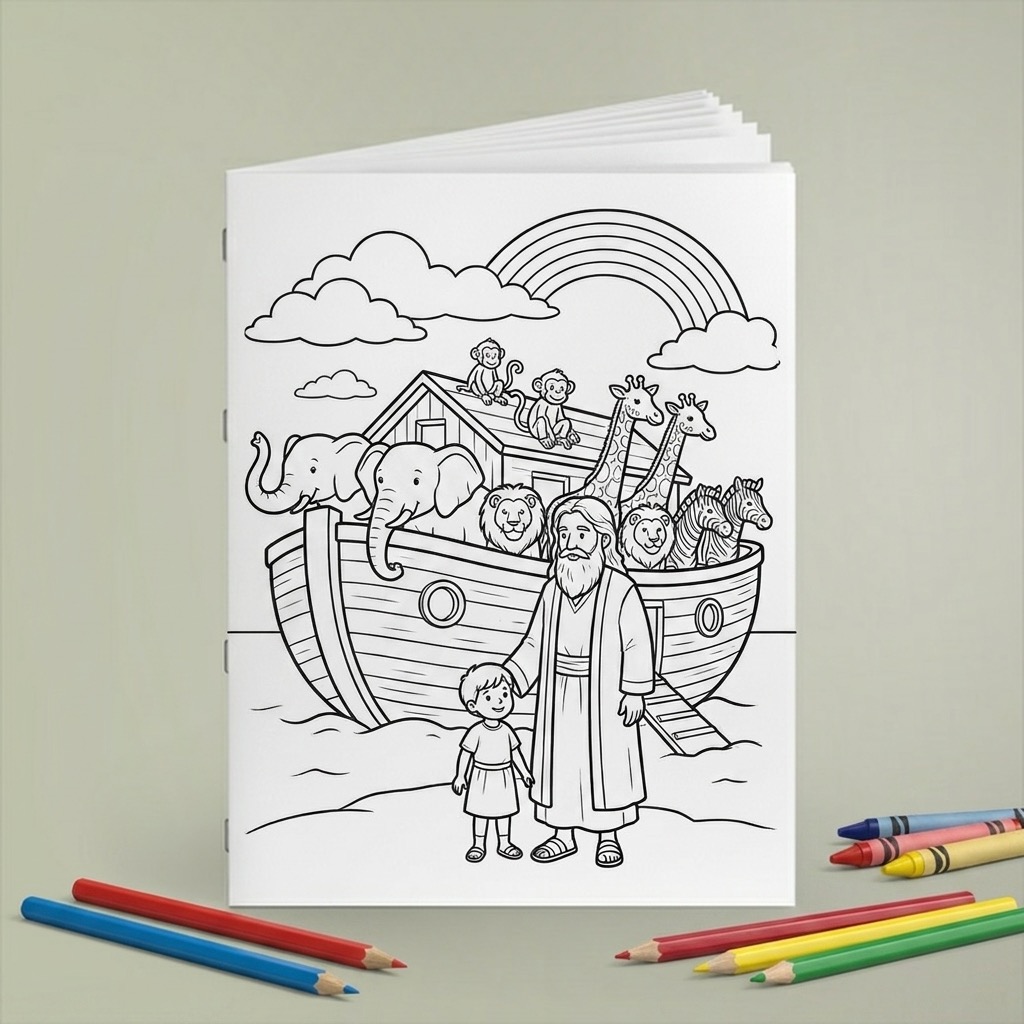
Coloring book 8.5″×11″
Up to four siblings can appear in the same book, which suits this parsha well, since so much of it is about what one person owes another. Choose the board book 6"x6" with rounded safety corners for ages 2 to 4, the softcover 8"x8" for ages 4 to 8, or the hardcover 8"x8" in square or landscape for ages 5 to 12. Books come in English, Hebrew or Yiddish, and you can order more than one language.
Every book ends with a dedicated discussion page of ten questions about the story, mixing what happened with what it asks of the child. That page is the reason a parsha book like this gets talked about at the Shabbos table rather than just read once at bedtime. Everything is written with careful rabbinical guidance and strict tznius, and reviewed by our team before printing.
One practical note: the book creator suggests next week's parsha, not this week's, with a live countdown to the order deadline for delivery before that Shabbos. If Mishpatim is the parsha you want, order it the week before. Our guide on how to choose the weekly parsha for your child's book walks through the timing, including double-parsha weeks, which produce one book covering both.
Mishpatim is the parsha that tells a child his ordinary Tuesday counts. Eight short questions, one photo, about five minutes: create the book and let your child be the one who returns the lost object, guards a friend's things and says naaseh v'nishma along with the whole nation.
Frequently asked questions
What is Parshas Mishpatim about?
Parshas Mishpatim is the parsha of laws that Hashem gave right after the Aseres HaDibros at Har Sinai. It covers damages, theft, watching something that belongs to someone else, honest judges, lending money without interest, caring for the ger, the widow and the orphan, kindness to animals, Shabbos and shemitta, and the three Yamim Tovim. It ends with the Yidden accepting the Torah with the words "Naaseh v'nishma" and Moshe Rabbeinu going up the mountain for forty days and forty nights.
What does "Naaseh v'nishma" mean?
Naaseh v'nishma means "we will do and we will listen." When Moshe Rabbeinu read the words of Hashem to the Yidden, they answered that they would keep the Torah first and understand it afterwards, rather than waiting to hear everything before agreeing. Chazal praise this answer greatly, teaching that the Yidden said in that moment what malachim say, and it is the single line from Mishpatim most worth teaching a child by heart.
What is the main lesson of Parshas Mishpatim for children?
That Hashem cares about ordinary, small, unglamorous behavior. The same Torah that was given with thunder and fire at Har Sinai also tells you to pay for the window you broke, to return the pencil case you found, to guard your friend's toy properly, and to help a person unload his donkey even if you do not like him. Mishpatim teaches a child that being frum happens mostly in the schoolyard and at the kitchen table, not only in shul.
How do I explain Mishpatim to a 5-year-old?
Say it in one sentence: "Hashem gave us the Ten Commandments on the mountain, and then Hashem said: here are the rules for every day, so that people are kind and fair to each other." Then give one concrete example a five-year-old already lives: if you break your brother's toy, you have to make it right. Finish with naaseh v'nishma, which even a young child can repeat: we will do what Hashem says, and we will listen.
When is Parshas Mishpatim read?
Parshas Mishpatim is read in the winter, usually in late January or February, on the Shabbos after Parshas Yisro. It is the sixth parsha of Sefer Shemos. In some years it coincides with Shabbos Shekalim or Shabbos Mevarchim, which is why many families hear it together with a special maftir.
Which Torah Tale format suits my child's age for a parsha book?
Torah Tale prints a board book 6"x6" with rounded safety corners for ages 2 to 4, a softcover photo book 8"x8" for ages 4 to 8, and a hardcover photo book 8"x8" in square or landscape for ages 5 to 12. There is also an optional matching coloring book in black-and-white line art, which is a weekday activity, not a Shabbos one. Books can be ordered in English, Hebrew or Yiddish, and up to four siblings can appear in the same book.