Parshas Ki Seitzei for Kids: The Parsha With the Most Mitzvos
Ki Seitzei holds more mitzvos than any other parsha in the Torah, and most of them are things a child can actually picture: a nest on a branch, a railing on a roof, a lost coat on a bench. Here is how to tell it, teach it, and talk about it at your Shabbos table.
Published by Torah Tale.
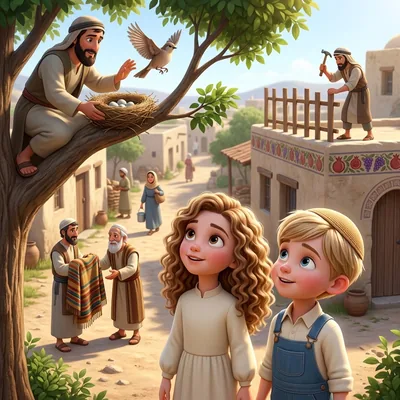
Parshas Ki Seitzei is the parsha of mitzvos. According to the count of the Sefer HaChinuch it holds 74 of them - more than any other parsha in the Torah - and most are about ordinary life rather than dramatic events: a bird's nest on a branch, a fence around a flat roof, a coat somebody lost, a donkey that collapsed under its load, honest weights in a shopkeeper's bag. That is exactly why it lands so well with children. There is no parsha in the year where a child can walk out of the room and immediately do what he just learned.
What happens in Parshas Ki Seitzei?
Ki Seitzei is the sixth parsha of Sefer Devarim, read during Elul while Moshe Rabbeinu is still speaking to Klal Yisrael before they enter Eretz Yisrael. It begins with the words "Ki seitzei lamilchamah" - when you go out to war - and then opens into mitzvah after mitzvah, one after the next, covering almost every corner of a Yid's day.
Here are the ones taught in cheder and Bais Yaakov first:
- Shiluach haken. If you find a bird's nest with the mother bird sitting on her eggs or her young, and you want the young, you must first send the mother away. The Torah promises for this small mitzvah that it will be good for you and that you will have long days.
- Ma'akeh. When you build a new house with a flat roof, you must build a fence around it so that nobody falls. Your responsibility for other people's safety is a mitzvah, not a favor.
- Hashavas aveidah. If you see a lost animal or a lost garment, you may not hide yourself from it and walk on. You bring it back.
- Helping the fallen animal. If you see an animal collapsed under its burden, you help lift it up together with its owner.
- Mercy for animals at work. Do not muzzle an ox while it threshes, and do not plow with an ox and a donkey harnessed together.
- Paying a worker on time. A poor worker's wages must be given the same day; he is waiting for them.
- Honest weights and measures. The weights in your bag must be true - no big stone for buying and a small one for selling.
- Tzitzis and shaatnez, and the mitzvah to remember what happened to Miriam, which Chazal connect to guarding our speech.
The parsha ends with Zechiras Amalek: remember what Amalek did to you on the way out of Mitzrayim, when they struck at the weak and the tired stragglers at the back of the camp. Ki Seitzei also contains mitzvos about war, marriage and beis din that are learned at an older age; a young child's version naturally stays with the mitzvos he can picture and perform.
What is the main lesson of Ki Seitzei?
Hashem cares about the small things. That is the sentence to send your child out of the room with.
Rashi points out something beautiful about the order of the mitzvos here. Right after shiluach haken comes the mitzvah of building a fence on your roof, and Rashi explains that if you fulfill the mitzvah of sending away the mother bird, you will merit to build a new house and fulfill the mitzvah of ma'akeh - because one mitzvah draws another after it. The parsha is literally arranged as a chain. A person who bothers to be careful with a bird ends up with a house, a vineyard, a field, a garment with tzitzis, one mitzvah pulling in the next.
There is a second thread running through the parsha: rachmanus. The mother bird, the threshing ox, the mismatched ox and donkey, the worker waiting for his pay, the person who lost his coat. Ki Seitzei trains a Yid to notice whoever is uncomfortable and do something about it. And the closing mitzvah about Amalek - who chose specifically the weak and tired at the back - is the sharpest possible contrast. Amalek attacked the stragglers. A Yid goes back for them.
How do I explain Ki Seitzei to a 4-year-old versus an 8-year-old?
The parsha is enormous, so the difference between ages is not how much you soften it - it is how many mitzvos you carry at once.
Ages 2-4
Three pictures, no more. "Hashem said: don't take the baby birds while the mother bird is watching - send her away first. Hashem said: put a fence on the roof so nobody falls. Hashem said: if you find something that isn't yours, give it back." Then let them act it out with a toy bird. At this age a board book with rounded safety corners is the format that survives the retelling, and Torah Tale prints one at 6"x6" for exactly this age.
Ages 5-8
Now you can count. Tell them this is the parsha with the most mitzvos in the whole Torah - 74 - and let that number impress them. Give five or six mitzvos and ask which one they could keep today. This is the age where the lost-and-found becomes real, because they are the ones losing hats.
Ages 9-12
Bring in Rashi's chain of mitzvos and ask why the Torah would put a bird's nest and a roof fence next to each other. Then bring in the honest weights and the mitzvah of Amalek, which appear almost side by side, and ask what cheating in business has to do with Amalek. Older children can hold the idea that the way we treat small things predicts the way we treat everything.
Shabbos-table questions for Ki Seitzei
Pick two or three; they work from about age five up.
- Which mitzvah in this parsha could you keep before Shabbos is over?
- Why do you think Hashem gave such a big reward for something as small as sending away a mother bird?
- Whose job is it to put the fence on the roof - the person who might fall, or the person who owns the house? What does that teach us?
- You find a siddur on a shul bench with no name in it. What do you do?
- Why does the Torah tell us not to muzzle the ox while it is working? What does Hashem want us to notice?
- Amalek attacked the people at the back who were tired. Who is at the back of the line in your class, and what could you do about it?
If you keep a parsha discussion going every week, our guide on choosing the weekly parsha for your child's book explains how families build the habit around a book that arrives before Shabbos.
A family activity: the mitzvah chain
Rashi's idea that one mitzvah pulls another after it turns into a very simple project. Cut paper strips, and each time somebody in the house does one of the mitzvos of Ki Seitzei, write it on a strip and staple it onto the chain: returned a lost pencil, helped carry the groceries, gave a sibling the bigger half honestly, filled the water bowl for the pet. Hang it where everyone walks past.
A second option for younger children: set up a real lost-and-found box in the front hall for the week. Anything found on the floor goes in, and nobody takes anything out unless it is theirs. Hashavas aveidah stops being a vocabulary word within about a day.
Softcover 8″×8″
Hardcover 8″×8″
Board book 6″×6″
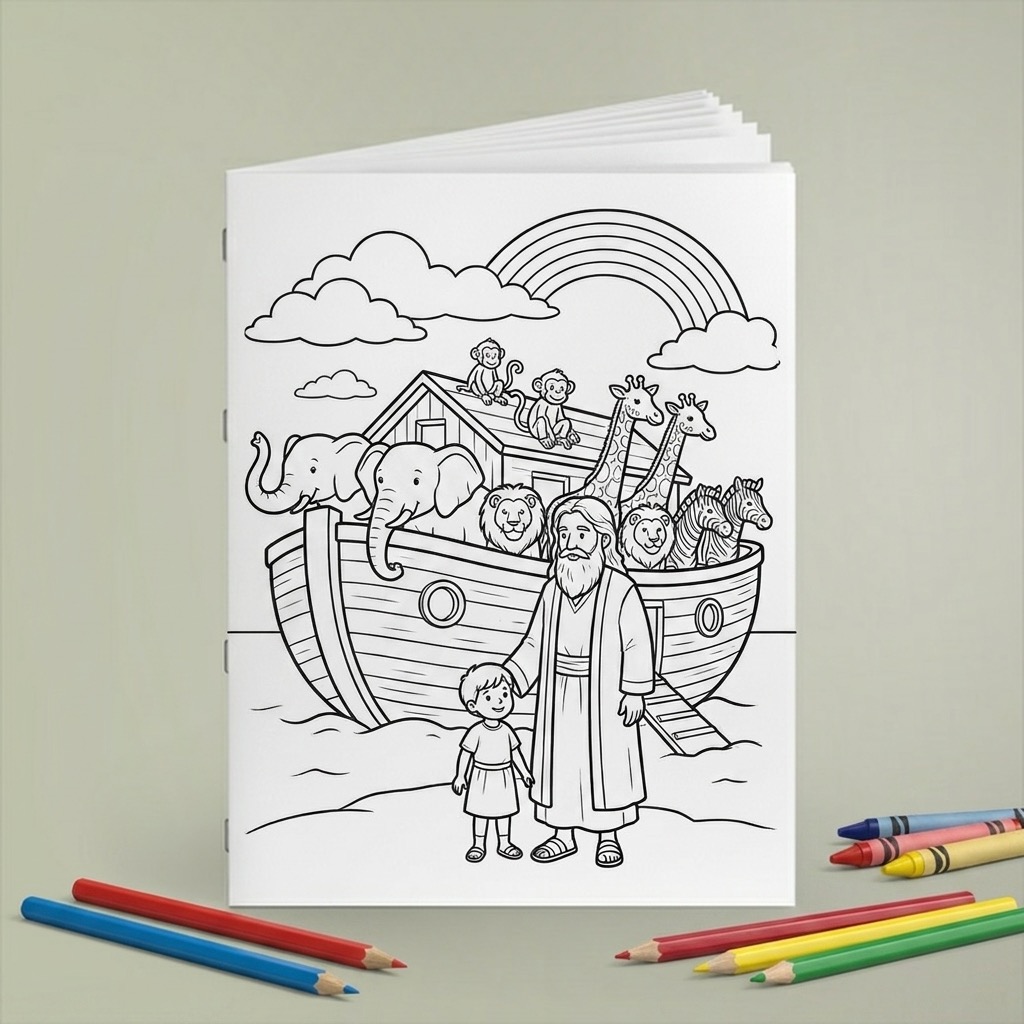
Coloring book 8.5″×11″
What a personalized Torah Tale book of Ki Seitzei is like
In a Torah Tale parsha book, your child is the hero of the story - their name and their likeness, illustrated in high-resolution 3D Pixar style from one photo you upload, appear on every page. For Ki Seitzei that means your child is the one standing under the tree deciding what to do about the nest, the one holding the railing on the new roof, the one who spots the coat on the bench and turns around to bring it back. When a child sees themselves keeping the mitzvah, the mitzvah stops being a rule and starts being a memory.
Up to four siblings can appear in the same book, which works especially well for a parsha built out of moments where one person helps another. Books come in English, Hebrew or Yiddish - you can order more than one language - as a 6"x6" board book for ages 2-4, an 8"x8" softcover for ages 4-8, or an 8"x8" hardcover in square or landscape for ages 5-12, with an optional matching black-and-white coloring book for a weekday afternoon. The book ends with a discussion page of ten questions, which is where a parsha packed with small mitzvos turns into a conversation about the ones your own child could do this week.
The creator asks eight short questions - name, boy or girl, age, one photo, siblings, story, language, format - and takes about five minutes. It opens on next week's parsha with a live countdown to the order deadline for delivery before that Shabbos, and you can also choose any story yourself from the full list, including all of Tanach and the Yamim Tovim. If you want to see the flow before you start, here is our step-by-step walkthrough. Every book is written with careful rabbinical guidance and strict tznius and reviewed by our team before printing.

Say it in one sentence
If you have thirty seconds in the car on the way to cheder: "Ki Seitzei has more mitzvos than any other parsha, and almost all of them are small - a bird, a fence, a lost coat, a tired animal - because Hashem cares about the small things, and one small mitzvah pulls the next one after it."
Ki Seitzei is also a natural first parsha book for a family that has never ordered one, because a child can finish it and immediately go do something in it. Books ship worldwide, with US standard shipping at $3.00 in 5-8 business days, and if you are thinking ahead to an upsherin, birthday or Yom Tov, our list of personalized Jewish gifts for kids covers the timing. When you are ready, create the book and put your child inside the parsha of mitzvos.
Frequently asked questions
What is Parshas Ki Seitzei about?
Ki Seitzei is the parsha of mitzvos - it contains 74 of them, more than any other parsha in the Torah, according to the count of the Sefer HaChinuch. Most of them deal with ordinary daily life: sending away a mother bird before taking her young, putting a fence around a flat roof, returning a lost object, paying a worker the same day, using honest weights, and treating animals with mercy. The parsha ends with the mitzvah to remember what Amalek did to the Yidden.
How do I explain Ki Seitzei to a 4-year-old?
Keep it to two or three pictures a small child can see in his mind. Tell him that Hashem gave us so many mitzvos in this parsha, and that they are about small things: don't take baby birds while the mother bird is watching - send her away first; if your house has a flat roof, build a fence so nobody falls; if you find something that isn't yours, give it back to the person who lost it. Then ask him to find one small mitzvah he can do before Shabbos.
What is the lesson of Ki Seitzei?
The lesson is that Hashem cares about the details of ordinary life. A bird on a branch, a railing on a roof, a lost coat on a shul bench, a worker waiting for his pay - none of these are too small for the Torah to talk about. Ki Seitzei teaches children that being a good Yid is built out of many small, specific acts, not only out of big moments.
What is shiluach haken and why is it in Ki Seitzei?
Shiluach haken is the mitzvah that if a person finds a bird's nest with the mother bird sitting on her eggs or her chicks and he wants to take the young, he must first send the mother bird away. The Torah attaches a remarkable reward to it - that it should be good for you and that you should have long days. Chazal draw our attention to the fact that this small, easy-to-miss mitzvah carries such a reward, which is why it is one of the first mitzvos children learn from this parsha.
Which mitzvos in Ki Seitzei can my child actually do this week?
Returning a lost object, helping someone who is struggling with a heavy load, speaking carefully and avoiding lashon hara, and being honest in anything he measures, counts or trades. A child can put a lost sweater in the cheder lost-and-found instead of walking past it, or help a sibling carry something heavy. These are literal fulfillments of mitzvos in this week's parsha, which is what makes Ki Seitzei so satisfying to teach.
Can I get a personalized Ki Seitzei book with my child in it?
Yes. Torah Tale prints personalized parsha storybooks in which your child is the hero - their name and their likeness, illustrated from one uploaded photo in high-resolution 3D Pixar style, appear on every page. Up to four siblings can appear in the same book, and books are available in English, Hebrew and Yiddish in board book, softcover and hardcover formats. The whole creation flow is eight short questions and takes about five minutes at torahtale.com/create.