Parshas Pekudei for Kids: The Final Count & the Cloud
Parshas Pekudei closes Sefer Shemos with a full accounting, a finished Mishkan and a cloud that settles over it. Here is how to tell it to a 4-year-old and to an 8-year-old, what the parsha is really teaching, and questions to bring to the Shabbos table.
Published by Torah Tale.
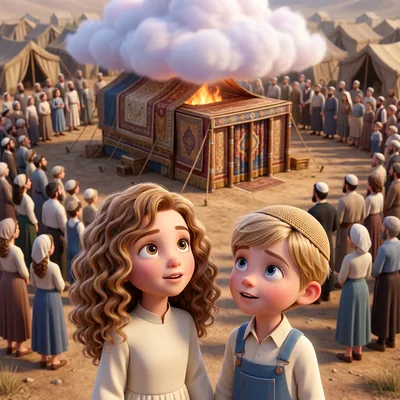
Parshas Pekudei is the last parsha in Sefer Shemos, and it is the parsha where everything finally comes together. Moshe Rabbeinu gives a full public accounting of every piece of gold, silver and copper the Yidden donated, the clothing of the Kohanim is finished, every part of the Mishkan is carried to Moshe, and Moshe stands the Mishkan up. Then a cloud settles on it. For children, Pekudei is the satisfying end of a long project: the parsha where the boxes are unpacked, the pieces fit, and Hashem's presence comes to rest in a home the Yidden built with their own hands.
What happens in Parshas Pekudei, retold for children
The parsha begins with numbers, and the numbers are the point. Moshe tells the whole nation exactly how much gold, silver and copper came in and exactly where each bit went. The silver from the half shekels became the hundred silver sockets that the Mishkan's beams stood in, and the leftover silver became the hooks and bands for the pillars. Nothing was unaccounted for.
Then the bigdei kehunah are completed: the ephod, the choshen with its twelve stones, the techeiles robe with its bells and pomegranates, and the golden tzitz worn on the forehead of the Kohen Gadol. If your child learned Parshas Tetzaveh earlier in the winter, this is where the instructions turn into finished garments.
Everything is brought to Moshe: the Mishkan, the covers, the Aron with its poles, the Shulchan, the Menorah, the Mizbeiach, the washstand, the curtains, the pegs. The Torah lists them one by one, and after item after item it repeats that it was made just as Hashem commanded Moshe. Moshe looks at all of it and blesses the people.
On Rosh Chodesh Nissan, Moshe sets the Mishkan up, puts the Luchos into the Aron, lights the Menorah, arranges the lechem hapanim and brings the first ketores. And then a cloud covers the Ohel Moed and the glory of Hashem fills the Mishkan, so completely that Moshe himself cannot enter. The cloud rested on the Mishkan by day and there was fire in it at night, and when the cloud lifted, the Yidden knew it was time to travel. That is the last pasuk of Sefer Shemos, and when the reading finishes, the shul says "Chazak chazak v'nischazek."
Why did Moshe count every coin?
A child listening to a long list of weights will ask why the Torah bothers. The answer is the whole middah of the parsha. Moshe had been handed a fortune in donated gold and silver, and he did not simply say "trust me." He counted it and reported it in public.
The Midrash relates that there were scoffers who muttered about how Moshe was living off the donations. He did not answer them with anger. He answered with an itemized accounting. Chazal learn from here that a person who handles other people's money, tzedakah money included, has to be clean in the eyes of people and not only in the eyes of Hashem.
This is unusually easy to make real for children, because children handle other people's things all day. The classroom tzedakah box, the shul Chumash, the money a mother gives for the grocery, a friend's toy borrowed for the afternoon. Pekudei says the tzaddik is the one who keeps count and can show you where everything went.
Why couldn't anyone stand up the Mishkan?
Chazal tell us that when it came time to raise the Mishkan, the beams were too heavy for any person to lift. Betzalel and the wise craftsmen who had made them could not get them to stand. Moshe had been pained that he had no share in the actual building work, so Hashem gave him this task and told him to put his hands to it. The Mishkan rose into place on its own, and the Torah writes that it was Moshe who set it up.
Children love this piece, and it carries a real idea: Moshe did not have a hammer in his hand all those weeks, and his part still turned out to be the part nobody else could do. There is more than one way to build something, and the person who was not holding the tools was not left out.
The Midrash also relates that the work on the Mishkan was actually finished in Kislev, and the Mishkan waited, standing unassembled, until Rosh Chodesh Nissan. Kislev was later repaid for the delay with the days of Chanukah. It is a nice detail for an older child who wants to know why they waited.
How to explain Pekudei to a 4-year-old and to an 8-year-old
The parsha is mostly lists, so the age gap here is real. Pick one thread and stay with it.
- Ages 2-4: "Everyone finished building Hashem's house. They brought all the pieces to Moshe. Moshe put it up, and then a special cloud came to show Hashem was right there with them." Build it with blocks while you talk and name the parts out loud.
- Ages 5-7: Add the counting. Moshe told everybody exactly how much gold and silver came in and where every piece went, so nobody would ever wonder. Ask what your child does with money they are holding for someone else.
- Ages 8-12: Add the repeated phrase. Ask them to listen for "ka'asher tzivah Hashem es Moshe" in the leining and count how many times it comes up. Then talk about the difference between doing a mitzvah your own clever way and doing it the way it was actually commanded. This is also the age to learn the Chazal about Moshe raising the Mishkan and why Hashem gave that specific job to him.
What a personalized Torah Tale book of Parshas Pekudei is like
A Torah Tale book of Pekudei puts your child inside the parsha. Their name and their face, illustrated from one uploaded photo in high resolution 3D Pixar style, appear on every page: watching the accounting, carrying finished pieces to Moshe, standing there when the cloud comes down. Up to four siblings can appear in the same book, which suits this parsha well, since Pekudei is a story about a whole nation bringing its work to one place.
Every book ends with a dedicated discussion page of ten questions about the story, mixing comprehension with middos. For Pekudei those questions do a lot of work, because the middah here is honesty with things that are not yours, and that is a conversation most children need more than once.
Books come in English, Hebrew or Yiddish, and you can order more than one language. Formats are a board book 6"x6" with rounded safety corners for ages 2-4, a softcover 8"x8" photo book for ages 4-8, and a hardcover 8"x8" in square or landscape for ages 5-12. There is also an optional matching coloring book in black and white line art. The coloring book is a weekday project, erev Shabbos or a quiet afternoon, since coloring is melacha. The storybook itself is exactly right for reading at the Shabbos table.
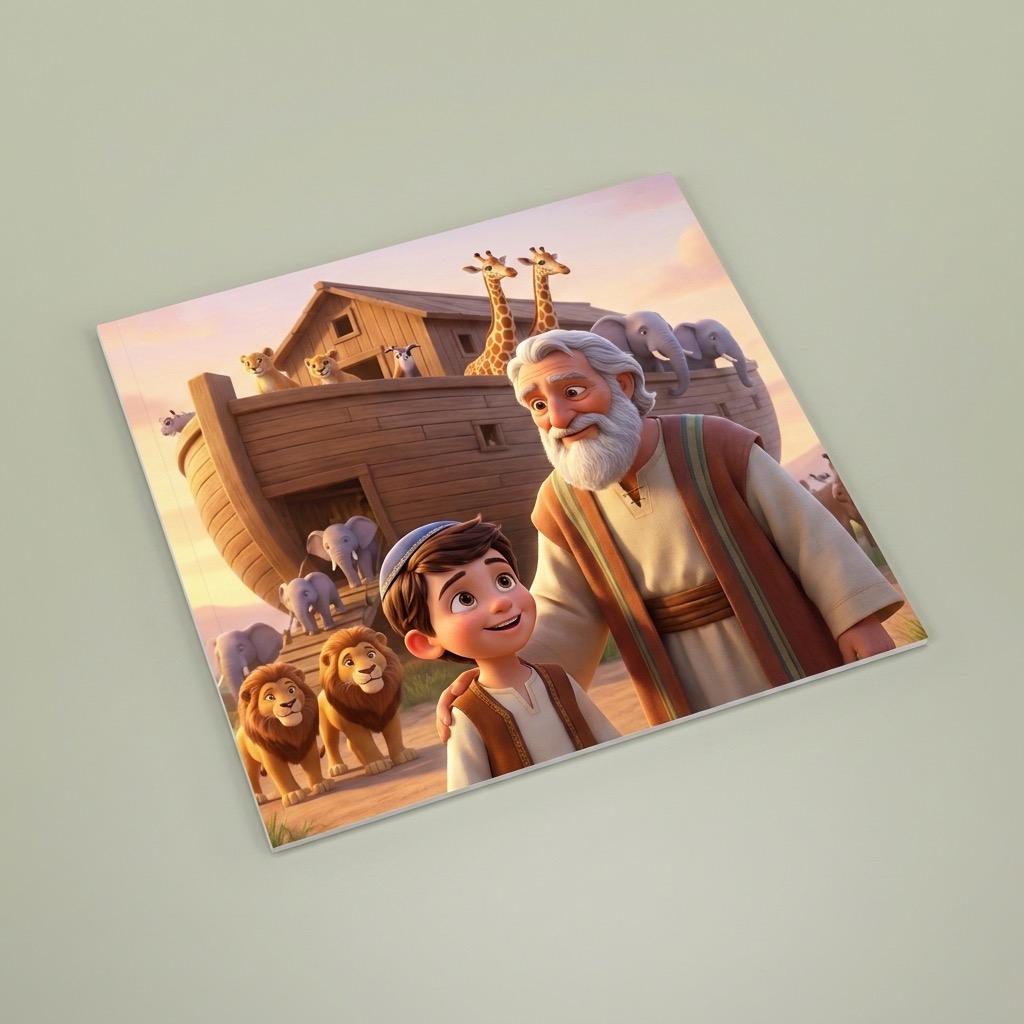
Softcover 8″×8″
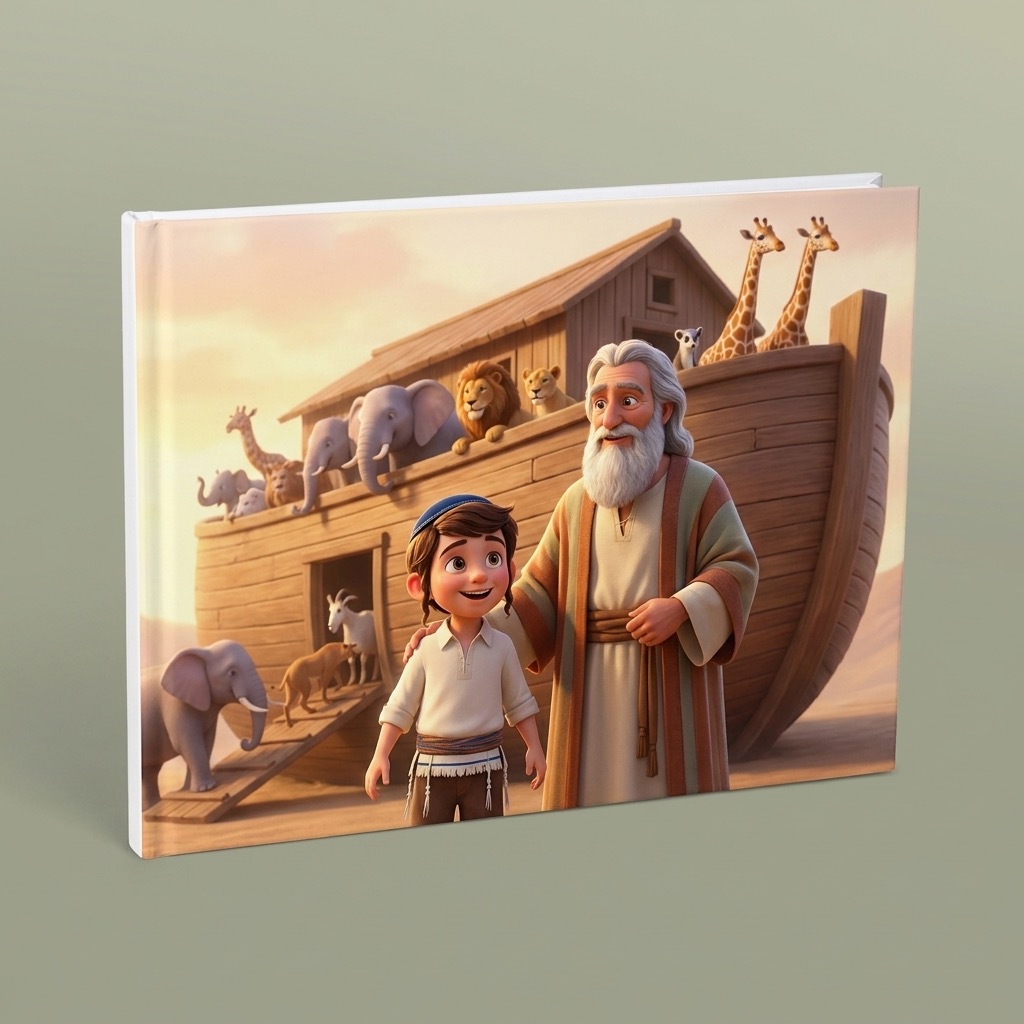
Hardcover 8″×8″
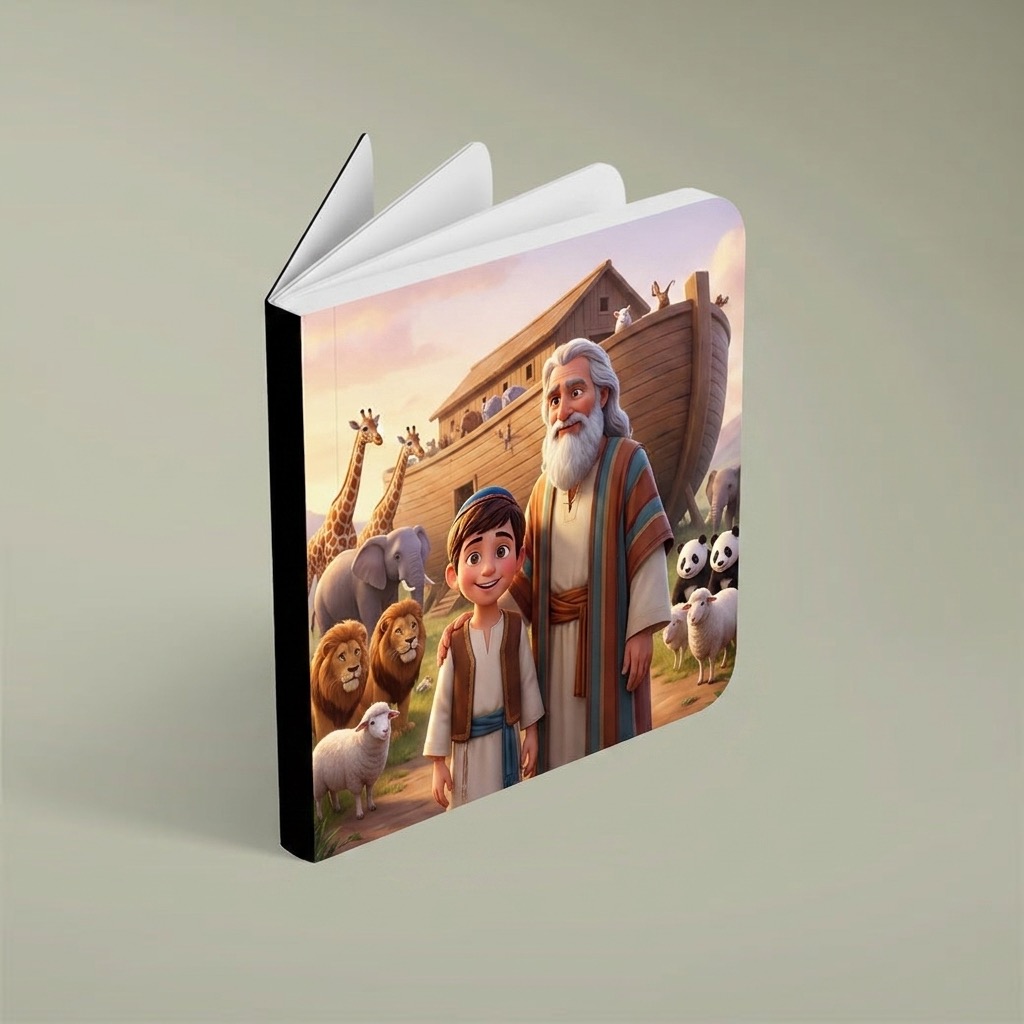
Board book 6″×6″
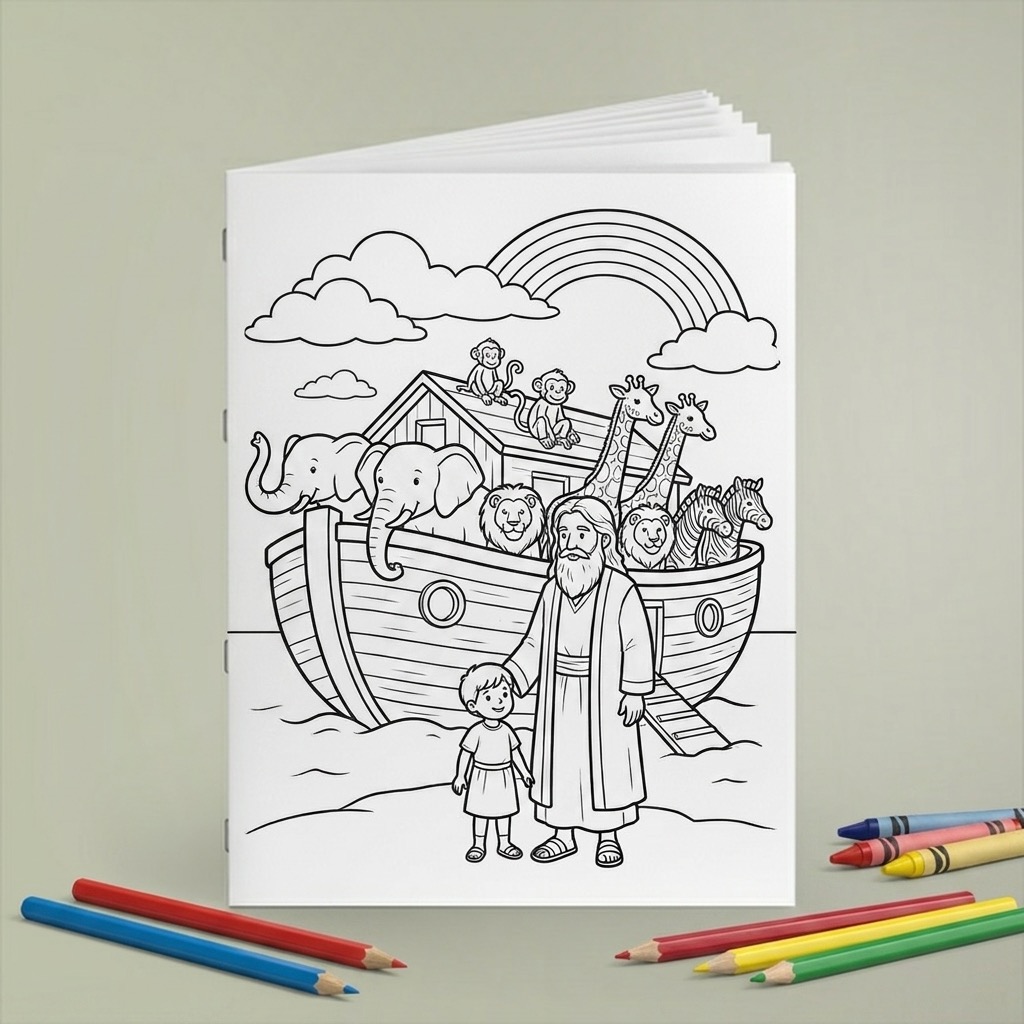
Coloring book 8.5″×11″
Shabbos table questions and a weekday activity
Pekudei gives you a table conversation that goes somewhere. Try these:
- Why did Moshe count all the gold and silver in front of everyone, if nobody asked him to?
- Is there anything in our house that belongs to somebody else right now? Do we know where it is?
- Why does the Torah keep repeating "just as Hashem commanded Moshe" instead of saying it once at the end?
- Moshe did not build any of the pieces himself. Did he still have a part in the Mishkan?
- How did the Yidden know when it was time to travel?
- We finished a whole sefer of the Torah this Shabbos. What do we say, and why do we say it out loud together?
For a weekday afternoon, do a Pekudei inventory. Give your child a pad and have them count and list something real: the sefarim on one shelf, the coins in the tzedakah box, the Shabbos candlesticks, the leftover craft supplies. Then have them "report" the list to you the way Moshe reported to the Yidden. Younger children can build and take apart a Mishkan from blocks, adding one piece at a time as you name it, and finishing with a cotton wool cloud on top.
If you are learning the Mishkan parshiyos in order, the two that lead here are Parshas Terumah, where the donations begin, and Parshas Vayakhel, where the gifts overflow and Betzalel begins to build.

Getting the book in hand before Shabbos
Torah Tale's book creator suggests next week's parsha, with a live countdown to the order deadline for delivery before that Shabbos, so you are always building ahead rather than catching up. In a year when Vayakhel and Pekudei are read together, the creator produces one book covering both. You can order a single book or a Weekly, Monthly or Year Bundle subscription. US standard shipping is $3.00 and takes 5-8 business days, express is $6.00 and takes 3 business days, and we ship worldwide with rates shown at checkout.
Every book is written with careful rabbinical guidance and strict tznius and reviewed by our team before printing. The whole process is eight short questions and takes about five minutes: create the book and your child can be the one standing there when the cloud comes down on the Mishkan.
Frequently asked questions
What happens in Parshas Pekudei?
Parshas Pekudei opens with a detailed accounting of all the gold, silver and copper that the Yidden donated for the Mishkan, and what each amount was used for. The bigdei kehunah are completed, including the ephod, the choshen and the golden tzitz for the Kohen Gadol's forehead. Every finished piece is brought to Moshe, who blesses the people, and then Moshe sets up the Mishkan. The parsha, and all of Sefer Shemos, ends with a cloud resting on the Mishkan and the glory of Hashem filling it.
What is the lesson of Parshas Pekudei for children?
Pekudei teaches two things children can use the same day they hear it. The first is honesty in money matters: Moshe gave a public reckoning of every donation even though no one demanded it of him, which Chazal teach as a model of staying clean not only before Hashem but before people. The second is following instructions exactly and finishing the job, since the Torah repeats after item after item that it was made just as Hashem commanded Moshe.
Why did Moshe count all the gold and silver?
Moshe was entrusted with an enormous amount of donated gold, silver and copper, and he gave the Yidden a full public accounting of where all of it went. The Midrash relates that there were scoffers who whispered about Moshe, and he answered them not with anger but with an itemized report. Chazal learn from here that a person who handles other people's money, even tzedakah money, should keep records and be open about them.
Why couldn't anyone stand up the Mishkan?
Chazal tell us that the beams of the Mishkan were too heavy for any person to raise, and the wise craftsmen who had built them could not get them to stand. Moshe was pained that he had no part in the actual building, so Hashem gave him this job and told him to put his hands to the work. The Mishkan rose into place on its own, and the Torah credits it to Moshe.
How do I explain Pekudei to a 5-year-old?
Say it in one sentence first: "Everyone finished making all the pieces of Hashem's house, they brought them to Moshe, and Moshe put the house up, and then a special cloud came to show Hashem was there." Young children connect to the counting and the building, so let them stack blocks while you name the parts: beams, curtains, the Menorah, the Aron. The cloud is the part they will remember, so end there rather than on the numbers.
Is Pekudei always read together with Vayakhel?
Not always. In many years Vayakhel and Pekudei are read together as a double parsha, and in other years each is read on its own Shabbos. When Torah Tale's book creator lands on a double-parsha week, it produces one book that covers both parshiyos together.