Parshas Tetzaveh for Kids: Olive Oil, the Kohen's Clothes & the Choshen
Tetzaveh is the parsha of pure olive oil and the Kohen Gadol's clothing - a gold tzitz on the forehead, twelve stones over the heart, and little bells on the hem of the me'il. Here is how to tell it to a four-year-old and to an eight-year-old, what the parsha is really teaching, and questions that keep it going at the Shabbos table.
Published by Torah Tale.
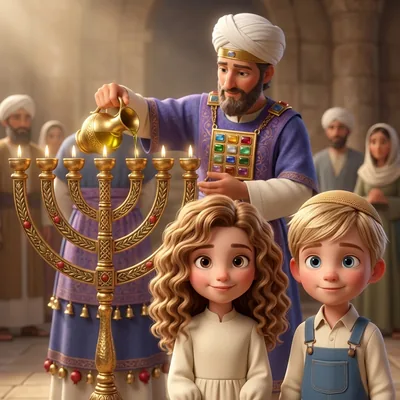
Parshas Tetzaveh is the parsha of the oil and the clothing. Hashem tells Bnei Yisrael to bring pure pressed olive oil so that Aharon and his sons will light the Menorah in the Mishkan every day, and then the Torah describes, piece by piece, the garments the kohanim wore while they served. For children, this is one of the most picture-able parshios in the Torah: a gold plate on the forehead, twelve colored stones over the heart, and little golden bells ringing on the hem of a blue robe.
What happens in Parshas Tetzaveh?
The parsha opens with a command to the whole nation: bring shemen zayis zach, clear olive oil made from the first pressing, so the Menorah can be kindled from evening until morning, always. It is called a ner tamid, a constant light. Every Yid had a share in that flame.
Then Hashem tells Moshe to bring Aharon and his sons close, to serve as kohanim. Their clothing is not ordinary clothing. The Torah says it is made l'chavod ul'sifaares, for honor and for beauty, and it is woven by people whose hearts Hashem filled with wisdom.
Every kohen wore four garments: linen pants, a long white tunic, a woven belt, and a head covering. The Kohen Gadol wore four more on top of those. The me'il was a robe of techeiles with golden bells and woolen pomegranates alternating around the bottom. The ephod was worn like an apron, with two shoham stones on the shoulders engraved with the names of the shevatim. The choshen was a folded square set with twelve precious stones, each one carrying the name of a shevet, worn over the heart. And the tzitz was a thin plate of gold on his forehead engraved with the words Kodesh LaHashem, holy to Hashem.
The parsha closes with the seven days of miluim, when Aharon and his sons were inaugurated into the avodah, and with the command to build the golden mizbeach for the ketores, the incense offered every morning and every evening when the lamps were tended.
Why is Moshe Rabbeinu's name missing from Tetzaveh?
This is the detail children remember for years, and it is worth telling them. From the beginning of Sefer Shemos until the end of the Torah, Moshe Rabbeinu's name appears in every single parsha except this one. Here the Torah says only v'atah, "and you."
The mefarshim connect it to what happens later, in Parshas Ki Sisa. After the cheit ha'eigel, Moshe davened for Klal Yisrael and told Hashem that if He would not forgive them, He should erase Moshe from His sefer. Hashem forgave the Yidden, but the words of a tzaddik leave their mark, and so one parsha is missing his name.
Explain to a child what that means: Moshe was willing to give up having his own name in the Torah so that the Jewish people would be forgiven. That is what a leader is. Many families also point out that 7 Adar, Moshe Rabbeinu's yahrzeit, usually falls during the week of Tetzaveh.
What is the lesson of Parshas Tetzaveh?
There are three lessons that children can actually hold onto.
How we present ourselves matters. The kohen could not serve in the Mishkan in whatever he happened to be wearing. Getting dressed properly was part of the avodah. This is a natural bridge to Shabbos clothes, to washing hands and faces before davening, to dressing b'kavod when we stand in front of Hashem.
Carry other people with you. The Kohen Gadol did not walk into the Mishkan alone. Twelve names were on his shoulders and twelve names were over his heart, so that every single shevet came in with him. A child can understand that when you daven, you can daven for other people too.
Let people know you are coming. The Torah says about the bells, v'nishma kolo b'vo'o el hakodesh, his sound will be heard when he enters. From here Chazal learn a rule of derech eretz: a person should not walk into a room suddenly, even into his own house. Knock. Say hello first. It is a small, practical middah hiding inside a description of a robe.
How do I explain Tetzaveh to a 4-year-old and to an 8-year-old?
For a four-year-old, keep it to two pictures. First, the oil: "Everybody brought the very best olive oil so the big golden Menorah in Hashem's house would have light every day." Second, the clothes: "Aharon had special clothes for working in Hashem's house, with little gold bells that went ding when he walked, and twelve shiny stones over his heart, one for each of the shevatim." That is the whole parsha at that age, and it is enough.
For a six- or seven-year-old, add the tzitz on the forehead with Kodesh LaHashem written on it, and ask why a person would need words written where everyone can see them. Add that the names of all the shevatim were engraved on the stones, and count the twelve together.
For an eight- to twelve-year-old, go through all eight garments and which four the regular kohanim also wore. Introduce Moshe's missing name and the connection to Ki Sisa. Chazal teach that the bigdei kehunah brought atonement, each garment for a different thing, and an older child can appreciate the idea that the me'il, which made a sound, atoned for the wrong use of sound - lashon hara.
If your child is coming home from cheder with Tetzaveh this week, the same approach works for the parsha before it. Parshas Terumah builds the Mishkan itself, and Tetzaveh dresses the people who work inside it.
What a personalized Torah Tale book of Tetzaveh is like
A Torah Tale book of Parshas Tetzaveh puts your own child inside the story. Their name is in the text and their likeness, illustrated in high-resolution 3D Pixar style from one photo you upload, appears on every page: standing with the jars of pure olive oil, watching the Menorah being kindled, looking at the twelve stones of the choshen catch the light. Up to four siblings can appear in the same book, which is useful when the Tetzaveh sheet comes home from cheder for one child and the younger ones want in.
Every book ends with a dedicated discussion page carrying ten questions about the story, mixing comprehension with middos. That page is the difference between a book you read to a child and a book your family talks about at the Shabbos table.
The books are written with careful rabbinical guidance and strict tznius, and reviewed by our team before printing. Tetzaveh in particular is a parsha where accuracy in the details matters, because children notice when a picture does not match what the rebbi said.
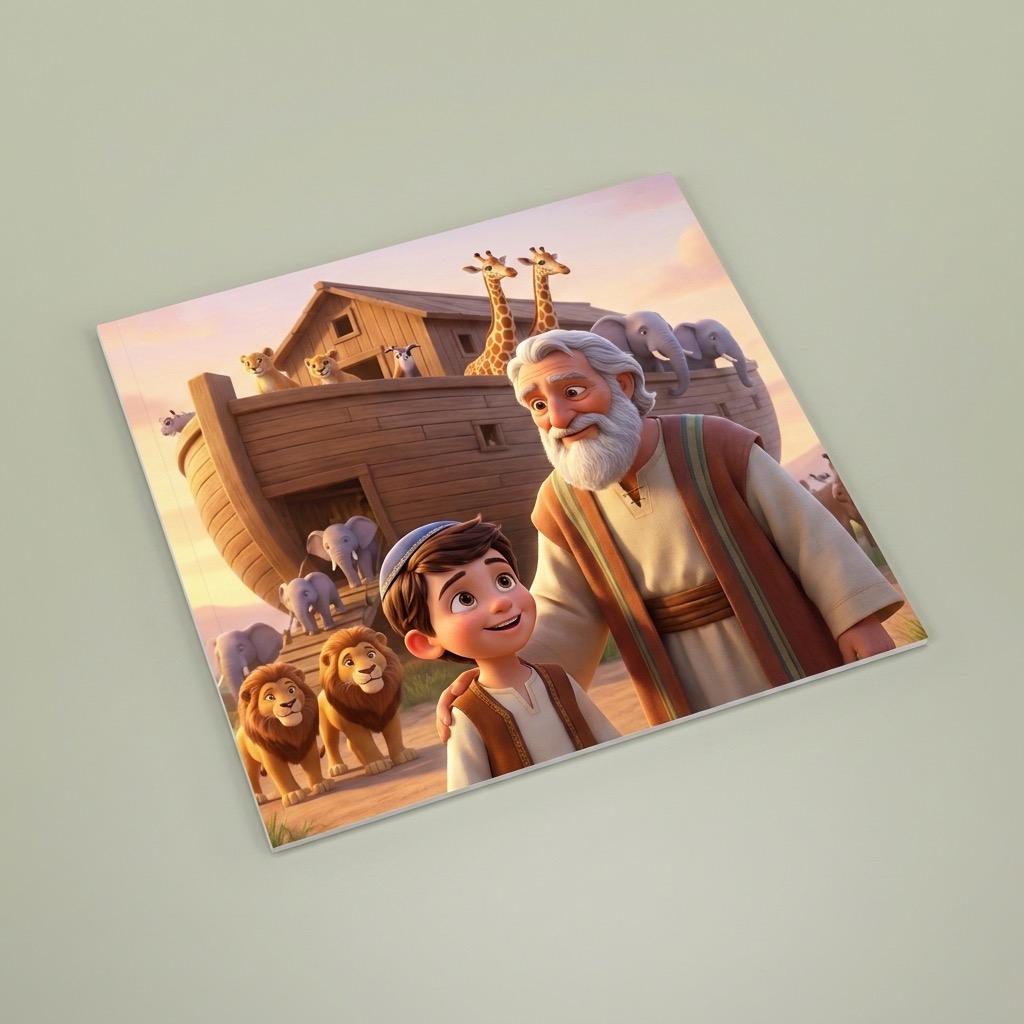
Softcover 8″×8″
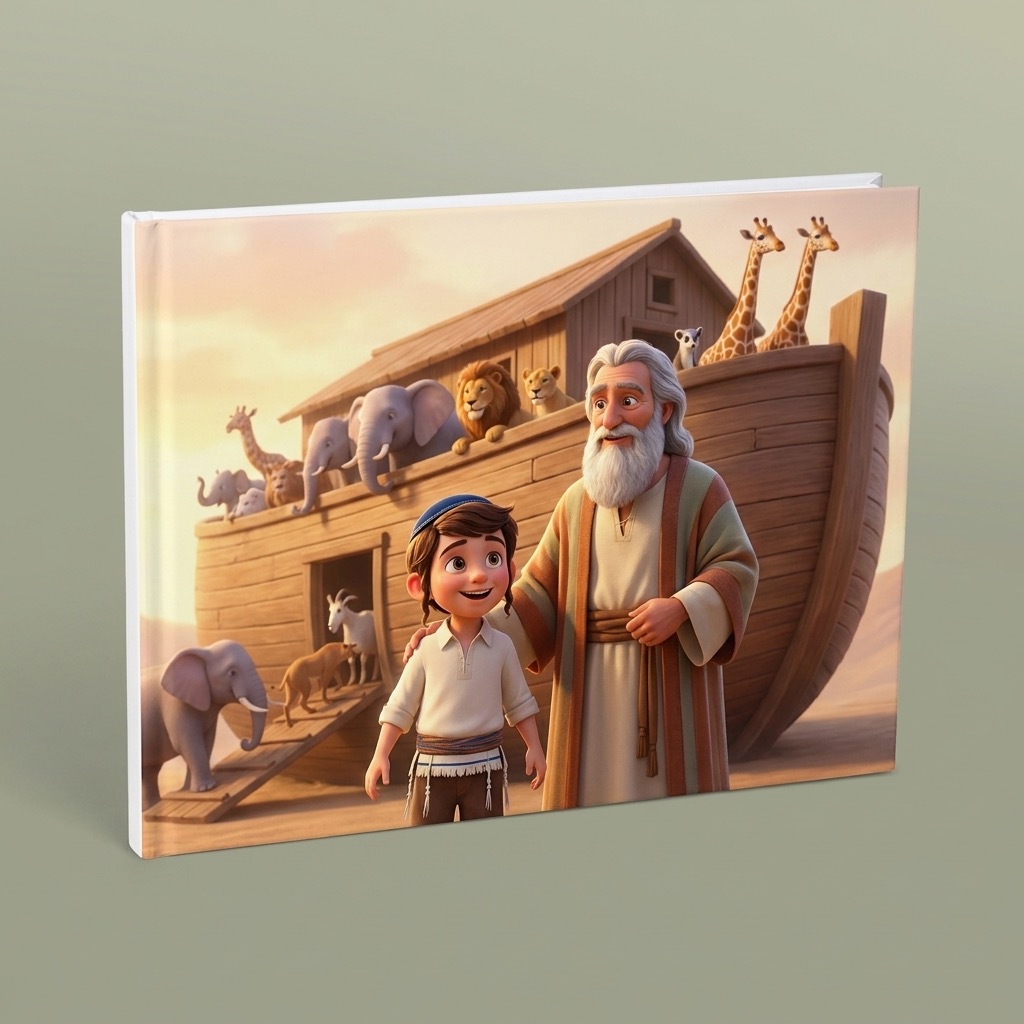
Hardcover 8″×8″
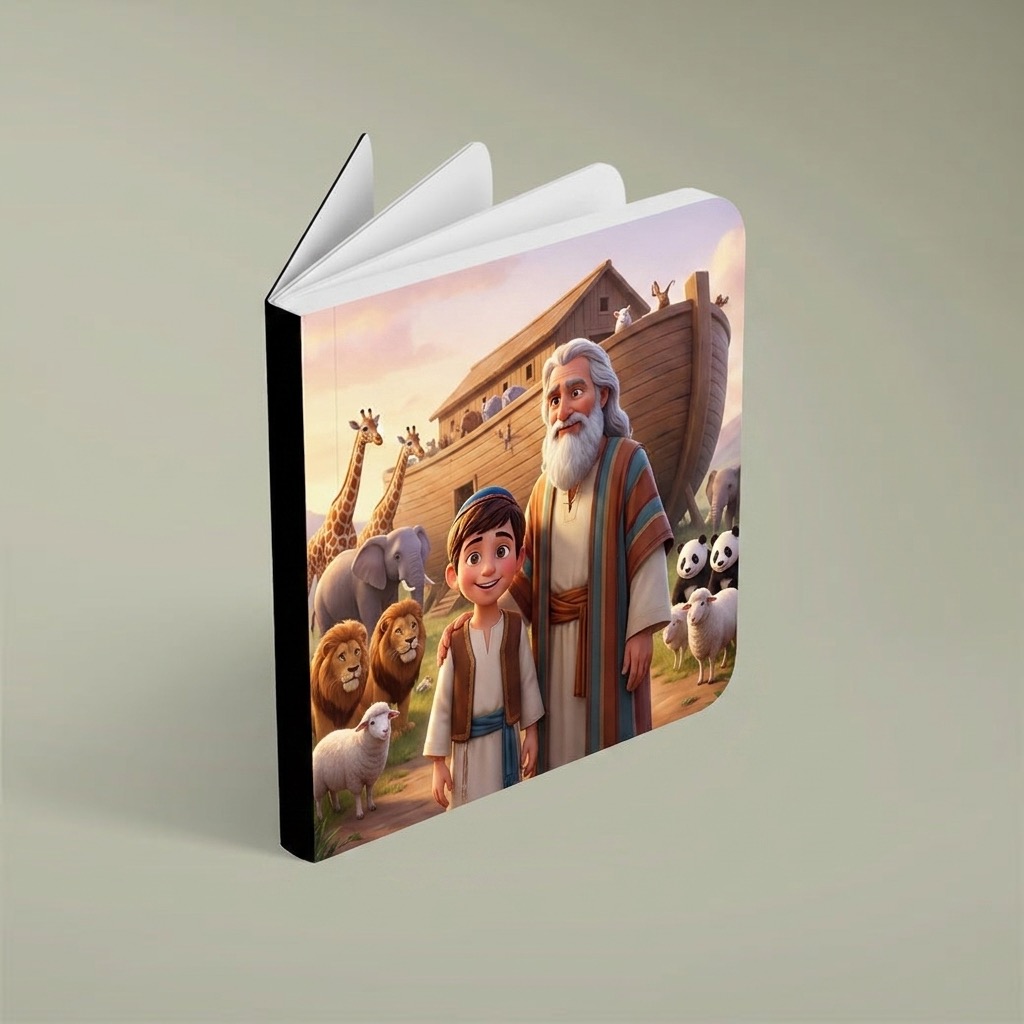
Board book 6″×6″
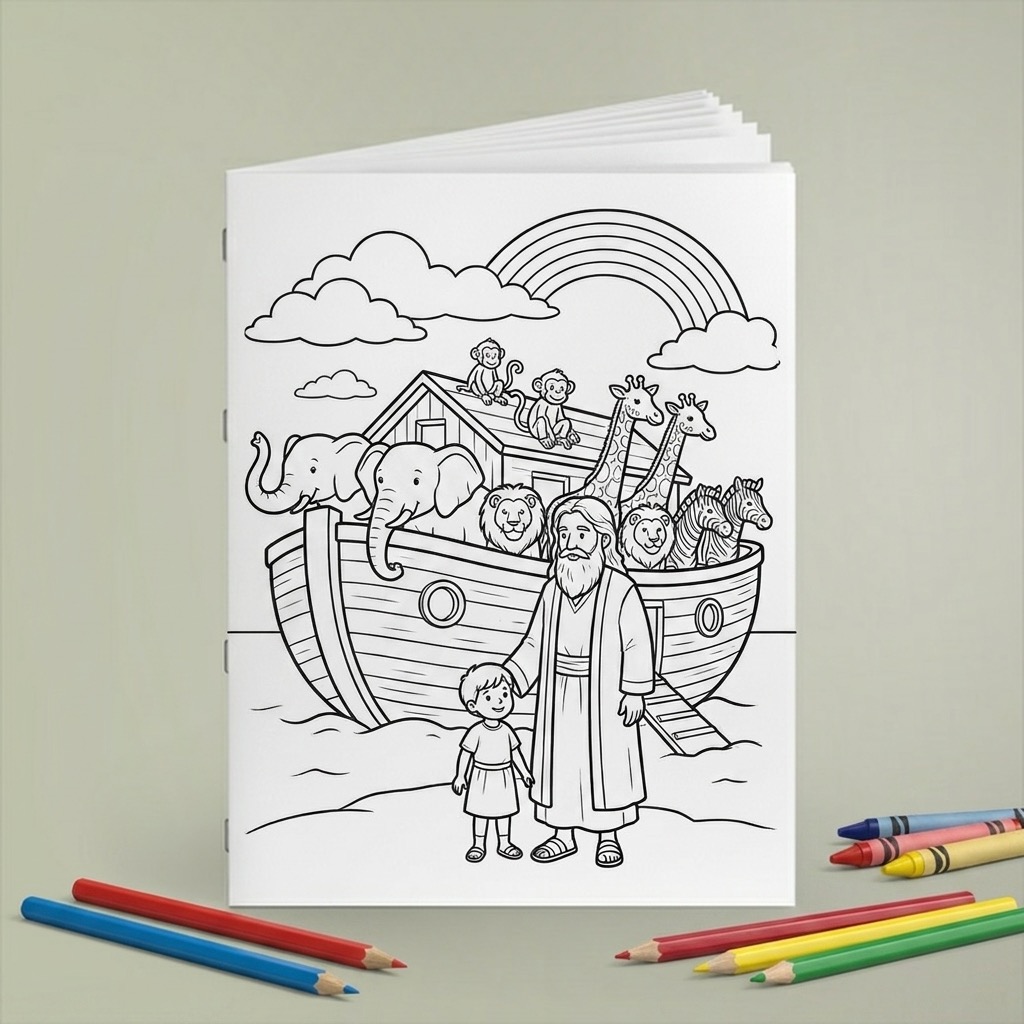
Coloring book 8.5″×11″
Choose the format by age: the 6"x6" board book with rounded safety corners for ages 2-4, the 8"x8" softcover for ages 4-8, and the 8"x8" hardcover in square or landscape for ages 5-12. Books come in English, Hebrew or Yiddish, and you can order more than one language. There is also an optional matching coloring book in black-and-white line art, which is a weekday activity - erev Shabbos or a weekday afternoon, never on Shabbos or Yom Tov. The storybook itself is exactly right for the Shabbos table.
Five Shabbos table questions on Tetzaveh
- The whole nation brought oil for one Menorah that only the kohanim lit. How can you have a share in something you are not the one doing?
- The Kohen Gadol wore twelve names over his heart. Whose names would you want to carry with you when you daven?
- Why do we wear different clothes on Shabbos than on Tuesday? Does it change how you act?
- The bells told people the Kohen Gadol was coming. What is one place in our house where we should knock first?
- Moshe Rabbeinu gave up having his name in one parsha so that Klal Yisrael would be forgiven. What is something you would give up for someone else?
A weekday activity that works: give each child twelve small squares of colored paper and have them write the names of the shevatim, four rows of three, the way the stones sat in the choshen. Ask them which name they would put where and why. It takes ten minutes and it makes the choshen real.
Where Tetzaveh sits in Sefer Shemos
Tetzaveh is the fourth of the five Mishkan parshios and the middle of a long stretch of building and preparing. Children track the sefer better when they can see the sequence: the Yidden leave Mitzrayim, stand at Har Sinai, learn the mitzvos of Mishpatim, donate to the Mishkan in Terumah, and now, in Tetzaveh, prepare the kohanim who will serve in it.
In the Torah Tale story picker you can browse the whole Chumash collection and choose any parsha, or move through Nevi'im, Kesuvim, Holidays, Jewish Life, Mitzvos and Stories of Tzadikim. The creator suggests next week's parsha with a live countdown to the order deadline for delivery before that Shabbos, and a double-parsha week produces one book covering both.

Creating a book takes about five minutes and eight short questions: name, boy or girl, age, one photo, siblings, story, language, format. If your child is learning Tetzaveh this week, you can create the book now and have their own copy to read together at the Shabbos table.
Frequently asked questions
What is Parshas Tetzaveh about, in one sentence?
Parshas Tetzaveh is about the oil for the Menorah and the special clothing worn by the kohanim who served in the Mishkan. Hashem tells Bnei Yisrael to bring pure olive oil so the Menorah burns every day, and then describes each of the Kohen Gadol's eight garments in detail. The parsha ends with the seven days of the Mishkan's inauguration and the golden mizbeach for the ketores.
How do I explain the bigdei kehunah to a young child?
Tell your child that the kohen had a special uniform for working in Hashem's house, the way a doctor has a white coat and a fireman has a helmet. The Kohen Gadol wore eight pieces: pants, a long white shirt, a belt, a head wrapping, a blue robe with tiny golden bells at the bottom, an apron-like ephod, a jeweled choshen over his heart, and a thin gold plate on his forehead that said Kodesh LaHashem. Young children usually latch onto the bells and the twelve colored stones, which is a fine place to start.
Why is Moshe Rabbeinu's name not mentioned in Parshas Tetzaveh?
Tetzaveh is the only parsha from the beginning of Shemos until the end of the Torah where Moshe's name does not appear. The mefarshim connect this to Parshas Ki Sisa, where Moshe davened for Klal Yisrael after the eigel and said that if Hashem would not forgive them, He should erase him from the Torah. A tzaddik's words leave a mark, so his name is missing from one parsha. Many families also note that 7 Adar, Moshe Rabbeinu's yahrzeit, usually falls in the week of Tetzaveh.
What is the lesson of Parshas Tetzaveh for children?
One clear lesson is that how we present ourselves matters, because the kohen's clothing was made l'chavod ul'sifaares, for honor and beauty, in order to serve Hashem properly. A second lesson comes from the choshen: a leader carries the names of everyone he serves over his heart, which is a lesson in thinking about other people. A third comes from the bells on the me'il, from which Chazal learn derech eretz - not to walk into a room suddenly, but to let people know you are coming.
What age is a Parshas Tetzaveh storybook right for?
Torah Tale prints a board book with rounded safety corners for ages 2-4, a softcover 8x8 photo book for ages 4-8, and a hardcover 8x8 in square or landscape for ages 5-12. Tetzaveh works well across all of them because the pictures carry so much of the story: the oil, the Menorah, the stones and the bells. Older children can handle the full list of eight garments and what each one is for.
Can I order a Tetzaveh book if it is not this week's parsha?
Yes. The Torah Tale book creator suggests next week's parsha with a countdown to the order deadline, but the story picker lets you choose any story from the seven collections, including any parsha in Sefer Shemos. Pick Tetzaveh whenever it is the one your child is learning in cheder.