Parshas Vayakhel for Kids: Shabbos, the Gifts That Overflowed & Betzalel
Vayakhel is the parsha where the Yidden give so generously that Moshe Rabbeinu has to announce that no more is needed. Here is the story retold for children, the middos inside it, and how to explain it to a 4-year-old and a 10-year-old.
Published by Torah Tale.
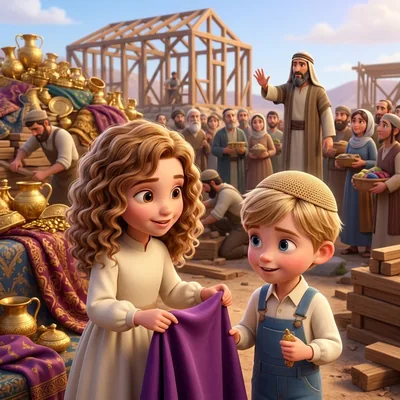
Parshas Vayakhel is the parsha where the Mishkan finally gets built. Moshe Rabbeinu gathers the entire nation, teaches them the mitzvah of Shabbos, and then asks for donations of gold, silver, copper, wool, linen, wood and precious stones. The Yidden bring so much that Moshe has to send an announcement through the camp telling everyone to stop. For children, that is the hook: this is the one story in the Torah where the problem is too much giving.
What happens in Parshas Vayakhel?
The parsha opens with the word that gives it its name. Moshe gathered the whole nation together - men, women and children, every shevet in one place. After the eigel, this gathering is a repair. The people who had once assembled in confusion now assemble to hear Hashem's word.
The first thing Moshe teaches them is Shabbos. Six days you may do work, and the seventh day is holy. Only then does he turn to the Mishkan and say that whoever has a giving heart should bring materials for Hashem's house.
What follows is one of the warmest scenes in Chumash. People come with gold rings and bracelets, with copper, with wool dyed techeiles, argaman and tolaas shani, with acacia wood they had carried out of Mitzrayim, with oil and spices. The women spun the goats' hair with their own hands. The nesi'im brought the avnei shoham for the Kohen Gadol's clothing. Morning after morning the gifts kept arriving.
Then the craftsmen came to Moshe with an unusual complaint: the people are bringing more than the work needs. Moshe had it announced throughout the camp that no man or woman should bring anything further, and the giving stopped. The Torah says the materials were enough, and more than enough.
Hashem chose Betzalel ben Uri ben Chur of shevet Yehuda to lead the building, filled with wisdom, understanding and knowledge in every craft, and Oholiav ben Achisamach of shevet Dan alongside him. The rest of the parsha walks through the work itself: the curtains, the beams of the walls, the paroches, the Aron with its poles, the Shulchan, the golden Menorah hammered from one piece, the mizbeach haketores, the mizbeach ha'olah, the kiyor, and the hangings of the chatzer. Rashi brings from Chazal that the kiyor was made from copper mirrors the women donated, gifts that were especially precious to Hashem because of the Jewish families those women had kept strong in Mitzrayim.
Why does the Torah teach Shabbos before the Mishkan?
Children notice the order if you point it out. Moshe is about to launch the biggest construction project the Yidden will ever undertake, and the first sentence out of his mouth is about resting.
The message is that even building a house for Hashem does not push off Shabbos. Nothing we build is more important than the day Hashem gave us. Chazal learn the thirty-nine melachos of Shabbos from exactly the kinds of work that went into the Mishkan - weaving, dyeing, sewing, building, carrying. That is why a parent can honestly tell a child that when we stop cooking and sewing and hammering on Shabbos, we are pausing the same list of jobs that built the Mishkan.
It pairs well with what your child already learned in Parshas Terumah, where Hashem first asked for the donations, and in Parshas Ki Sisa, where everything nearly fell apart.
The gifts that had to be stopped: teaching generosity
Most tzedakah conversations with children are about giving a little more. Vayakhel is the opposite conversation, and it is worth having.
The Torah repeats again and again that people gave because their hearts lifted them to give. Nobody was assigned an amount. Nobody was shamed into it. And the result was a surplus so large that the collection had to be closed.
Ask your child what it feels like when you want to give something, versus when you are told you have to. That is the difference the parsha is drawing, and a six-year-old can feel it immediately.
Chochmas lev: every skill has a place in Hashem's house
The Torah does not only praise Betzalel. It praises every woman whose heart lifted her with wisdom to spin, every person who knew how to weave or carve or set stones. The phrase the Torah uses is chochmas lev, wisdom of the heart.
This is a gift for a child who does not see themselves as the top of the class. The Mishkan needed a goldsmith and it needed someone who could spin goats' hair. Betzalel and Oholiav also taught their skills to others rather than guarding them, which is its own middah worth naming out loud.
For a child who loves to build or draw, this is the parsha that says: what your hands can do matters to Hashem.
How to explain Vayakhel at different ages
Ages 2 to 4
Keep it to one picture. "Moshe Rabbeinu asked everyone to bring presents so Hashem could have a beautiful house. Everyone brought and brought, until Moshe said, thank you, we have enough." Let them name three things they would bring.
Ages 5 to 8
Add Shabbos and Betzalel. Explain that Moshe taught Shabbos first because even Hashem's house waits for Shabbos, and that Hashem picked Betzalel, a young man with wisdom in his hands, to lead the work. Walk through two or three kelim: the Aron, the Menorah hammered from one solid piece of gold, the Shulchan.
Ages 9 to 12
Now the interesting questions open up. Why does the Torah describe the building all over again after Terumah and Tetzaveh already gave the instructions? Because commands are one thing and doing them is another, and the Torah wanted the doing recorded in full. Discuss the link between the melachos of the Mishkan and the melachos of Shabbos, and why the nesi'im's gift is spelled with a missing letter in the Torah, as Rashi brings.
Shabbos table questions for Parshas Vayakhel
- Why do you think Moshe gathered everybody instead of just telling the leaders?
- Have you ever been told you gave too much? How would that feel?
- What is one thing your hands are good at? How could you use it for a mitzvah?
- Why is it harder to stop giving than to start?
- What in our house is like a small Mishkan - something we make beautiful for Hashem?
- Moshe taught Shabbos before the building. What does our family stop for, no matter what?
What a personalized Torah Tale Vayakhel book is like
Torah Tale prints Parshas Vayakhel as a personalized storybook in which your own child is the hero. From one uploaded photo, their name and their likeness appear on every page, illustrated in high-resolution 3D Pixar style, carrying wool to Moshe, watching Betzalel shape the Menorah, standing in the camp when the announcement goes out that there is more than enough. Up to four siblings can appear in the same book.
Every book ends with a dedicated discussion page of ten questions about the story, mixing comprehension with middos - what happened, and what it asks of the child. That page is what turns the book from something read at bedtime into something argued about happily at the Shabbos table.
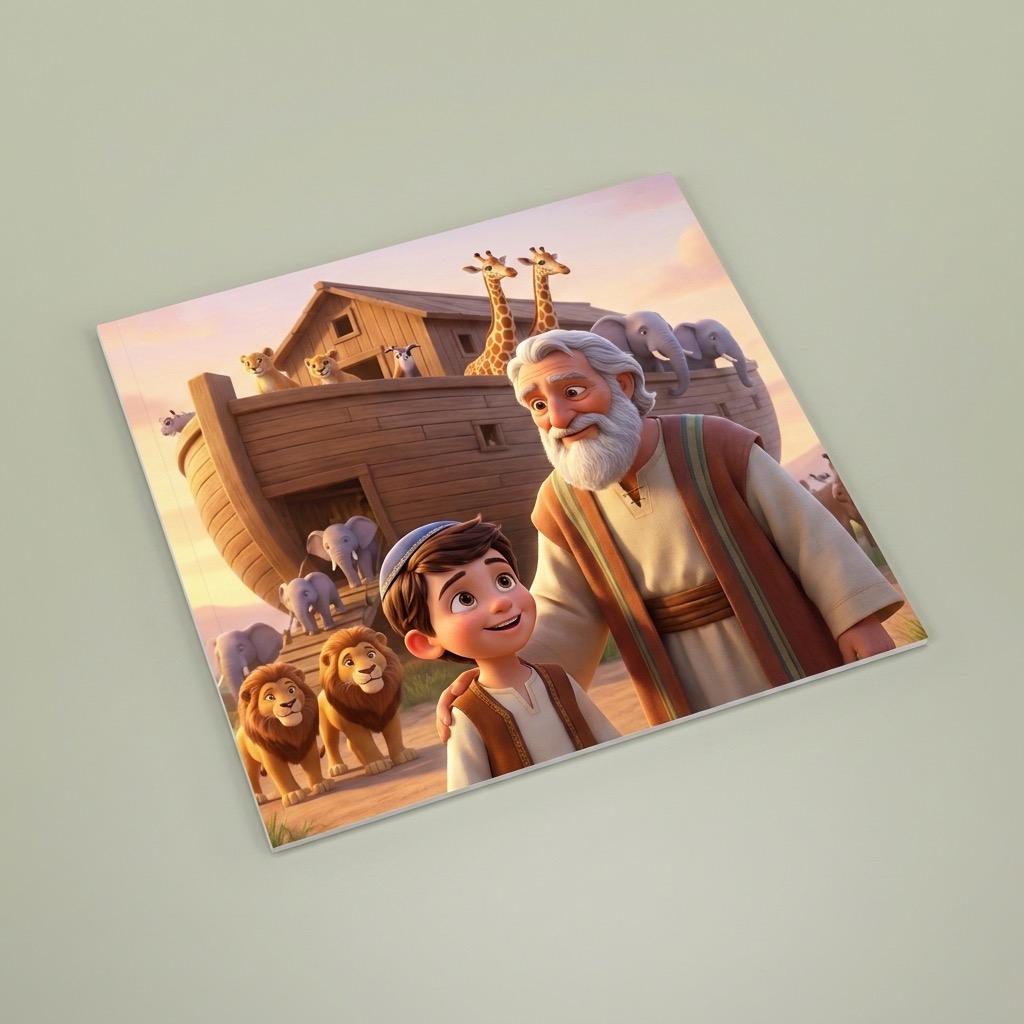
Softcover 8″×8″
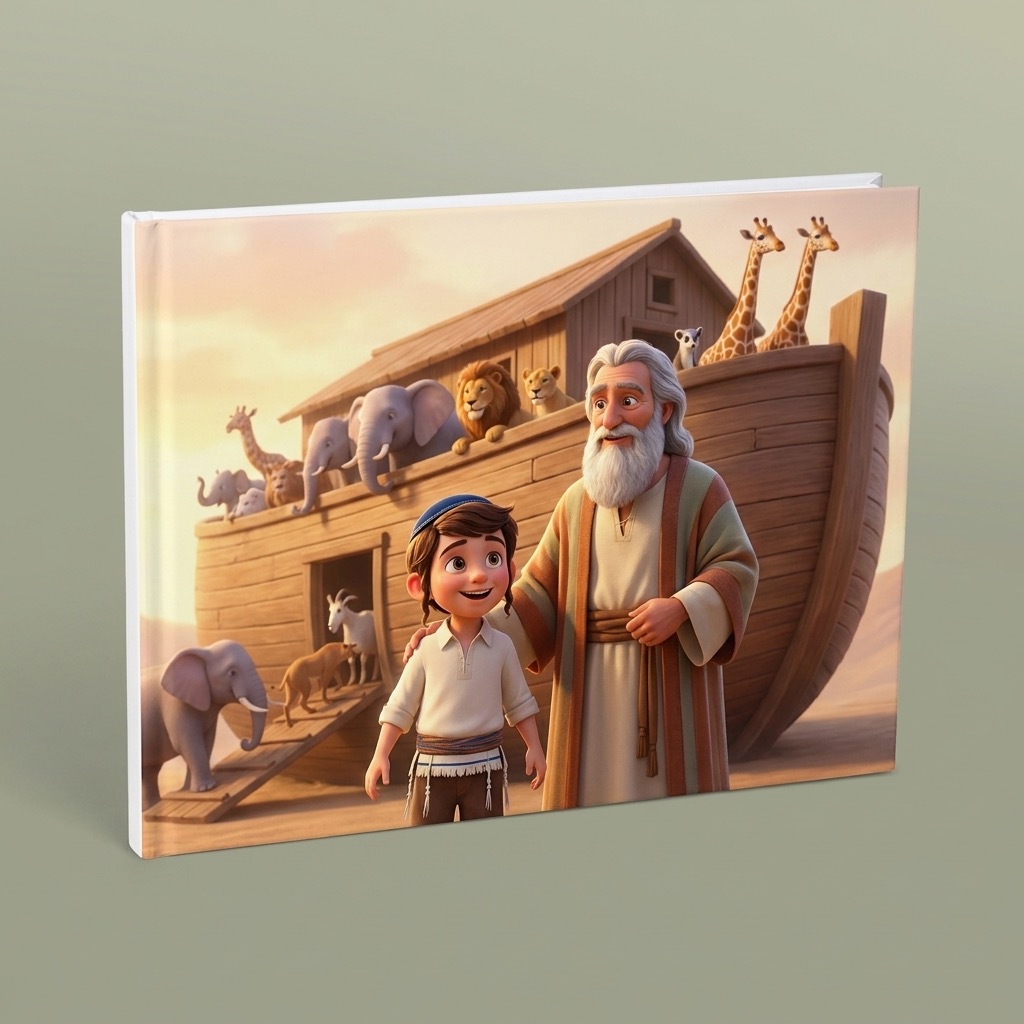
Hardcover 8″×8″
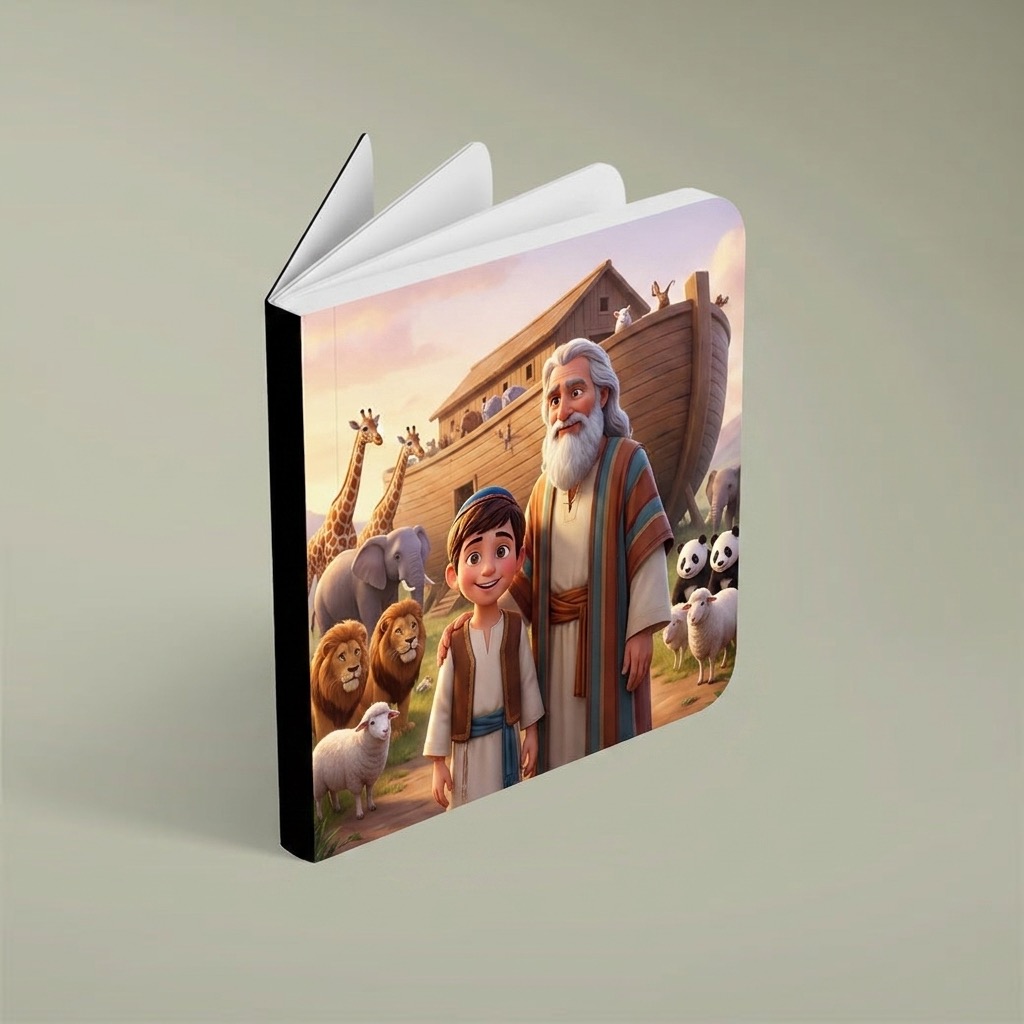
Board book 6″×6″
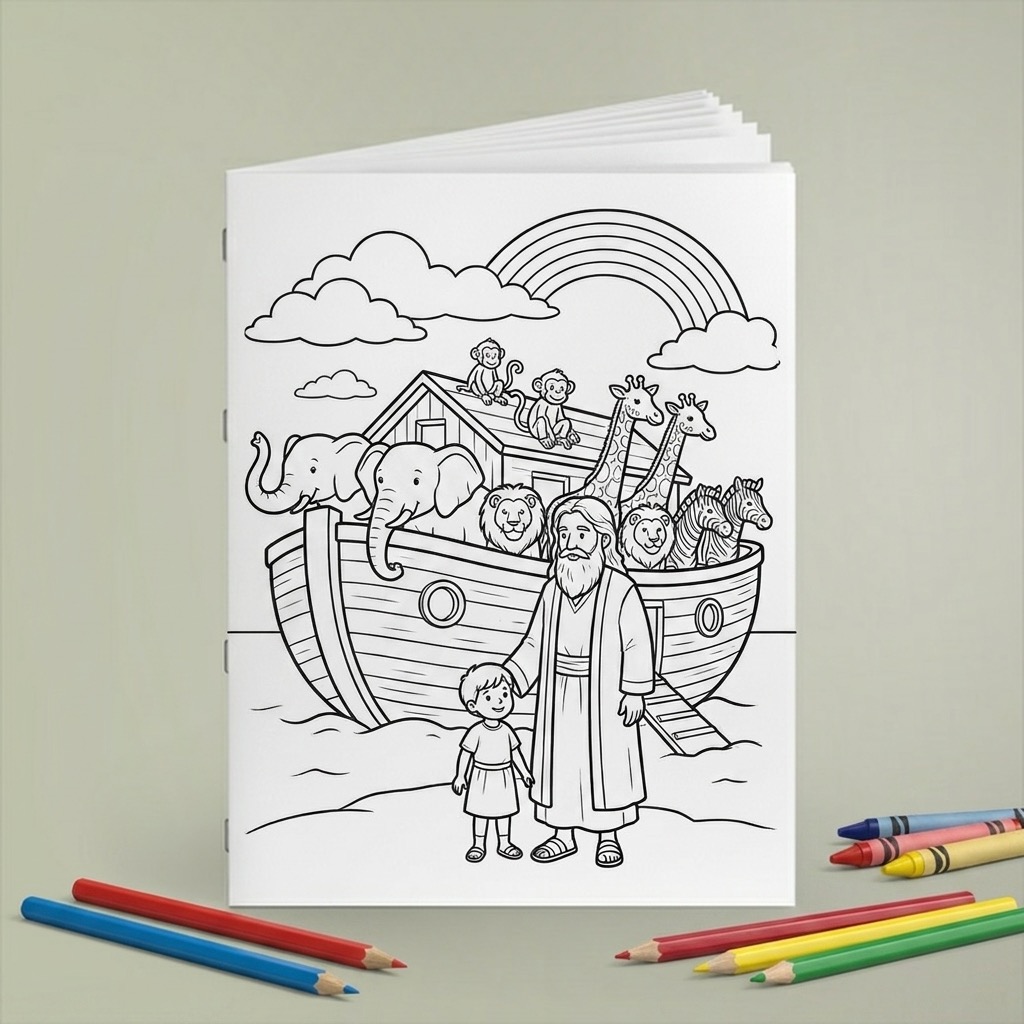
Coloring book 8.5″×11″
Formats match the age: a board book 6"x6" with rounded safety corners for 2 to 4, a softcover 8"x8" photo book for 4 to 8, a hardcover 8"x8" in square or landscape for 5 to 12, and an optional matching coloring book in black-and-white line art. The coloring book is a weekday project - erev Shabbos afternoon or Chol HaMoed, never on Shabbos or Yom Tov itself, since coloring is melacha. The storybook is exactly the opposite: reading it at the Shabbos table is precisely what it was made for.
Books come in English, Hebrew or Yiddish, and you can order more than one language. The book creator suggests next week's parsha with a live countdown to the order deadline for delivery before that Shabbos, and a double-parsha week such as Vayakhel-Pekudei produces one book covering both. If you are not sure which parsha to pick for your child, this guide walks through it.

One activity for this week
On a weekday afternoon, set out a box and ask each child to find three things in the house they would have donated to the Mishkan and explain why. Something gold-colored, something soft, something they made themselves. Then ask the harder question: what would it take for you to give something you actually like? Keep the box on the table until Shabbos as a reminder of the parsha, and put the tzedakah pushke next to it.
Vayakhel is a story about a nation that gave more than was asked and a boy from Yehuda who knew how to build. A child who sees their own face inside that camp remembers it differently. You can create the book in about five minutes: eight short questions, one photo, and it is on its way.
Frequently asked questions
What is Parshas Vayakhel about in simple words?
Parshas Vayakhel is about the Yidden actually building the Mishkan after they were forgiven for the eigel. Moshe gathers the whole nation, first reminds them to keep Shabbos, and then invites anyone with a giving heart to bring materials for Hashem's house. The people bring so much that Moshe has to tell them to stop, and Betzalel and the other skilled craftsmen begin to build.
Why is Shabbos mentioned before the Mishkan in Vayakhel?
Moshe teaches Shabbos first to make clear that the Mishkan does not override Shabbos. Even the holiest building project in history stops for one day a week. Chazal learn the thirty-nine melachos of Shabbos from the kinds of work that were done in building the Mishkan, so the two parshiyos are permanently linked.
How do I explain Vayakhel to a 5-year-old?
Tell it as a story about giving. Say that Moshe Rabbeinu asked the Yidden to bring presents so Hashem could have a beautiful house, and everyone brought gold, silver, colored wool and wood, until there was so much that Moshe had to say thank you, that is enough, please stop bringing. Then ask your child what they would have brought.
What is the lesson of Parshas Vayakhel for children?
The main lesson is generosity that comes from the heart. The Torah repeats that people gave because their hearts moved them, not because they were forced, and the result was more than the job needed. A second lesson is that every talent counts: some people spun wool, some carved wood, some wove, and all of it together became the Mishkan.
Who were Betzalel and Oholiav?
Betzalel ben Uri ben Chur, from shevet Yehuda, was chosen by Hashem to lead the building of the Mishkan, filled with wisdom, understanding and knowledge in every kind of craft. Oholiav ben Achisamach, from shevet Dan, was appointed alongside him. They also taught the work to others rather than keeping it to themselves.
Can I get a personalized book for Vayakhel and Pekudei together?
Yes. Torah Tale's book creator suggests next week's parsha with a live countdown to the order deadline for delivery before that Shabbos, and when the week is a double parsha the system produces one book covering both. So a Vayakhel-Pekudei week gives you a single personalized storybook that carries the child through the building of the Mishkan and its final accounting.