Parshas Ki Sisa for Kids: The Half Shekel, the Eigel & the Second Luchos
Ki Sisa holds the hardest moment in Sefer Shemos and the most hopeful one. Here is how to tell it to a child: the half shekel of fire, the Eigel, the broken Luchos, Moshe davening for forty days, and the second Luchos that came down on Yom Kippur.
Published by Torah Tale.
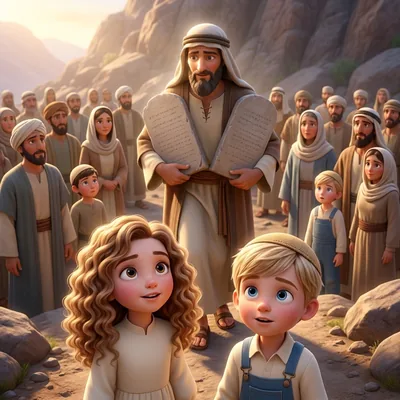
Parshas Ki Sisa holds the hardest moment in Sefer Shemos and the most hopeful one, side by side. The Yidden make the Eigel HaZahav just weeks after standing at Har Sinai, Moshe Rabbeinu breaks the Luchos, and then Moshe davens for forty days until Hashem tells him to carve a second set. For children, this is the parsha that answers the question they are already quietly asking: what happens when I do something really wrong? Ki Sisa says clearly that a Yid is never finished, and that is why it lands so hard and so warmly at the same time.
What happens in Parshas Ki Sisa?
The parsha opens with a counting. Hashem tells Moshe not to count Bnei Yisrael by heads, but to have every person give a machatzis hashekel, half a silver coin, and to count the coins instead. Chazal tell us that Moshe was unsure what exactly Hashem meant, so Hashem showed him a coin of fire and said, "Like this one." The silver went into the sockets that held up the Mishkan, so every single Yid had a share in the building.
Then come more instructions for the Mishkan: the kiyor, the copper basin where the Kohanim washed their hands and feet before serving; the ketores, the incense with its exact mixture of spices; and the special oil for anointing. Hashem names the builder, Betzalel from shevet Yehuda, with Oholiav beside him, and fills him with wisdom for every kind of craft. Right in the middle of all this building talk, Hashem gives the pesukim of V'shamru: Shabbos is the sign between Hashem and the Yidden, and even the Mishkan does not get built on Shabbos.
Moshe is up on Har Sinai for forty days and forty nights. Below, the people count wrong and think he is late. Some of them demand something they can see, and gold is brought, and the Eigel HaZahav is made. Aharon tries to slow it down, asking for gold jewelry and announcing a chag for the next day, hoping Moshe will arrive first. Moshe comes down carrying the Luchos, sees the calf and the dancing, and breaks the Luchos at the foot of the mountain. Chazal tell us that the letters flew off the stone.
What follows is the part children should remember most. Moshe goes back up and davens for Bnei Yisrael, asking Hashem to forgive them and refusing to let them be replaced. Hashem teaches him the Yud Gimmel Middos HaRachamim, the thirteen expressions of mercy, and tells him that whenever Yidden say these words, they will be answered. Moshe carves two new stones, goes up again, and comes down with the second Luchos. Chazal tell us that day was Yom Kippur. His face is shining with light, so bright that he covers it when he speaks to the people.
How do I tell the Eigel HaZahav story without scaring my child?
Tell the mistake plainly and briefly, and spend your time on what came after. A child does not need the details of the punishment to understand that the Eigel was very wrong. What they need is the shape of the story: the Yidden got frightened and confused, they did something terrible, it had real consequences, and then Moshe Rabbeinu stood up and davened for them until Hashem forgave.
Two small framing choices help. First, say that the Yidden had just heard Hashem's voice at Har Sinai, so their mistake was especially painful, rather than saying they were simply wicked. Chazal tell us the push for the Eigel came largely from the erev rav, the mixed multitude who had left Mitzrayim along with Bnei Yisrael. Second, mention Aharon's attempts to delay. Children understand an adult trying to stall a bad idea, and it keeps Aharon HaKohen where he belongs in a child's mind.
Avoid the temptation to soften it into nothing. Ki Sisa works precisely because the failure is real. A child who is told that nothing much went wrong learns nothing about teshuvah.
What is the middah of Parshas Ki Sisa?
Teshuvah, and tefillah for other people. Moshe Rabbeinu had just been offered a nation of his own, and he asked instead for the Yidden who had failed him. He did not minimize what they did and he did not walk away from them. That combination, honest about the wrong and refusing to give up on the person, is exactly what we want a child to learn about apologizing and about being apologized to.
There is a second middah hiding in the opening pesukim. Everyone gave the same half coin. The wealthiest Yid gave no more and the poorest gave no less, and every one of those coins ended up holding up the Mishkan. It is a useful thing to say to a child who thinks their own small mitzvah does not count for much. If your family has already read about the giving in Parshas Terumah, the half shekel is a natural follow-up: there, people gave what their heart moved them to give, and here everyone gives exactly the same.
How do I explain Ki Sisa to a 4-year-old vs an 8-year-old?
Ages 2 to 4. One thread only: Moshe went up the mountain to get the Luchos from Hashem, the Yidden made a big mistake while he was gone, Moshe davened for them, and Hashem gave the Luchos again. Add the coin of fire if you want one picture they will remember. Skip the ketores, the oil and the count.
Ages 5 to 7. Add the miscounted days, Aharon asking for the gold jewelry to buy time, and Moshe breaking the Luchos. Then give the forty days of tefillah and the second Luchos. This is the age to point out V'shamru and tell them that the words they sing on Shabbos come from this parsha.
Ages 8 to 12. Now the whole arc fits, including the Yud Gimmel Middos and the fact that Moshe came down on Yom Kippur. Ask them why Hashem taught Moshe words to say rather than simply forgiving. Older children can also handle the question of why Moshe broke the Luchos rather than showing them to the people, and it is worth telling them that Hashem later agreed with what he did. Connect it to the Yom Kippur story and to Har Sinai in Parshas Yisro, so they see the three days as one continuous story.
Shabbos-table questions and a weekday activity
Five questions that work at almost any age around the table:
- Why did Hashem want the Yidden counted with coins instead of counting people?
- Why do you think everybody gave the same half coin?
- What did Aharon try to do to stop the Eigel from being made?
- Moshe could have asked Hashem for a brand new nation. Why did he ask for the Yidden instead?
- Has someone ever davened or asked for you when you made a mistake? How did that feel?
And a one-sentence script for a child who asks what the parsha is about: "The Yidden made a golden calf while Moshe was on the mountain, Moshe davened for forty days until Hashem forgave them, and then Hashem gave the Torah a second time."
For a weekday activity, before Shabbos or on a regular afternoon, give each child a coin and a jar and let them count out tzedakah the way the Yidden counted with the machatzis hashekel. Talk about the fact that each coin is the same size and each one matters. A Torah Tale coloring book, the 8.5"x11" black-and-white line art version of your child's own story, fits the same slot: erev Shabbos or a weekday afternoon, never on Shabbos or Yom Tov itself, since coloring is melacha.
What is a personalized Torah Tale book of Parshas Ki Sisa like?
In a Torah Tale book, your child is inside the parsha. Their name is in the text and their likeness, built from one uploaded photo and illustrated in high-resolution 3D Pixar style, appears on every page: standing among the Yidden as the half shekels are counted, watching Aharon try to delay, seeing Moshe come down the mountain with light on his face. Up to four siblings can appear in the same book, which is what makes it a story the whole table follows rather than one child's book.
Every book ends with a dedicated discussion page of 10 questions about the story, mixing comprehension with middos: what happened, and what it asks of the child. For a parsha like Ki Sisa, where the point is teshuvah rather than plot, that page is where most of the real conversation happens. Every Torah Tale book is written with careful rabbinical guidance and strict tznius, and reviewed by our team before it goes to print.
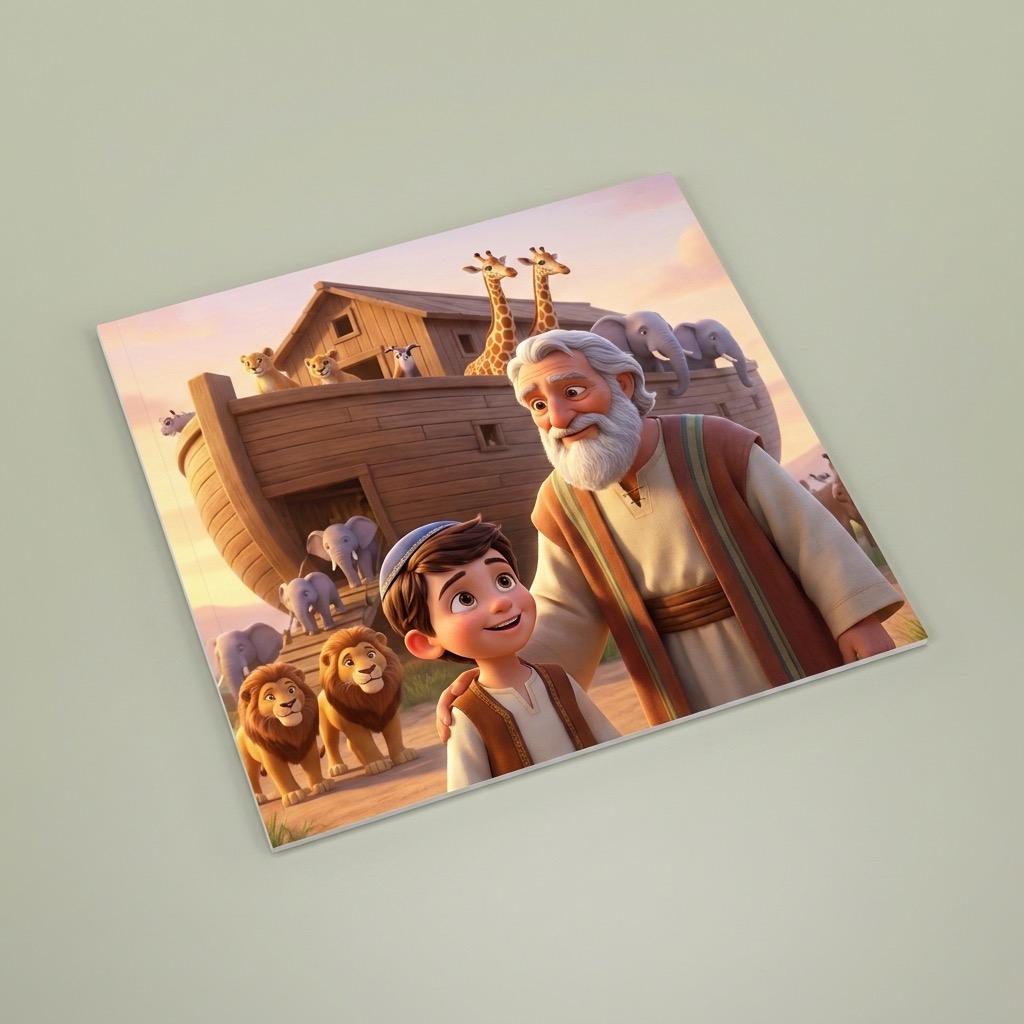
Softcover 8″×8″
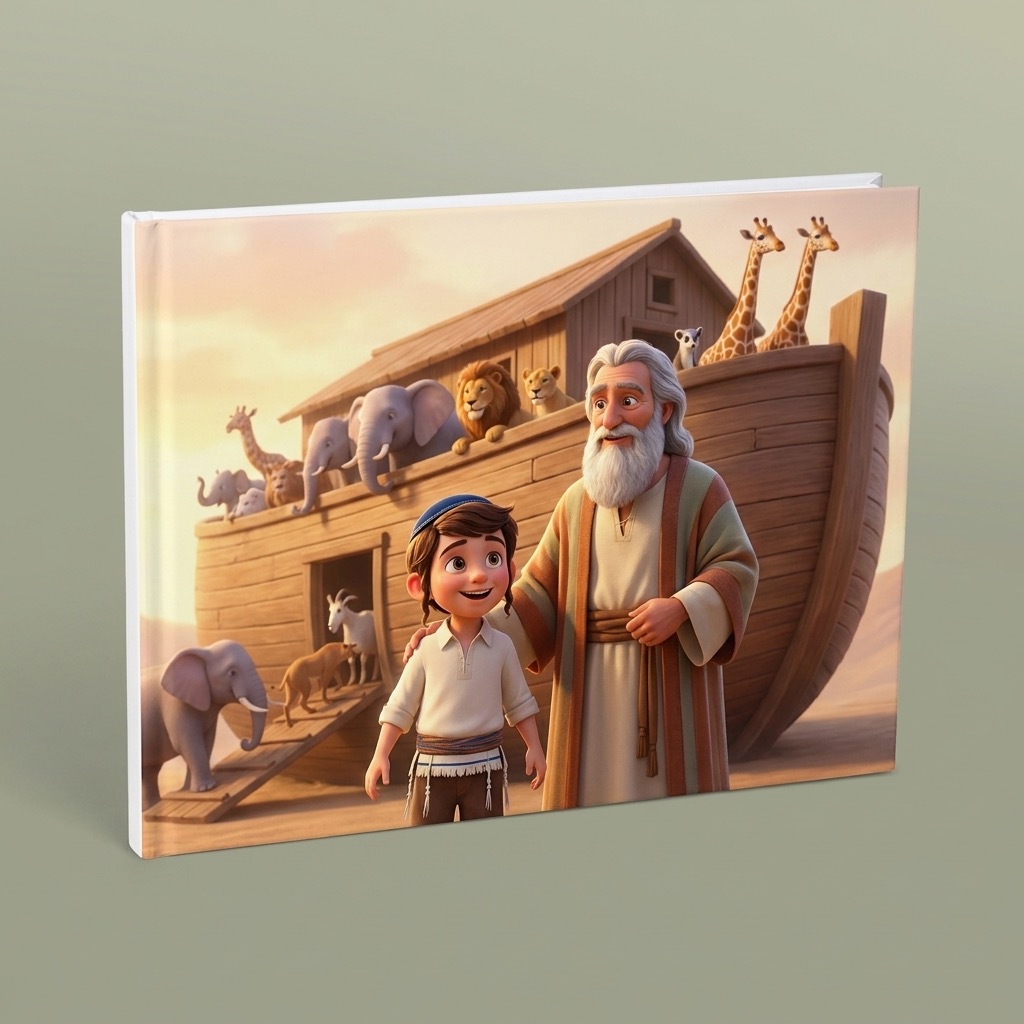
Hardcover 8″×8″
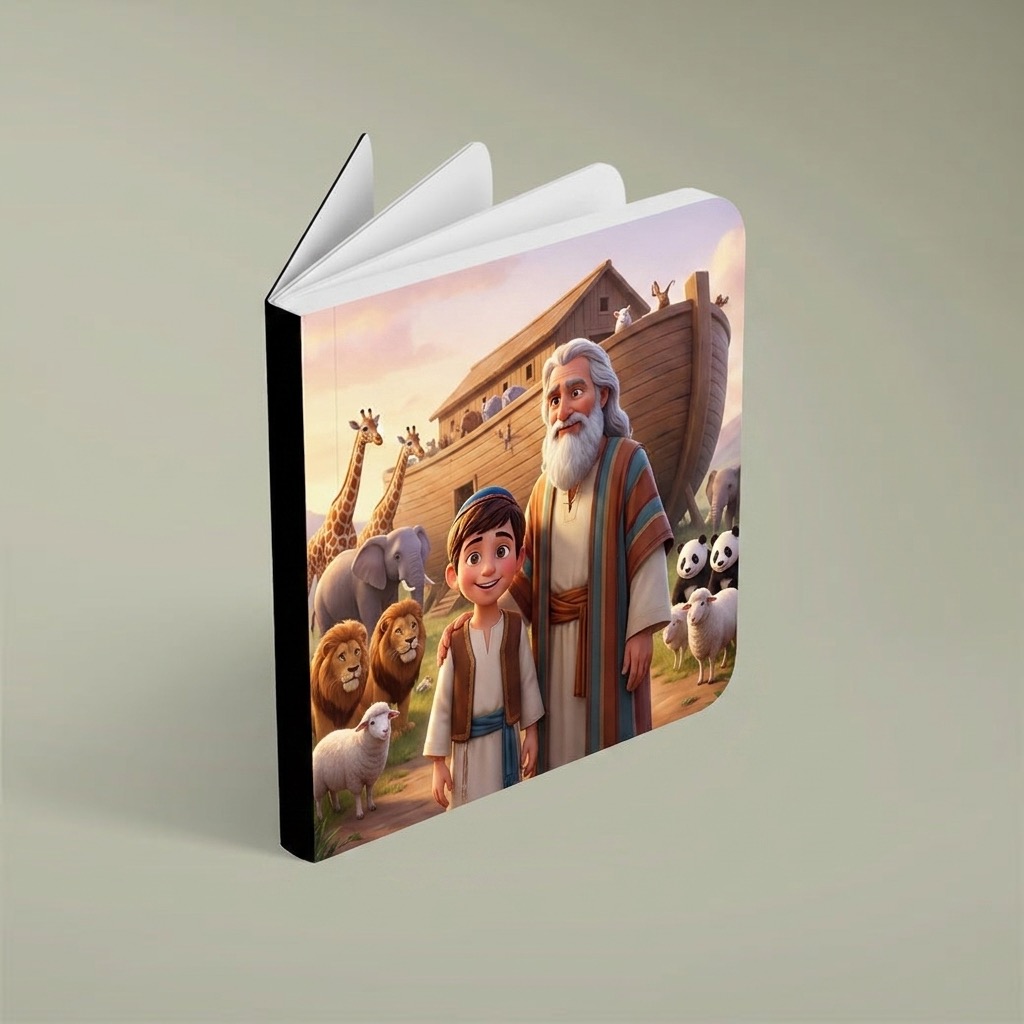
Board book 6″×6″
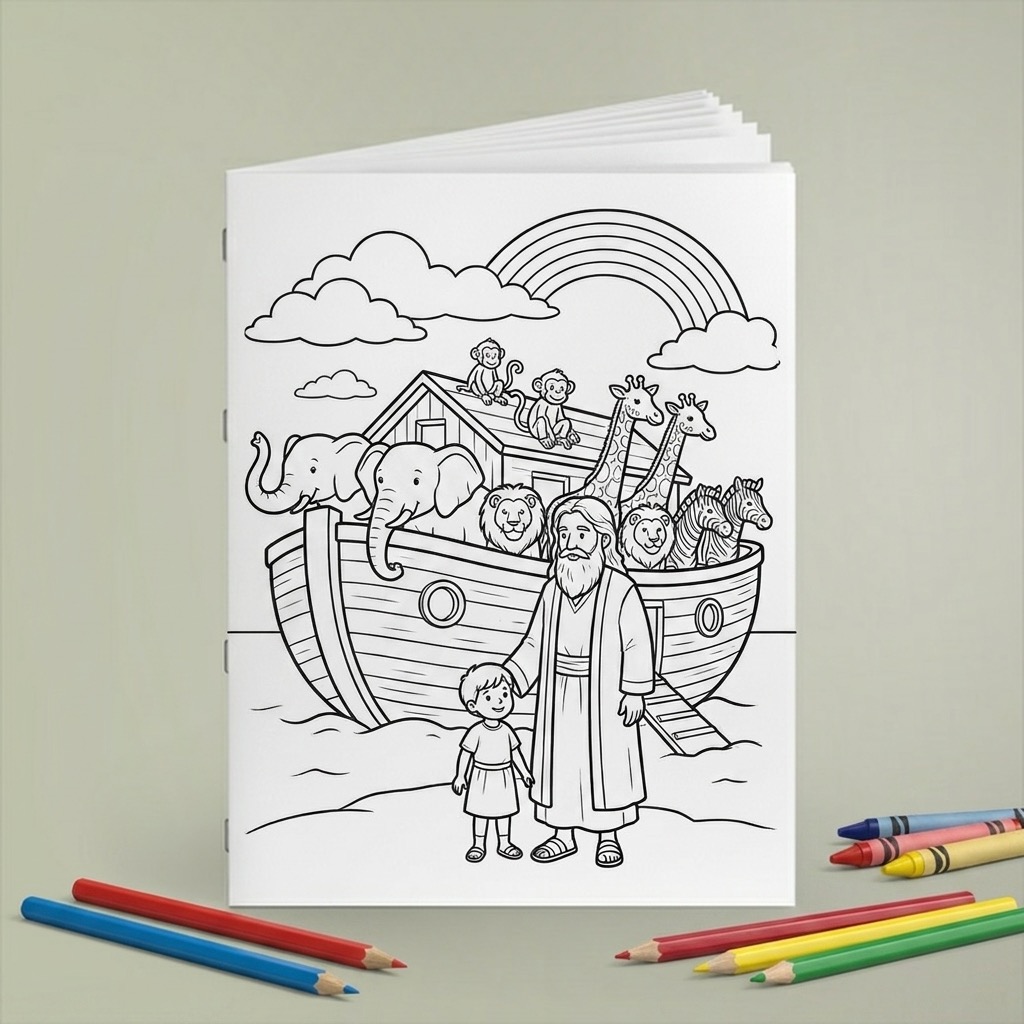
Coloring book 8.5″×11″
Formats follow the age: the 6"x6" board book with rounded safety corners for 2 to 4, the softcover 8"x8" photo book for 4 to 8, and the hardcover 8"x8" in square or landscape for 5 to 12. Books come in English, Hebrew or Yiddish, and you can order more than one language. The book creator suggests next week's parsha with a live countdown to the order deadline for delivery before that Shabbos, and a double-parsha week produces one book covering both. If you are deciding which week to start with, this guide to choosing the parsha walks through it.
Ki Sisa is a parsha children remember because it tells them the truth: people fail, and Hashem takes them back. If you want your child to hear that story with their own name in it, it takes about five minutes and eight short questions to create the book.
Frequently asked questions
What is the story of Parshas Ki Sisa for kids?
Parshas Ki Sisa begins with Hashem telling Moshe Rabbeinu to count Bnei Yisrael by having each person give a half silver coin, a machatzis hashekel, instead of counting heads. It then tells how the Yidden, waiting at the bottom of Har Sinai, miscounted the days and made a golden calf, the Eigel HaZahav. Moshe came down, broke the Luchos, davened for forty days on behalf of the people, and Hashem gave a second set of Luchos. The parsha also includes the kiyor for washing, the ketores, the appointment of Betzalel to build the Mishkan, and the pesukim of V'shamru about Shabbos.
How do I explain the Eigel HaZahav to a young child without frightening them?
Keep it simple and keep it about the mistake, not the punishment. You can say that the Yidden got scared when they thought Moshe was not coming back, so some of them made a gold statue and treated it as if it could help them, which was very wrong because only Hashem helps us. Then move quickly to what happened next: Moshe davened and davened for them, and Hashem gave the Torah again on new Luchos. Young children need to hear the ending, not linger on the failure.
What is the lesson of Parshas Ki Sisa?
The lesson is that a mistake, even a serious one, is not the end of the story. Ki Sisa teaches teshuvah: the Yidden did something terrible, Moshe Rabbeinu davened for them, and Hashem gave them the Torah a second time. It also teaches the power of tefillah on behalf of others, since Moshe asked for the nation rather than for himself.
Why did each person give a half shekel instead of a whole one?
Hashem told Moshe to count Bnei Yisrael through coins rather than counting people directly, and each person gave exactly a machatzis hashekel, half a silver shekel. The silver was used for the sockets of the Mishkan, so every single Yid had a part in the building. A common way it is taught to children is that a half coin reminds us that one Yid alone is only half, and we become whole together with others. Chazal tell us Hashem showed Moshe a coin of fire so he would know exactly what to collect.
What is the connection between Parshas Ki Sisa and Yom Kippur?
After the Eigel, Moshe Rabbeinu went up Har Sinai again and davened for Bnei Yisrael, and Hashem told him to carve new Luchos. Chazal tell us that Moshe came down with the second Luchos on Yom Kippur, which is why that day became the day of forgiveness for every generation. Hashem also taught Moshe the Yud Gimmel Middos HaRachamim, the thirteen expressions of mercy that we say in tefillah on Yom Kippur and in Selichos.
Which Torah Tale format is right for Parshas Ki Sisa?
For ages 2 to 4, the 6"x6" board book with rounded safety corners holds up to small hands. For ages 4 to 8 the softcover 8"x8" photo book fits well, and for ages 5 to 12 the hardcover 8"x8" in square or landscape is the one children keep on a shelf. Books are available in English, Hebrew or Yiddish, and a matching black-and-white coloring book can be added for weekday use.