The Yom Kippur Story for Kids: The Second Luchos, Teshuvah & a Clean Slate
Yom Kippur is the day Hashem forgave the Yidden after the cheit ha'egel - the day Moshe Rabbeinu came down the mountain with the second luchos. Here is how to tell that story to a child, what to say at different ages, and how to make the day feel hopeful rather than heavy.
Published by Torah Tale.
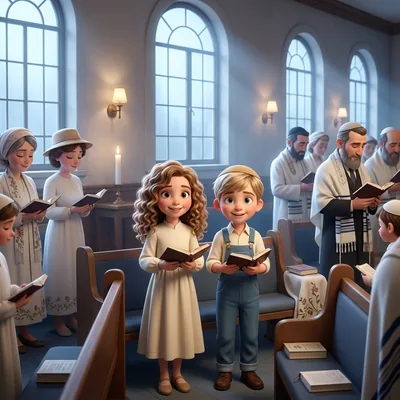
Yom Kippur is the day Hashem forgave the Yidden after the cheit ha'egel. Chazal teach that Moshe Rabbeinu came down from Har Sinai with the second luchos on the tenth of Tishrei, and Hashem fixed that date forever as a day of forgiveness for Klal Yisrael. That is the story children need first - before the fasting, before the long davening - because it turns Yom Kippur from a heavy day into a hopeful one.
What happens in the Yom Kippur story?
The story begins at Har Sinai. Moshe Rabbeinu went up to receive the Torah, and while he was there, the Yidden below made the golden calf. Moshe came down, saw what happened, and the first luchos were broken.
Then Moshe went back up the mountain and davened for his people. He asked Hashem again and again to forgive them, and he stayed up there forty days and forty nights without eating or drinking.
Chazal tell us that on the tenth of Tishrei Hashem said the words Moshe was waiting for - salachti, I have forgiven - and Moshe came down carrying the second luchos. The Yidden saw their teacher walking down the mountain with new luchos in his arms and understood that Hashem had taken them back.
Because of that day, Hashem gave Klal Yisrael Yom Kippur every single year: one day when we stop everything, admit what went wrong, and are forgiven.
What did the Kohen Gadol do on Yom Kippur?
When the Beis HaMikdash stood, Yom Kippur had an avodah that happened on no other day of the year. The Torah describes it in parshas Acharei Mos: the Kohen Gadol brought special korbanos to bring kaparah for himself, for the other Kohanim, and for all of Klal Yisrael.
Only on Yom Kippur, and only the Kohen Gadol, was permitted to enter the Kodesh HaKodashim - the innermost room of the Beis HaMikdash. He went in with the ketores, wearing plain white bigdei lavan rather than his gold garments, and he davened there for the whole nation.
Chazal relate that all of Klal Yisrael waited outside while he was inside, and that when he came out safely the people knew the year had been accepted. We retell that avodah on Yom Kippur in Mussaf, in the piyut of Seder HaAvodah, which is why children who look at a machzor see so many pages about Kohanim and korbanos on this Yom Tov.
One more piece of the day children remember: at Mincha we read Sefer Yonah, the story of a navi and a city that did teshuvah and was saved. It is the clearest proof in Tanach that teshuvah works.
The middah: teshuvah means mistakes can be fixed
Children live with a quiet fear that some things cannot be undone. They break a sibling's toy, they say something mean, they get caught in a lie - and part of them assumes the mark is permanent.
Yom Kippur says otherwise. The Yidden did something far worse than anything a child has ever done, and Hashem forgave them and gave them new luchos. Nothing about that story requires a child to be perfect; it requires a child to come back.
Practically, teshuvah has parts a child can actually do: being sorry, saying it out loud to Hashem, saying it to the person he hurt, and deciding on one thing he will do differently. That last part is what makes teshuvah more than a feeling. If your eight-year-old can name one concrete change before Neilah, he has understood the day.
How to explain Yom Kippur at different ages
Ages 2-4
One sentence, repeated: "Yom Kippur is the day Hashem forgives." Add that Mommy and Tatty daven all day and don't eat, and that children eat like always. Little ones mostly need to know that the grownups being in shul is a happy thing, not a worrying one.
Ages 5-8
Now tell the story properly: the cheit ha'egel, the broken luchos, Moshe davening for forty days, and coming down with the second luchos on the tenth of Tishrei. Connect it to what they will see - the white kittels, the machzor, Kol Nidrei at night, the shofar at the very end. Explain that we say sorry to Hashem in davening and sorry to people with our own mouths.
Ages 9-12
Older children can handle the harder question: if Hashem forgives anyway, why does anything we do matter? Talk about the fact that teshuvah requires deciding to change, not only regretting. Show them the Al Cheit in the machzor before Yom Kippur and let them find two lines that are actually about their life. Chazal describe Yom Kippur as a day when Yidden are compared to malachim - that is why many wear white and why we don't eat: for one day we live above our usual needs.
Erev Yom Kippur table questions
Use these at the seudah before the fast, or at the Shabbos table during Elul:
- Moshe davened for forty days for people who had just done something terrible. What does that teach us about how to think about someone who did wrong?
- Why do you think Hashem gave the second luchos on the very day that became Yom Kippur?
- What is the difference between saying "sorry" quickly and doing real teshuvah?
- Name one thing you want to do better this year - something small enough that you'll actually do it.
- Is there someone you should ask forgiveness from before Yom Kippur starts?
A simple activity for younger children: fold a paper into two luchos shapes and write on them one mitzvah each child wants to be careful with this year. Put them up somewhere visible until Simchas Torah.
What a personalized Torah Tale Yom Kippur book is like
Torah Tale's Yom Kippur story is part of the Yamim Tovim collection, and in it your own child is the one walking through the story. You upload one photo, and from it the illustrators render the child in high-resolution 3D Pixar-style art, appearing by name and likeness on every page. Up to four siblings can be in the same book, which is useful when you want one Yom Tov book for the whole family rather than four.
Every Torah Tale book is written with careful rabbinical guidance and strict tznius, and reviewed by our team before printing. That matters for a story like this one, where the retelling has to stay accurate and age-appropriate at the same time - serious about cheit and teshuvah without being frightening.

Books come in English, Hebrew or Yiddish, and you can order the same story in more than one language - a practical option if a child learns in Yiddish in cheder and reads English at home.
Which format fits your child?
The board book is 6"x6" with rounded safety corners, made for ages 2-4 - the right choice when the goal is simply "Hashem forgives" said many times before Yom Tov. The softcover photo book, 8"x8", suits ages 4-8. The hardcover 8"x8", in square or landscape, holds up for ages 5-12 and is the one that stays on the Yom Tov shelf year after year. The book ends with a discussion page of ten questions, half about the story and half about the child - which is how a book about asking mechilah becomes a conversation about it.
There is also an optional matching coloring book, 8.5"x11" in black-and-white line art, for the weekdays of the Aseres Yemei Teshuvah - something connected to these days that a child can sit with in the week before Yom Kippur.
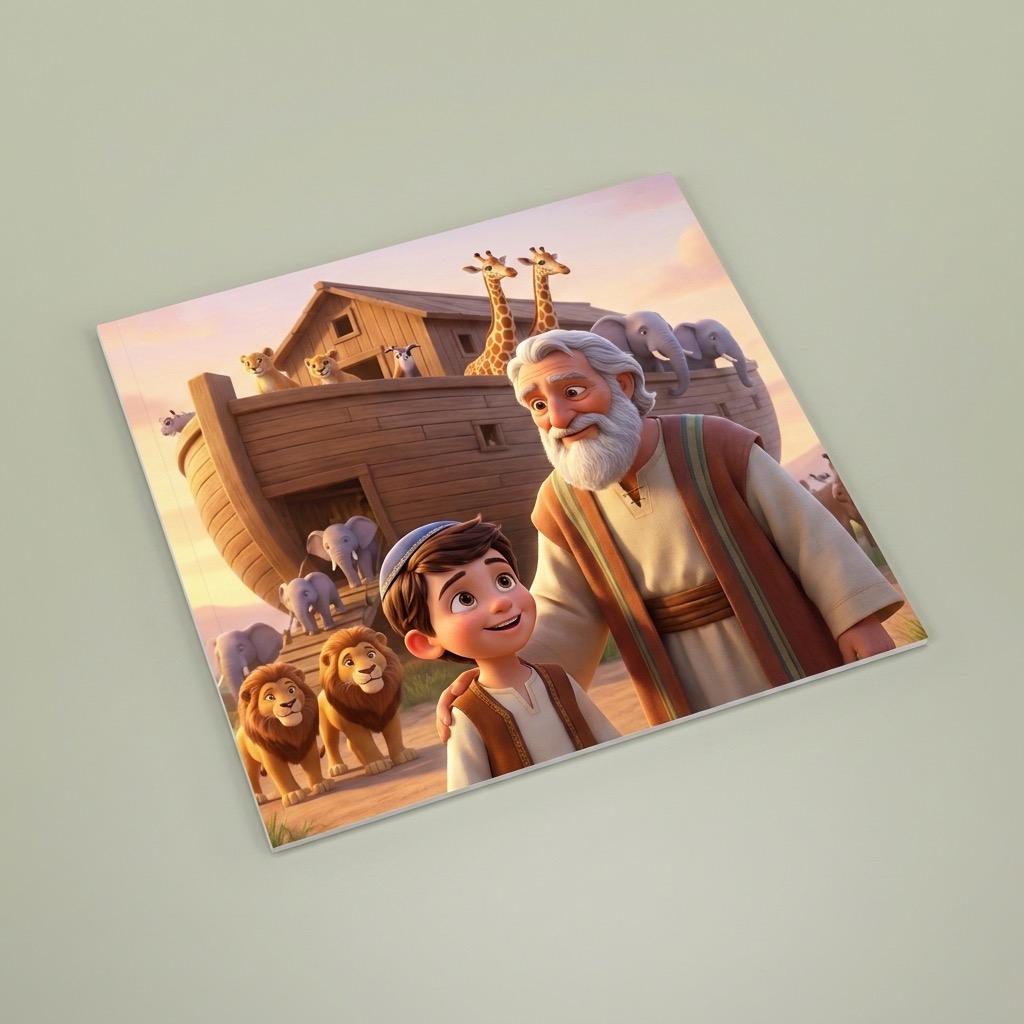
Softcover 8″×8″
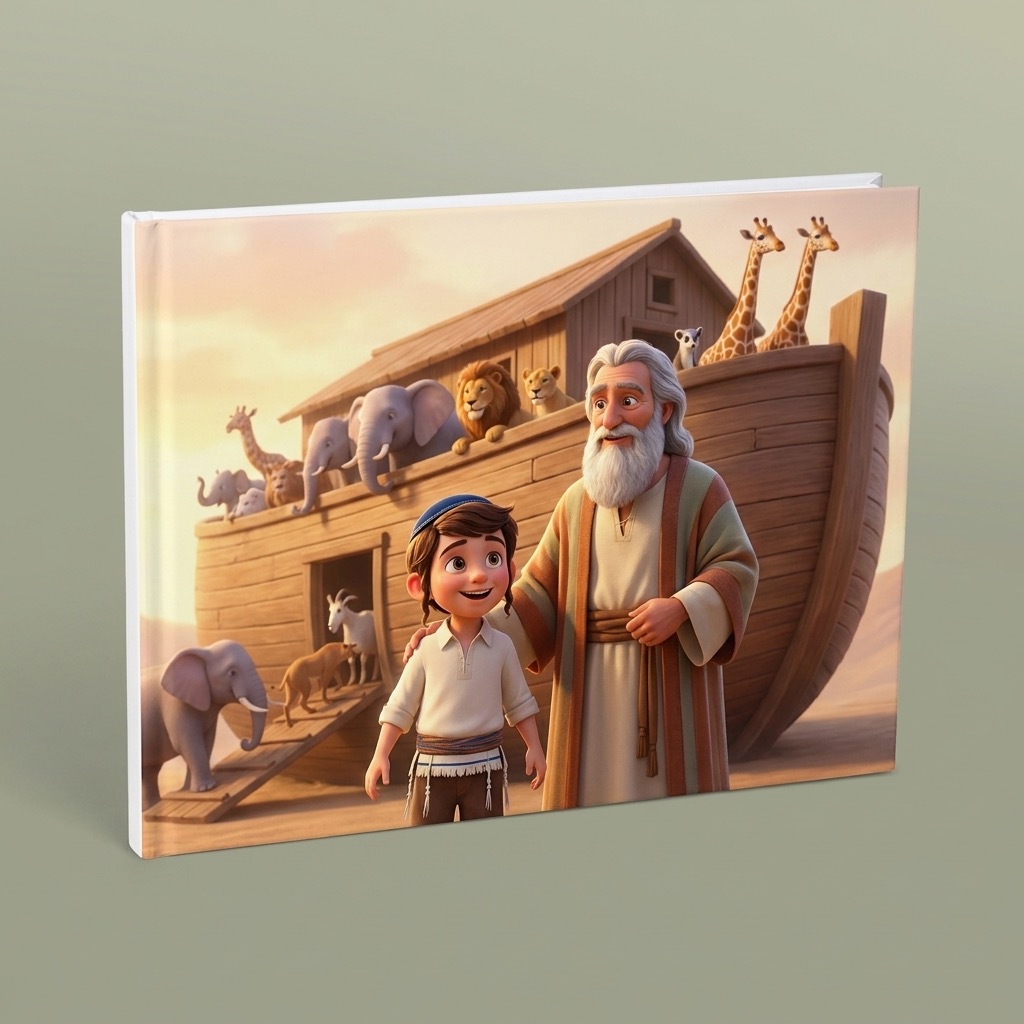
Hardcover 8″×8″
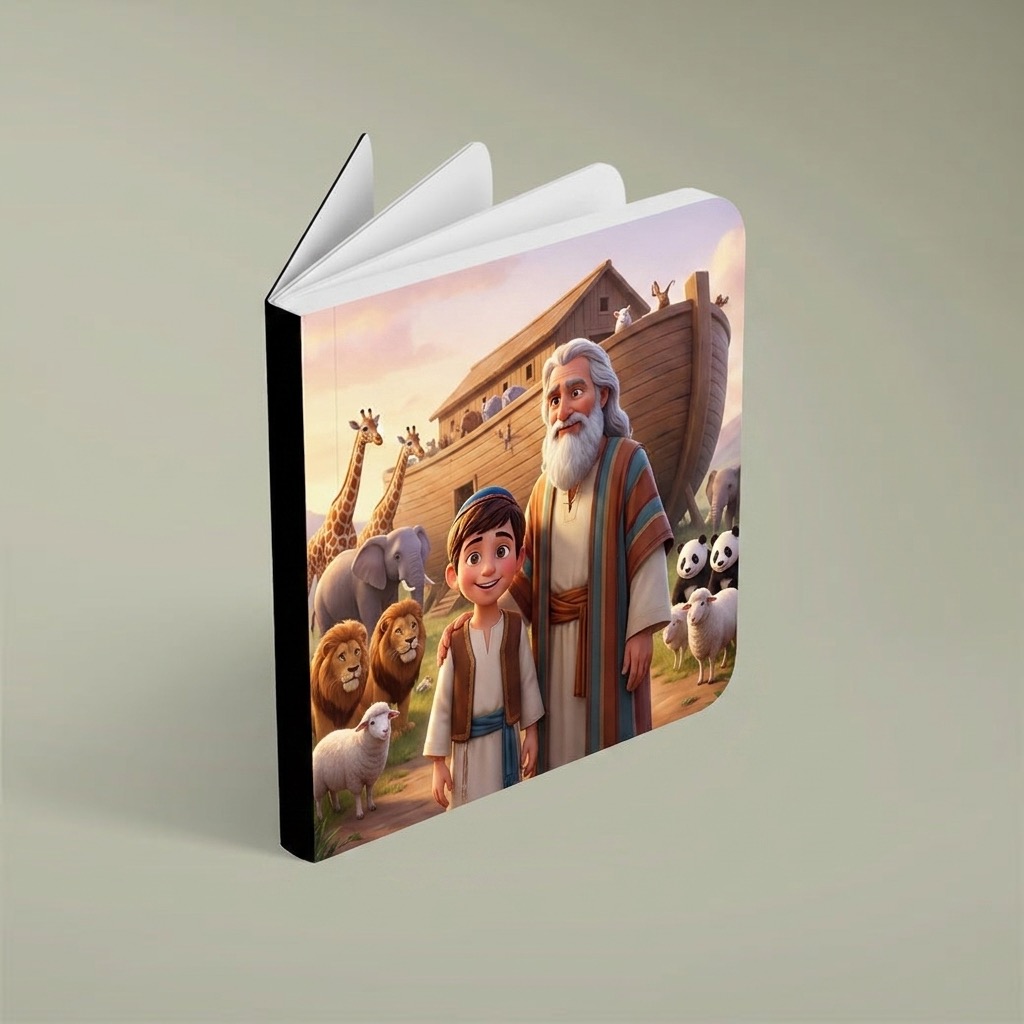
Board book 6″×6″
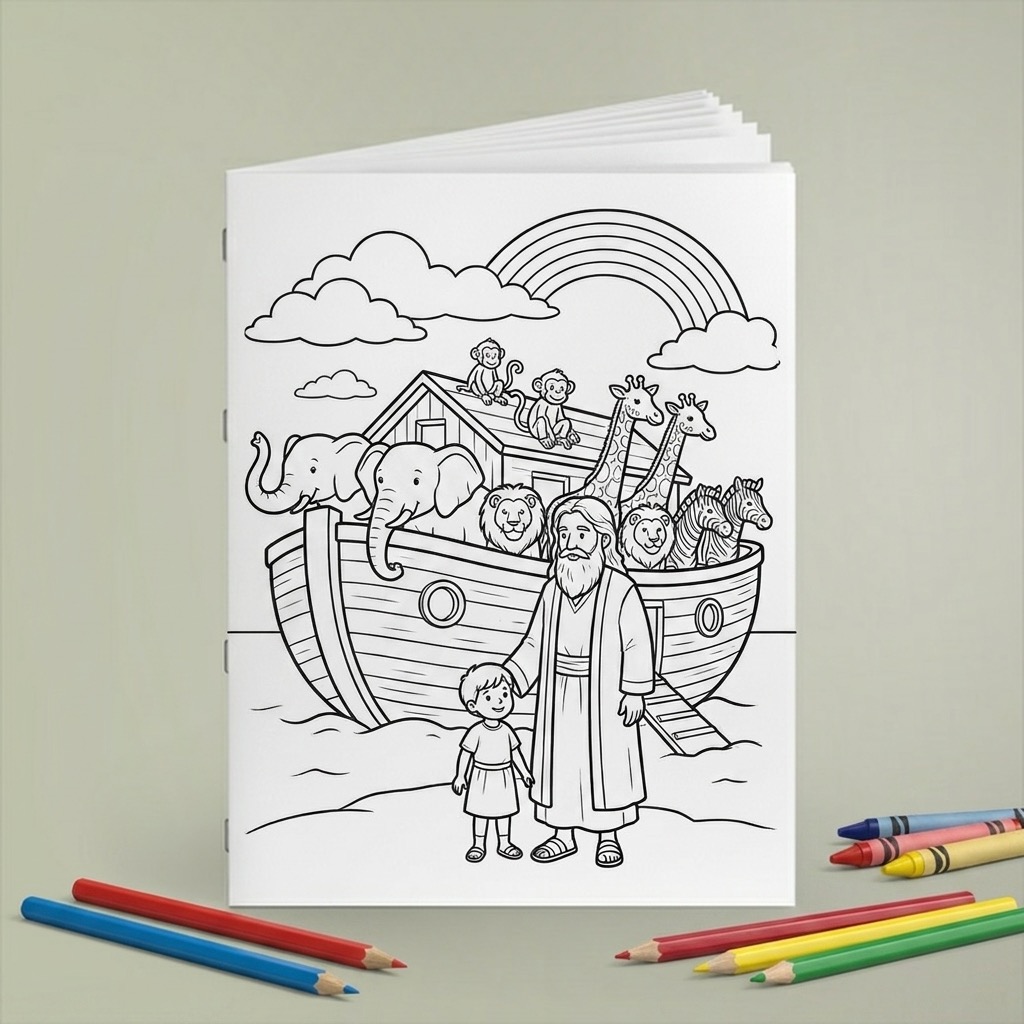
Coloring book 8.5″×11″
If you are also building books around the weekly parsha, the creator suggests next week's parsha with a live countdown to the order deadline for delivery before that Shabbos - more on how that works in choosing the parsha for your child's book. Single books, the Parsha Series and Year Bundle subscriptions are all available, and shipping rates are shown at checkout.
Ordering in time for Yom Kippur
Elul is here, which means the Yamim Noraim are close enough to plan for and far enough that you are not rushing. US standard shipping takes 5-8 business days and express 3; we ship worldwide. If a Yom Kippur book is part of your plan, this is the week to set it up rather than the week before Yom Tov. (For gift-giving beyond Yom Tov - birthdays, an upsherin - see our roundup of personalized Jewish gifts for kids.)
Eight short questions, about five minutes, and your child is the one standing at the foot of Har Sinai watching Moshe Rabbeinu come down with the second luchos. Create the book and let this be the year Yom Kippur becomes a story your child can tell back to you.
Frequently asked questions
What is the story of Yom Kippur for kids?
After the Yidden made the cheit ha'egel, Moshe Rabbeinu went back up Har Sinai to daven for them for forty days. Chazal teach that on the tenth of Tishrei he came down with the second luchos and told Klal Yisrael that Hashem had forgiven them. That day became Yom Kippur for all generations - a day when we daven, say we are sorry, and Hashem gives us a clean start.
How do I explain Yom Kippur to a 4-year-old?
Keep it to one idea: Yom Kippur is the day Hashem forgives. You can say, "Long ago Yidden did something very wrong, and Moshe Rabbeinu davened and davened until Hashem said, 'I forgive you.' That happened on Yom Kippur, and every year Hashem forgives us again when we say we're sorry." Add that Mommy and Tatty don't eat that day because they are busy davening, and that children eat as usual.
What is the lesson of Yom Kippur for children?
The lesson is teshuvah: mistakes can be fixed. A child learns that being sorry is not just a feeling - it means saying it to Hashem, saying it to the person you hurt, and deciding what you will do differently. Yom Kippur teaches that Hashem wants us back, which is why the day ends with singing rather than sadness.
Do children fast on Yom Kippur?
Children do not fast on Yom Kippur. As they get older, healthy children begin practicing gradually according to halacha, and parents should ask their rav what is right for their particular child and age. Younger children eat normally and take part in the day by going to shul for a while, wearing Yom Tov clothes, and davening.
Why is Yom Kippur called a happy day if we are asking forgiveness?
Because the outcome is forgiveness, not punishment. Chazal describe Yom Kippur as one of the joyous days of the year precisely because it is the day Hashem accepted our teshuvah after the cheit ha'egel. Children often absorb the seriousness of the day and miss the happiness, so it is worth saying out loud that we are glad Yom Kippur came.
Can I get a personalized Yom Kippur book before Yom Kippur?
Yes. Torah Tale's Yamim Tovim collection includes a Yom Kippur story, and the whole creation flow takes about five minutes and eight short questions at torahtale.com/create. US standard shipping is $3.00 and takes 5-8 business days, express is $6.00 in 3 business days, so order with enough time before Yom Tov.