Rav Huna for Kids: The Barrels of Wine, the Open Door & Being Fair
Rav Huna was an Amora who led the yeshiva in Sura. Here are the two Gemara accounts children love, the middos they teach, and how to talk about them with a 4-year-old, a 7-year-old and a 10-year-old.
Published by Torah Tale.
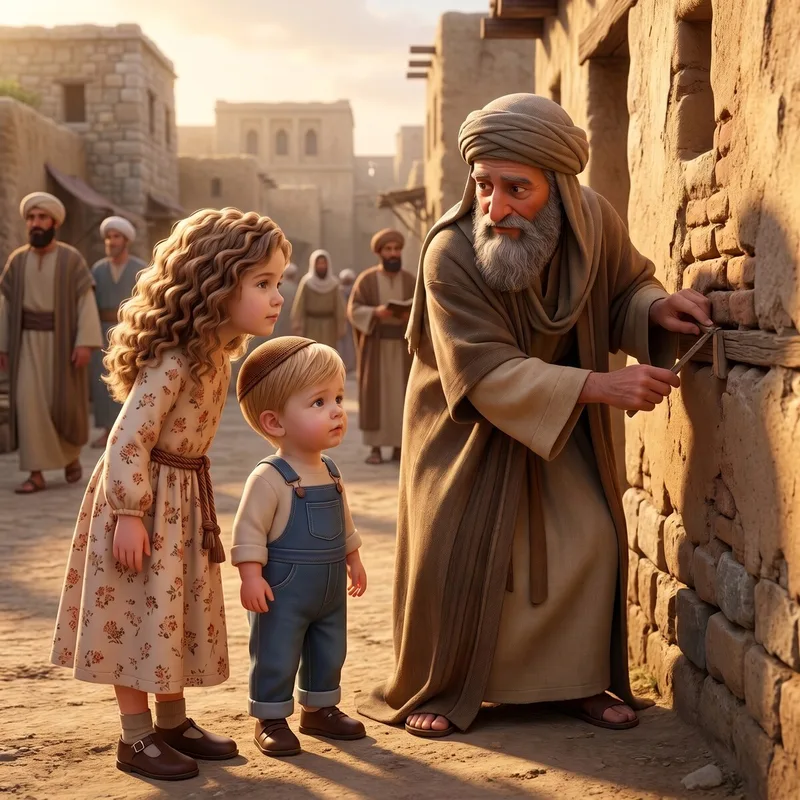
Create this book for your child
Rav Huna (רב הונא) was an Amora in Bavel, a talmid of Rav, who went on to lead the yeshiva in Sura. Children meet him through two accounts in the Gemara that suit them well: the barrels of wine that turned sour, and the open door at his meal. Both come down to something a child understands right away, being fair and generous to the person in front of you.
Who was Rav Huna?
Rav Huna lived in Bavel in the era of the Amoraim, the sages whose teachings fill the Gemara. He learned from Rav, and after Rav he led the yeshiva in Sura. You can read about his rebbi in Rav (Abba Aricha) for Kids.
There were several sages named Huna in the Gemara, so when you tell this at home, say that this is the Rav Huna who learned from Rav. The two accounts below come from Berachos and Taanis.
What happened when Rav Huna's wine turned sour?
The Gemara in Berachos 5b tells that four hundred barrels of Rav Huna's wine turned to vinegar. His colleagues came to him and said, let the master examine his deeds. Rav Huna asked whether they suspected him of something. They answered that Hashem does not pervert justice.
Rav Huna said that if anyone had heard anything about him, let them say it. They told him they had heard that he was not giving his tenant his share of the vine shoots. Rav Huna answered that the tenant takes them all himself, so what is left for him?
Their reply, in the Gemara's words, was that one who steals from a thief tastes the taste of theft. Rav Huna did not argue further. He said he accepted upon himself to give the tenant his share.
Then the Gemara adds something the children usually ask about. Some say the vinegar became wine again, and others say the price of vinegar rose to the price of wine. The Gemara leaves both opinions standing, so you can say it that way too.
What did Rav Huna do when he sat down to eat?
The Gemara in Taanis 20b tells that when Rav Huna sat down to eat bread, he would open his door and say that whoever is in need should come in and eat. It is a short scene and a very easy one for a young child to picture: a door open, a table with room at it.
If your children have heard about Avraham's tent, this is a natural next step. Our article on welcoming guests, hachnasas orchim goes through that mitzvah at home.
What is the lesson of Rav Huna for kids?
There are a few lessons, and it works best to pick one at a time.
- Fairness even when it feels unfair. Rav Huna thought his tenant was taking too much. His colleagues pointed out that this did not change what he owed. We learn that being wronged does not excuse us from being exact with others.
- Listening to a friend. Rav Huna did not brush his colleagues aside. He asked what they had heard, and when they told him, he accepted to correct it. A child can understand that it is a strength to say, "You are right, I will fix it."
- Sharing at the table. The open door shows that a tzaddik who has food thinks about who might not.
One caution for parents: the Gemara brings the wine story in the discussion of examining our deeds when something hard happens. It is about Rav Huna looking at himself, not about explaining anyone else's troubles. Do not tell a child that something bad happened to them because of something they did. Tell it as a story of a tzaddik who listened and fixed something.
The idea of not taking what is not ours is the subject of Never Taking What Is Not Mine, which pairs well with this one.
How do I explain Rav Huna to a 4-year-old, a 7-year-old and a 10-year-old?
- Around 4: Tell only the open door. "Rav Huna was a great Torah teacher. When he sat down to eat, he opened his door and said, whoever needs food, come in and eat." Then ask who your child would invite.
- Around 7: Tell the wine story simply. The wine turned sour, friends told Rav Huna he owed his worker his share, and he said yes, I will give it. Ask, "Was it easy for him to say yes?"
- Around 10: Bring in the Gemara's line that one who steals from a thief tastes the taste of theft. Ask why it matters that Rav Huna felt the tenant was taking too much, and why his colleagues still told him to give what he owed.
What can we ask at the Shabbos table?
Reading, talking and questions are all fine for Shabbos, so this story works well at the table. Try these:
- What happened to Rav Huna's wine?
- What did his colleagues tell him?
- Rav Huna thought the tenant was taking too much. Why did he still agree to give him his share?
- When did someone last tell you something you did not want to hear, and how did you answer?
- If our door were open at the meal like Rav Huna's, who would you want to come in?
What is the Torah Tale book about Rav Huna?
Torah Tale makes personalized Torah storybooks in which your child is the hero, with their name and, from one uploaded photo, their likeness on every page in 3D animated-film style. Rav Huna is in the Stories of Tzaddikim category, in the Sefer Amoraim collection. You can also add siblings, up to eight children in one book, ages 0 to 18.
Every book ends with a discussion page of 10 questions about the story, mixing comprehension with middos. That page is what turns the book from something you read to your child into something talked about at the table. The books are written with careful rabbinical guidance and strict tznius, and reviewed by our team before they go to print.

Softcover 8″×8″

Hardcover 8″×8″

Board book 6″×6″

Coloring book 8.5″×11″
For the format, go by age: a board book (6x6, rounded safety corners, ages 0-4), a softcover photo book (8x8, ages 4-8), or a hardcover photo book (8x8, ages 5-18). Softcover and hardcover open with a dedication page. If you add parents and grandparents, they appear with the children on a closing family page in every format. A matching coloring book is an optional add-on, best kept for a weekday afternoon or erev Shabbos, never for Shabbos itself. The storybook itself is a good read for the Shabbos table or a long Yom Tov afternoon.
For older readers who like this kind of Amora story, you might also try Shmuel Yarchinai for Kids.
Creating the book takes about five minutes: a free account and a few short questions about your child, the story, your family's community, the language and the format. When you are ready, you can create the book.
Frequently asked questions
Who was Rav Huna?
Rav Huna was an Amora in Bavel, a talmid of Rav, who led the yeshiva in Sura. There were several sages named Huna in the Gemara, so it helps to say that this is the Rav Huna who learned from Rav. Children usually know him from the story of his wine and the story of his open door.
What is the story of Rav Huna and the wine vinegar?
The Gemara in Berachos 5b tells that four hundred barrels of Rav Huna's wine turned sour. His colleagues suggested he examine his deeds and told him he was not giving his tenant his share of the vine shoots. Rav Huna accepted to give it, and the Gemara adds that some say the vinegar became wine and others say the price of vinegar rose to the price of wine.
What is the lesson of Rav Huna for children?
The lesson is to be fair and honest in what we owe others, even when it feels as if the other person is not fair either. It is also to listen when a friend gently points out something, and to share what we have, as Rav Huna did when he opened his door at mealtime. A child can take away one of these three at a time.
How do I explain Rav Huna to a 4-year-old?
Keep it to the open door. Say that Rav Huna was a great Torah teacher, and that when he sat down to eat he opened his door and said that anyone who needed food should come in and eat. Then ask who your child would invite to a table at home.
Should I tell my child that hard things happen because of something they did?
No. The Gemara brings Rav Huna's story in the discussion of examining our deeds when something difficult happens, and the story is about Rav Huna looking at himself, not about judging anyone else. Present it to children as a story of a tzaddik who listened and corrected something, never as an explanation for a child's own troubles.
What is the Torah Tale book about Rav Huna?
It is a personalized storybook in the Stories of Tzaddikim category, in the Sefer Amoraim collection, with your child's name and likeness illustrated in 3D animated-film style on every page. Every book ends with a discussion page of 10 questions mixing comprehension with middos. It comes as a softcover or hardcover 8x8 book, or a 6x6 board book with rounded safety corners for ages 0-4.