Never Taking What Is Not Mine (לא תגנוב) for Kids: Teaching Lo Signov
Lo signov is one of the Aseres HaDibros, and children meet it long before they can read it: a sibling's snack, a classmate's pencil, a toy at a friend's house. Here is how to explain it simply, by age, and how to talk about it at home.
Published by Torah Tale.
Create this book for your child
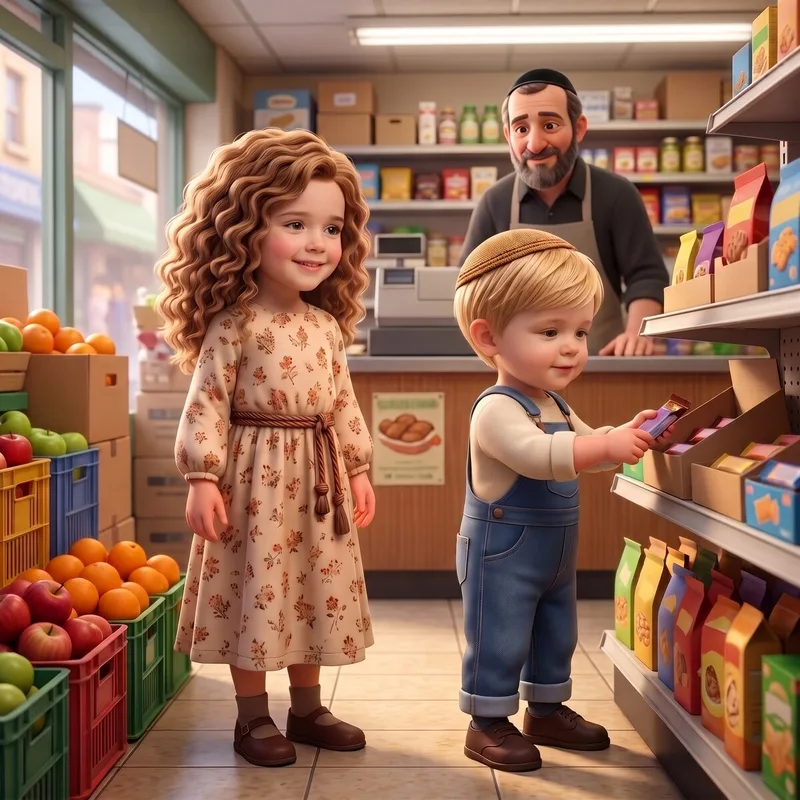
Lo signov, 'do not steal', is one of the Aseres HaDibros, and children run into it long before they can read it: a sibling's snack, a classmate's pencil, a toy at a friend's house. The simplest way to teach it is one habit, if it is not mine, I ask first, practiced in the small moments of an ordinary day. That is also the heart of Torah Tale's story Never Taking What Is Not Mine, set in everyday life today.
What does the Torah say about lo signov?
The Torah tells us 'לא תגנב' in the Aseres HaDibros (Shemos 20:13), and it is repeated when Moshe reviews the Dibros in Devarim 5:17. In Parshas Kedoshim the Torah says 'לא תגנבו' again (Vayikra 19:11), together with the mitzvos about not denying a debt and not lying to one another. You can read more about the Dibros themselves in Parshas Yisro for Kids, and about Kedoshim in Parshas Kedoshim for Kids.
Chazal teach (Sanhedrin 86a) that the lo signov of the Aseres HaDibros speaks of kidnapping, and that taking property is the mitzvah of Kedoshim. For a child's purposes, both teach the same thing: a person, and what belongs to a person, is not ours to take.
What does 'never taking what is not mine' look like in a child's day?
Children rarely think of themselves as taking anything. It looks more like these everyday moments:
- Picking up a sibling's snack or toy 'for a second' without asking.
- Using a classmate's marker or eraser and then forgetting to return it.
- Taking a sticker or a small item from a friend's house to keep.
- Helping oneself to something from Ima's drawer or Abba's desk.
These are good conversations to have in a calm moment, not only after something happens. The mitzvah applies when nobody is watching, and a child who hears that at home in a warm tone learns it as something they do, not only as something they fear.
How do I explain lo signov to a 4-year-old and to an older child?
Ages 3 to 4: give one sentence and one habit. 'If it is not mine, I ask first.' Role-play it with a toy, and let the child hear both answers, yes and no. Praise the asking itself.
Ages 6 to 7: add the other person's feelings. Ask, 'How would you feel if your things were gone when you came back for them?' Children this age also love fairness, so talk about why the owner gets to decide, and what to do when the answer is no.
Ages 9 to 12: bring in the gray areas that older children actually face: taking something 'just to borrow', taking as a joke, or keeping something small that someone dropped. Explain that halacha is careful about these cases, and that for a specific question the answer is to ask a rav. It shows a child that this is a mitzvah with real detail, not just a slogan.
What if my child already took something?
Stay calm and keep the focus on putting it right. Help your child return it, say what happened and say sorry, and let them do the talking where they can. If it was damaged or used up, ask your rav what to do.
It also connects to speaking honestly. A child who took something often feels the pull to hide it, which is why it fits well with Always Telling the Truth. The message to give is that a mistake can be fixed, and that fixing it is a strong thing to do.
What is the personalized Torah Tale book like?
Never Taking What Is Not Mine (לא תגנוב) comes from the Mitzvos collection, the mitzvos a child keeps, set in everyday life today. Your child is the hero: their name and, from one uploaded photo, their likeness appear on every page, illustrated in 3D animated-film style. Up to eight siblings, ages 0 to 18, can appear in the same book.
Every book ends with a dedicated discussion page of 10 questions about the story, mixing comprehension with middos: what happened, and what it asks of the child. That page is what makes the book something to talk about, not only to read to a child. Softcover and hardcover books open with a dedication page, and if you add parents and grandparents, they appear with the children on a closing family page in every format. Every book is written with careful rabbinical guidance and strict tznius, and reviewed by our team before it goes to print.

Softcover 8″×8″

Hardcover 8″×8″

Board book 6″×6″

Coloring book 8.5″×11″
Which format fits which age?
- Board book, 6x6 with rounded safety corners: ages 0-4.
- Softcover photo book, 8x8: ages 4-8.
- Hardcover photo book, 8x8: ages 5-18.
An optional matching coloring book (8.5x11, black-and-white line art) can be added to a book. Coloring is melacha, so keep it for a weekday afternoon or erev Shabbos, never for Shabbos or Yom Tov. The storybook itself is different: reading it at the Shabbos table or on a long Yom Tov afternoon is exactly right.
What can we ask at the Shabbos table?
These are talking-only questions, and work after reading the book or on their own. Pick the ones that suit your children's ages:
- What does it mean that something belongs to someone?
- What are the words we say before using something that is not ours?
- When is it hard to ask first? Why?
- What can we do when the answer is no?
- How does it feel to get something back that you thought was lost?
- If someone took something by mistake, how do we help put it right?
Let the children give examples from school and home. Parents can add one of their own from childhood, which makes it easier for a child to be honest in return. For more middos conversations at home, see Guarding My Tongue.
Ready to make the book for your child?
Creating a Torah Tale book takes about five minutes. You need a free account and a few short questions: each child's name, boy or girl, age and one photo, any siblings, the story, your community (asked once), the language (English, Hebrew or Yiddish) and the printed format. When you are ready, create the book and give your child a story where the hero is them.
Frequently asked questions
What is the lesson of lo signov for children?
The lesson is that what belongs to someone else stays theirs unless they say yes. For a child this means asking before taking a sibling's snack, a classmate's pencil or a friend's toy. It is a mitzvah from the Aseres HaDibros, so it is part of how a Yid lives, not only a rule about being polite.
How do I explain not stealing to a 4-year-old?
Keep it to one short sentence they can repeat: 'If it is not mine, I ask first.' Practice it with real things at home, such as a sister's cup or Abba's pen, and praise the asking even when the answer is no. At this age, hearing the words and using them every day matters more than any explanation.
Is it stealing to take something just to borrow it or as a joke?
Halacha takes taking another person's things without permission seriously, even when the intention is to tease or to give it back. The safe habit for children is to always ask first. For the details of a specific case, ask your rav.
What should my child do if they already took something that is not theirs?
Help your child return it, say what happened and say sorry. Make it a calm conversation, so the child learns that putting things right is always possible and is a strong thing to do. If the item was damaged, used up or is hard to return, ask your rav what to do.
Which Torah Tale book teaches lo signov?
Never Taking What Is Not Mine (לא תגנוב) is in the Mitzvos collection, a collection of the mitzvos a child keeps, set in everyday life today. Your child's name and likeness appear in the story, and the book ends with a dedicated discussion page of 10 questions about the story, mixing comprehension with middos.