Always Telling the Truth (תמיד אומרים אמת) for Kids: Teaching Emes at Home
A practical guide to teaching emes: what the Torah says about telling the truth, how to explain it to a 3-year-old and a 10-year-old, and questions for the Shabbos table.
Published by Torah Tale.
Create this book for your child
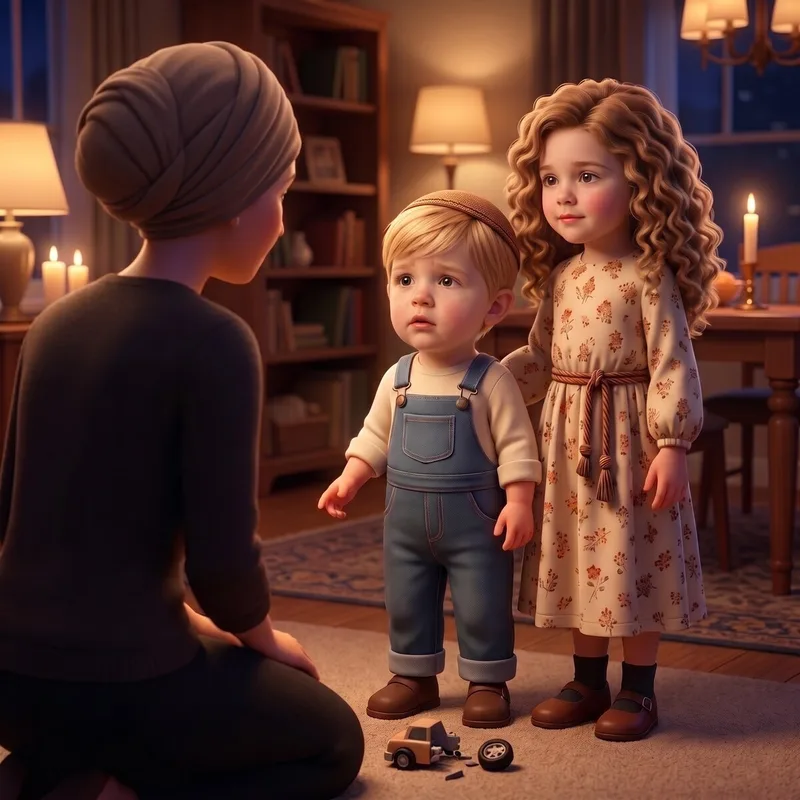
Always Telling the Truth (תמיד אומרים אמת) is a Middos story set in everyday life today, in which the child is the hero and the middah is emes. It lands with children because truth is not an abstract idea to them: it is the moment after the cup breaks, or the question "Did you brush your teeth?" A story that puts them inside that moment gives them words for it.
What is the story Always Telling the Truth about?
It is a story from the Middos collection, the good character a child grows, and like every Torah Tale book it stars your child, with their name and likeness illustrated in 3D animated-film style. It is set in ordinary life today rather than in a scene from the parshiyos. The middah it builds is plain: say what is true, even when it is hard.
We are not going to retell individual scenes here, because the most useful thing this page can do is help you use the idea at home. Below are the Torah sources, what truth looks like for different ages, and questions to ask once you have read the book together.
What does the Torah say about telling the truth?
The Torah tells us midvar sheker tirchak, stay far from a false matter (Shemos 23:7). The Torah does not say merely "do not lie" but "stay far," which teaches us to keep distance from falsehood and not just avoid the outright lie. Zecharia 8:16 adds a line children can remember: dabru emes ish es re'eihu, speak truth, each man to his neighbor.
Chazal tell us (Shabbos 55a) that the seal of Hashem is emes. A child can take that in simply: when we tell the truth, we are doing something that Hashem loves.
Chazal also notice something about the letters themselves (Shabbos 104a). The letters of emes are the first, middle and last of the aleph-beis and stand on a firm base, while the letters of sheker stand close together, each on a single leg. Children like this because they can see it: write both words and compare.
What does telling the truth look like in a child's day?
Here are everyday situations where a child is tested. They are examples for your own conversation, not scenes from the book.
- Saying who spilled the juice when a sibling is blamed.
- Admitting that homework was not finished.
- Telling a friend honestly that you cannot lend something, instead of making up an excuse.
- Owning up to a mistake in a game and not pretending it did not happen.
Each of these has a moment where lying looks easier. Naming that moment out loud, "I know this is hard to say," gives your child the courage to say it.
How do I explain telling the truth to a 3-year-old, a 6-year-old and a 10-year-old?
Ages 3 to 4. Use one sentence: "We tell what really happened, and Hashem loves emes." Point to a real moment and thank your child when they say what happened. Do not expect an understanding of why, just a good feeling about it.
Ages 6 to 7. Children this age can understand consequences. Say: "If you tell me the truth, we can fix it together. If you hide it, it gets bigger." This is also a good age to introduce the idea that a lie often needs another lie to cover it.
Ages 9 to 12. Older children can handle the harder question: truth and kindness. Talk about telling the truth without hurting someone, and why we do not say every true thing we think. Our article on guarding my tongue pairs well with this age, since honesty and careful speech belong together.
What do I do when my child tells me a hard truth?
This is where the middah is really built, and it is about your reaction more than the story. If every confession gets a harsh response, the child learns to hide. If the truth gets a calm "thank you for telling me," the child learns that the truth is safe.
- Say thank you first, before anything else.
- Then deal with what happened, and keep the consequence smaller than it would have been if they had hidden it.
- Later, quietly, tell them you noticed how hard it was and that you are proud.
This does not mean there are no consequences. It means the child can tell the difference between what happened and whether they were honest about it.
What is the Torah Tale book of this story like?
Your child's name and a likeness from one uploaded photo appear on every page, so the child is the one standing in each situation. Up to eight siblings can share one book. If you add parents and grandparents, they appear with the children on a closing family page in every format.
Softcover and hardcover books open with a dedication page, and every book ends with a discussion page of 10 questions about the story, mixing comprehension with middos: what happened, and what it asks of the child. That page is what turns a book read to a child into one talked about at the table. Every book is written with careful rabbinical guidance and strict tznius, and reviewed by our team before it goes to print.

Softcover 8″×8″

Hardcover 8″×8″

Board book 6″×6″

Coloring book 8.5″×11″
The board book is 6x6 with rounded safety corners, for ages 0-4. The softcover is 8x8 for ages 4-8, and the hardcover is 8x8 for ages 5-18. An optional matching coloring book, 8.5"x11" in black-and-white line art, can be added to a book. It is a weekday activity, for an afternoon during the week or erev Shabbos, not for Shabbos itself. The book, on the other hand, is perfect to read at the Shabbos table.
What questions can I ask at the Shabbos table?
Talking, not writing, is what this section is for. Try these after reading, and let the children answer before you do:
- When is it hardest to tell the truth?
- How do you feel inside after you tell the truth, even when it was hard?
- Why do you think the Torah says to stay far from falsehood?
- What can we do to make our home a place where it is easy to say what happened?
For a related middah, see teaching hakaras hatov at home and A Helping Hand, another Middos story set in everyday life.
If you would like your child to be the hero of this story, create the book. It takes about five minutes: a free account and a few short questions, including your child's name, age and one photo, and the family's community, which is asked once.
Frequently asked questions
What is the lesson of Always Telling the Truth?
The lesson is that a child who is a person of emes tells the truth even when it is uncomfortable, and that honesty is part of how a Yid lives every day. The Torah tells us 'midvar sheker tirchak', to stay far from a false matter. The story is set in everyday life today, so a child can see where truth shows up in their own day.
How do I explain telling the truth to a 3-year-old?
Keep it to one short sentence: 'We tell what really happened, and Hashem loves emes.' Use a small real moment, such as a spilled cup, and say thank you when your child tells you what happened. At this age the goal is a warm feeling about telling the truth, not a lesson on why.
Why do children lie, and is it normal?
Young children often say what they wish had happened, or they are afraid of a reaction. Older children usually lie to avoid trouble or embarrassment. It is common, which is why the response of a parent matters so much: a calm reaction makes the truth feel safe.
Which format of the book fits which age?
The board book is 6x6 with rounded safety corners and fits ages 0-4. The softcover is 8x8 and fits ages 4-8, and the hardcover is 8x8 and fits ages 5-18. Your child's age is one of the short questions when you create the book.
Can siblings appear in the same book?
Yes. Up to eight children, ages 0 to 18, can appear in the same book. If you add parents, grandparents or other relatives with their photos, they appear with the children on a closing family page in every format.