Saying Thank You for Kids: Teaching Hakaras Hatov at Home
Saying thank you is more than manners. It is hakaras hatov, noticing the good someone did and saying so. Here is how to teach it to children of different ages, with Shabbos table questions.
Published by Torah Tale.
Create this book for your child
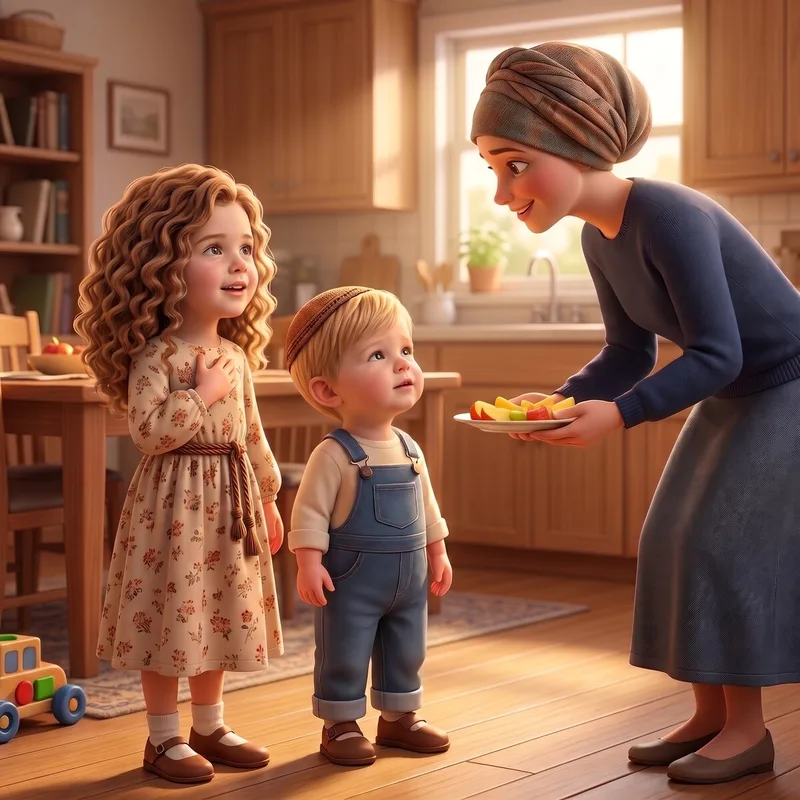
Saying Thank You is a middos story starring your child in everyday life today, and it teaches hakaras hatov: noticing the good someone did for you and saying so. Children connect to it because thank you is something they can practice at the next meal, the next ride and the next time someone helps them.
What is the Saying Thank You story about?
The story is set in ordinary life today, not in the time of the Avos. Your child is the one who learns to notice what other people do and to say thank you for it.
The book tells the story with your child's name and likeness, illustrated in 3D animated-film style. At the end comes a discussion page that carries the lesson back to your own home.
What does the Torah teach about saying thank you?
Thanks runs through the Torah, and several examples are easy for children to remember.
- Leah and Yehuda. The Torah tells us that when Leah's fourth son was born she said 'this time I will thank Hashem', and she named him Yehuda (Bereishis 29:35). Our word for Jew, Yehudi, comes from that name. You can read more in Parshas Vayeitzei for Kids.
- The korban todah. The Torah describes a thank-offering brought in gratitude. The Midrash relates that in the future, the korban todah and the tefillah of hoda'ah will not be nullified. There is more in Parshas Tzav for Kids.
- Bikkurim. In Parshas Ki Savo the farmer brings the first fruits to the Kohen and makes a declaration of thanks. See Parshas Ki Savo for Kids.
- Birkas HaMazon. The Torah says 'you will eat and be satisfied, and you will bless' (Devarim 8:10).
Chazal also teach that one should not benefit from this world without a bracha. A child who says a bracha before eating is already practicing thanks.
What is hakaras hatov, and why is it more than good manners?
Hakaras hatov means recognizing the good. There are two steps. First you notice that someone did something for you, and then you say so.
Manners can be only the second step, a word said because we were told to say it. Hakaras hatov asks the child to really see the person who helped. That is why the same middah leads a Yid to say Modeh Ani each morning, thanking Hashem for returning his neshamah, before he has done anything else that day.
How do I explain saying thank you to a 3-year-old, a 6-year-old and a 10-year-old?
Ages 2 to 3. Keep it short and keep it visible. Say 'Thank you, Ima, for the cup' where your child can hear it. Then wait a moment and let your child say the words back. Young children learn this middah mostly by watching you.
Ages 4 to 6. Add the reason. 'Thank you means I saw what you did for me.' Ask 'Who helped you today?' at supper. Children this age love to find the answer and tell it to the family.
Ages 7 to 9. Talk about what thank you costs and what it gives. It takes a few seconds, and it tells the other person that what they did mattered. Invite your child to notice the small jobs people do without being asked, such as a bus driver, a cheder rebbi or a parent making lunch.
Ages 10 to 12. Move from saying to showing. Thanks can be a note, a favor returned or a bracha said slowly and with kavanah. On a weekday your child can write a short thank-you note, since writing is not for Shabbos. Ask what changes when we thank people we usually take for granted.

Softcover 8″×8″

Hardcover 8″×8″

Board book 6″×6″

Coloring book 8.5″×11″
What are good thank-you questions for the Shabbos table?
Shabbos is a natural time for hakaras hatov, and these questions need nothing but talking. Go around the table, and let the youngest answer first.
- Who did something kind for you this week?
- Did you say thank you? How did it feel to say it, or to hear it?
- What is something in this house you never say thank you for?
- What do we thank Hashem for before we eat?
- Is it easier to thank someone who did a big favor or a small one? Why?
Parents can answer too. When a child hears a parent say 'I want to thank you for helping set the table', the middah becomes something the family does, not only something children are told to do.
How do I say it in one sentence?
Here is a script you can use: 'When someone does something good for us, we notice it, and we say thank you, just like we thank Hashem every morning in Modeh Ani.' It is short enough for a three-year-old and has enough in it for an older child to keep thinking about.
What is a personalized Saying Thank You book like?
Your child is the hero, with their name and, from one uploaded photo, their likeness, illustrated in high-resolution 3D animated-film style. Up to eight siblings can appear in the same book. Ages 0 to 18 are covered, so a family with children of different ages can share one book.
Every book ends with a discussion page of 10 questions that mix comprehension with middos: what happened, and what it asks of your child. Softcover and hardcover books open with a dedication page. If you add parents, grandparents or other relatives, they appear with the children on a closing family page in every format. The book is written with careful rabbinical guidance and strict tznius, and our team reviews it before it goes to print.
There are three formats. The board book is 6x6 with rounded safety corners, for ages 0-4. The softcover is 8x8, for ages 4-8, and the hardcover is 8x8, for ages 5-18. Books come in English, Hebrew or Yiddish. An optional matching coloring book is a weekday activity, such as erev Shabbos or Chol HaMoed, never for Shabbos or Yom Tov. The book itself is perfect to read on Shabbos.
Creating a book takes about five minutes. You need a free account and a few short questions: each child's name, boy or girl, age and one photo, any siblings, the story, your community (asked once), the language and the format. If you are new to the process, our step-by-step guide to creating a personalized Torah storybook walks through it.
Ready to make hakaras hatov part of your child's own story? Create the book and choose Saying Thank You in the story picker.
Frequently asked questions
What is the lesson of the Saying Thank You story?
The lesson is hakaras hatov: noticing the good that others do for us and saying thank you out loud. The story is set in everyday life today, so a child can see where this middah fits into an ordinary day. The discussion page at the end of the book helps parents turn the lesson into a conversation.
At what age should a child start saying thank you?
Many parents begin with simple words and a modeled example when a child is two or three, and keep building from there. Young children learn mostly by hearing a parent say thank you often and naturally. Older children can start to notice for themselves who did something for them and why it matters.
Where does the Torah talk about thanking?
Leah named her fourth son Yehuda and said 'this time I will thank Hashem' (Bereishis 29:35). The Torah also describes the korban todah, the thank-offering, and the bikkurim declaration in Ki Savo. Every day we begin with Modeh Ani, words of thanks, as soon as we wake up.
Which Torah Tale format is best for a book about saying thank you?
It depends on your child's age. The board book is 6x6 with rounded safety corners for ages 0-4, the softcover is 8x8 for ages 4-8, and the hardcover is 8x8 for ages 5-18. Your child's age is one of the short questions when you create the book.
Can I read the book on Shabbos?
Yes. Reading a storybook is entirely appropriate on Shabbos and Yom Tov. The optional coloring book is different, because coloring is melacha, so keep it for a weekday such as erev Shabbos or Chol HaMoed.