Parshas Tzav for Kids: The Fire That Never Went Out & the Korban Todah
Parshas Tzav is the parsha of the fire that never went out. Here is the story retold for children, the middos inside it, and how to explain it to a four-year-old and an eight-year-old at the same table.
Published by Torah Tale.
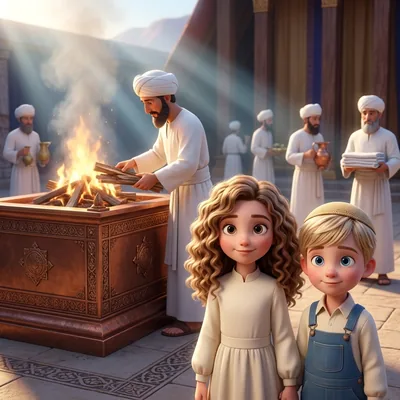
Parshas Tzav is the second parsha in Sefer Vayikra, and it is the parsha of the fire that never went out. Hashem tells Moshe to instruct Aharon and his sons in exactly how to serve in the Mishkan: how to clear the ashes each morning, how to keep the fire on the mizbeach burning without a break, and how each korban is brought and eaten. It closes with seven days of inauguration, when Aharon and his sons became kohanim. For children, the parsha lands on one very reachable idea: doing the same small thing every single day, with energy, is what keeps a fire alive.
What happens in Parshas Tzav?
Where Parshas Vayikra taught the Yidden which korbanos exist, Parshas Tzav turns to the kohanim and gives them their working instructions. Hashem tells Moshe: command Aharon and his sons.
The first job of the day was terumas hadeshen. A kohen would take a shovelful of ashes off the mizbeach from the korbanos that had burned all night. Rashi explains that he then changed out of those clothes before carrying the rest of the ashes outside the camp, because you do not serve a king in the same clothes you cooked in.
Then comes the mitzvah that gives the parsha its picture: eish tamid tukad al hamizbeach, lo sichbeh. A constant fire shall burn on the mizbeach, it shall not go out. The kohanim laid fresh wood on it every morning, day after day, so that the fire never died down.
From there the parsha goes through the korbanos one by one: the olah that goes up entirely, the mincha of flour and oil, the chatas and the asham, and the shelamim with its happy branch, the korban todah. The Torah teaches which parts are burned on the mizbeach, which parts the kohanim eat, and where they may be eaten. It also warns the Yidden not to eat chelev or blood.
The last part of the parsha is the seven days of miluim. Moshe Rabbeinu gathered the whole nation to the entrance of the Ohel Moed, washed Aharon and his sons, dressed them in the bigdei kehunah, anointed the Mishkan and its vessels with the shemen hamishcha, and brought the inauguration korbanos. Aharon and his sons stayed at the entrance of the Ohel Moed for seven days, and did exactly what Hashem had commanded through Moshe. If your child has already met those garments in Parshas Tetzaveh, this is the parsha where Aharon finally puts them on.
Why does the parsha start with the word "Tzav"?
Hashem could have said "speak to Aharon" or "say to Aharon." Instead He said "Tzav," command. Rashi explains that "tzav" is a lashon of zeiruz, which means urging someone on, giving them a push of energy. He brings in the name of Rabbi Shimon that this extra push is needed most where a person stands to lose money, and that the Torah needs to say it now and for all the generations that follow.
Children understand this better than adults expect, because they live it. There is the way you put your shoes away when you are asked, and there is the way you run to the door when the person you love is coming. Same action, different fire. Hashem was telling Aharon: not just do it, do it like it matters.
That is worth naming out loud at the table, because it is the difference between a child who says Modeh Ani and a child who says Modeh Ani.
What does the eish tamid teach a child?
Here is the detail children find surprising. Chazal teach that fire came down from Shamayim onto the mizbeach, and yet the kohanim were still commanded to bring ordinary wood every morning with their own hands. Hashem's fire was there, and human effort was still required to keep it going.
That is the whole parsha in one image. Hashem gives us the spark. We bring the wood. Every day, including the days we are not in the mood.
Ask a child what would happen to the fire if the kohen decided that yesterday's wood was enough. They will tell you immediately. Then ask what happens to a person who davens beautifully on Shabbos and skips it all week, and let them make the connection themselves.
The korban todah: saying thank you out loud
Of all the korbanos in Parshas Tzav, the todah is the one children remember. A person who came through something frightening safely, such as a dangerous journey or a serious illness, brought a thank-you korban together with loaves of bread. Chazal tell us there were forty loaves in all.
And here is the beautiful part. The korban todah had to be eaten in one day and the night that followed, not the usual two days. One family could never finish forty loaves and a whole korban alone in that time. So the person had to invite people, and when they came and asked what the meal was for, he told them: this is what Hashem did for me.
Gratitude in the Torah is not a private feeling. It is a table with guests around it and a story being told. That is a lesson worth planting in a seven-year-old, and it pairs naturally with the bikkurim declaration in Parshas Ki Savo.
How do I explain Parshas Tzav to a 4-year-old and an 8-year-old?
This parsha is heavy on detail, so the trick is to choose one image per age and stop there.
| Age | What to say |
|---|---|
| Ages 2-4 | "In Hashem's house there was a special fire. Every morning the kohanim put new wood on it so it would never, ever go out." Let them help you count imaginary logs. |
| Ages 5-7 | Add the ashes. The kohen's very first job of the day was cleaning up, and he had special clothes for it. Cleaning up in Hashem's house was an honor, not a punishment. |
| Ages 8-10 | Add "Tzav" as zeiruz, and the todah. Why did Hashem need to tell Aharon to be enthusiastic? Why did the todah have to be finished so fast? |
| Ages 11-12 | Add the miluim. Moshe Rabbeinu himself served for seven days and then handed the kehunah to his brother, without a word of complaint recorded in the Torah. |
Say it in one sentence if you only have one sentence: Parshas Tzav is about the fire in Hashem's house that was never allowed to go out, and about doing your job with life in it.
What is a personalized Torah Tale book of Parshas Tzav like?
Torah Tale prints Parshas Tzav as a personalized storybook in which your own child is inside the story. You upload one photo, and your child's likeness is illustrated in high-resolution 3D Pixar style on every page, with their name in the text. Up to four siblings can appear in the same book, which is what usually happens when the older one wants the hardcover and the little one needs something they can chew on.
A parsha like this one is exactly where personalization earns its keep. Korbanos can feel distant to a child who has never seen a mizbeach. When the child carrying the wood up to the fire in the morning has their own face, the mitzvah of eish tamid stops being an ancient procedure and becomes a job they can picture themselves doing.
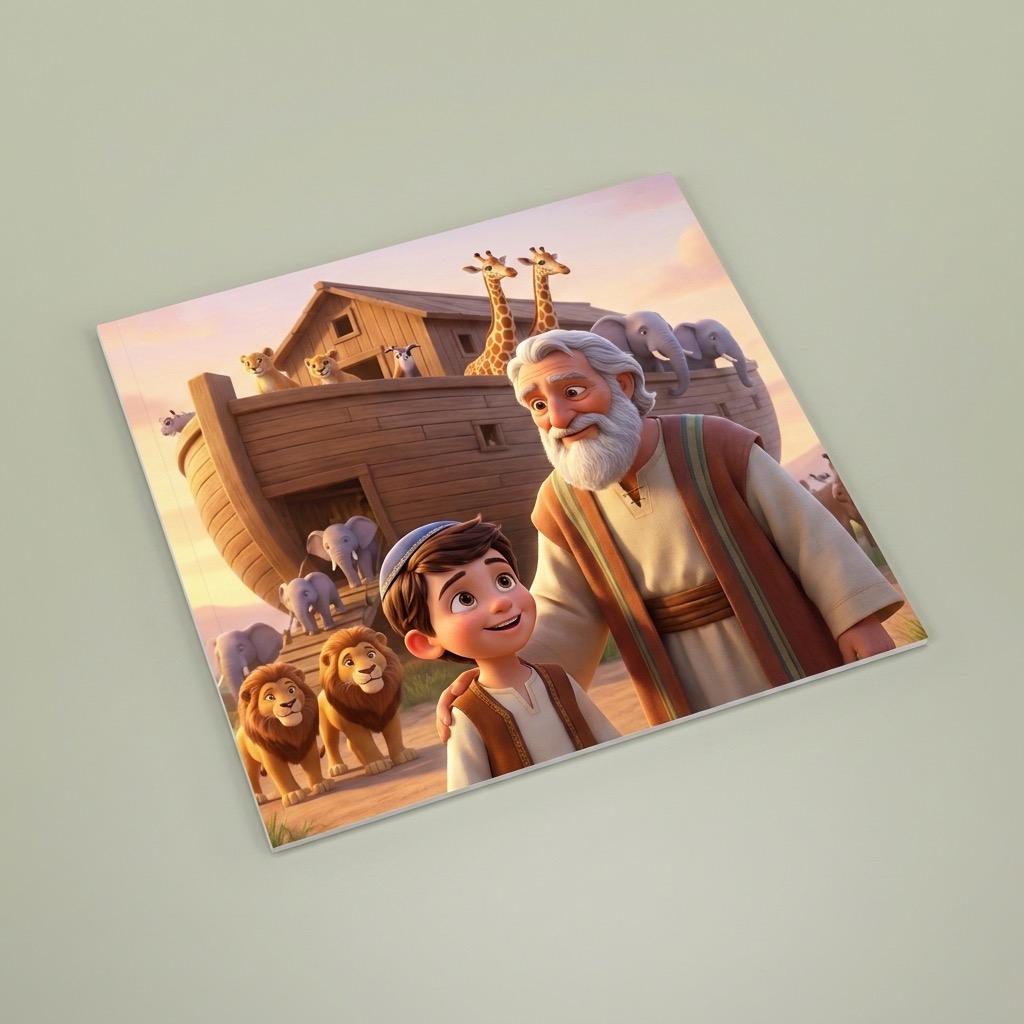
Softcover 8″×8″
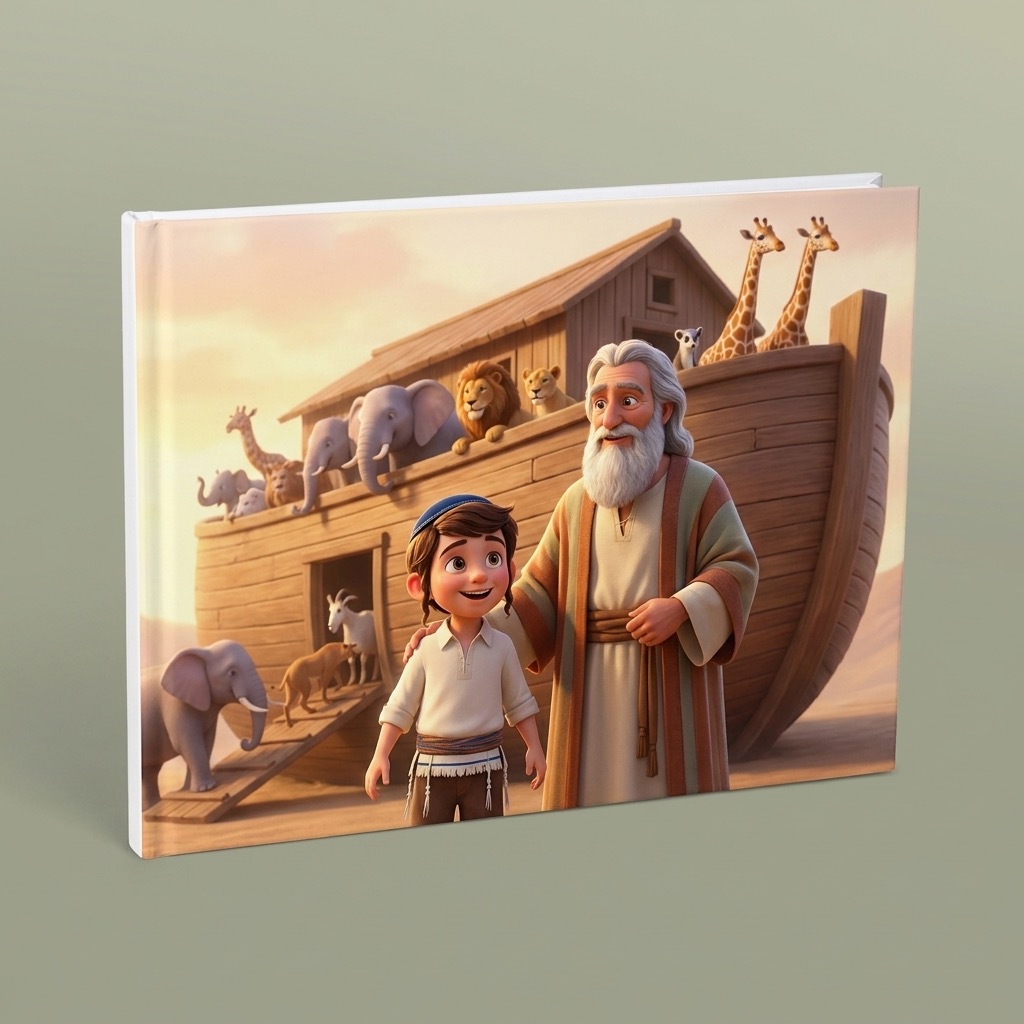
Hardcover 8″×8″
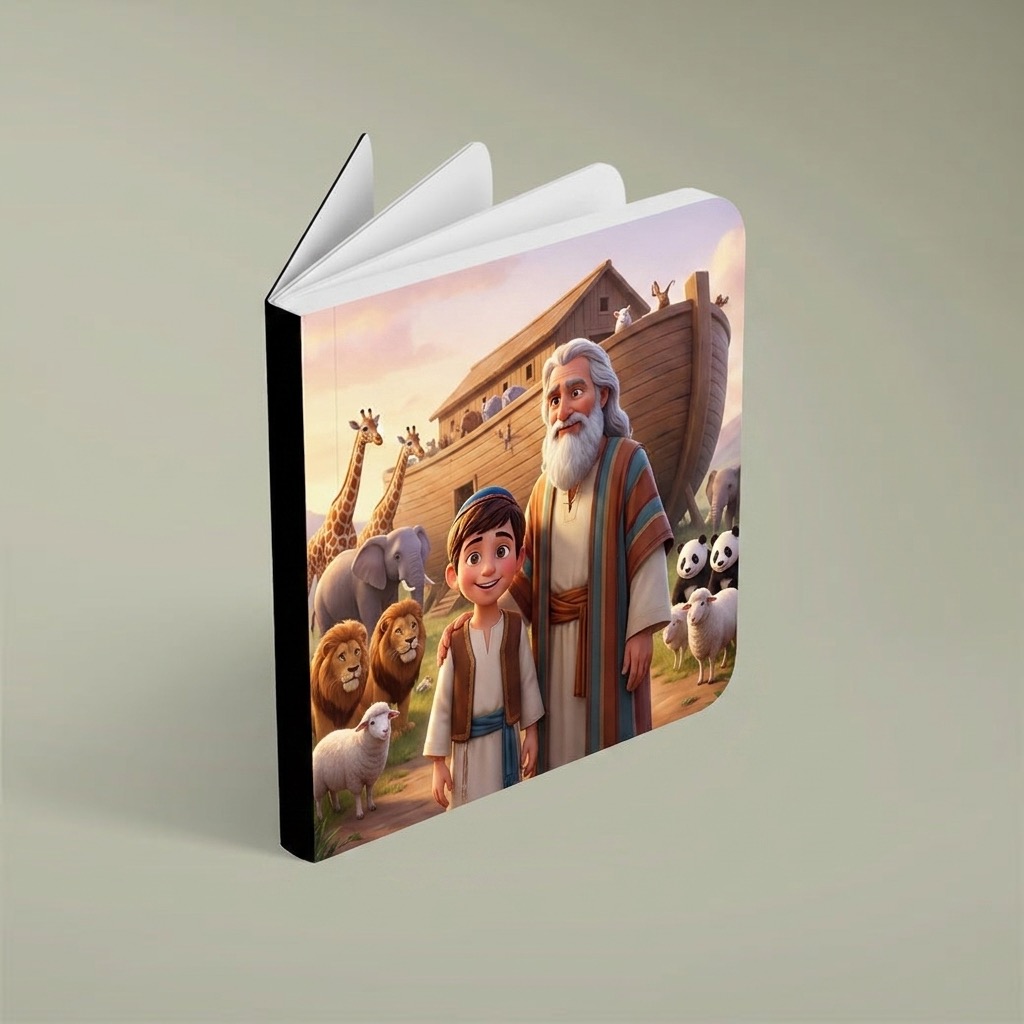
Board book 6″×6″
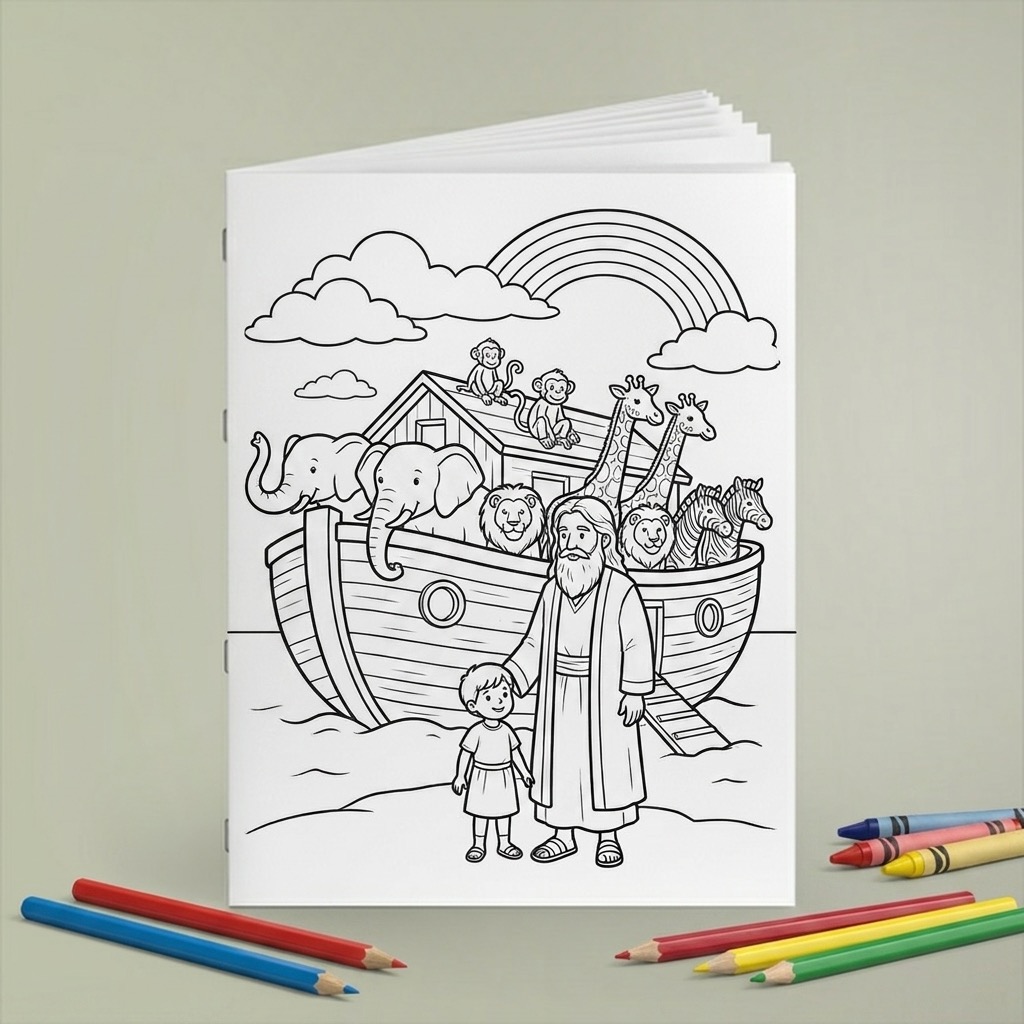
Coloring book 8.5″×11″
There are four printed formats: a 6"x6" board book with rounded safety corners for ages 2-4, an 8"x8" softcover for ages 4-8, an 8"x8" hardcover in square or landscape for ages 5-12, and an optional matching 8.5"x11" coloring book in black-and-white line art. Books come in English, Hebrew or Yiddish, and you can order more than one language. Every book is written with careful rabbinical guidance and strict tznius and reviewed by our team before printing.
The coloring book is a weekday thing. Coloring is melacha, so save it for erev Shabbos afternoon, a weekday after cheder, or Chol HaMoed. The storybook itself is the opposite: reading it at the Shabbos table, or on a long Shabbos afternoon when the parsha is Tzav, is exactly what it is for.
Shabbos table questions and a weekday activity
Every Torah Tale book ends with a dedicated discussion page carrying ten questions about the story, mixing comprehension with middos. If you do not have the book in front of you yet, start with these:
- Why do you think Hashem said "Tzav" instead of just "tell Aharon"?
- The fire came from Shamayim. So why did the kohanim still bring wood every morning?
- What is something you do every day that would stop working if you skipped it for a week?
- The kohen changed clothes before carrying the ashes out. What does that teach about how we treat Hashem's house?
- If you brought a korban todah, what would you be thanking Hashem for, and who would you invite to hear about it?
For a weekday activity, make a "wood pile" chart. Cut strips of brown paper, and every morning that your child says Modeh Ani straight out of bed, they add one strip to a drawing of the mizbeach on the fridge. A week of strips makes the point better than any speech about consistency.
One more, for older children: ask each person at the table to finish the sentence "Something Hashem did for me this year that I never said thank you for out loud." That is a korban todah in the only form we have right now.

Getting the book before the parsha
The Torah Tale book creator always suggests next week's parsha, not this week's, with a live countdown to the order deadline for delivery before that Shabbos. A double-parsha week produces one book covering both. If you are working out how to plan a parsha book around your family's schedule, we wrote about it in choosing the weekly parsha for your child's book. US standard shipping is $3.00 and takes 5-8 business days, express is $6.00 and takes 3 business days, and we ship worldwide with rates shown at checkout.
Parshas Tzav gives children something they can hold onto all week: Hashem gives the fire, and we bring the wood. Create the book with your child as the kohen carrying it, in about five minutes and eight short questions.
Frequently asked questions
What is Parshas Tzav about?
Parshas Tzav is the second parsha of Sefer Vayikra. It tells the kohanim how to do their work in the Mishkan: taking the ashes off the mizbeach each morning, keeping the fire burning without it ever going out, and the specific laws of the olah, mincha, chatas, asham and shelamim, including the korban todah. The parsha ends with the seven days of miluim, when Moshe Rabbeinu dressed Aharon and his sons in the bigdei kehunah and inaugurated them as kohanim.
Why does the parsha begin with the word "Tzav"?
"Tzav" means command, and Rashi explains that it is a language of zeiruz, which means urging someone on with extra energy. Rashi brings from Rabbi Shimon that this extra encouragement is especially needed where there is a loss of money involved, and that it applies now and for all future generations. For children the point is simple: Hashem did not only tell Aharon what to do, He told him to do it with real life in it.
What is the eish tamid and how do I explain it to a child?
The eish tamid was the fire on the mizbeach in the Mishkan that was never allowed to go out. The kohanim brought fresh wood every morning to keep it burning, day and night, without a break. To a child you can say that some mitzvos are like a candle you light once and some are like a fire you feed every day, and davening, learning and being kind belong to the second kind.
What is the korban todah?
The korban todah is a thank-you offering that a person brought when Hashem saved him from something, for example a dangerous journey or a serious illness. It came together with loaves of bread, and Chazal tell us there were forty loaves in total. Because it all had to be eaten within one day and the following night, the person had to invite family and friends and tell them the story of what Hashem had done for him.
How do I explain Parshas Tzav to a 4-year-old?
Keep it to one picture. Say that the kohanim had a special fire in Hashem's house, and every single morning they put more wood on it so it would never go out. Then connect it to your child: we also do things every day so our love for Hashem never goes out, like saying Modeh Ani the moment we wake up.
Can I get a personalized Parshas Tzav book with my child in it?
Yes. Torah Tale prints a personalized Parshas Tzav storybook in which your child's name and likeness, drawn in 3D Pixar style from one uploaded photo, appear on every page, and up to four siblings can be in the same book. It comes in English, Hebrew or Yiddish, as a board book, softcover or hardcover, with an optional matching coloring book for weekday use. The whole creation flow is eight short questions and takes about five minutes at torahtale.com/create.