An Upsherin (אפשערן) for Kids: First Haircut & Peyos
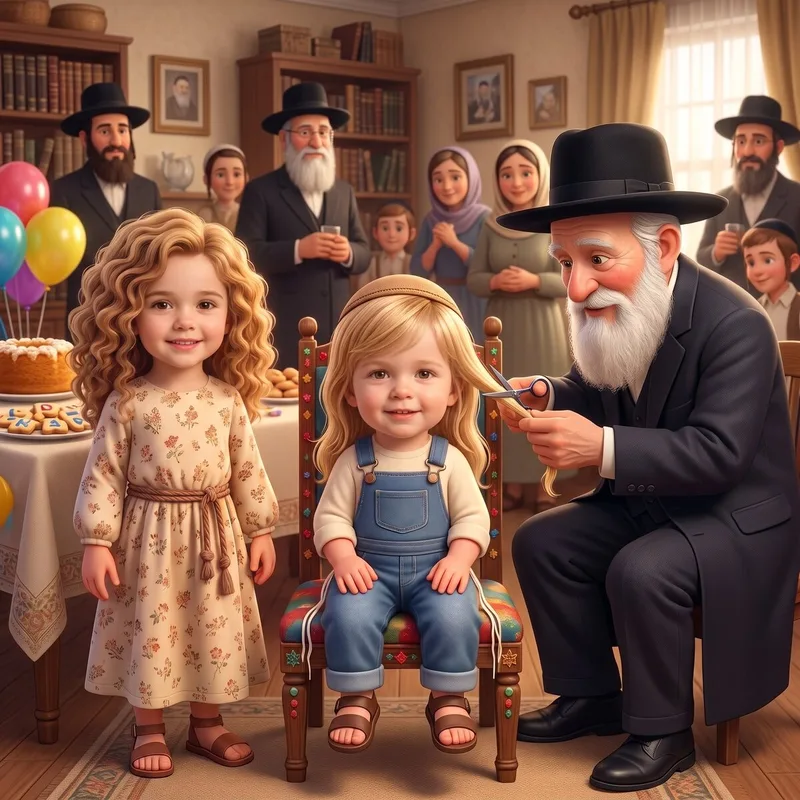
An upsherin is a boy's first haircut at age three, when his peyos are left and he starts to look and learn like a young Yid. Here is how to explain it to a 3-year-old, a 5-year-old and an 8-year-old, with table questions.
Published by Torah Tale.
Create this book for your child
An upsherin is a Jewish boy's first haircut, given when he turns three, when his peyos are left and he begins to look and learn like a young Yid. For a three-year-old it is one of the first big days that is really about him, and a story about it helps him know what to expect and why it matters.
What is an upsherin, and why do we wait until three?
Upsherin is the Yiddish word for the haircut (it means "cutting off"). A boy's hair is left to grow until three, and then it is cut for the first time, leaving his peyos. This is a minhag, a long-standing custom of Klal Yisrael, and not a mitzvah written outright in the Torah.
The sefarim connect the custom to the mitzvah of orlah. The Torah says that for the first three years the fruit of a new tree is not eaten (Vayikra 19:23), and later sources compare a child to a growing tree. The Torah also tells us not to remove the peyos (Vayikra 19:27), and the upsherin is the day the peyos are left in place.
What happens at an upsherin?
Customs differ from family to family and community to community, so what follows is the general picture. The day is built around a few things a three-year-old can follow:
- The haircut. Family and friends, often a grandfather or another honored guest first, each cut a lock. A barber finishes the job and the peyos are left.
- The aleph-bais with honey. A minhag many families keep is placing a little honey on the letters so the child's first taste of learning is sweet. The pasuk in Tehillim 19 compares the words of Hashem's Torah to honey.
- A first pasuk. Many families teach the boy to say "Torah tziva lanu Moshe, morasha kehillas Yaakov" (Devarim 33:4).
- Tzitzis. Many families begin tzitzis around this time. Ask your rav what is right for your son.
- The date. Some hold it on the birthday, and many have a custom connected with Lag BaOmer and Rabbi Shimon bar Yochai. Follow your family's minhag.
What does an upsherin teach a child?
It teaches that growing up is a gift and a responsibility. At three a boy is no longer a baby, and the family marks that with Torah: letters, a pasuk, tzitzis, peyos. Chinuch begins early and it begins with joy.
It also teaches that Torah is sweet. A child who connects his first letters with honey and a party with grandparents carries a warm feeling about learning. That feeling does more for him in cheder than any speech about why he should learn.
A middah that comes up naturally is bravery with calm. Some boys are a little nervous about scissors. Telling the story ahead of time, and letting him know that everyone is there to celebrate him, helps him stay calm and even look forward to it.
How do I explain an upsherin to a 3-year-old, a 5-year-old, and an 8-year-old?
To the 3-year-old. Use a few simple sentences: "You are turning three. We are going to cut your hair, and your peyos will stay. Then you will say the aleph-bais and have something sweet." Say it more than once in the weeks before, so the day feels familiar.
To a 5-year-old sibling. He may remember his own upsherin dimly. Ask, "Do you remember when you got your peyos?" and let him tell his little brother what to expect. Being the one who explains makes him proud and gently teaches chesed to a younger brother.
To an 8-year-old sibling. He can understand the why: the three years of orlah, the peyos, and starting Torah early. Let him ask questions, and if you do not know an answer, say so and ask your rav together.
What is a personalized upsherin storybook like?
An Upsherin (אפשערן) is a story in Torah Tale's Jewish Life collection, the collection of the simchos and minhagim of a Yiddishe life. Your son's name and, from one uploaded photo, his likeness appear on every page, illustrated in 3D animated-film style. So the three-year-old does not just hear about an upsherin, he sees himself in it.
Because an upsherin is at age three, the board book fits best: 6x6 with rounded safety corners, made for ages 0-4. Up to eight children can appear in the same book, so brothers and sisters can be part of the story too.

Softcover 8″×8″

Hardcover 8″×8″

Board book 6″×6″

Coloring book 8.5″×11″
If you add parents, grandparents or other relatives with their photos, the story itself stars the children, and the grown-ups appear with them on a closing family page, in every format. That page works well for an upsherin, when the family is gathered. Every book is written with careful rabbinical guidance and strict tznius, and it is reviewed by our team before it goes to print.
What questions can we ask at the Shabbos table?
Every Torah Tale book ends with a discussion page of 10 questions about the story, mixing comprehension with middos, what happened and what it asks of the child. Reading the book is entirely appropriate on Shabbos, and the table is a good place for talking, singing and questions. Here are a few more to add:
- What did we do on the day you got your peyos?
- Why do you think we put something sweet with the letters?
- Who was there to celebrate with you? How did that feel?
- What is one thing a big boy of three can do now, like saying a bracha or a pasuk?
- How can we help a little brother who is nervous about something new?
When should we give the book, and is there a coloring book?
You can give the book in the weeks before the upsherin, so the story is familiar and the day is something to look forward to. It also makes a keepsake afterward, or a gift from grandparents. Either way, order ahead: US standard shipping on a one-time order arrives in about 12 business days, counted from the order, so plan with a little room. We also ship worldwide, with rates shown at checkout.
The optional matching coloring book (8.5"x11", black-and-white line art) is a one-time add-on to a book, and it is a weekday activity: a quiet weekday afternoon or erev Shabbos in the days before the upsherin.
To go with an upsherin, you can also read about the bris milah and pidyon haben, two other milestones in a boy's early life, or see personalized Jewish gifts for kids for more ideas. For the Lag BaOmer connection, there is also Rabbi Shimon bar Yochai for kids.
Creating the book takes about five minutes. It needs a free account and a few short questions: each child's name, boy or girl, age and one photo, any siblings, the story, your community (asked once), the language and the printed format. When you are ready, create the book for your son's upsherin.
Frequently asked questions
What is an upsherin and why do we wait until age three?
An upsherin is the minhag of a boy's first haircut, held when he turns three. Later sources connect the custom to the Torah's three years of orlah for a fruit tree (Vayikra 19:23) and compare a young child to a growing tree, so we wait three years before the first cut. It is a minhag and not a mitzvah stated in the Torah, so ask your rav about the exact practice in your family.
How do I explain an upsherin to a 3-year-old?
Keep it short and happy: you are three now, you are a big boy, and we are going to cut your hair a little so your peyos show and you can learn the aleph-bais. Tell him ahead of time who will be there and what will happen, and let him hold the book. Children this age do best when the day matches the story they have already heard.
Do girls have an upsherin?
The upsherin is a minhag for boys. Girls do not have an upsherin, but a sister can certainly be part of the day, and she can appear in the same personalized Torah Tale book with her brother, since up to eight children can be in one book.
Why is honey put on the aleph-bais at an upsherin?
It is a well-known minhag at the start of a child's learning, so that his first taste of the letters is sweet. The pasuk in Tehillim 19 compares the words of Hashem's Torah to honey. Many families do this at the upsherin, but customs vary, so follow your own family's practice.
What book is best for an upsherin gift?
For a boy turning three, the Torah Tale board book (6x6 with rounded safety corners, ages 0-4) matches his age. The story An Upsherin is in the Jewish Life collection, and the boy's name and likeness appear on every page. If you add grandparents or parents, they appear with the children on a closing family page.