The Name My Family Gave Me (השם שהמשפחה נתנה לי): A Torah Story for Kids
A child's name is the first thing that is truly theirs. Here is what this Family story is about, what the Torah and Chazal say about names, how to talk about your child's name at 3-4, 6-7 and 9-12, and questions for the Shabbos table.
Published by Torah Tale.
Create this book for your child
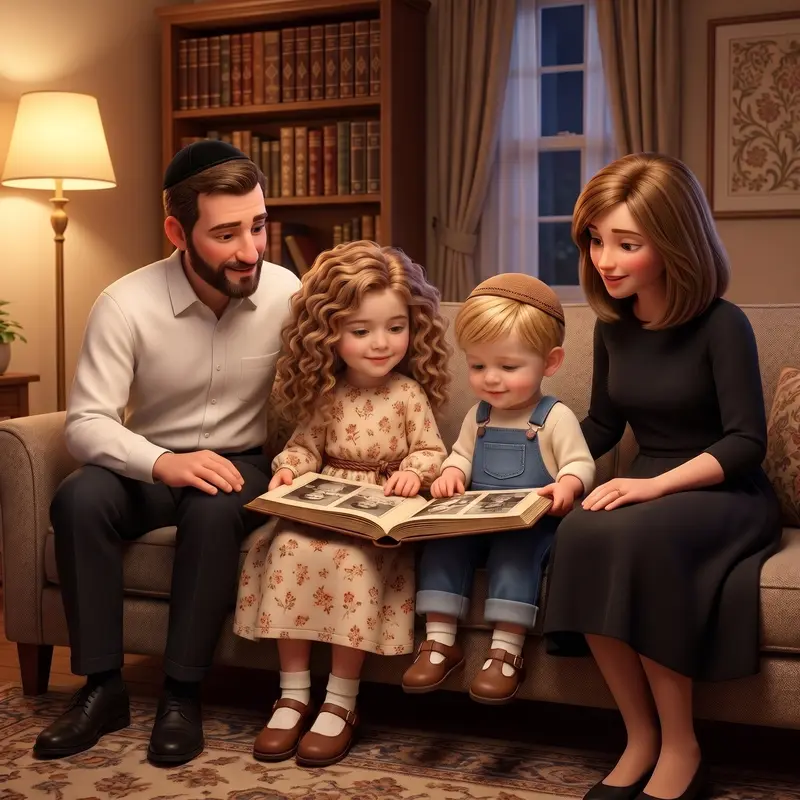
"The Name My Family Gave Me" is a Torah Tale story from the Family collection about a child's own name: where it came from, who chose it, and the family who say it every day. It lands with children because a name is the first thing that is truly theirs, and a child who hears that the grown-ups chose it with love feels wanted.
What is The Name My Family Gave Me about?
The Family collection is about a child and the grown-ups who love them, set at home today: what they do together and what a parent or grandparent teaches. This story takes the child's name as its subject. Since every Torah Tale book is personalized, the name in the story is your child's real name, and from one uploaded photo your child's likeness appears on every page, illustrated in 3D animated-film style.
What no book can supply is your family's own story of the name: why you chose it, who it may recall, what you hoped when you first said it. That part belongs to you. The book opens the subject, and the conversation at home finishes it. Every Torah Tale book ends with a discussion page of 10 questions mixing comprehension with middos, so there is a place to start.
Why do names matter so much in the Torah?
The Torah pays close attention to names. The pasuk tells us that bas Pharaoh named the baby Moshe and said she had drawn him from the water. You can read more in Bas Pharaoh Saves Baby Moshe for Kids.
In Parshas Vayeitzei the Torah gives the reason for the names of many of Yaakov's sons, so we know the names were chosen with meaning. In Parshas Vayishlach Yaakov is told that he will be called Yisrael, a new name for a new stage. Our article Parshas Vayishlach for Kids tells that story.
And Koheles 7:1 says טוב שם משמן טוב, a good name is better than good oil. A child can hold onto that phrase for years.
What is the middah behind a name?
There are two, and they fit together. The first is hakaras hatov: someone thought about this child before the child could say a word, and gave a name with care. Saying thank you to the people who gave it is a natural step, and our article on teaching hakaras hatov at home has simple ways to practice.
The second is the shem tov. The Midrash on Koheles relates that a person has three names: the one his father and mother call him, the one others call him, and the one he earns for himself, and the best of them is the one he earns. A parent can use this gently. The name was a gift, and the good name is what the child builds through everyday choices like speaking kindly, keeping a promise and helping without being asked.
How do I explain a name to a 3-year-old, a 6-year-old and a 10-year-old?
Ages 3 to 4: Keep it to a few sentences. Point to the name in the book and say it. "This is your name. Mommy and Totty picked it because we love you." That is plenty. A young child learns most from hearing his or her own name said with joy.
Ages 6 to 7: Add the why. Tell them who the name may recall, if anyone, or what it means, and the story of the day it was given. Mention that the Hebrew name is the one used when they are called to the Torah and when we daven for someone. Customs about when and how a name is given differ between families and communities, so ask your rav if you are unsure about yours.
Ages 9 to 12: Bring in the three names from the Midrash and ask which one a person has the most say in. Talk about what it means to carry a name that others will connect with you and your family. Older children usually enjoy the idea that a good name is something they are building right now.
What is the personalized book like?
You create the book on torahtale.com with a free account and a few short questions: your child's name, boy or girl, age and one photo, any siblings, the story, your family's community (asked once), the language and the printed format. Up to eight children, ages 0 to 18, can appear in the same book, and the book can be ordered in English, Hebrew or Yiddish. The whole flow takes about five minutes.

Softcover 8″×8″

Hardcover 8″×8″

Board book 6″×6″

Coloring book 8.5″×11″
Choose the format by age: a board book (6"x6", rounded safety corners, ages 0-4), a softcover photo book (8"x8", ages 4-8) or a hardcover photo book (8"x8", ages 5-18). Softcover and hardcover open with a dedication page. If you add parents and grandparents, they appear with the children on a closing family page in every format. Every book is written with careful rabbinical guidance and strict tznius, and is reviewed by our team before it goes to print.
What can we ask at the Shabbos table about our child's name?
Reading a storybook is entirely appropriate on Shabbos, and a name makes an easy topic for the table because it needs only talking. Here are some questions to try:
- Do you know why we chose your name?
- Is there someone in our family whose name is like yours? What was that person like?
- What does your name sound like when Totty says it? When Zaidy says it?
- If a good name is something you earn, what is one thing you did this week that helps build yours?
- Who else at this table has a name with a story? Let's hear it.
Let the grown-ups answer too. Children love hearing why their parents and grandparents have the names they do.
Is there a weekday activity to go with it?
On a weekday afternoon, a child can ask a grandparent or an aunt or uncle about the name, in person or when you speak during the week. Children often hear stories this way that nobody ever thought to tell them. The optional matching coloring book (8.5"x11", black-and-white line art) is a weekday activity as well: it suits a weekday afternoon, erev Shabbos, the days before a Yom Tov, or Chol HaMoed.
When you are ready, you can create the book and give your child a story that begins with the name you gave them.
Frequently asked questions
What is The Name My Family Gave Me about?
It is a story in the Family collection of Torah Tale, built around a child's own name. The collection is about a child and the grown-ups who love them, set at home today. Your child's real name and likeness appear in the book, and the family fills in the personal part, such as why you chose the name, in conversation.
How do I explain a Hebrew name to a young child?
Keep it short and warm: this is your name, Mommy and Totty chose it with love, and this is why. For a 3 or 4 year old, hearing their own name in a book and in your voice is the whole lesson. Older children can hear who the name recalls, if anyone, and what the name means.
What is the lesson of a name story?
Two lessons fit naturally: hakaras hatov for the family who gave the name, and the idea of a shem tov. The Midrash on Koheles relates that of a person's three names, the best is the one he earns for himself. The name is a gift, and the good name is what a child builds with his or her own actions.
Which format suits this story for my child?
Choose by your child's age. The board book is 6"x6" with rounded safety corners, for ages 0-4. The softcover photo book is 8"x8", for ages 4-8, and the hardcover photo book is 8"x8", for ages 5-18. An optional matching coloring book, 8.5"x11", can be added to a one-time order.
Can grandparents and parents appear in the book?
Yes, if you add them. The story itself stars the children, and any parents, grandparents and other relatives you add, with their photos, appear with the children on a closing family page in every format.
Is it appropriate to read this book on Shabbos?
Yes. Reading a storybook is entirely appropriate on Shabbos and Yom Tov, and it makes a good book for the Shabbos table. The optional coloring book is a weekday activity, for a weekday afternoon, erev Shabbos, the days before a Yom Tov, or Chol HaMoed.