The Simchas Torah Story for Kids: Hakafos, Flags & Finishing the Torah
Simchas Torah is the day we finish the Torah and start it again the same morning - and then dance with it closed. Here is the story for children, the lesson underneath the dancing, and how to explain it at every age.
Published by Torah Tale.
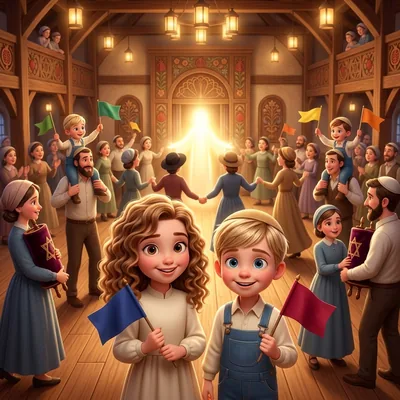
Simchas Torah is the day the Yidden finish reading the entire Torah and start it again from the first word - and celebrate that with dancing, flags and singing in shul. It is the last day of the Yom Tov season, and for most children it is the loudest, happiest, most physical Yom Tov of the year: hakafos in the evening, hakafos again in the morning, candy, and a ride on Tatty's shoulders while a sefer Torah goes by. It lands with children because it asks nothing of them except to be happy - and they are very good at that.
What actually happens on Simchas Torah?
The Torah is divided into parshiyos that we lain one per week all year. On Simchas Torah we reach the very last one, Vezos HaBracha, where Moshe Rabbeinu blesses each of the shevatim before he is niftar. The moment it is finished, the reader opens a second sefer Torah and lains the beginning of Bereishis - "In the beginning Hashem created the heaven and the earth."
The man honored with finishing is called the Chassan Torah. The man honored with starting again is the Chassan Bereishis. Children who have been hearing a new parsha every Shabbos all year suddenly see both ends of the Torah touch in one morning.
Before the laining come the hakafos. All the sifrei Torah are taken out of the aron and carried around the bimah seven times, with singing and dancing between each circuit. It is done at night and repeated the next day. In many shuls the children get flags, and small children are lifted up to kiss the Torah as it passes.
Then comes Kol HaNe'arim - the aliyah where all the boys under bar mitzvah are called up together. A large tallis is spread open over their heads like a canopy, an adult says the brachos with them, and the tzibbur says over them the pasuk HaMalach HaGoel, the bracha Yaakov Avinu gave to Ephraim and Menashe. Hakafos, Kol HaNe'arim and the flags are minhagim, not mitzvos from the Torah, but they are minhagim that Klal Yisrael has kept for centuries, and a child who grows up inside them never forgets them.
Why do we dance with the Torah closed?
This is the question worth putting to an older child, because the answer is the whole Yom Tov. All year we open the Torah and read it. On Simchas Torah we close it, wrap it, hold it against our shoulder, and dance.
The reason is that on this day we are not celebrating what we understand. We are celebrating that the Torah belongs to us. The rosh yeshiva and the child who is still learning to read the alef-beis dance the same circles, holding the same scroll, singing the same words. Nobody is measured on Simchas Torah.
That is a real middah lesson, and children feel it before they can say it: you can be part of something completely without having finished it. The eight-year-old who thinks he is "not good at learning" holds a sefer Torah on Simchas Torah exactly the way his rebbi does.
The other lesson is in the turn from Vezos HaBracha straight back to Bereishis. A well-known idea in the seforim is that we begin again at once so that no one can say the Yidden are done with the Torah. Learning has no finish line - it has a loop. If you have already read our piece on Parshas Bereishis for kids, this is the seam where it joins.
How do I explain Simchas Torah at different ages?
The same day, three different explanations:
- Ages 2-4: "The Torah is Hashem's present to us. Today is the Torah's party. We dance and we sing and we wave our flag." Don't explain the reading cycle. Let the dancing be the story.
- Ages 5-8: "Every Shabbos all year we lain a new parsha. Today we finished the last one - and then we started the first one again right away, in the same davening. We're so happy the Torah is ours that we dance with it." Point out the two sifrei Torah on the bimah.
- Ages 9-12: Ask the question instead of giving the answer. "Why is the Torah closed while we dance with it? What are we happy about, if we're not reading it?" Then talk about the Chassan Torah and the Chassan Bereishis, and about why the year ends and restarts without a gap.
One more thing worth saying to older children: Simchas Torah is the last day of a long stretch of Yamim Tovim that began with the shofar. Rosh Hashanah crowned Hashem as King, Yom Kippur cleaned the slate, Sukkos moved us outside into Hashem's protection - and Simchas Torah is the joy at the end of all of it. Our pieces on the Rosh Hashanah story and the Sukkos story walk through the earlier stops.
What is a personalized Simchas Torah book like?
Torah Tale's Simchas Torah book, from the Yamim Tovim collection, puts your own child inside the day. Their name is in the text and their face - illustrated in high-resolution 3D Pixar style from one photo you upload - appears on every page: holding the flag, standing under the tallis at Kol HaNe'arim, being lifted to see the sefer Torah go past during hakafos.
Up to four siblings can appear in the same book, which matters on a Yom Tov that is so much about children together. Books come in English, Hebrew or Yiddish, and you can order more than one language.

Every book ends with a discussion page of ten questions about the story - some comprehension, some middos. That page is the difference between a book you read to a child and a book your family talks about at the Yom Tov seudah. Reading it on Simchas Torah afternoon itself, when the dancing is over and everyone is worn out, is exactly what it is for.
Which format for which age?
Four printed formats, and the age ranges are real ones:
- Board book, 6"x6" with rounded safety corners (ages 2-4) - survives a two-year-old who wants to carry it around like a sefer Torah of his own.
- Softcover photo book, 8"x8" (ages 4-8) - the standard choice for the flag-waving years.
- Hardcover photo book, 8"x8", square or landscape (ages 5-12) - the one that stays on the shelf and comes out every Tishrei.
- Matching coloring book, 8.5"x11" - black-and-white line art of the same scenes, and a weekday item: a quiet weekday afternoon, erev Yom Tov, or Chol HaMoed Sukkos, in the days leading up to the dancing.
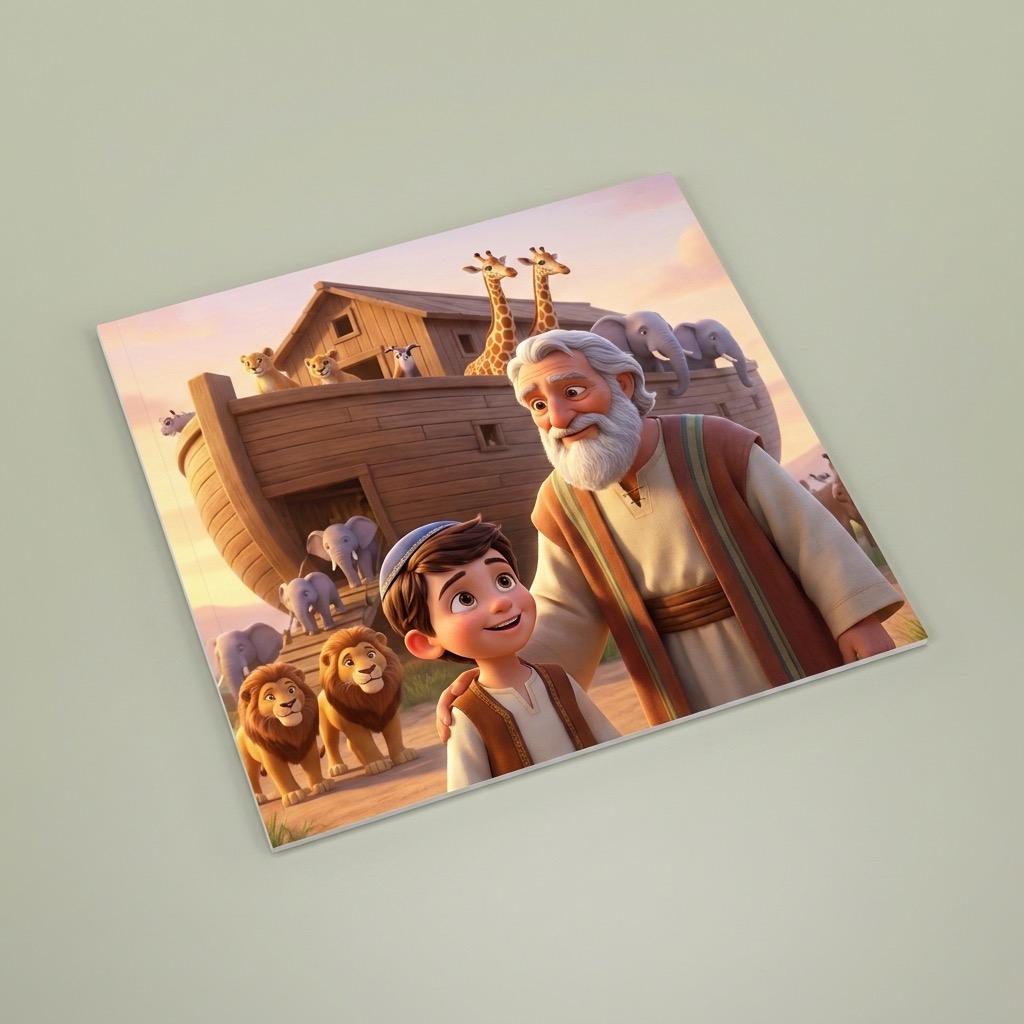
Softcover 8″×8″
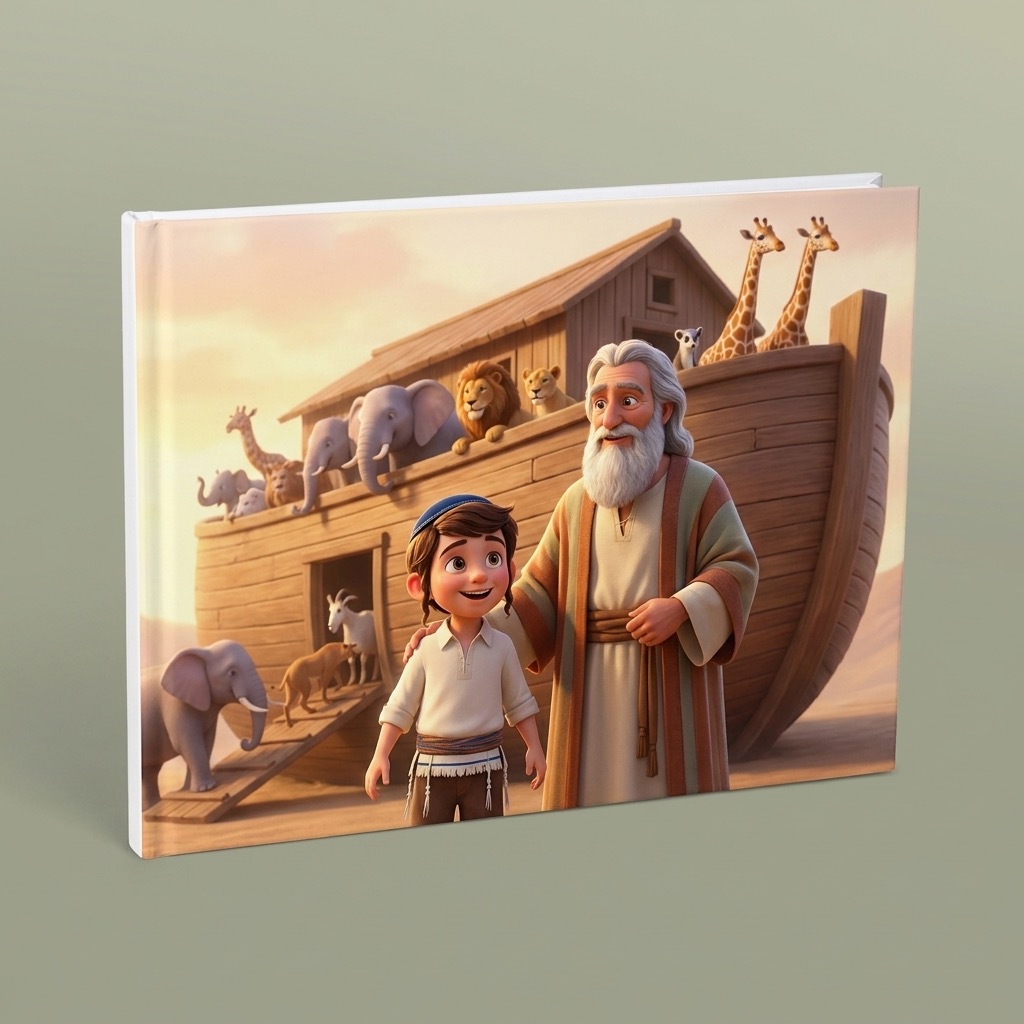
Hardcover 8″×8″
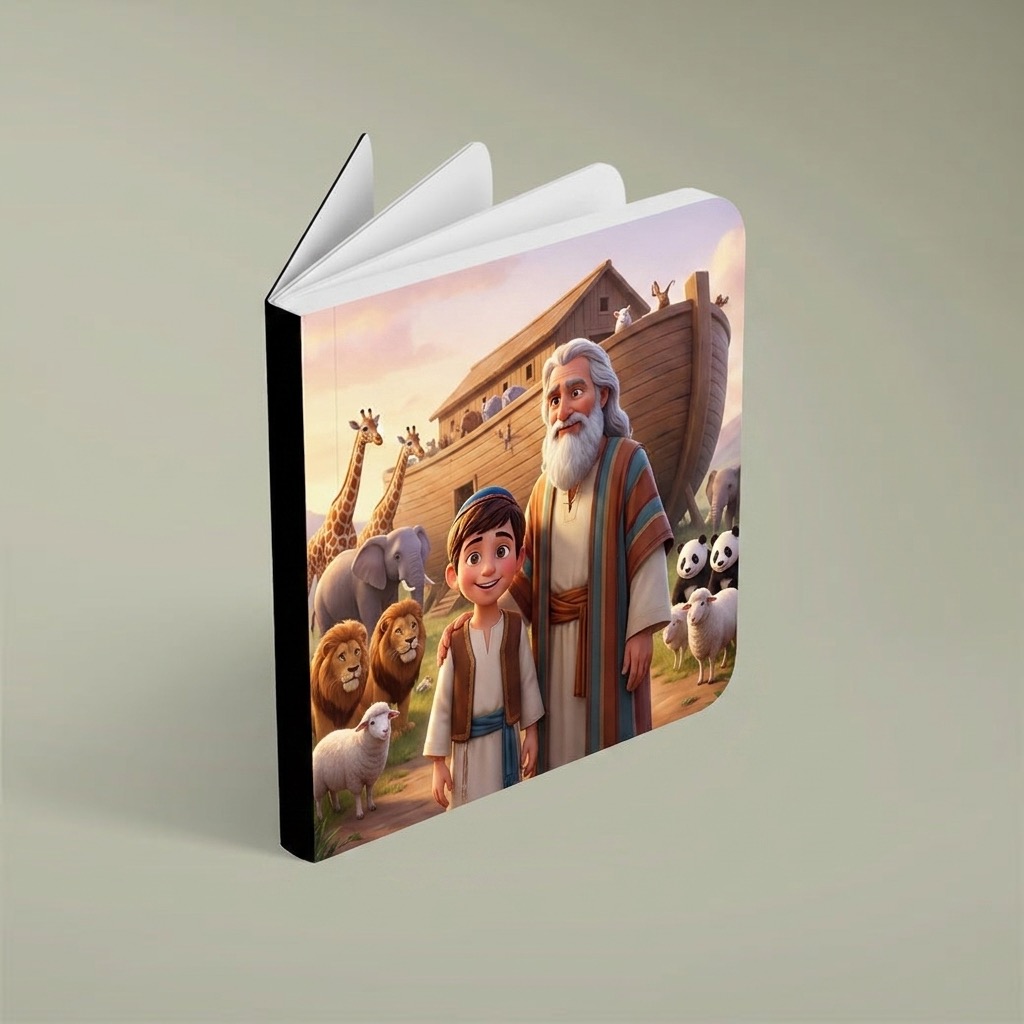
Board book 6″×6″
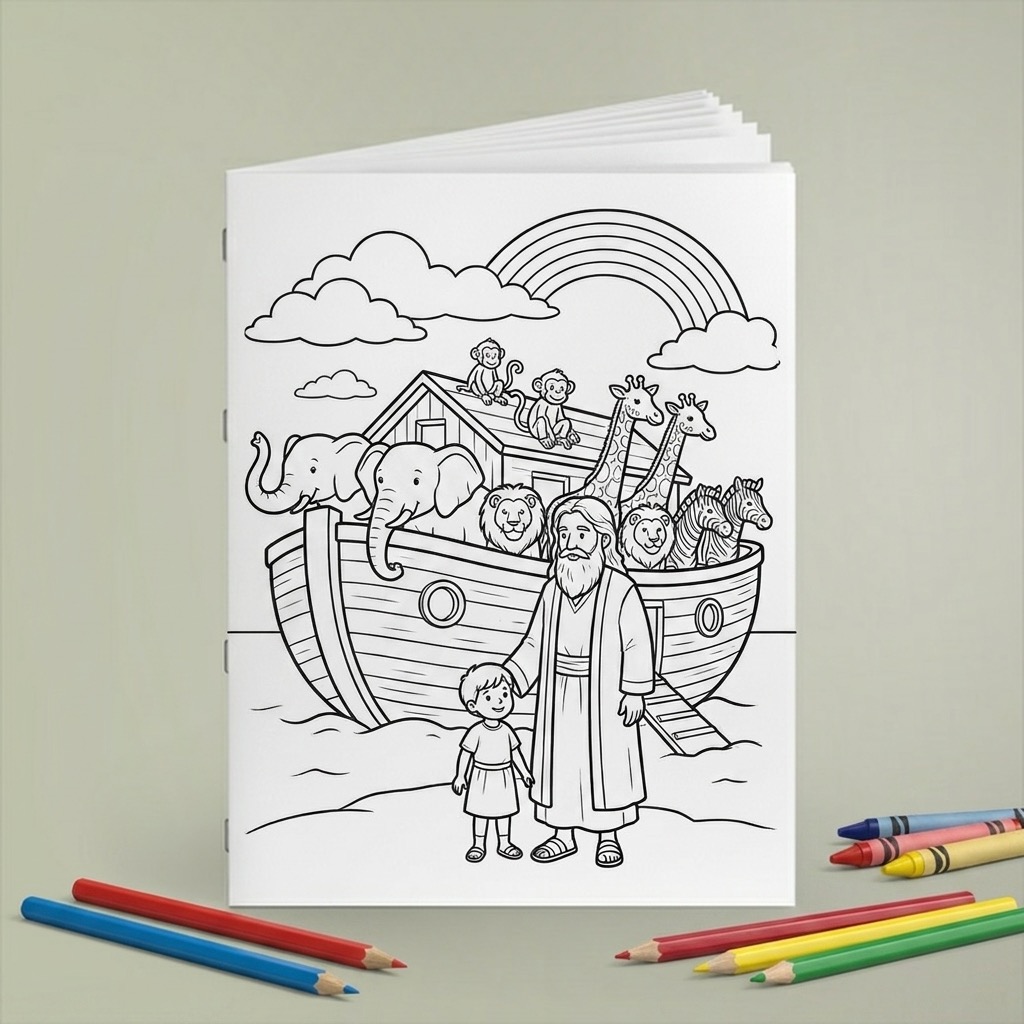
Coloring book 8.5″×11″
Questions to ask at the Simchas Torah table
Pick two or three, not all seven. These work between the seudah and the afternoon:
- Why do we dance with the Torah closed instead of open?
- What was the very last thing Moshe Rabbeinu did in the Torah? (He blessed each of the shevatim.)
- Why don't we take a break after finishing before we start Bereishis again?
- Who held the Torah highest today - and who danced the longest?
- If you got an aliyah, what would you want the whole shul to say about you?
- Kol HaNe'arim uses the bracha Yaakov Avinu gave Ephraim and Menashe. Why give the children an old bracha instead of a new one?
- Name one thing you learned this year that you didn't know last Simchas Torah.
A practical activity for Chol HaMoed: sit with your child on one of the weekday afternoons and make a flag together. Have them decorate one side with something from a parsha they learned this year. It gives the hakafos a personal handle, and it fills an afternoon.
When is Simchas Torah this year?
In 2026, Shemini Atzeres falls on Shabbos, October 3. In chutz la'aretz Simchas Torah is the following day, Sunday, October 4. In Eretz Yisrael the two are one day, so Simchas Torah is Shabbos, October 3. Order early enough for the book to arrive before Yom Tov - US standard shipping is $3.00 and takes 5-8 business days, express is $6.00 in 3, and we ship worldwide. If you are building a whole Tishrei set, the personalized Jewish gifts guide covers how families usually space them out.
A child who sees himself on the page holding the sefer Torah walks into shul that night looking for the thing he already knows. Eight short questions, one photo, about five minutes - create the book and have it in the house before hakafos.
Frequently asked questions
What is Simchas Torah, in one sentence for a child?
Simchas Torah is the day we finish reading the whole Torah and start it again from the very beginning, and we are so happy about it that we dance with the sifrei Torah in our arms. It comes right at the end of Sukkos, on Shemini Atzeres in Eretz Yisrael and on the day after Shemini Atzeres in chutz la'aretz. The dancing is called hakafos, and children join in with flags, candy and rides on their fathers' shoulders.
Why do we dance with the Torah closed instead of learning from it?
Because on Simchas Torah we are not celebrating how much we understand - we are celebrating that the Torah is ours. A great talmid chacham and a child who only knows the alef-beis hold the same sefer Torah and dance the same circles. That is why the scroll stays closed and covered: the joy is in belonging to it, not in reading it at that moment.
What is Kol HaNe'arim?
Kol HaNe'arim is the aliyah on Simchas Torah morning when all the boys under bar mitzvah are called up to the Torah together. A large tallis is held open above them like a canopy, an adult says the brachos with them, and the pasuk of HaMalach HaGoel - the bracha Yaakov Avinu gave to Ephraim and Menashe - is said over the children. For many children it is the first time they stand at the bimah, and they remember it for years.
Why do we start Bereishis again the very same day we finish?
A well-known idea brought in the seforim is that we start again immediately so that no one can say the Yidden are finished with the Torah - learning Torah never ends, it only turns back to the beginning. Practically, the Chassan Torah is called up for the last pesukim of Vezos HaBracha and the Chassan Bereishis is called up right afterward for the first pesukim of Bereishis. Children see the two ends of the Torah meet in one morning.
How do I explain Simchas Torah to a 4-year-old?
Tell him the Torah is Hashem's most precious gift to the Yidden, and today is its party. Say: we finished the whole Torah, so we are dancing with it - and in shul we start it again from the very first word straight away. At that age the flags, the singing, the candy and being carried on shoulders during hakafos are the explanation - the words just give it a name.
Can we read a Torah Tale book on Simchas Torah itself?
Yes. Reading a printed storybook is entirely appropriate on Shabbos and Yom Tov, and a Yom Tov afternoon after the seudah is one of the best times for it. The matching coloring book is a separate, weekday item - it belongs on a weekday afternoon, erev Yom Tov, or on Chol HaMoed Sukkos.