The Sukkos Story for Kids: The Sukkah, the Four Minim & Simcha
Sukkos is the Yom Tov a child can touch - schach overhead, a lulav in his hand, meals under the stars. Here is the story told the way it is taught in a frum home, plus age-by-age explanations and questions for the Yom Tov table.
Published by Torah Tale.
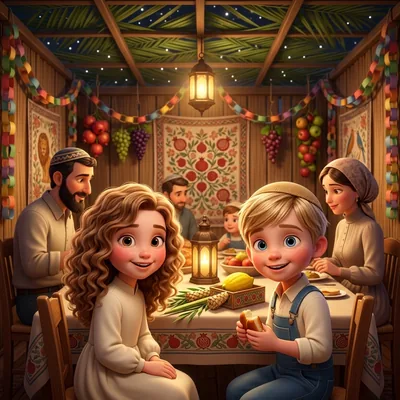
Sukkos is the Yom Tov on which we leave our houses and live for seven days in a sukkah - a temporary hut whose roof is branches you can see the stars through - because the Torah tells us to remember how Hashem sheltered the Yidden during forty years in the midbar. It begins on the fifteenth of Tishrei, five days after Yom Kippur, and the Torah calls it a time of simcha. For children it is the most touchable story of the year: the mitzvah is not an idea to explain, it is a roof over their head and a lulav in their hand.
What is the story of Sukkos, told for children?
The story starts earlier than Tishrei. The Yidden came out of Mitzrayim and traveled through a wilderness with no cities, no wells and no roads, and they traveled that way for forty years. Every step of it, Hashem took care of them - mahn from the sky, water in the desert, and protection all around them.
Then Hashem gave us a mitzvah so that we would never forget it. Once a year, for seven days, we move out of our solid houses with locks and roofs and we live in a sukkah instead. We eat there, we bentch there, we say Torah there, and many sleep there. Wherever a Yid is in the world - a porch in Boro Park, a yard in Yerushalayim, a balcony in Lakewood - the sukkah goes up.
Alongside the sukkah comes the mitzvah of the four minim: lulav, esrog, hadassim and aravos, held together and waved each day of Sukkos. There is Hoshana Rabbah on the seventh day, with the hoshanos, and then Shemini Atzeres and Simchas Torah follow as their own Yom Tov, when the dancing with the sifrei Torah carries the whole season to its finish.
Why do we sit in a sukkah? The two answers Chazal give
Chazal ask exactly what a child asks: what is the sukkah remembering? One explanation is that it recalls the Ananei HaKavod, the Clouds of Glory that surrounded the Yidden in the midbar and sheltered them from every side. The other is that it recalls the actual huts the Yidden built and dwelled in during those forty years.
Both answers land in the same place, and that is the sentence to give a child: our real roof is Hashem. A house made of bricks can feel like the reason we are safe. Sukkos takes us out from under the bricks for a week so that we notice Who was holding us up the whole time.
That is also why the schach has to be thin enough to see stars through. Chazal's shiur for a kosher sukkah is not about comfort. It is about a roof that reminds you it is not really the roof.
What is the lesson of Sukkos for children?
Two middos come out of this Yom Tov cleanly enough that a child of five can say them.
Bitachon. We walk out of the strong house on purpose. Nothing bad happens. Hashem is taking care of us in the sukkah exactly as He was in the house - the sukkah just makes it easier to see. For a child who worries, this is one of the warmest ideas in the Torah year.
Achdus. The Midrash relates that the four minim stand for different kinds of Yidden - the esrog with taste and smell, the lulav's dates with taste, the hadas with smell, the arava with neither - and the mitzvah is only fulfilled when all four are bound and held together. Children understand instantly that you cannot leave out the arava because it is "less." That is a lesson about a class, a bunk and a Shabbos table.
And there is the simcha itself. Sukkos is called zman simchaseinu, and the singing, the guests, the decorations the children made in cheder and the seforim's description of the Ushpizin - the seven great guests who come to the sukkah, Avraham Avinu among them - all belong to that one mitzvah of being happy in front of Hashem.
How do I explain Sukkos to a 4-year-old versus an 8-year-old?
Same story, different depth. Here is roughly how the same three minutes go at each age:
| Age | What to say |
|---|---|
| 2-4 | "Hashem took care of the Yidden in the desert. Now Hashem says: live in a little house of branches for a week and remember. Look up - we can see the stars, because Hashem is watching us." Let him carry something into the sukkah. |
| 5-7 | Add the four minim by name and the idea that we hold all four together, even the arava, because every Yid counts. Add that we eat every meal in the sukkah for seven days. |
| 8-10 | Give both explanations in Chazal - Ananei HaKavod and real huts - and ask which he thinks the schach is more like. Introduce zman simchaseinu and why Sukkos comes right after Yom Kippur. |
| 11-12 | Talk about bitachon as a choice: we leave a safe house on purpose. Ask why Shemini Atzeres is a separate Yom Tov and bring Chazal's mashal of the king asking his guests to stay one more day. |
One thing worth telling a child in advance: in a year when the first day of Sukkos falls on Shabbos, we do not take the four minim that day and begin the next day instead. Children who have been waiting all month for their own lulav are much calmer when they hear this before Yom Tov rather than during it.
Questions for the Yom Tov table, and one activity
Five questions that work in a sukkah with children of mixed ages:
- Why did Hashem tell us to make a roof you can see through instead of a strong one?
- What is one thing Hashem gave the Yidden in the midbar that they could not have gotten themselves?
- If the four minim are four kinds of Yidden, which one do you think you are this year?
- What is something in our house we usually think keeps us safe - and Who is really keeping us safe?
- Who would you most want as a guest in our sukkah, and what would you ask him?
The activity: before Yom Tov, have each child draw or write one thing Hashem gave the family this year on a strip of paper, and hang the strips in the sukkah with the decorations. On Hoshana Rabbah, read them out loud. Children who spent the week eating under their own list of Hashem's kindnesses do not need a speech about hakaras hatov.
What is a personalized Sukkos book from Torah Tale like?
Torah Tale prints the Sukkos story as part of the Yamim Tovim collection, and the child who receives the book is the hero of it. You upload one photo, and their likeness - with their name - appears on every page, illustrated in high-resolution 3D Pixar style: under the schach, holding the four minim, at the table with the family. Up to four siblings can appear together in the same book, which is usually what families with a few children choose.
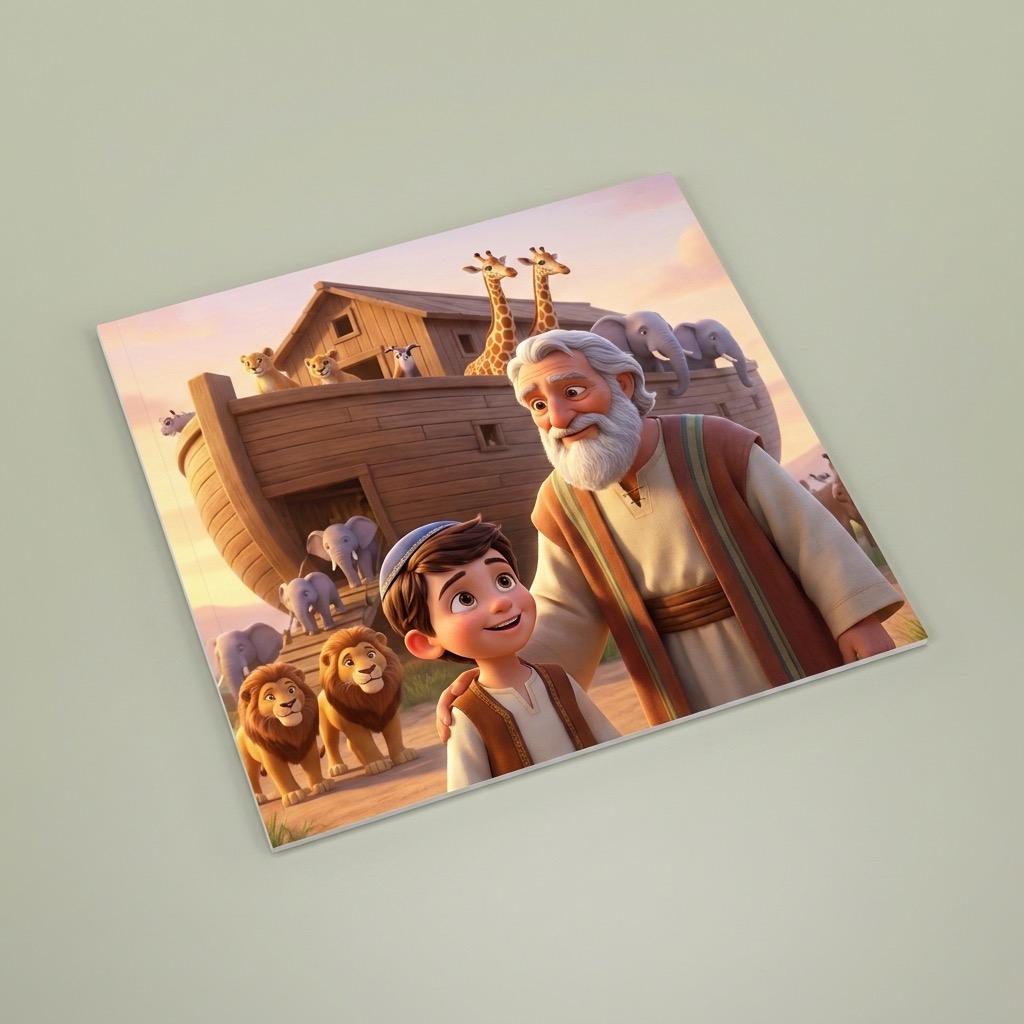
Softcover 8″×8″
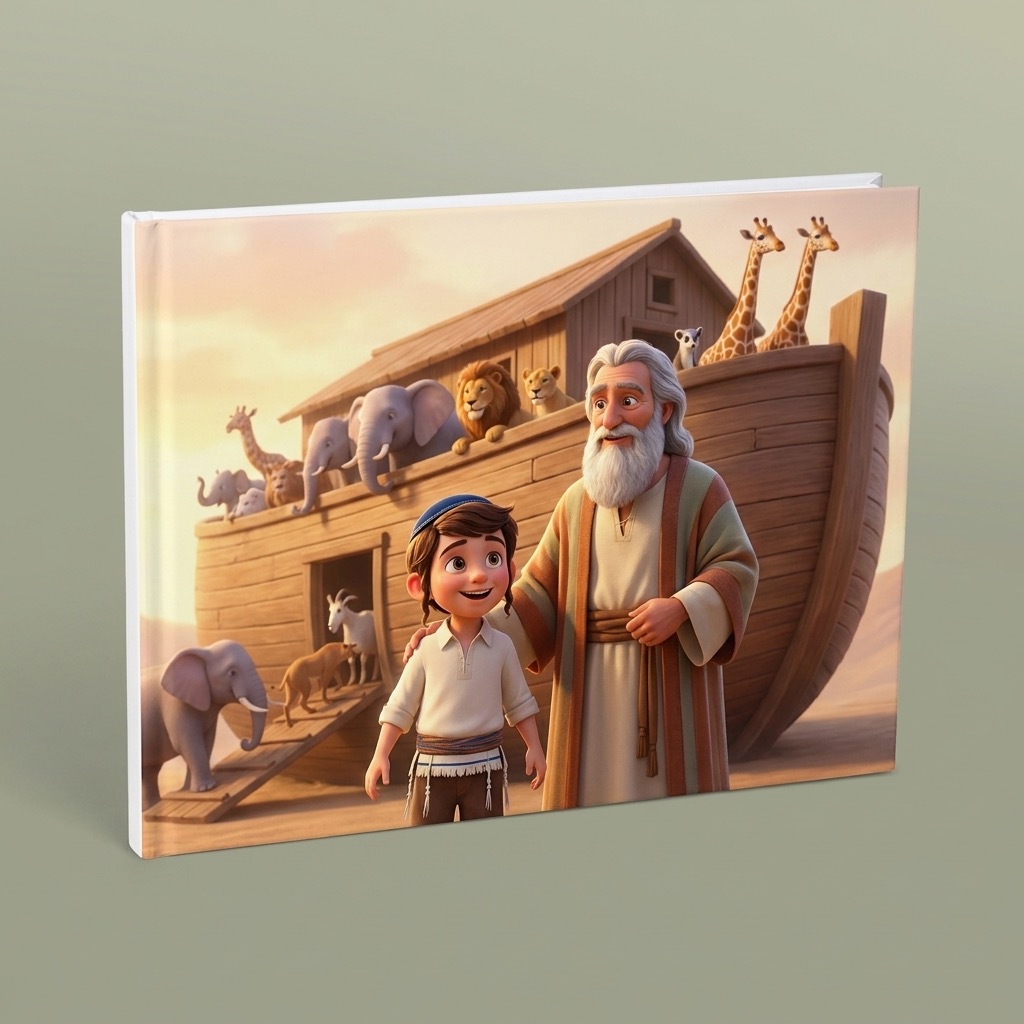
Hardcover 8″×8″
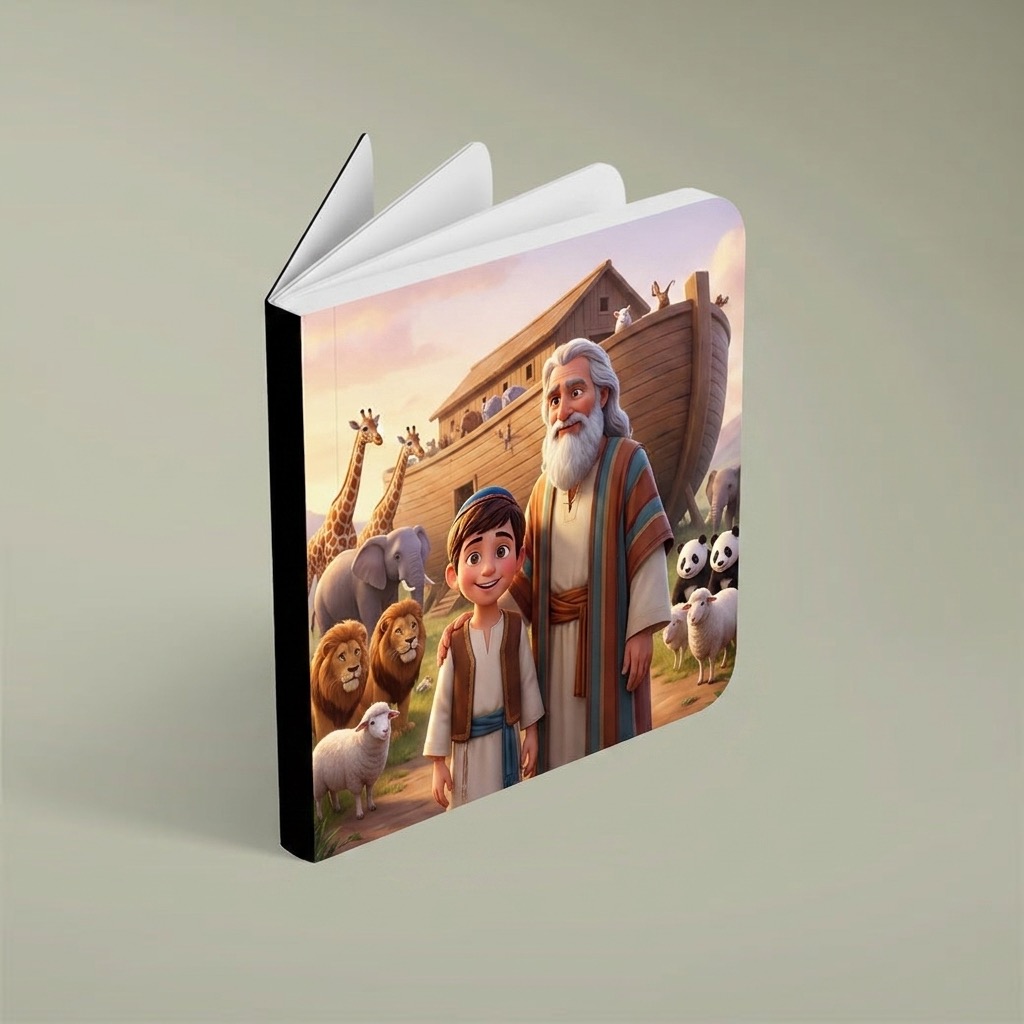
Board book 6″×6″
Coloring book 8.5″×11″
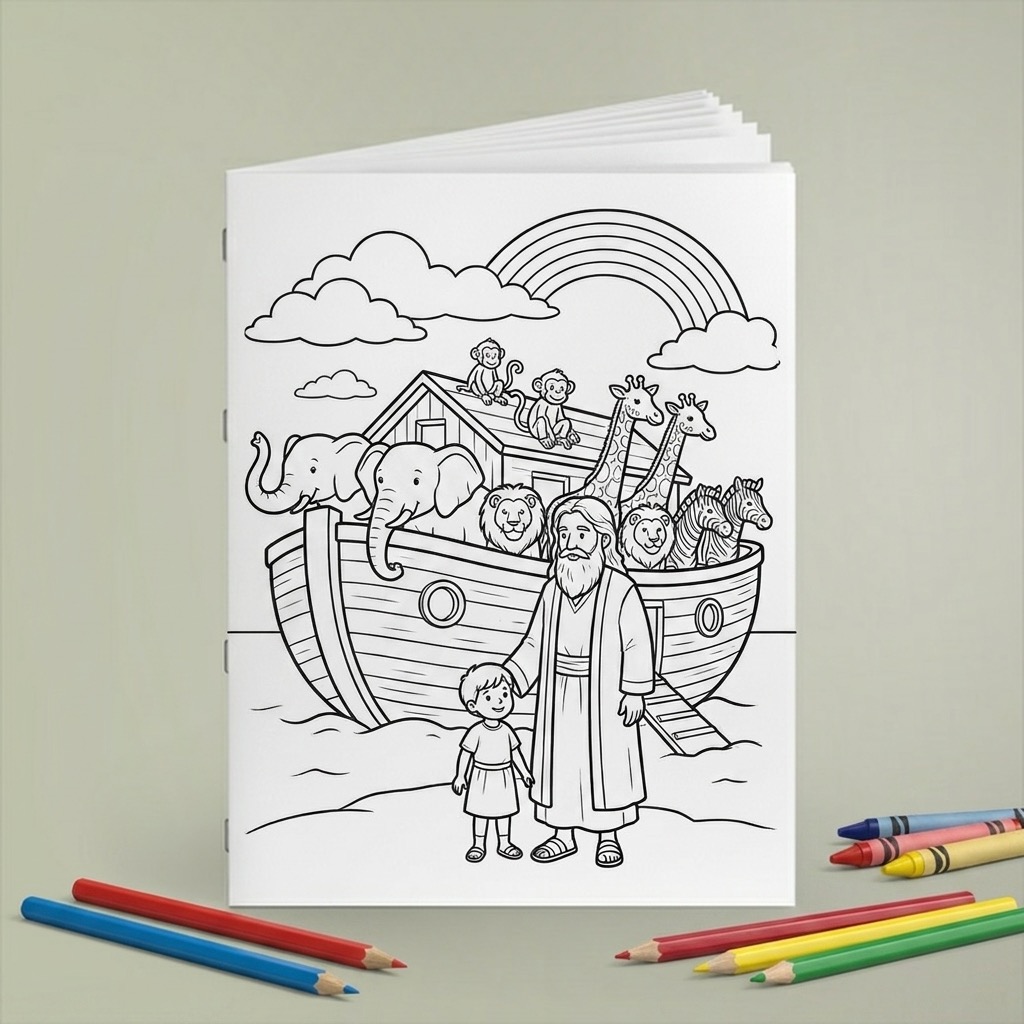
Pick the format by age. The 6"x6" board book with rounded safety corners is built for a two- to four-year-old who will handle it in the sukkah. The 8"x8" softcover suits ages 4-8, and the 8"x8" hardcover, square or landscape, is the one to give a child of 5-12 who will keep it on the shelf year after year. There is also a matching 8.5"x11" coloring book in black-and-white line art - one for the afternoons of Chol HaMoed in the sukkah. The back of the book carries a discussion page of ten questions about the story - something to open in the sukkah when the meal is over and the children are still at the table.
Books come in English, Hebrew or Yiddish, and you can order more than one language. Every Torah Tale book is written with careful rabbinical guidance and strict tznius and reviewed by our team before printing.

Creating the book takes about five minutes and eight short questions: name, boy or girl, age, one photo, siblings, story, language and format. The story picker is where you choose Sukkos from the Yamim Tovim collection; the same creator suggests next week's parsha with a countdown to the order deadline, and you can also work through the full step-by-step guide first if you would rather see it laid out.
When should I order a Sukkos book?
Earlier than feels necessary. US standard shipping is $3.00 and takes 5-8 business days, express is $6.00 in 3, and we ship worldwide - but Tishrei is crowded on the parent's side, not only ours. Ordering in Elul means the book is on the shelf before Rosh Hashanah and can be read all through the season.
Many families order the Yamim Tovim stories as a set, so that the child meets Rosh Hashanah and then Sukkos in books where he is the one blowing shofar and shaking the lulav. A Sukkos book also makes a natural Yom Tov present for a nephew, a grandchild or an upsherin boy - see the guide to personalized Jewish gifts for choosing between the formats.
If you want your child to walk into the sukkah this year already knowing whose kindness that roof is remembering, create the book - eight questions, one photo, about five minutes.
Frequently asked questions
What is the story of Sukkos for kids in one paragraph?
After the Yidden left Mitzrayim, they traveled through the midbar for forty years, and Hashem protected them the whole way. The Torah tells us that every year, on the fifteenth of Tishrei, we leave our strong houses and live for seven days in a sukkah - a hut with a roof of branches - so that we remember that protection and remember that it is Hashem, not our walls, who keeps us safe. We also take the four minim, we eat and sing and sleep in the sukkah, and the Torah calls these days a time of simcha.
Why do we sit in a sukkah? What do Chazal say it remembers?
Chazal give two explanations. According to one, the sukkah recalls the Ananei HaKavod, the Clouds of Glory that surrounded the Yidden in the midbar and sheltered them. According to the other, it recalls the actual huts the Yidden built and lived in during those forty years. Both teach the same point: our real shelter comes from Hashem.
How do I explain Sukkos to a 4-year-old?
Keep it to what he can touch. Tell him: Hashem took care of the Yidden in the desert for forty years, and now Hashem tells us to live in a little house made of branches for a week so we remember. Point at the schach and say that we can see the stars through it because Hashem is watching us from above the roof. A four-year-old does not need the two opinions in Chazal or the halachos of schach - he needs to help carry a chair into the sukkah and hear that Hashem is taking care of him too.
What are the four minim and what do they teach children?
The four minim are the lulav (a palm branch), the esrog, three hadassim (myrtle branches) and two aravos (willow branches). We hold them together and wave them on each day of Sukkos, except on Shabbos. The Midrash relates that the four minim stand for different kinds of Yidden - some with more Torah, some with more mitzvos - and the mitzvah is done only when all four are held together, which is a clear lesson in achdus that even a young child can repeat back to you.
Is Simchas Torah part of Sukkos?
Sukkos itself is seven days. Shemini Atzeres, and Simchas Torah with it, follows immediately afterward and is its own Yom Tov, even though it comes at the end of the same season. Chazal describe it with a mashal of a king who asks his beloved guests to stay one more day for a smaller, more private meal after the great feast is over.
Can I get a personalized Sukkos book in time for Yom Tov?
Torah Tale's Sukkos story is part of the Yamim Tovim collection and can be ordered any time of year. Creating the book takes about five minutes and eight short questions, US standard shipping is $3.00 and takes 5-8 business days, and express is $6.00 and takes 3 business days. Because Tishrei is a busy season, order with room to spare rather than in the last week.