Parshas Bereishis for Kids: Creation, Gan Eden & the First Shabbos
Parshas Bereishis is where the Torah begins: Hashem creates the world in six days and rests on the seventh. Here is the story retold for children, the middos it teaches, age-by-age explanations, and Shabbos-table questions parents can use this week.
Published by Torah Tale.
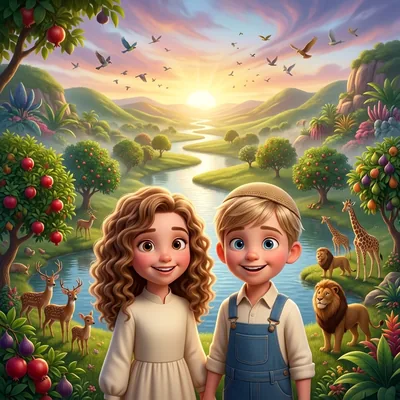
Parshas Bereishis is the first parsha in the Torah, and it tells how Hashem created the world in six days, rested on the seventh and made it Shabbos, placed Adam and Chava in Gan Eden with one instruction, and then relates what happened with Kayin and Hevel. It lands with children better than almost any other parsha for a simple reason: they already know the sun, the water, the birds and the trees, and this parsha tells them Who made each one and on which day.
What happens in Parshas Bereishis, retold for children
In the beginning there was nothing that we could recognize as a world. Hashem spoke, and things came into being - Chazal count ten maamaros, ten statements, with which the world was created, and Pirkei Avos asks why Hashem did it that way when one statement would have been enough.
On the first day: light, and the separation between light and darkness. On the second: the rakia, dividing the waters above from the waters below. On the third: the seas gathered together, dry land appeared, and grass and trees grew. On the fourth day the sun, the moon and the stars were set in place - the light of the first day and the lamps of the fourth are not the same thing, which is a nice detail for an older child who notices the question. On the fifth day, fish filled the water and birds filled the air. On the sixth day came the land animals, and then Adam and Chava.
Then Hashem stopped. The seventh day was made kadosh, and that is Shabbos - the first Shabbos in the history of the world, and the reason we have one every week.
Adam and Chava were placed in Gan Eden. They were told they could eat from the trees of the garden, but not from the Eitz HaDaas. The nachash spoke to Chava, she ate, Adam ate, and everything changed. What is worth pausing on with children is Hashem's words afterward: Ayeka - where are you? Hashem knows where a person is. Chazal understand this as an opening, a chance to say "I did it" - and instead Adam pointed at Chava and Chava pointed at the nachash.
Later, Adam and Chava's sons Kayin and Hevel each brought a korban. Hevel brought the best of what he had. Kayin did not. When Hevel's korban was accepted, Kayin was eaten up with jealousy, and Hashem told him openly that he was capable of ruling over that feeling. Kayin chose otherwise, and Hevel died at his hand. When Hashem asked him where his brother was, Kayin answered with the words children remember for years: am I my brother's keeper? The parsha closes with Sheis and the ten generations from Adam down to Noach.
Why does the Torah begin with creation at all?
Rashi's very first comment on the Torah asks exactly this. If the Torah is a book of mitzvos, why not start with the first mitzvah given to Klal Yisrael? He brings two answers that are both worth saying out loud at the table.
The first: the world was created for the sake of the Torah and for the sake of Klal Yisrael. The second: so that when the nations say that the Jewish people took Eretz Yisrael unjustly, we can answer that the whole world belongs to the One who made it, and He gives land to whom He chooses.
For a child, the takeaway is straightforward. This is not a story about how the world happened to turn out. It is Hashem's world, made on purpose, with a purpose - and the child is part of the purpose.
What is the lesson of Parshas Bereishis for kids?
There are three middos in this parsha that children can actually use, and you do not need all three in one sitting.
- Shabbos is built into the world. Hashem worked and Hashem stopped. Chazal teach that Adam was created on erev Shabbos, so the first full day of his life was Shabbos. Resting is not what is left over after the week; it is where the week was heading.
- Owning what you did. Adam was given the chance to answer Ayeka plainly and he blamed instead. Every child knows the pull of "he started it." This is the parsha where that pull first shows up in the Torah.
- Jealousy is a choice you can still make differently. Hashem said to Kayin, before anything happened, that he could master it. Children who fight with a sibling over who got the bigger piece are living in Kayin's question. The answer the Torah gives is that the feeling is not the sin - feeding it is.
How to explain Parshas Bereishis to a 4-year-old vs an 8-year-old
Ages 2-4. One idea only: Hashem made everything, in order, and then made Shabbos. Count the days on your fingers with one item each - light, sky, trees, sun, fish, animals, Shabbos. Skip the Eitz HaDaas and skip Kayin and Hevel entirely. A board book they can carry around is the right vessel for this age.
Ages 5-7. Add Gan Eden and the one instruction Adam and Chava were given, and add Ayeka. Ask: what would have happened if Adam had just said "I ate it, I'm sorry"? Children this age have strong opinions about that, and the conversation is the point.
Ages 8-12. Now Rashi's opening question is interesting to them, and so is Kayin and Hevel - told without graphic detail, but honestly. Ask why the Torah bothers to tell us that Hevel brought his best. Ask why Hashem warned Kayin in advance. Ask what "am I my brother's keeper" is really trying to say, and whether it is ever a good answer.
Shabbos-table questions and a weekday activity
Five questions that work at almost any table:
- Which day of creation would you most want to have watched, and why?
- Hashem could have made everything in one moment. Why do you think He made it in six days?
- Hashem asked Adam "Where are you?" - what do you think Hashem really wanted him to say?
- Hevel brought his best. What is one thing you could bring your best to this week?
- Kayin was told he could rule over his jealousy. What actually helps you when you feel that way?
For a weekday afternoon or erev Shabbos, make a seven-day chart together: one strip of paper per day, each child drawing what was created on it, with the seventh left almost empty except for the word Shabbos. If you order a matching Torah Tale coloring book with a Bereishis storybook, that is the same kind of project - a weekday or Chol HaMoed activity, since coloring and drawing are melacha and belong before Shabbos, not on it.
What a personalized Torah Tale book of Parshas Bereishis is like
In a Torah Tale book, your child is in the story. You upload one photo, and their likeness is illustrated in high-resolution 3D Pixar style on every page - standing under the new stars on the fourth day, watching the first birds, walking through Gan Eden. Their name is in the text. Up to four siblings can appear in the same book, which for this parsha is fitting: a story that includes two brothers reads differently when your own two are on the page.
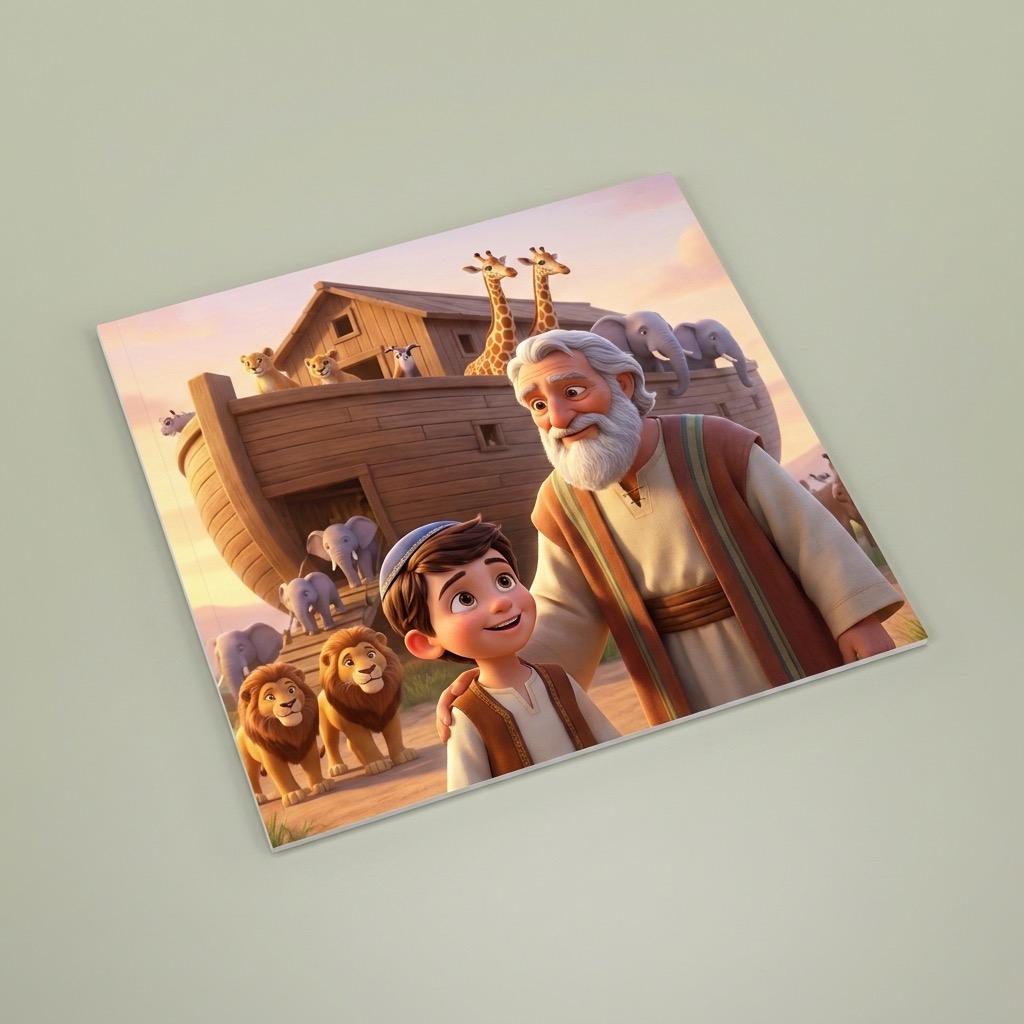
Softcover 8″×8″
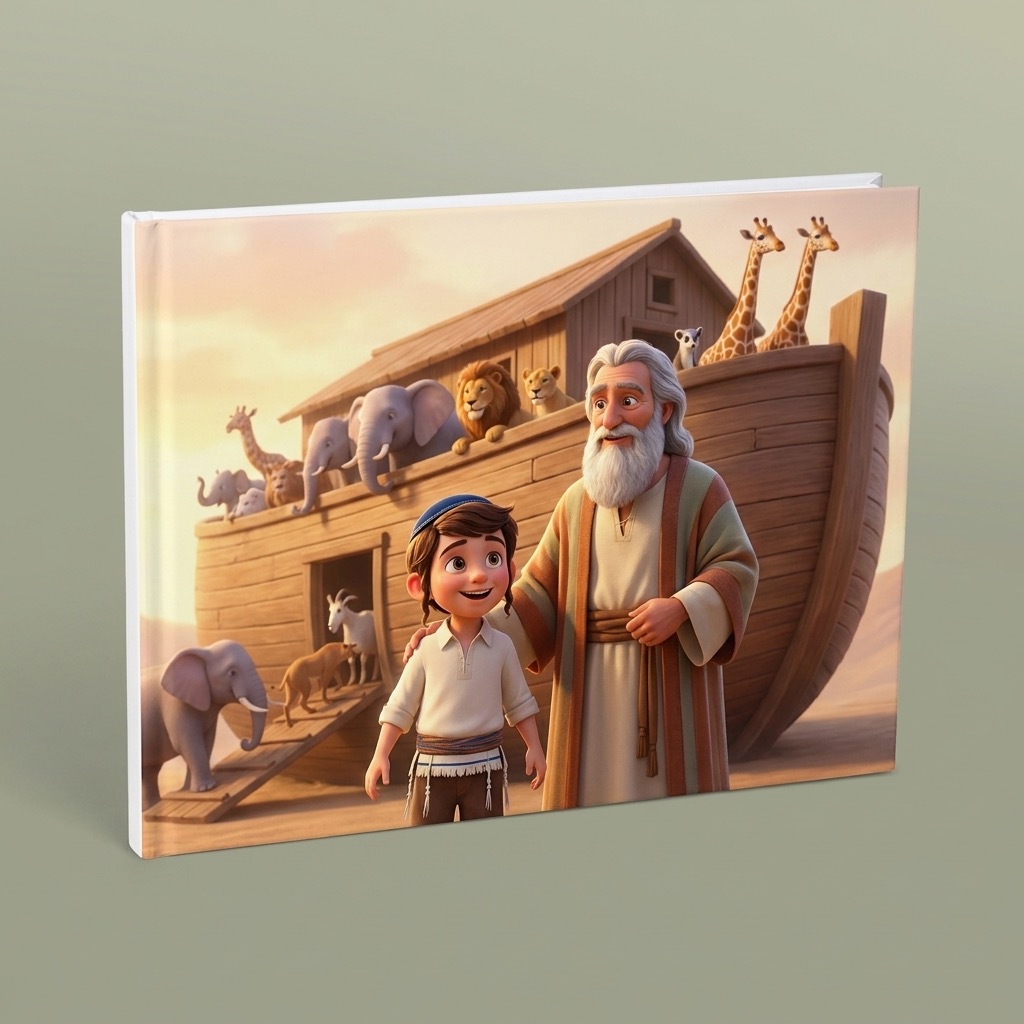
Hardcover 8″×8″
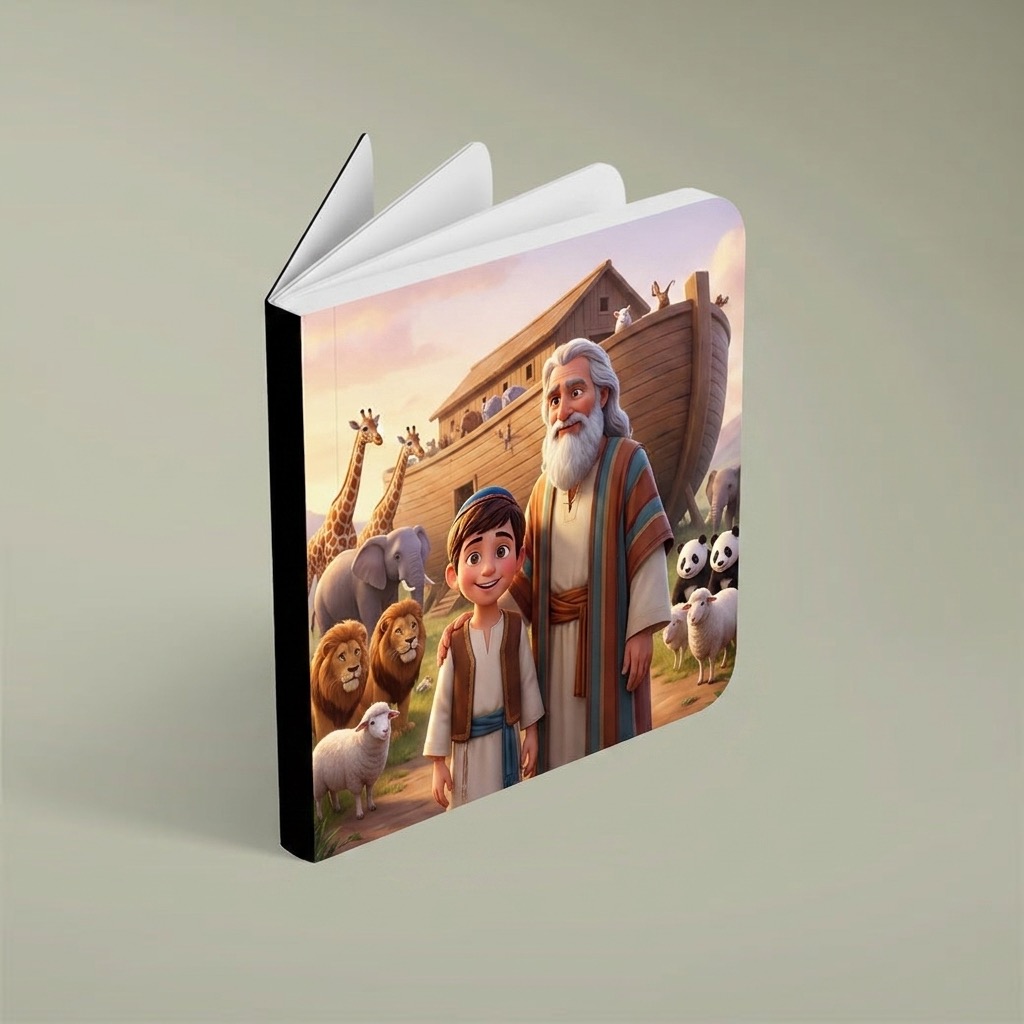
Board book 6″×6″
Coloring book 8.5″×11″
Every book ends with a dedicated discussion page of ten questions on the story, mixing comprehension with middos - what happened, and what it asks of the child. That page is what turns the book from something you read to a child into something the table talks about, and it is the part parents tell us they use most. Books come in English, Hebrew or Yiddish, in a 6"x6" board book with rounded corners for ages 2-4, an 8"x8" softcover for ages 4-8, or an 8"x8" hardcover in square or landscape for ages 5-12. Everything is written with careful rabbinical guidance and strict tznius, and reviewed before it prints.
The book creator suggests next week's parsha with a live countdown to the order deadline for delivery before that Shabbos, so a Bereishis book is ordered the week of Simchas Torah - there is more on that timing in our guide to choosing the weekly parsha for your child's book. If you want the whole flow walked through first, see how to create a personalized Torah storybook. And since creation is also what we are saying on Rosh Hashanah, our piece on the Rosh Hashanah story for kids pairs naturally with this parsha.
Say it in one sentence
If you have thirty seconds in the car: "Bereishis is where the Torah starts - Hashem made the whole world in six days and then made Shabbos, and everything in it, including you, is here on purpose."
Eight short questions, one photo, about five minutes: create the book and let your child open the Torah from the very first pasuk with their own name in it.
Frequently asked questions
What is Parshas Bereishis about?
Parshas Bereishis is the opening parsha of the Torah. It describes how Hashem created the world in six days and rested on the seventh, how Adam and Chava were placed in Gan Eden and were told not to eat from the Eitz HaDaas, what happened when they did, and the story of their sons Kayin and Hevel. The parsha ends by listing the ten generations from Adam until Noach.
What are the seven days of creation in order for kids?
Day one: light and darkness. Day two: the rakia, separating the waters above from the waters below. Day three: dry land, the seas, grass and trees. Day four: the sun, the moon and the stars. Day five: fish in the water and birds in the air. Day six: land animals, and then Adam and Chava. Day seven: Hashem rested, and made Shabbos kadosh.
How do I explain Parshas Bereishis to a 4-year-old?
Keep it to one idea: Hashem made everything, and He made it in a certain order. Count the days on your fingers and name one thing from each day, then land on Shabbos and say that we stop working every week just like Hashem stopped. A four-year-old does not need the Eitz HaDaas or Kayin and Hevel in detail; the creation days and the first Shabbos are more than enough.
What is the lesson of Kayin and Hevel for children?
Two brothers each brought a korban to Hashem. Hevel chose the best of what he had, and Kayin did not, and when Hevel's korban was accepted Kayin became jealous and angry. Hashem told him plainly that he could still master that feeling - and he chose not to, with terrible results. For children the usable lesson is that jealousy is not a sin, but feeding it is a choice, and it is a choice a person can make differently.
Why does the Torah start with creation instead of the mitzvos?
Rashi asks this at the very beginning of his commentary. He brings the answer that Hashem created the world for the sake of the Torah and for Klal Yisrael, and he also brings the answer that the Torah tells us Hashem created the world so that the nations cannot claim Eretz Yisrael was taken unjustly - the world belongs to the One who made it, and He gives it to whom He chooses.
Which Torah Tale format should I choose for a Parshas Bereishis book?
For a two- to four-year-old, the 6"x6" board book with rounded safety corners holds up to being carried around. Ages four to eight suit the 8"x8" softcover photo book, and ages five to twelve suit the 8"x8" hardcover in square or landscape. You can also add a matching 8.5"x11" black-and-white coloring book, which is a weekday activity - coloring is melacha and is not for Shabbos or Yom Tov.