Sheva Brachos (שבע ברכות) for Kids: Explaining the Seven Blessings
Sheva Brachos are the seven blessings said for a chasan and kallah, and the festive meals held in their honor during the week after the chasunah. Here is how to explain them to a young child, with questions for the table.
Published by Torah Tale.
Create this book for your child
Sheva Brachos are the seven blessings said for a chasan and kallah, and also the name for the festive meals held in their honor during the week after the chasunah. Children love them because they see the whole family come together to sing, eat and be happy for someone else. That makes it an easy mitzvah to explain: we are mesameach a chasan and kallah.
What are Sheva Brachos?
The words mean "seven blessings." Chazal established them for the chasunah, and they are recited under the chuppah. They are also said again at meals during the week after the wedding.
The brachos begin with the blessing over wine and then thank Hashem for creation and for the simcha of the chasan and kallah. The last one speaks of the voice of joy and gladness, the voice of the chasan and the voice of the kallah. For a child, a good way to say it is: "These are our special thank-yous to Hashem, and our wishes for a happy home."
What happens at a Sheva Brachos meal?
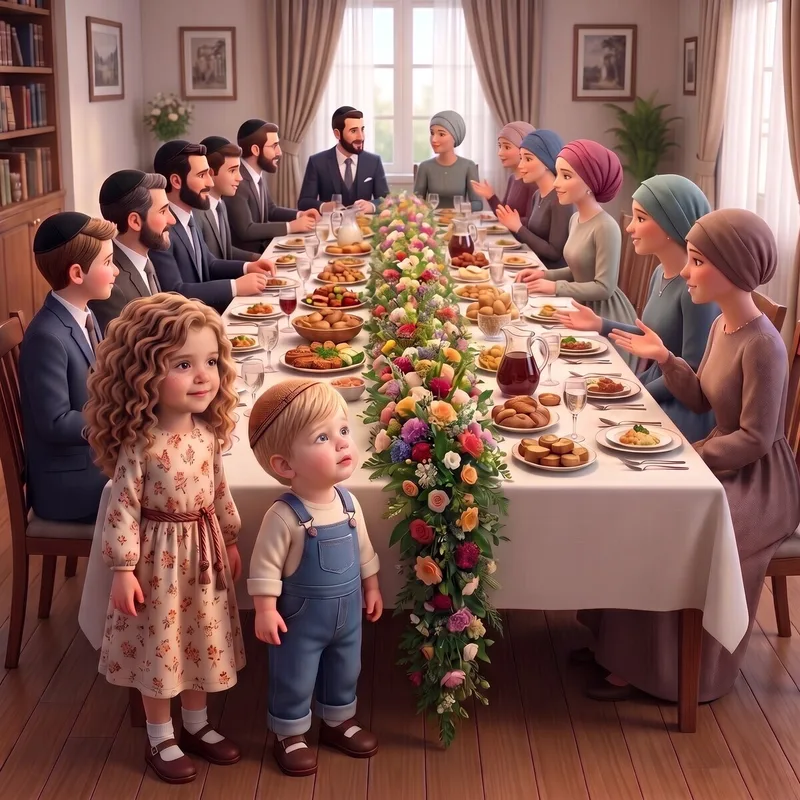
Family and friends gather for a festive seudah in honor of the chasan and kallah. When Birkas HaMazon is finished, a cup of wine is taken and the seven brachos are recited, with the guests answering amen. There is usually singing, and often a few words of Torah or a warm wish from the host.
The meal is also known for the idea of a panim chadashos, a new face: someone whose presence adds to the simcha in a fresh way. The halachos of who counts, how many guests are needed, and which days are different (Shabbos, for example) have details of their own. For your specific situation, ask your rav.
For a child, what matters is simple: people made a seudah, said brachos together and made the chasan and kallah happy.
Why do we celebrate for a week?
The celebration of the week after a chasunah goes back to Chazal. They connect it to the pasuk in Parshas Vayeitzei where Lavan tells Yaakov to complete the week of Leah (Bereishis 29:27). Our Parshas Vayeitzei article covers that parsha for children.
So the simcha is not meant to be over in one evening. The new home starts with a week of brachos, song and good company around the table. When your child asks "why a whole week?", you can say that a simcha this big deserves time.
How do I explain Sheva Brachos to a 4-year-old and an 8-year-old?
Ages 3 to 4. Keep to what they can see and do. "After the chasunah, the chasan and kallah have special meals. We sing, we say amen to the brachos, and we are happy for them." Let your child practice saying amen when you make a bracha at home.
Ages 5 to 7. Add the meaning of the words. "Sheva means seven. Seven brachos thank Hashem and wish the chasan and kallah a home full of simcha." Children this age like counting and singing, so sing a niggun your family knows from a chasunah.
Ages 8 to 12. Bring in the reason. Explain that bringing joy to a chasan and kallah is a mitzvah, and ask what it means to truly be happy for someone else. This is also a good age to talk about being a guest, and our article on explaining the Jewish wedding and welcoming guests go well with it.
What is a Torah Tale Sheva Brachos book like?
The Sheva Brachos story is in the Jewish Life collection, the simchos and minhagim of a Yiddishe life. Your child is the hero: their name and their likeness, from one uploaded photo, appear on every page, illustrated in 3D animated-film style. Up to eight siblings can appear in the same book.
Creating it takes a free account and a few short questions: each child's name, boy or girl, age and one photo, any siblings, the story, your community (asked once), the language (English, Hebrew or Yiddish) and the printed format. The whole process takes about five minutes. The book is written with careful rabbinical guidance and strict tznius, and our team reviews it before it goes to print.
Choose the format by age. The board book is 6x6 with rounded safety corners for ages 0-4. The softcover is 8x8 for ages 4-8, and the hardcover is 8x8 for ages 5-18. Softcover and hardcover open with a dedication page. If you add parents, grandparents and other relatives with their photos, they appear with the children on a closing family page in every format.

Softcover 8″×8″

Hardcover 8″×8″

Board book 6″×6″

Coloring book 8.5″×11″
Every book ends with a discussion page of 10 questions about the story, mixing comprehension with middos. It turns the book from something read to a child into something talked about at the table.
What questions can we ask at the Shabbos table?
Reading is entirely appropriate on Shabbos, so the storybook is a good fit for the table. Keep it to talking, singing and questions. Here are some to start with:
- What does "sheva brachos" mean, and who are the brachos for?
- Why do we say amen when someone else makes a bracha?
- How can a child be mesameach a chasan and kallah?
- Why do you think a simcha like this is celebrated with a seudah and singing?
- What can we do when we are guests, to make the hosts happy?
The discussion page at the end of the book has 10 questions to draw on, so you do not need to prepare any of this yourself. If your child likes to color, the optional matching coloring book (8.5x11, black-and-white line art) is a weekday activity: erev Shabbos or an afternoon during the week, never on Shabbos or Yom Tov.
Ready to make it? You can create the book in about five minutes, and see how it fits next to Shabbos with My Family on your child's shelf.
Frequently asked questions
What are Sheva Brachos?
Sheva Brachos means seven blessings. They are the blessings said under the chuppah, and they are said again at festive meals held in honor of the chasan and kallah in the week after the chasunah. At these meals the blessings are recited after Birkas HaMazon over a cup of wine.
How do I explain Sheva Brachos to a 4-year-old?
You can say that after a chasunah, family and friends make happy meals for the chasan and kallah, and everyone says special brachos to thank Hashem and wish them a good home. Then point to something your child can do, such as singing, saying amen and being happy with them. Short and concrete works best at this age.
Why are there seven blessings?
The Sheva Brachos are seven brachos that Chazal established for the chasunah. They thank Hashem for creation and for the simcha of the chasan and kallah, and the last one speaks of the voice of joy and gladness. If your child asks about the details of each bracha, a rav or teacher can explain them.
Can children come to a Sheva Brachos?
Children are often part of the family celebration, and being mesameach a chasan and kallah is a mitzvah that children can learn from by watching. Whether young children come depends on the hosts and the setting, so follow the family's lead. Help your child know in advance to stay quiet during the brachos and to answer amen.
What is the Torah Tale Sheva Brachos book?
It is a personalized storybook in the Jewish Life collection, with your child's name and likeness, from one uploaded photo, illustrated in 3D animated-film style on every page. It ends with a discussion page of 10 questions mixing comprehension with middos. Creating it takes a free account and a few short questions, starting at torahtale.com/create.
Which format of the book is right for my child?
Choose by your child's age: the board book is 6x6 with rounded safety corners for ages 0-4, the softcover is 8x8 for ages 4-8, and the hardcover is 8x8 for ages 5-18. The child's age is one of the short questions when you create the book.