Sefer Nechemia for Kids: Rebuilding the Walls, Tefillah & Simcha
Nechemia heard that Yerushalayim's wall lay broken, davened, asked the king, and led the Yidden in rebuilding it. How to tell the story to ages 3-4, 5-8 and 9-12, what it teaches, and questions for the Shabbos table.
Published by Torah Tale.
Create this book for your child
Sefer Nechemia tells how Nechemia ben Chachalyah, cupbearer to the king in Shushan, davened, asked for permission, traveled to Yerushalayim and led the Yidden in rebuilding its broken wall. Children connect to it because the heart of the story is simple: something is broken, one person cares, and then everyone takes a piece of the job. It is a story from Kesuvim, and it ends with the people learning Torah and rejoicing together.
What happens in Sefer Nechemia?
The sefer opens in the month of Kislev. Nechemia is in Shushan, serving as cupbearer to King Artachshasta, when his brother Chanani arrives with men from Yehuda. Nechemia asks how things are in Yehuda and Yerushalayim, and they tell him the Yidden there are in great trouble and shame, and that the wall of Yerushalayim is broken down and its gates burned with fire.
Nechemia sits down and cries. The pasuk tells us he mourned for days, fasted and davened to Hashem, Elokei HaShamayim. In his tefillah he asked that Hashem give him favor before 'this man', meaning the king.
In Nissan, as Nechemia gave the king his wine, the king noticed that his face was sad, which had not happened before. The pasuk says Nechemia became very afraid. He told the king that the city where his fathers are buried lay in ruins. When the king asked what he wanted, Nechemia first davened to Elokei HaShamayim and then asked to be sent to Yehuda to rebuild it.
The king agreed. He gave letters for the governors beyond the river and a letter to Asaf, keeper of the king's forest, for timber for the gates and the wall. The king also sent army officers and horsemen with him. Nechemia himself says it all happened because the good hand of his God was upon him.
In Yerushalayim, Nechemia waited three days. Then, at night, he went out with a few men to look over the broken walls, and the pasuk says no one knew what Hashem had put in his heart. Afterward he spoke to the Yidden: let us build the wall, so that we will no longer be a shame. They answered that they would rise and build, and they strengthened their hands for the good work.
How did they keep building when people tried to stop them?
Sanballat, Tuviah and Geshem mocked the builders and asked whether they were rebelling against the king. Nechemia answered that the God of heaven would make them succeed, and that his servants would rise and build.
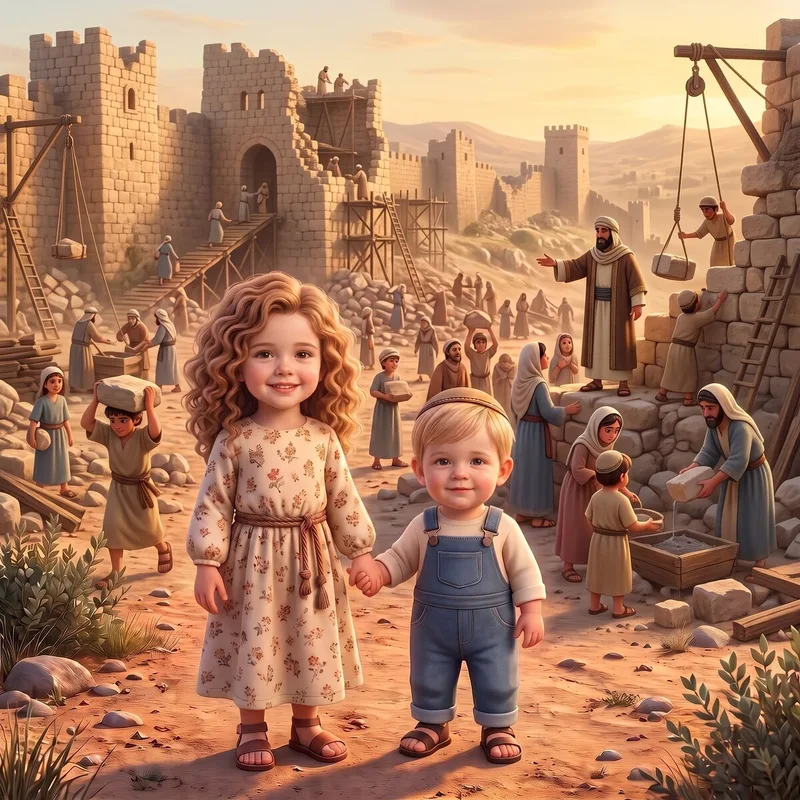
Chapter 3 lists builder after builder and family after family, and several times it says that a man built opposite his own house. It begins with Elyashiv the Kohen Gadol and his brothers the kohanim building the Sheep Gate. Chapter 3 also tells us that the wall was joined together to half its height because the people had a heart to work.
When the enemies grew angrier and plotted to come against Yerushalayim, the Yidden davened to their God and also set a guard day and night. Nechemia placed families behind the wall with swords, spears and bows, and told them not to be afraid, but to remember Hashem, great and awesome. From then on half of his young men worked while half held the weapons, and a man with a shofar stayed beside Nechemia. Nechemia told the people that their God would fight for them.
Later, Sanballat and Geshem asked Nechemia to meet them in the valley of Ono. The pasuk says they planned to harm him. His answer was, 'I am doing a great work and I cannot come down.' They sent to him four times in this way, and he gave the same answer each time.
The wall was completed on the twenty-fifth of Elul, in fifty-two days. The pasuk says the nations around them recognized that this work had been done from Hashem.
What happened after the wall was finished?
Nechemia appointed gatekeepers, singers and Levites, and put his brother Chanani and Chananya, the officer of the Birah, in charge of Yerushalayim. Chapter 7 tells us the city was wide and large, but few people lived in it. Later, lots were cast so that one in ten of the people would settle in Yerushalayim, and the pasuk says the people blessed those who volunteered.
In the seventh month, all the people gathered as one in the plaza by the Water Gate, and Ezra HaSofer read from the Torah of Moshe from morning until midday to the men, the women and everyone who could understand. The Levites explained what was read, and the people cried when they heard the words of the Torah. Nechemia, Ezra and the Levites told them that the day was holy to Hashem, that they should not be sad, that they should eat and drink and send portions to those who had nothing prepared, and the pasuk adds: ki chedvas Hashem hi ma'uzchem, the joy of Hashem is your strength. You can read more about that reading in Ezra Teaches the Torah for Kids.
The next day they found written in the Torah the mitzvah of living in sukkos in the seventh month, and they made sukkos. When the wall was dedicated, the Yidden sang and two large choirs of thanks walked on it. The pasuk says the women and children also rejoiced, and the joy of Yerushalayim was heard from far away.
What is the lesson of Sefer Nechemia for children?
Feel another Yid's pain. Nechemia lived in the king's palace and could have stayed comfortable. Instead he cried over a wall he had not even seen.
Daven, and then do your part. Nechemia davened before he spoke to the king, and the builders davened and set a guard. We learn from this that tefillah and effort go together. For more on teaching a child to daven, see Davening to Hashem for Kids.
Everyone has a piece. The sefer names families who each built a section of the wall, often opposite their own houses. A child may not build the whole wall, but there is a piece that is theirs.
Do not be pulled away from the work. When he was invited to Ono, Nechemia said he was doing a great work and could not come down. For a child, that can mean finishing homework or a chesed before going to play.
Be fair to your brother. In chapter 5, some Yidden had pledged their fields to pay the king's tax and were in deep trouble. Nechemia rebuked the nobles for taking interest from their brothers and asked them to return what they had taken. They agreed, and all the people answered Amen. The pasuk also tells us that Nechemia did not take the governor's bread, because of his fear of God.
How do I explain Sefer Nechemia to a 4-year-old and an older child?
- Ages 3-4: 'The wall of Yerushalayim was broken, and Nechemia was sad. He davened to Hashem and asked the king to help. Everybody built a piece of the wall together, and when it was done they sang.' Leave out the enemies and the weapons at this age.
- Ages 5-8: Add that the king saw Nechemia's sad face, and that some people did not want the wall built. The Yidden davened and stayed careful, so half of them built while half watched. Ask, 'What is your piece of the wall?'
- Ages 9-12: Talk about chapter 5 and what it means to help a brother in need, about Ono and staying focused on the work, and about the Torah reading and the simcha. Nechemia also closed the gates of Yerushalayim as Shabbos began, so that Shabbos would be kept.
On a weekday afternoon, you can build a wall with blocks and give each child a section that is theirs. Let the wall stand until every piece is in place, and then sing together, the way the Yidden did.
What is a personalized Sefer Nechemia book like?
Torah Tale makes a personalized storybook of Sefer Nechemia in the Kesuvim collection. Your child's name and, from one uploaded photo, their likeness appear on every page, in 3D animated-film style, so your child is the hero of the story. Up to eight siblings, ages 0 to 18, can appear in the same book. If you add parents and grandparents, they appear with the children on a closing family page in every format.

Softcover 8″×8″

Hardcover 8″×8″

Board book 6″×6″

Coloring book 8.5″×11″
The book comes as a 6x6 board book with rounded safety corners (ages 0-4), an 8x8 softcover (ages 4-8) or an 8x8 hardcover (ages 5-18). Softcover and hardcover open with a dedication page. An optional matching coloring book (8.5x11, black-and-white line art) can be added, and it is a weekday activity for erev Shabbos or a weekday afternoon. The story is available in English, Hebrew and Yiddish.
Every book ends with a discussion page of 10 questions, mixing comprehension with middos: what happened, and what it asks of your child. Each book is written with careful rabbinical guidance and strict tznius, and reviewed by our team before it goes to print. You can read the book to your child on Shabbos.

Creating one takes about five minutes. You open a free account and answer a few short questions: each child's name, boy or girl, age and one photo, any siblings, the story, your community (asked once), the language and the printed format.
What can we ask at the Shabbos table about Nechemia?
These are for talking only. Pick the ones that fit your children's ages.
- Why did Nechemia cry when he heard about the wall?
- What did Nechemia do before he spoke to the king?
- What was your piece of the wall? What job at home is yours?
- Why did half the people build while half held weapons, and what does that teach about davening and doing?
- Why wouldn't Nechemia go down to Ono?
- Why did Nechemia tell the people not to be sad when they heard the Torah?
- How can we help a Yid who is having a hard time?
For the next chapter in the story, you can read Sefer Ezra for Kids. When you are ready to give your child a Sefer Nechemia book of their own, you can create the book in about five minutes.
Frequently asked questions
What is Sefer Nechemia about?
Sefer Nechemia is about Nechemia ben Chachalyah, who served as cupbearer to the king in Shushan. When he heard that the wall of Yerushalayim was broken and its gates burned, he davened, asked the king for permission to go, and led the Yidden in rebuilding the wall. The sefer also describes the public reading of the Torah and the dedication of the wall.
What is the lesson of Sefer Nechemia for children?
One lesson is to care when another Yid is hurting and then do something about it. Nechemia davened first and then acted, and the people who built also set a guard. Each person also had a section of the wall to build, which teaches a child that everyone has a piece of the work.
How do I explain Sefer Nechemia to a young child?
For a 3 or 4-year-old, keep it short: the wall of Yerushalayim was broken, Nechemia was sad, he davened and asked the king for help, everyone built a piece together, and then they sang. Leave out the enemies and the weapons at that age. Older children can hear about the people who tried to stop the work and how the builders stayed alert.
How long did it take to rebuild the wall of Yerushalayim in Sefer Nechemia?
The pasuk in Nechemia chapter 6 says the wall was completed on the twenty-fifth of Elul, in fifty-two days. The pasuk also says that the nations around them recognized that the work had been done from Hashem.
Which part of Tanach is Sefer Nechemia in?
Sefer Nechemia is in Kesuvim, not in the Chumash. It continues the story of the return to Yerushalayim that is told in Sefer Ezra, and Ezra HaSofer appears in it when he reads the Torah to the people.
Can my child be the hero of a Sefer Nechemia book?
Yes. Torah Tale makes a personalized Sefer Nechemia storybook in which your child's name and, from one uploaded photo, their likeness appear on every page in 3D animated-film style. It comes as a 6x6 board book with rounded safety corners (ages 0-4), an 8x8 softcover (ages 4-8) or an 8x8 hardcover (ages 5-18), and every book ends with a discussion page of 10 questions.