Parshas Re'eh for Kids: A Bracha to Choose, an Open Hand & Simcha
What Parshas Re'eh teaches children: Moshe places a bracha before Bnei Yisrael, and the parsha shows what choosing it looks like - listening, giving and being happy on Yom Tov. Includes how to explain it at ages 4, 7 and 10 and six questions for the Shabbos table.
Published by Torah Tale.
Create this book for your child
Parshas Re'eh is the fourth parsha of Sefer Devarim, and it is Moshe Rabbeinu's call to Bnei Yisrael to see that Hashem has placed a bracha before them, and that they choose it by listening. Children connect with it because it is made of things they already know from their own day: choosing between right and wrong, giving to someone who needs, and being happy on Yom Tov.
What happens in Parshas Re'eh?
Moshe is speaking to Bnei Yisrael before they enter Eretz Yisrael. The parsha opens with the words Re'eh anochi nosein lifneichem hayom bracha u'klalah: see, I am placing before you today a bracha and a klalah. The pasuk says the bracha is for listening to the mitzvos of Hashem, and the klalah is for turning away from them.
Moshe then tells them that once they are in Eretz Yisrael, the bracha is to be placed on Har Gerizim and the klalah on Har Eival. The full ceremony is described later, in Parshas Ki Savo.
Next the Torah speaks of the place Hashem will choose for the korbanos, where the Beis HaMikdash would stand, and of staying far from avodah zarah. It also warns that a navi who tries to lead Yidden away from Hashem must not be followed, because the pasuk says Hashem is testing whether they love Him with all their heart.
Then comes a line children love: Banim atem laShem Elokeichem, you are children of Hashem your Elokim. The Torah follows it with the signs of kosher animals, such as split hooves and chewing the cud. You can read more about explaining this at home in Keeping Kosher (כשרות) for Kids.
The rest of the parsha is about giving and rejoicing. There is maaser sheni, and maaser for the poor every third year. At the end of seven years debts are released, and the Torah says not to harden your heart or close your hand to a needy brother.
An eved ivri goes free in the seventh year, and the Torah says not to send him away empty-handed. The parsha finishes with Pesach, Shavuos and Sukkos, and with the mitzvah that no one comes to Hashem empty-handed, each according to what he can give.
What is the lesson of Parshas Re'eh for kids?
The lesson is that a bracha is something a child can choose. Moshe does not only describe a bracha, he says see, as if to say it is in front of you right now. Everything that follows shows what choosing it looks like.
One part of that is an open hand. The Torah uses the words pasoach tiftach es yadcha about helping a needy brother, and the doubled wording teaches us to give generously and truly. Children can see this in a coin dropped into the pushka, or in sharing a snack without being asked. For more on this, see Giving Tzedakah (נתינת צדקה) for Kids.
Another part is simcha. The Torah says v'samachta b'chagecha, you shall rejoice on your Yom Tov, and later v'hayisa ach sameach, you shall be only happy. A child can learn that serving Hashem is not only a list of rules but something that fills the home with joy.
The parsha also shows that the choice includes small things, like what we eat and how we treat a worker or a poor person. Parshas Re'eh follows Parshas Eikev, where Moshe also reminds Bnei Yisrael to thank Hashem for what they have.
How do I explain Parshas Re'eh to a 4-year-old, a 7-year-old and a 10-year-old?
For a 4-year-old: Say it in one picture. Moshe says to Bnei Yisrael, look, Hashem is giving you a bracha, and you choose it when you listen. Then ask for one example, like saying a bracha before eating or giving tzedakah.
For a 7-year-old: Tell the parsha as a few connected things: two mountains, Har Gerizim and Har Eival; the animals Hashem permits us to eat; and the open hand. Ask, 'When is it hard to choose the right thing, and what helps?'
For a 10-year-old: Look at the words. The parsha begins with Re'eh, in the singular, and goes on with lifneichem, in the plural. We can learn that Moshe speaks to the whole nation and to each Yid personally. Ask why the Torah puts the mitzvah of giving to the poor right beside the Yamim Tovim, and let them think about what a real simcha includes.
What can we ask at the Shabbos table about Parshas Re'eh?
Shabbos is a good time for talking, singing and questions only. Here are six to try:
- What did Moshe place before Bnei Yisrael, and what does the word Re'eh mean?
- What is a bracha, and how do we choose it?
- Why do you think the Torah says Bnei Yisrael are banim of Hashem right before the mitzvos of kashrus?
- What is one way you can open your hand to someone this week?
- Why does the Torah say not to send an eved ivri away empty-handed?
- What makes a Yom Tov truly happy in our house?
To turn the open hand into something you do, set aside a few minutes on a weekday or erev Shabbos to put coins in the pushka together, and talk about who it will help.
What is a personalized book of Parshas Re'eh like?
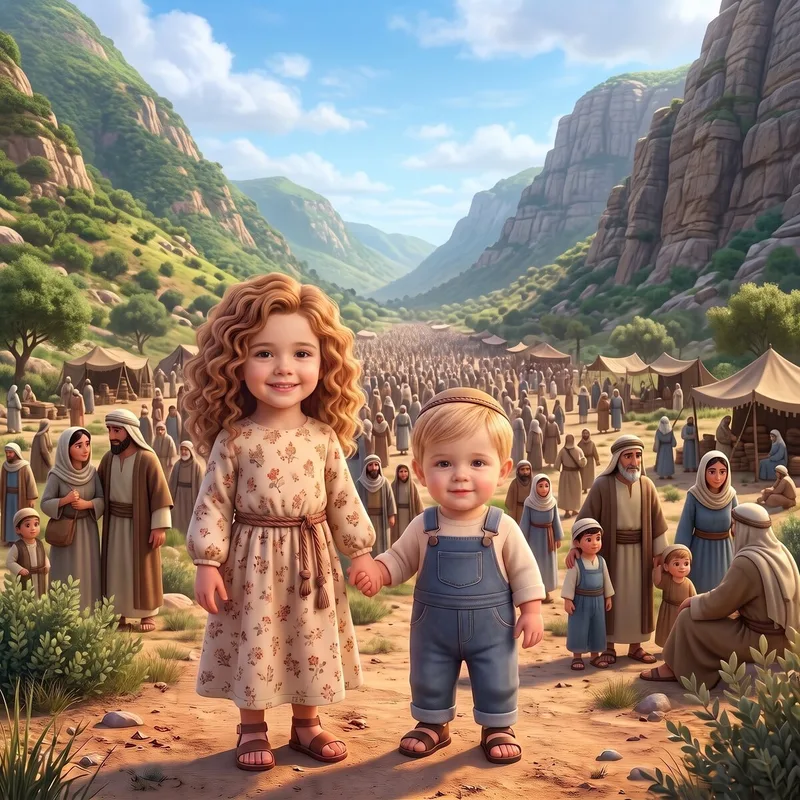
A Torah Tale book of Parshas Re'eh is from the Torah collection. Your child's name and, from one uploaded photo, their likeness appear on every page, illustrated in 3D animated-film style. Up to eight siblings, ages 0 to 18, can appear in the same book.
Every book is written with careful rabbinical guidance and strict tznius, and our team reviews it before it goes to print. Every book ends with a discussion page of 10 questions that mix comprehension with middos, so the story is talked about at the table and not only read. If you add parents and grandparents, they appear with the children on a closing family page, in every format.
Reading is entirely appropriate on Shabbos, so a book about the parsha can be read at the Shabbos table when Re'eh comes around. If you are ordering for a particular Shabbos, check the countdown to the order deadline in the book creator.

Softcover 8″×8″

Hardcover 8″×8″

Board book 6″×6″

Coloring book 8.5″×11″
Which format is right for my child?
Match the format to the child's age:
- The board book is 6x6 with rounded safety corners, for ages 0-4.
- The softcover photo book is 8x8, for ages 4-8.
- The hardcover photo book is 8x8, for ages 5-18.
Softcover and hardcover books open with a dedication page. You can also add a matching coloring book, 8.5x11 in black-and-white line art. Coloring is melacha, so it is a weekday activity for a quiet afternoon or the days before Shabbos or Yom Tov, never for Shabbos or Yom Tov themselves.
Ready to make it? Create the book with a free account and a few short questions: each child's name, boy or girl, age and one photo, any siblings, the story, your community, the language and the format. English, Hebrew and Yiddish are available, and it takes about five minutes.
Frequently asked questions
What is Parshas Re'eh about?
Parshas Re'eh is the fourth parsha of Sefer Devarim. Moshe Rabbeinu tells Bnei Yisrael that Hashem has placed before them a bracha and a klalah, and that the bracha comes from listening to the mitzvos. The parsha then teaches many of those mitzvos, including the place Hashem will choose for korbanos, the signs of kosher animals, maaser, helping the poor, freeing an eved ivri, and the Yamim Tovim.
What does the word Re'eh mean?
Re'eh means 'see'. The parsha opens with Moshe telling Bnei Yisrael to see that Hashem is placing a bracha and a klalah before them that day. The pasuk begins with the singular word Re'eh and continues with the plural lifneichem, and we can learn from this that Moshe is speaking to the whole nation and to each Yid personally.
What is the lesson of Parshas Re'eh for children?
The main lesson is that a child can choose the bracha by listening to what Hashem asks. The parsha shows what that looks like in daily life: eating only what the Torah permits, opening a hand to someone in need, not sending a worker away empty-handed, and being truly happy on Yom Tov. A parent can say it simply: Hashem put a bracha in front of us, and we choose it with our actions.
How do I explain Parshas Re'eh to a 5-year-old?
Keep it to one picture: Moshe says to Bnei Yisrael, look, Hashem is giving you a bracha, and you choose it when you listen. Then give two small examples from the parsha that a young child understands, such as giving tzedakah and being happy on Yom Tov. Ask, 'What is one way you can listen to Hashem today?' and let the child answer in their own words.
Is there a personalized book for Parshas Re'eh?
Yes. Torah Tale makes a personalized book of Parshas Re'eh from the Torah collection, with your child's name and likeness, from one uploaded photo, illustrated in 3D animated-film style. Up to eight children can appear in one book, and every book ends with a discussion page of 10 questions mixing comprehension with middos. Creating it takes a free account and a few short questions, about five minutes, starting at torahtale.com/create.