Parshas Matos for Kids: Keeping Your Word, Midyan & Reuven and Gad
Parshas Matos teaches that a Yid does what comes out of his mouth. Here is the story in order, the lesson, how to explain it to ages 3-4, 5-7 and 9-12, and questions for the Shabbos table.
Published by Torah Tale.
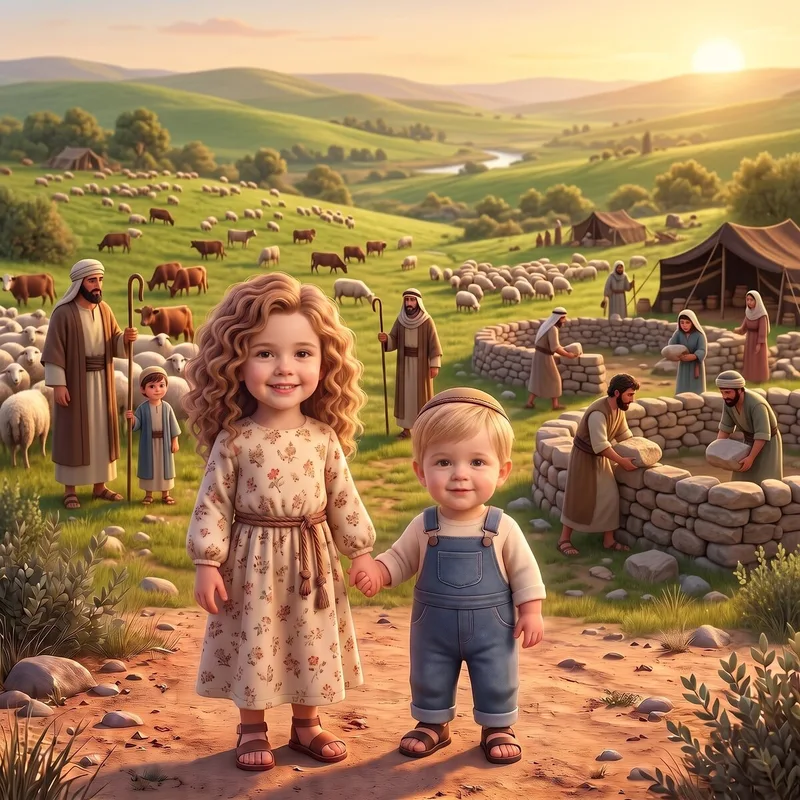
Create this book for your child
Parshas Matos is the ninth parsha of Sefer Bamidbar, and its message for children is simple: when a Yid says he will do something, he does it. The parsha teaches this through the halachos of nedarim, through Moshe Rabbeinu sending an army to Midyan, and through the promise of Reuven and Gad, which Moshe holds them to.
What does Parshas Matos say about keeping your word?
The parsha opens with Moshe speaking to the heads of the tribes, the rashei hamatos, which is where the parsha gets its name. He teaches the halachos of a neder, a vow. The Torah tells us that a person who makes a vow shall not profane his word, but shall do according to all that came out of his mouth.
The parsha also explains how some vows can be annulled in certain situations. These halachos are detailed, so for a real question about a promise or a vow, ask your rav. For a child, the point to take is that what we say is serious.
What happened in the war against Midyan?
Hashem told Moshe to take vengeance for Bnei Yisrael against Midyan, and that afterward he would be gathered to his people. Rashi points out that Moshe knew this, yet he did not delay. He acted at once.
Moshe sent a thousand men from each tribe, twelve thousand in all. Pinchas ben Elazar the kohen went with them, with the keilei hakodesh and the chatzotzros, the silver trumpets, in his hand. The kings of Midyan were killed, and so was Bilam ben Be'or. This follows what Midyan had done to Bnei Yisrael in the previous parshiyos (see Parshas Pinchas for Kids).
After the war, the men who had fought stayed outside the camp for seven days, and Elazar the kohen taught the halachos of purifying the vessels that had been taken. Then the officers counted their men and told Moshe that not one man was missing. They brought an offering of the gold they had taken to Hashem, which the pasuk calls a kapparah for their souls.
What did Reuven and Gad ask for, and what did Moshe answer?
The tribes of Reuven and Gad owned a very large amount of livestock. They saw that the land of Yaazer and Gilad, east of the Yarden, was good for flocks, and they asked Moshe to let them stay there instead of crossing into Eretz Yisrael.
Moshe asked them whether their brothers would go to war while they sat at home. He reminded them what happened when the meraglim discouraged the people's hearts (see Parshas Shelach for Kids). Reuven and Gad answered with a plan: they would build pens for their flocks and cities for their children, and they themselves would go armed ahead of Bnei Yisrael until every Yid had received his inheritance.
Moshe accepted, on the condition that they do it. He told them that if they kept their word, they would be clean before Hashem and before Yisrael. He told them to build cities for their children and pens for their flocks, and to do what had come out of their mouths. Moshe gave the land to Gad, Reuven and half of the tribe of Menashe.
What is the lesson of Parshas Matos for children?
The lesson is the one the parsha opens with: what comes out of your mouth, you do. Moshe uses the same idea with Reuven and Gad, because their words became a real commitment that the whole nation relied on.
There are smaller lessons too. Reuven and Gad promised to go with their brothers until the work was done. Rashi notes that they mentioned their flocks first, and that Moshe's answer puts the children first. And the officers who counted their men and found no one missing brought an offering to Hashem.
For more on this middah, see Keeping a Promise for Kids.
How do I explain Parshas Matos to a 4-year-old and to a 9-year-old?
Ages 3-4: Skip the war and tell a small story. Reuven and Gad had lots of sheep and cows and asked to live on the near side of the Yarden. They promised to help their brothers anyway, and Moshe said, do what you promised. Then: when we say yes, we do it.
Ages 5-7: Add the idea of being a good brother. Reuven and Gad could have stayed home while the others fought. Instead they promised to go first. Ask your child when someone kept a promise to them, and how that felt.
Ages 9-12: Talk about why Moshe set conditions and what he was worried about, and compare it to the meraglim. Ask what it means that Moshe put the children before the flocks. You can also explain that the halachos of nedarim are serious, and that a question about a real vow goes to a rav.
Questions for the Shabbos table
Shabbos is a good time to talk about this parsha, since it needs only talking, no props. Try a few of these:
- What did Reuven and Gad promise Moshe?
- Why was Moshe worried when they asked to stay on the other side of the Yarden?
- Why do you think Moshe said to build cities for the children first?
- Is it harder to keep a promise when it is easy or when it is hard? Why?
- What is a promise you can keep this week?
For a weekday afternoon, you can build a small pen and a few houses with blocks while retelling the story, with the children's houses going up first.
What is a personalized book of Parshas Matos like?
In a Torah Tale book, your child is the hero. Their name and, from one uploaded photo, their likeness appear on every page, illustrated in 3D animated-film style. Every book is written with careful rabbinical guidance and strict tznius, and reviewed by our team before it goes to print. You can include up to eight children in one book, ages 0 to 18.

Softcover 8″×8″

Hardcover 8″×8″

Board book 6″×6″

Coloring book 8.5″×11″
Choose the format by age: a 6x6 board book with rounded safety corners for ages 0-4, an 8x8 softcover for ages 4-8, or an 8x8 hardcover for ages 5-18. Softcover and hardcover open with a dedication page. If you add parents and grandparents, they appear with the children on a closing family page in every format.
Every book ends with a discussion page of 10 questions mixing comprehension with middos, which turns the book from something read to a child into something talked about at the table. The books are good Shabbos reading. The optional matching coloring book (8.5"x11", black-and-white line art) is a weekday activity, for an afternoon or erev Shabbos, never for Shabbos itself.
Creating a book takes about five minutes: a free account and a few short questions about each child's name, boy or girl, age and one photo, any siblings, the story, your community (asked once), the language and the format. Books come in English, Hebrew and Yiddish. The creator suggests the first parsha that can still arrive before its Shabbos, usually two to three weeks out, with a live countdown to the order deadline. In a double-parsha week, one book covers both parshiyos.
Ready to start? You can create the book, and for help choosing a parsha, see How to Choose the Weekly Parsha for Your Child's Book.
Frequently asked questions
What is Parshas Matos about?
Parshas Matos opens with the halachos of nedarim, teaching that a person must do what he said. It continues with Hashem's command to Moshe about Midyan, where Moshe sends a thousand men from each tribe, and then with the request of Reuven and Gad to settle east of the Yarden because of their large flocks. Moshe agrees on the condition that they go armed ahead of their brothers until the whole land is settled.
What is the lesson of Parshas Matos for children?
The main lesson is that our words count, so when we say we will do something, we do it. A second lesson is that Reuven and Gad did not leave their brothers to fight alone. A third, which Rashi points out, is that Moshe's answer puts the children first and the flocks second.
How do I explain Parshas Matos to a 5-year-old?
Keep it to one sentence about a promise: Hashem wants us to do what we said we would do. Then tell the story of Reuven and Gad, who had many sheep and cows, asked to live on the near side of the Yarden, and promised to still help their brothers. You can finish by asking your child about a promise they made today and how they kept it.
Why did Reuven and Gad ask to stay east of the Yarden?
The Torah tells us they had a very large amount of livestock, and the land of Yaazer and Gilad was good for flocks. Moshe was concerned that their brothers would be discouraged from crossing into Eretz Yisrael, so Reuven and Gad promised to build pens and cities and to go armed ahead of Bnei Yisrael until each Yid had his inheritance.
Is there a personalized children's book of Parshas Matos?
Yes. Torah Tale makes a personalized book of the parsha where your child's name and likeness, from one uploaded photo, appear on every page in 3D animated-film style. It comes as a 6x6 board book with rounded safety corners (ages 0-4), an 8x8 softcover (ages 4-8) or an 8x8 hardcover (ages 5-18), and every book ends with a discussion page of 10 questions. In a double-parsha week, one book covers both parshiyos.