Keeping a Promise (מוצא שפתיך תשמור) for Kids: Teaching It at Home
Keeping a promise is a mitzvah a child can practice every day. Here is what the pasuk says, how to explain it at ages 3-4, 6-7 and 10-12, and questions to talk about at the Shabbos table.
Published by Torah Tale.
Create this book for your child
Keeping a promise means doing what we said we would do, and the Torah tells us to guard our words: motza sefasecha tishmor. Children understand this one quickly, because they know exactly how it feels when someone says "I promise" and then forgets. This article explains the pasuk, how to say it at different ages, and how a personalized book can turn it into a conversation at home.
What does מוצא שפתיך תשמור mean?
The pasuk in Devarim 23:24 says: מוצא שפתיך תשמור ועשית כאשר נדרת לה' אלקיך נדבה אשר דברת בפיך. Literally, guard what comes out of your lips, and do as you vowed to Hashem, the pledge you spoke with your mouth. The pasuk itself speaks of a neder or a nedavah, a pledge made to Hashem.
From here we learn how seriously Torah takes a spoken word. Another pasuk, in Parshas Matos, says לא יחל דברו ככל היוצא מפיו יעשה, that a person should not break his word and should do whatever came out of his mouth. A child's promise to a friend is not the same thing as a neder, but it grows from the same root. It is a way of living in the spirit of the mitzvah.
Chazal teach in Bava Metzia 49a that your "yes" should be a true yes and your "no" a true no. This is a good line for a child to hear, because it is short and easy to repeat.
What is a keeping-a-promise story about?
A story about keeping a promise has a simple shape. A child says "I promise," something makes it hard to follow through, and the child keeps their word anyway. Torah Tale's Keeping a Promise sits in the Mitzvos collection, which is set in everyday life today, with your child as the hero.
You can tell a version at home right now. Imagine a child who told a sibling, "I'll save you a turn." Later the child is tempted to take it back. Keeping the promise means giving the turn, even when nobody would have noticed. Small, ordinary moments like that are where the middah gets built.
Is there a promise in Torah that children can learn from?
Yes. Before his petirah, Yosef made Bnei Yisrael swear that they would bring up his bones from Mitzrayim. The Torah tells us (Shemos 13:19) that Moshe Rabbeinu took the atzamos Yosef with him when the Yidden left, because of that oath. It is a clear example for children that a promise is kept, even after many years. The midrash about Yosef's coffin is retold in Yosef's Coffin in the Nile for Kids.
The pasuk from today's topic also appears in Parshas Ki Seitzei, which is covered in Parshas Ki Seitzei for Kids.
How do I explain keeping a promise to a 3-year-old, a 6-year-old and a 10-year-old?
Ages 3-4. Keep it to one sentence: "When we say we will do something, we do it." Connect it to something small and visible, like helping set the table after saying you would. Praise the child by name when they follow through, and say that it is a mitzvah.
Ages 6-7. Children this age can understand that a promise makes someone else count on you. Ask, "How did your friend feel when you kept your word?" and "What would have happened if you forgot?" Teach them to say "I promise" only when they mean it, and "I'll try" when they are not sure.
Ages 10-12. Tweens can handle the harder part. A promise is hardest to keep when it costs something, when no one is watching, or when something more fun comes along. Talk about what to do when a promise truly cannot be kept: tell the person early, apologize sincerely, and offer to make it right.
What Shabbos table questions work for keeping a promise?
This is a topic for talking, not for activities, so it fits the Shabbos table well. Try a few of these:
- Can you think of a time someone kept a promise to you? How did it feel?
- What is the difference between "I promise" and "I'll try"?
- Why do you think the Torah says to guard what comes out of our lips?
- What can you do if you realize you cannot keep a promise?
- Why do you think Moshe took Yosef's bones with him?
Let the grown-ups answer too. Children learn the most when they hear a parent say, "I forgot something I promised, and this is how I fixed it."
What if my child breaks a promise?
It will happen, and it is a good teaching moment rather than a reason to scold. Ask the child to say what happened in their own words, then help them think of how to repair it. Apologizing and making it right are part of the mitzvah.
Parents also teach by example. Be careful what you promise in front of children, and if you cannot keep something, say so honestly. Many people say bli neder when they plan to do something, so that a plan does not become a neder. Ask your rav what to teach your children about this.

Softcover 8″×8″

Hardcover 8″×8″

Board book 6″×6″

Coloring book 8.5″×11″
What is the personalized Keeping a Promise book like?
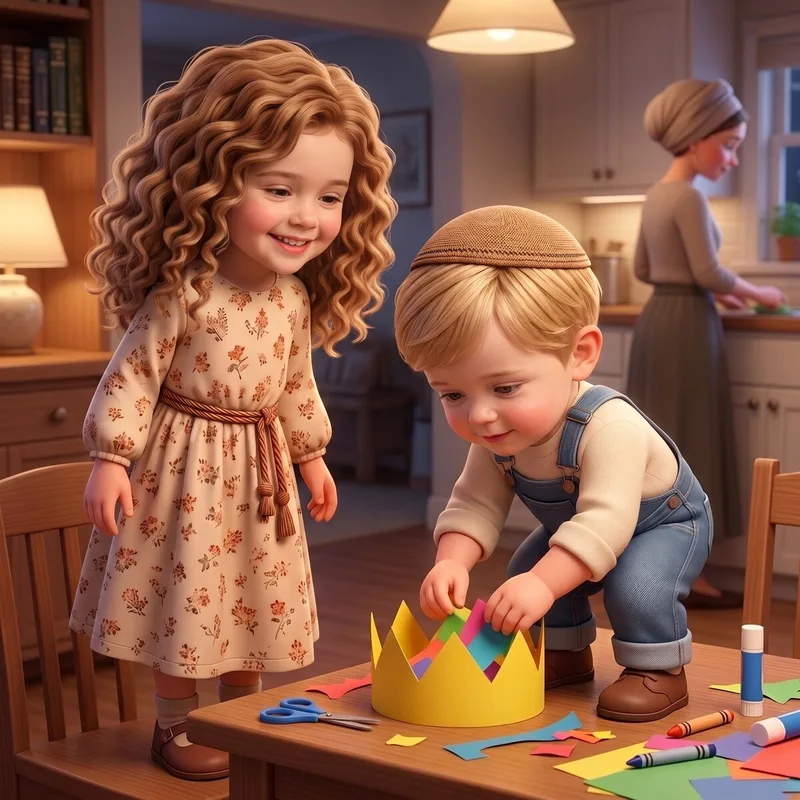
Your child's name and, from one uploaded photo, their likeness appear on every page, illustrated in 3D animated-film style. Up to eight siblings, ages 0 to 18, can appear in the same book. Every book is written with careful rabbinical guidance and strict tznius, and reviewed by our team before it goes to print.
Every book ends with a dedicated discussion page of 10 questions about the story, mixing comprehension with middos: what happened, and what it asks of the child. That page is what makes the book something you talk about, not just read. If you add parents, grandparents and other relatives with their photos, they appear with the children on a closing family page in every format.
There are three formats. The board book is 6"x6" with rounded safety corners, for ages 0-4. The softcover photo book is 8"x8", for ages 4-8. The hardcover photo book is 8"x8", for ages 5-18. Softcover and hardcover open with a dedication page. An optional matching coloring book, 8.5"x11" in black-and-white line art, can be added as a weekday activity, such as erev Shabbos or a weekday afternoon. The storybook itself is lovely to read at the Shabbos table.
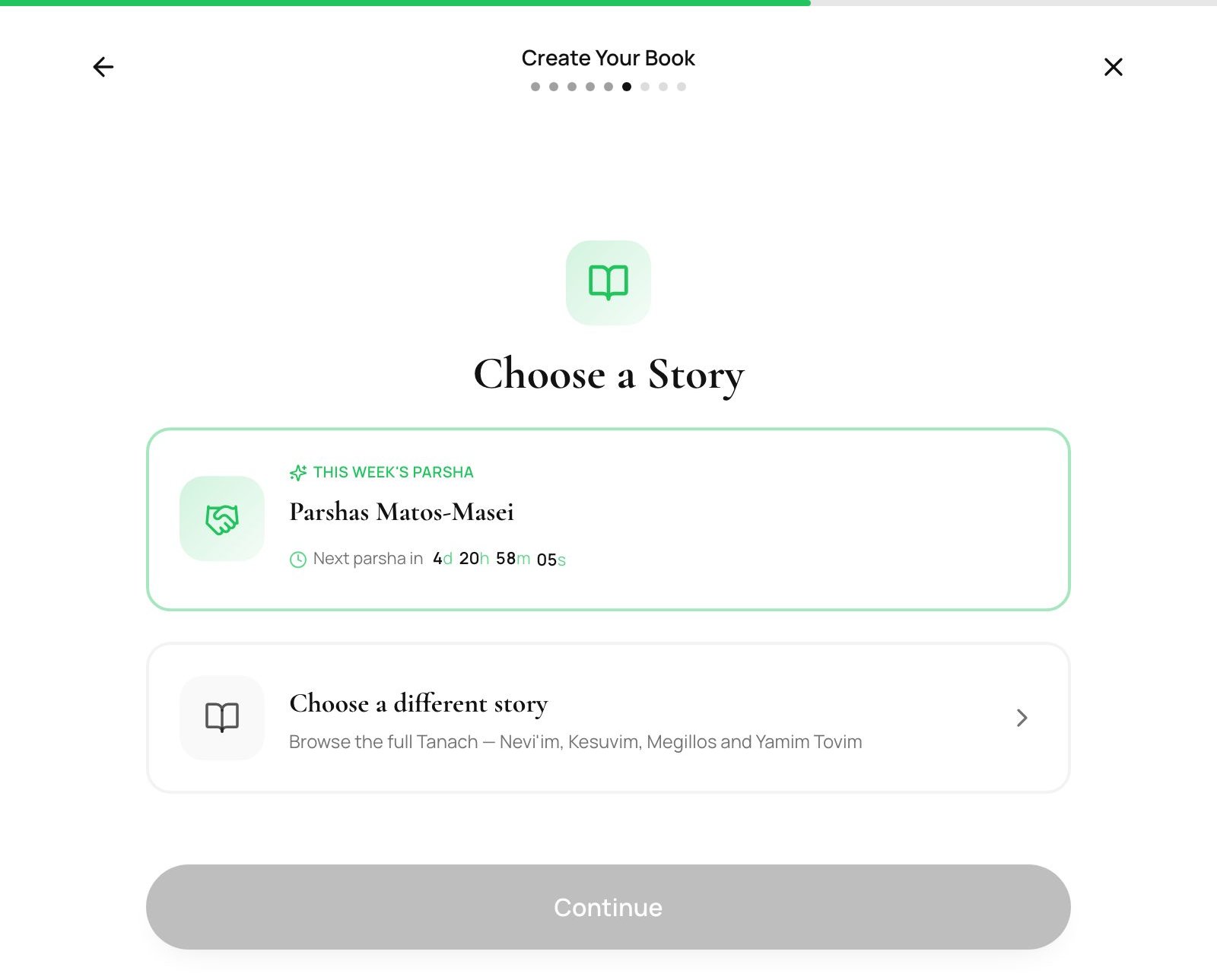
Creating a book requires a free account and a few short questions: each child's name, boy or girl, age and one photo, any siblings, the story, your community (asked once), the language and the printed format. Languages are English, Hebrew and Yiddish. The whole flow takes about five minutes.
Another story that comes alongside this one is Always Telling the Truth, because honesty and keeping your word go hand in hand.
When you are ready, you can create the book for your child, pick Keeping a Promise from the Mitzvos collection, and start a conversation about the power of a Yid's word.
Frequently asked questions
What does מוצא שפתיך תשמור mean?
It means "guard what comes out of your lips." The pasuk in Devarim 23:24 continues that you should do as you vowed to Hashem, the pledge you spoke with your mouth. We learn from it that a Yid's word is not casual, and children can begin practicing this with simple promises at home.
How do I explain keeping a promise to a 4-year-old?
Use one short sentence: "When we say we will do something, we do it, because our words matter." Then give a concrete example from the child's day, such as putting away the blocks after saying you would. Praise the keeping of the word by name, so the child connects the effort with the mitzvah.
Is a child's promise to a friend a mitzvah from the Torah?
The pasuk speaks of vows and pledges to Hashem, so a child's everyday promise is not the same thing. But keeping our word to anyone is in the spirit of the mitzvah and is part of how Chazal describe an honest person. If a question comes up about whether a specific promise or pledge is binding, ask your rav.
What should a child do if they cannot keep a promise?
Teach the child to speak up early and honestly, to apologize, and to offer to make it right in another way. It also helps to teach children to say "I'll try" when they are not sure. Parents can model this by being careful about what they promise in front of children.
What is the Torah Tale book Keeping a Promise?
It is a personalized Torah storybook in the Mitzvos collection, set in everyday life today, where your child is the hero with their name and likeness illustrated in 3D animated-film style. Like every Torah Tale book, it ends with a discussion page of 10 questions mixing comprehension with middos, and a closing family page that includes the parents and grandparents you choose to add.
Can I read the book on Shabbos?
Yes. Reading a storybook is entirely appropriate on Shabbos and Yom Tov, and the discussion questions at the end are well suited to the Shabbos table. The optional matching coloring book is for weekdays only, such as erev Shabbos or a weekday afternoon.