Parshas Ha'azinu for Kids: Moshe's Song, the Eagle & Remembering
Parshas Ha'azinu is a song - Moshe Rabbeinu's last shirah to Klal Yisrael. Here is the story retold for children, the eagle Rashi that kids remember for years, age-by-age scripts, and Shabbos-table questions you can use this week.
Published by Torah Tale.
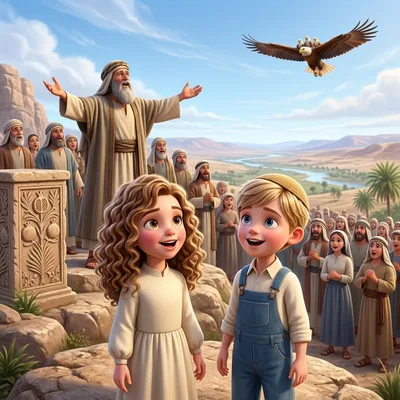
Parshas Ha'azinu is a song. In the last days of his life, Moshe Rabbeinu gathered all of Klal Yisrael and taught them a shirah - forty-three pesukim that hold the entire story of the Jewish people, past and future, in poetry. Because it is a song and not a list of mitzvos, it lands differently with children: it is short, it has rhythm, it has a picture of an eagle in it, and it even looks different when the Sefer Torah is opened. This is a parsha a five-year-old can carry home from cheder in one sentence.
What happens in Parshas Ha'azinu?
Moshe Rabbeinu is one hundred and twenty years old. He has already blessed the people, already told them to choose life, already handed leadership to Yehoshua. Now he does one last thing: he teaches them a song, so that it will stay in their mouths even in generations when the rest is forgotten.
He begins by calling two witnesses: Ha'azinu hashamayim va'adabeira, v'sishma ha'aretz imrei fi - listen, heavens, and let the earth hear what I say. Rashi explains that Moshe chose heaven and earth as witnesses because they last forever; long after that generation is gone, the sky and the ground will still be standing and still be able to testify to what was said.
Then Moshe compares his words to rain and dew - ya'arof kamatar likchi. Rashi explains that Torah is like rain because rain is what gives the world life. Not a nice extra; the thing everything depends on.
The song itself reviews the whole history. Hashem chose the Yidden and made them His portion. He found them in the desert and took care of them there. He brought them to a good land and gave them everything. And then comes the warning in the middle of the song: Vayishman Yeshurun vayiv'at - the people became full and comfortable, and forgetting followed. Moshe tells them plainly what happens when Yidden forget Hashem, and he tells them just as plainly that in the end Hashem will bring them back, because Hatzur tamim pa'alo - everything Hashem does is complete and just.
At the end of the parsha Hashem tells Moshe to go up Har Nevo and look out at Eretz Yisrael from there. He will see the land he brought the people to, even though he will not walk into it himself.
Why does Ha'azinu look different in the Sefer Torah?
Take a child to shul on the Shabbos of Ha'azinu and let them look at the klaf. A shirah is not written like ordinary text. Instead of full lines, the words are laid out with wide blank spaces, so Ha'azinu appears as two tall columns with a white channel running down the middle. The Gemara describes these special layouts, and the pattern used for Ha'azinu is not the same one used for Shiras Hayam.
Children love this because it is verifiable. They can stand at the bimah, see two columns instead of one, and know exactly which parsha it is without reading a word. Give them that piece of information on Friday night and they will look for it Shabbos morning.
The eagle who carries its babies on top of its wings
The most quoted image in Ha'azinu is the eagle: k'nesher ya'ir kino, al gozalav yeracheif - like an eagle that stirs its nest and hovers over its young. Rashi explains the detail that makes it unforgettable. Most birds carry their chicks underneath, between their feet, because they are afraid of the eagle flying above them. The eagle is afraid of nothing above it except an arrow from a person below - so the eagle carries its young on top of its wings, and says, in effect, better the arrow should reach me and not my child.
That is how Hashem carried the Yidden through the midbar. Not walking alongside them and hoping for the best - carrying them, with Himself between them and whatever came.
Very young children take this literally and beautifully. Older children can be asked the follow-up: what does it mean that Hashem carries us on top rather than underneath? Usually the answer they come to on their own is that Hashem does not hide us from difficulty; He takes it first.
What is the lesson of Ha'azinu for children?
Ha'azinu is a parsha about memory. Moshe's central line is Zechor yemos olam, binu shnos dor vador, she'al avicha v'yagedcha, zekeinecha v'yomru lach - remember the days of old, understand the years of each generation, ask your father and he will tell you, your zeidys and they will say it over to you.
The warning of Vayishman Yeshurun is not that the Yidden became bad people. It is that they became comfortable, and comfort made them forget. That is a middah lesson a child can actually use: the bigger the bracha, the easier it is to stop noticing it. It pairs naturally with the bikkurim of Parshas Ki Savo, where a farmer carries his first fruits to Yerushalayim specifically so that a good year does not turn into a forgetful one.
And Hatzur tamim pa'alo gives children the emunah half of the parsha: Hashem's ways are complete, even the parts we do not understand yet. Coming as it does in the days of the Yamim Noraim - Ha'azinu is read either on Shabbos Shuvah or on the Shabbos after Yom Kippur, depending on the year - that line is the whole season in four words.
How to explain Ha'azinu at different ages
| Age | Say it like this |
|---|---|
| 2-4 | "Moshe Rabbeinu taught the Yidden a song so they would remember that Hashem loves them. Hashem carries us like a big bird carries its babies on its wings." |
| 5-7 | "Moshe was very old and wanted to give the Yidden something they would never lose, so he gave them a song. In it he tells them: don't forget Hashem when everything is going well." |
| 8-10 | Add the witnesses. Why heaven and earth? Because they are still here in every generation. Ask: who are the witnesses to the way our family keeps Torah? |
| 10-12 | Work through Vayishman Yeshurun and Hatzur tamim pa'alo together. Comfort can make a person forget; emunah means trusting that everything Hashem does is complete even when we cannot see how. |
For the youngest listeners, a board book with rounded corners survives the way a two-year-old handles a book. For a child who is learning the pesukim in cheder, a hardcover in Hebrew alongside the English gives them the actual words they are hearing at the amud. Every book closes on a discussion page of ten questions - some about what happened, some about what it asks of the child - which for a parsha that is itself a song about listening is a fitting way to end.
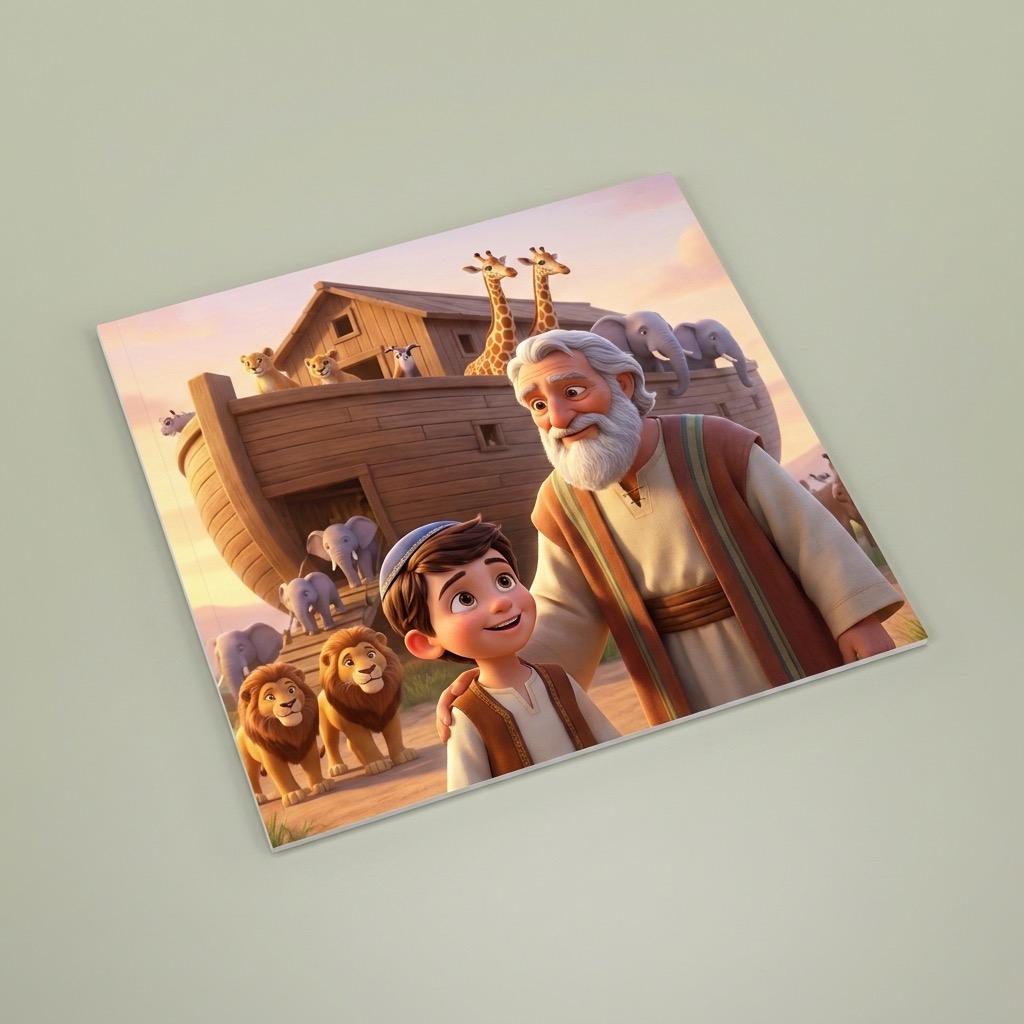
Softcover 8″×8″
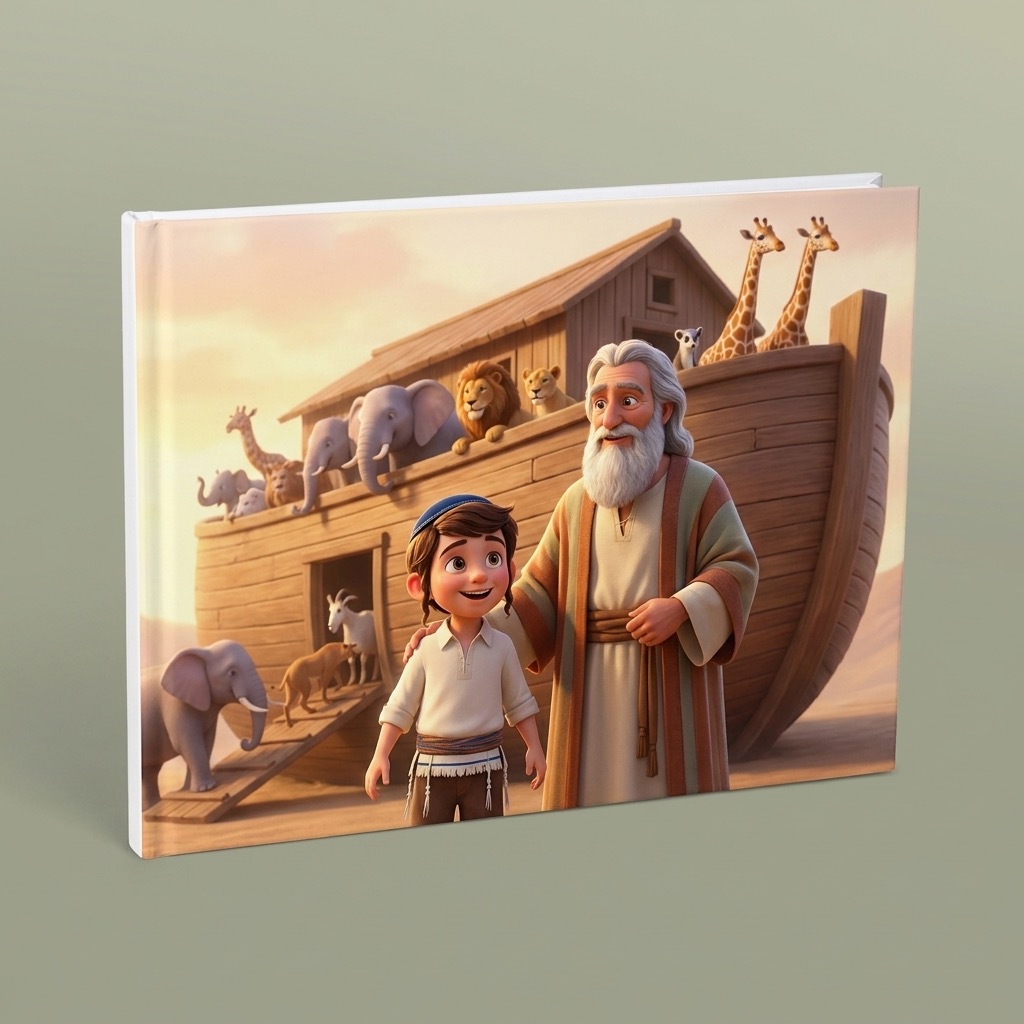
Hardcover 8″×8″
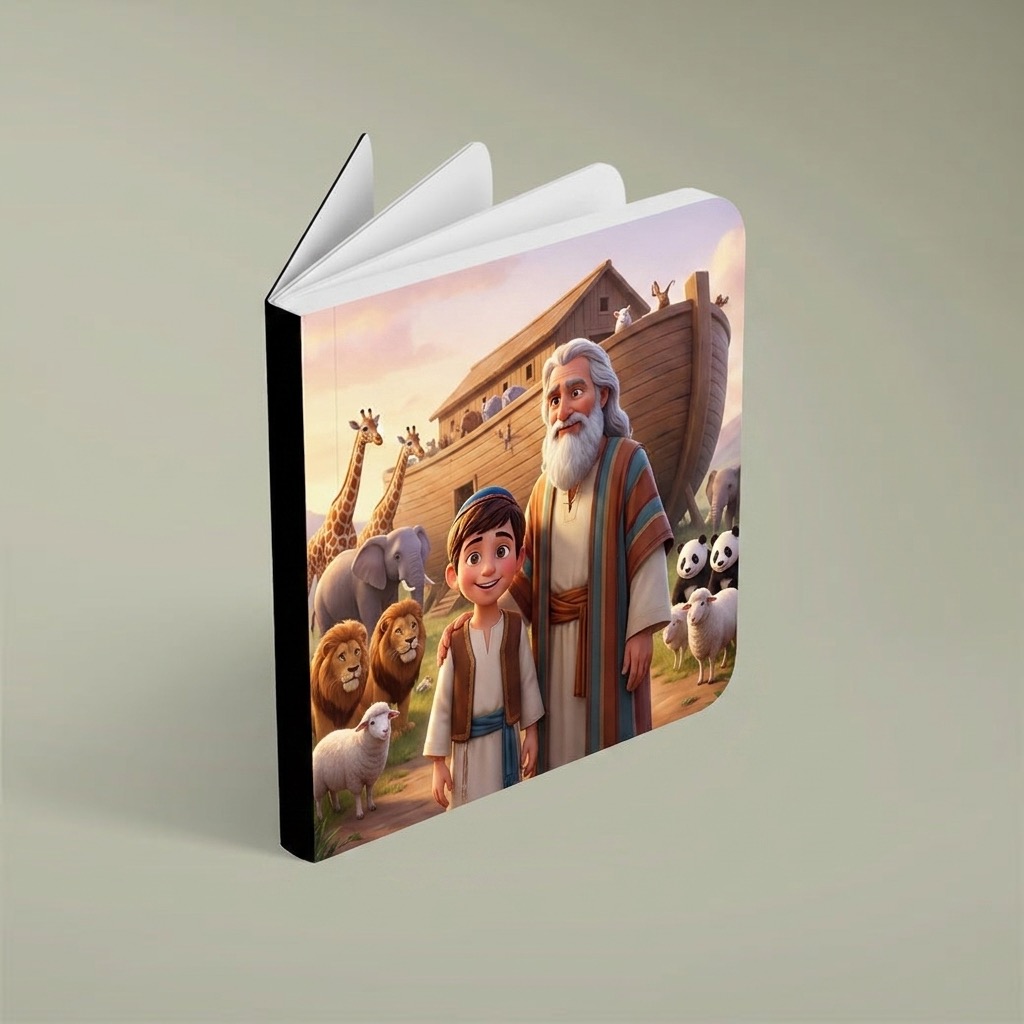
Board book 6″×6″
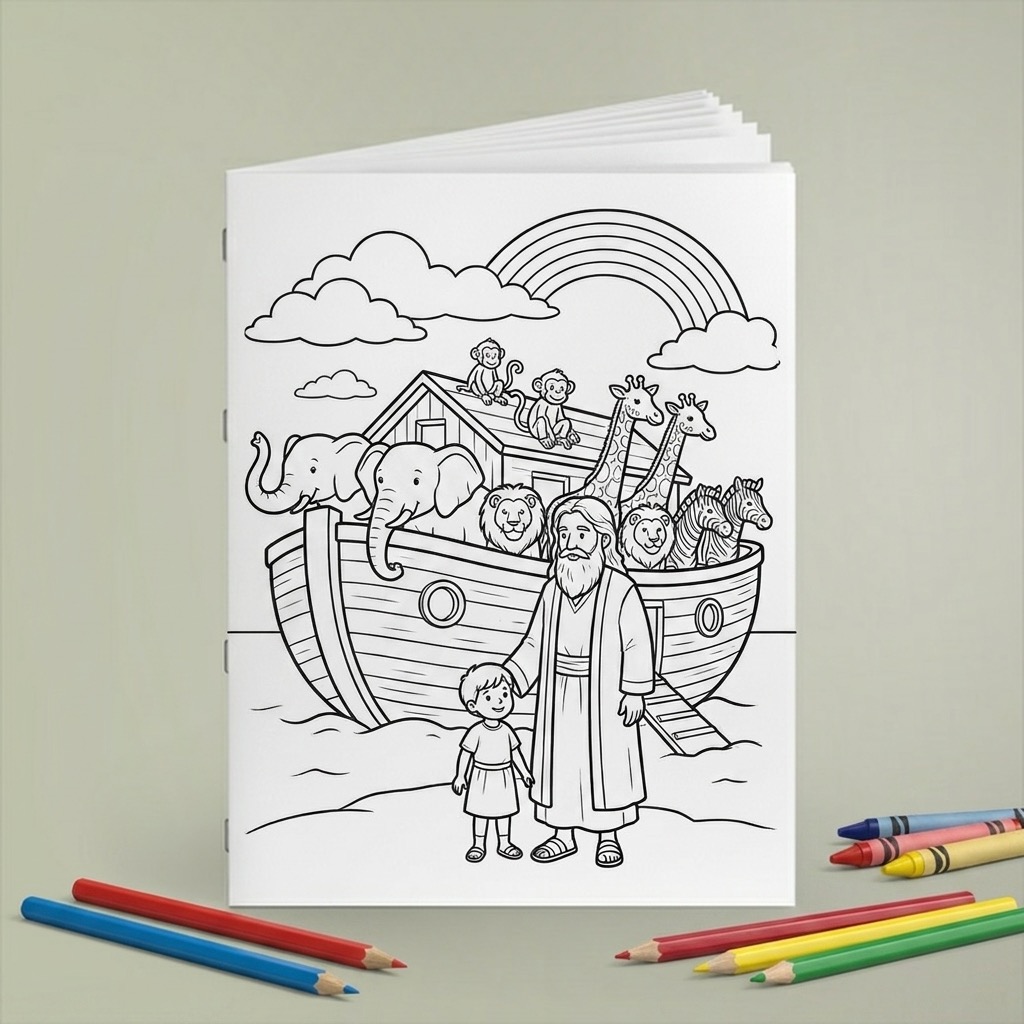
Coloring book 8.5″×11″
Shabbos-table questions and one activity for Ha'azinu
Five questions that work at almost any age:
- Why did Moshe Rabbeinu teach the Yidden a song instead of just giving another speech?
- Why did he pick heaven and earth to be the witnesses?
- What does an eagle do differently from other birds, and what is Rashi teaching us with it?
- Can you name one thing you have that is so normal you almost never say thank you for it?
- Ha'azinu says "ask your father and he will tell you." What is one thing you want to ask a zeidy or bubby about?
The activity: the Ha'azinu interview. Moshe's instruction is literally she'al avicha v'yagedcha - ask. Have each child prepare two questions for a grandparent, an older cousin, or a parent: where did our family come from, and what is one thing Hashem did for our family that I would not know about if nobody told me. Ask them motzaei Shabbos, over the phone if needed, and write the answers on one page. Next year on Ha'azinu, read the page again. That is mesorah being built in twenty minutes.
A second option for younger children: write a family shirah. Four lines, each one starting "Thank You Hashem for…", laid out in two columns on the page with a gap down the middle, the way Ha'azinu is written in the Sefer Torah. A matching Torah Tale coloring book in black-and-white line art gives the little ones something to work on while the older ones write.
What a personalized Torah Tale book of Ha'azinu is like
In the Torah Tale version of Ha'azinu, your child is inside the story. Their name is on the page and their likeness - generated from one photo you upload - is illustrated in high-resolution 3D Pixar style, standing among the Yidden as Moshe Rabbeinu teaches the song, watching the eagle spread its wings, listening as heaven and earth are called to hear. Up to four siblings can appear together in the same book.
Every book is written with careful rabbinical guidance and strict tznius, and reviewed by our team before it goes to print. You choose the language - English, Hebrew or Yiddish, and you can order the same story in more than one - and the format: board book 6"x6" for ages 2 to 4, softcover 8"x8" for ages 4 to 8, or hardcover 8"x8" in square or landscape for ages 5 to 12.

The book creator opens on next week's parsha with a live countdown to the order deadline for delivery before that Shabbos, so families on a Parsha Series or Year Bundle subscription always stay a step ahead of the laining. If you want Ha'azinu specifically - or you are working ahead through Nitzavim-Vayeilech and the Yamim Noraim - you can pick it straight from the story list instead. Our guide to choosing the weekly parsha walks through the timing.
Ha'azinu asks children to remember, and a book with their own face in it is a strong way to make a parsha stick. We ship worldwide, with shipping rates shown at checkout. Create the book - eight short questions, about five minutes.
Frequently asked questions
What is Parshas Ha'azinu about?
Parshas Ha'azinu is the song Moshe Rabbeinu taught Klal Yisrael at the very end of his life. In forty-three pesukim it reviews how Hashem chose the Yidden, carried them through the midbar, and gave them everything they have - and it warns them not to forget Him once they are comfortable in Eretz Yisrael. The parsha ends with Hashem telling Moshe to go up Har Nevo and see the land from there.
What is the lesson of Ha'azinu for children?
The central lesson is remembering. Moshe says "Zechor yemos olam" - remember what happened before, ask your father and he will tell you - because the fastest way to lose gratitude is to forget where things came from. For a child that turns into something very practical: notice what you have, find out who gave it to you, and say thank you.
How do I explain Ha'azinu to a 5-year-old?
Say it in one sentence: "Moshe Rabbeinu was very old, and he taught the Yidden a song so they would never forget how much Hashem loves them." Then add the eagle: Hashem carries us the way a big bird carries its babies on top of its wings, keeping them safe. Young children hold onto the picture of the eagle long after they forget the rest.
Why is Ha'azinu written in two columns in the Sefer Torah?
A shirah - a song - is written in the Sefer Torah with a special layout of words and blank spaces rather than as solid lines of text. The Gemara describes these layouts, and the one used for Ha'azinu differs from the one used for Shiras Hayam. The practical result is that Ha'azinu looks like two tall columns with a white channel down the middle, which children can identify from across the shul.
When is Parshas Ha'azinu read?
Ha'azinu is the second-to-last parsha in the Torah, right before V'zos Habracha. It falls in the days of the Yamim Noraim - depending on the year, it is read either on Shabbos Shuvah between Rosh Hashanah and Yom Kippur, or on the Shabbos after Yom Kippur.
Can I get a personalized book of Parshas Ha'azinu for my child?
Yes. Torah Tale prints a personalized Ha'azinu storybook in which your child's name and likeness - generated from one uploaded photo in 3D Pixar style - appear on every page, and up to four siblings can be in the same book. Choose a board book for ages 2 to 4, a softcover for ages 4 to 8, or a hardcover for ages 5 to 12, in English, Hebrew or Yiddish. The whole flow is eight short questions at torahtale.com/create and takes about five minutes.