Parshas Nitzavim-Vayeilech for Kids: Everyone Standing Together
On the last day of his life, Moshe Rabbeinu gathered every single Yid - leaders, water-carriers, women and small children - and brought them into a bris with Hashem that included every generation still to come. Here is how to tell Nitzavim-Vayeilech to a child, what it teaches, and how to talk about it at the Shabbos table.
Published by Torah Tale.
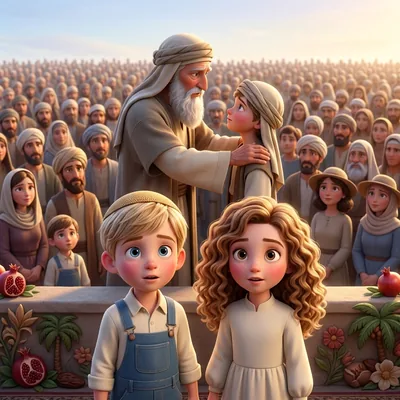
Parshas Nitzavim-Vayeilech is Moshe Rabbeinu's last day. He gathers every single Yid - the leaders and the elders, the wood-choppers and the water-carriers, the women and the little children - and brings them all into a bris with Hashem, a bris that he says includes people who are not standing there at all. Then he says goodbye, hands the leadership to Yehoshua, and writes down the Torah. For children, this parsha lands because it is the moment the Torah is handed to them.
What happens in Parshas Nitzavim-Vayeilech?
Nitzavim opens with the word nitzavim - standing. The whole nation is standing before Hashem: "your heads, your tribes, your elders and your officers, every man of Yisrael, your small children, your women, and the stranger in your camp, from the one who chops your wood to the one who draws your water." Nobody is standing in a back room. Everyone is in the same gathering.
Moshe tells them they are entering into a bris with Hashem - and then he adds something remarkable: the bris is being made "with those who are here with us today, and with those who are not here with us today." Chazal tell us that these words include the neshamos of every generation of Yidden who would ever live.
Moshe then speaks about teshuvah. Even if the Yidden are scattered to the far ends of the earth, when they return to Hashem, Hashem gathers them back. And he tells them that the Torah is not out of reach: lo bashamayim hi - it is not in heaven that you should say, "who will go up and bring it down for us," and not across the sea. "It is very close to you, in your mouth and in your heart, to do it." He finishes with a choice laid out plainly: life and good, or the opposite - uvacharta bachaim, choose life.
Vayeilech is the goodbye. Moshe tells the people he is 120 years old today and will not be crossing the Yarden with them; Rashi tells us that this was his birthday and the day of his petirah, his years exactly complete. He strengthens Yehoshua with the words chazak ve'ematz, be strong and courageous. He teaches the mitzvah of Hakhel. He writes the Torah and gives it to the Kohanim and Leviim to be placed beside the Aron, and he is told to write down the song that will always remain with the Yidden and never be forgotten.
Why does the bris include people who weren't there?
This is the line worth stopping on with a child. Moshe was speaking to a specific group of people on a specific afternoon in the plains of Moav - and he said the bris also included "those who are not here with us today." Chazal explain that every Jewish neshamah of every future generation was present at that moment.
Practically, it means a child does not receive the Torah second-hand. When your eight-year-old learns the parsha in cheder or Bais Yaakov, they are not studying somebody else's agreement. They were there when it was made. That is a very different feeling from "a long time ago, some people promised something."
What is the middah of this parsha?
Two things sit at the center, and they belong together.
The first is teshuvah. Nitzavim is read on the Shabbos before Rosh Hashanah every single year, and its message is that no one is ever too far away to come back. Moshe describes Yidden at the ends of the earth and says plainly that Hashem brings them back. Children who worry about mistakes - and many do - need to hear this in Moshe's own framing, not only in a mussar shmuess. It pairs naturally with the Rosh Hashanah story, which follows a few days later.
The second is achrayus - taking ownership. Lo bashamayim hi. The Torah is not a distant thing for great people; it is "in your mouth and in your heart." The Gemara famously invokes this pasuk to show that the Torah was given over to us to learn and to rule on. For a child, the simple version is: you don't need to wait until you are big. It is already yours.
How do I explain Nitzavim-Vayeilech at different ages?
Ages 2-4. One picture, one sentence: "Every single Yid stood together in front of Hashem - the biggest ones and the smallest ones - and nobody was left out." Let them find the children in the illustration. That is the whole lesson at this age, and it is a real one. Torah Tale prints this age in a 6"x6" board book with rounded safety corners.
Ages 5-7. Add the bris and Hakhel. "Moshe made a promise-agreement between the Yidden and Hashem, and he said it counts for us too, even though we weren't there. And once in seven years, everyone came to the Beis Hamikdash to hear the Torah - even little kids who couldn't understand yet." The 8"x8" softcover suits this age.
Ages 8-12. Now bring in lo bashamayim hi, uvacharta bachaim, and the handover to Yehoshua. Older children can handle the honest weight of it: Moshe knows he is not going in, and he spends his last hours strengthening the person who will replace him. Ask what that took. The 8"x8" hardcover, square or landscape, is built for ages 5 to 12.
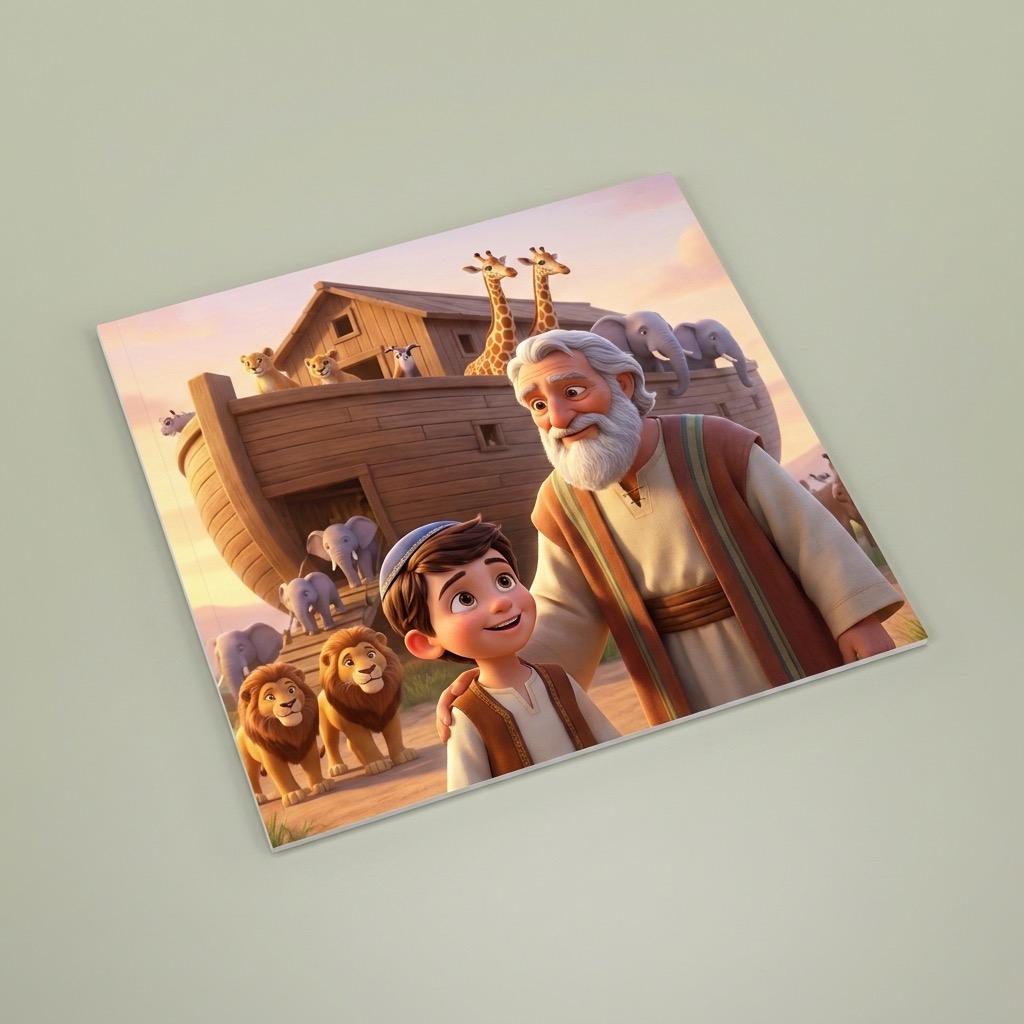
Softcover 8″×8″
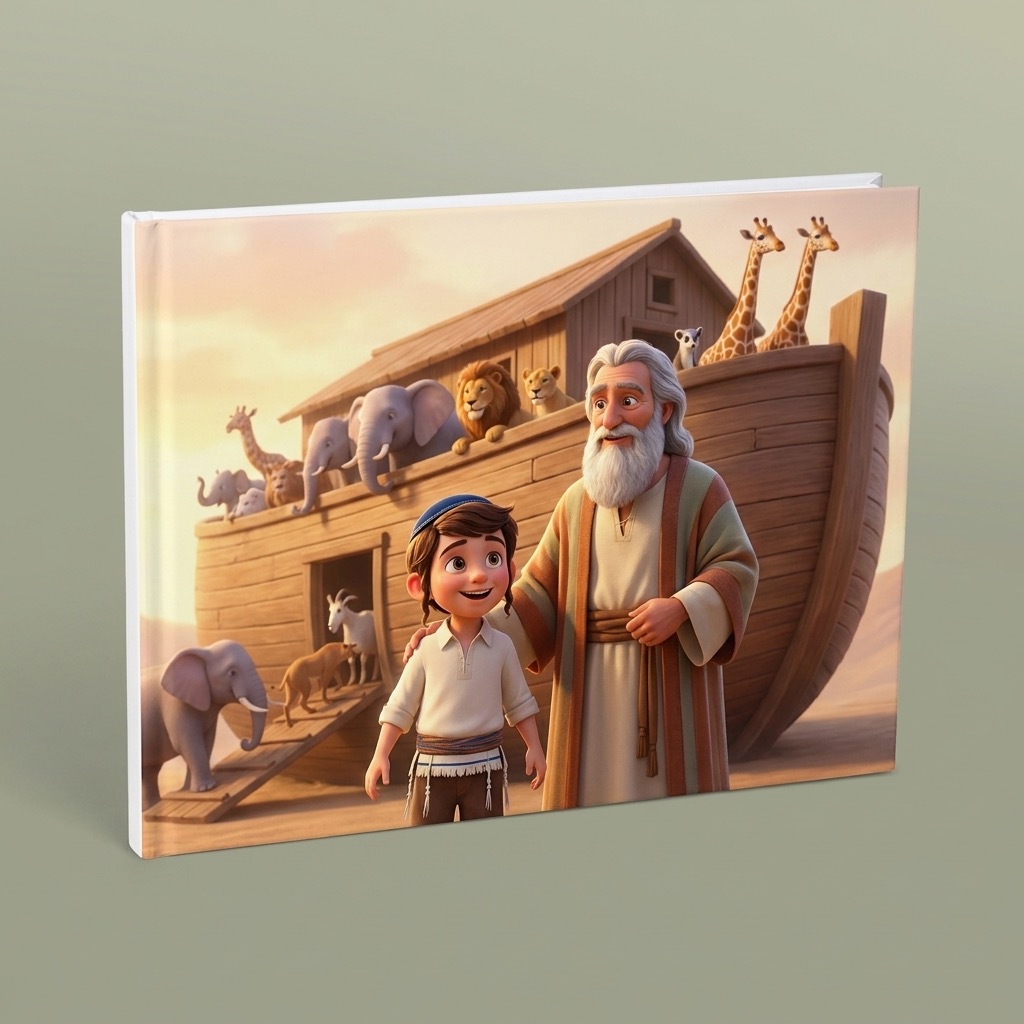
Hardcover 8″×8″
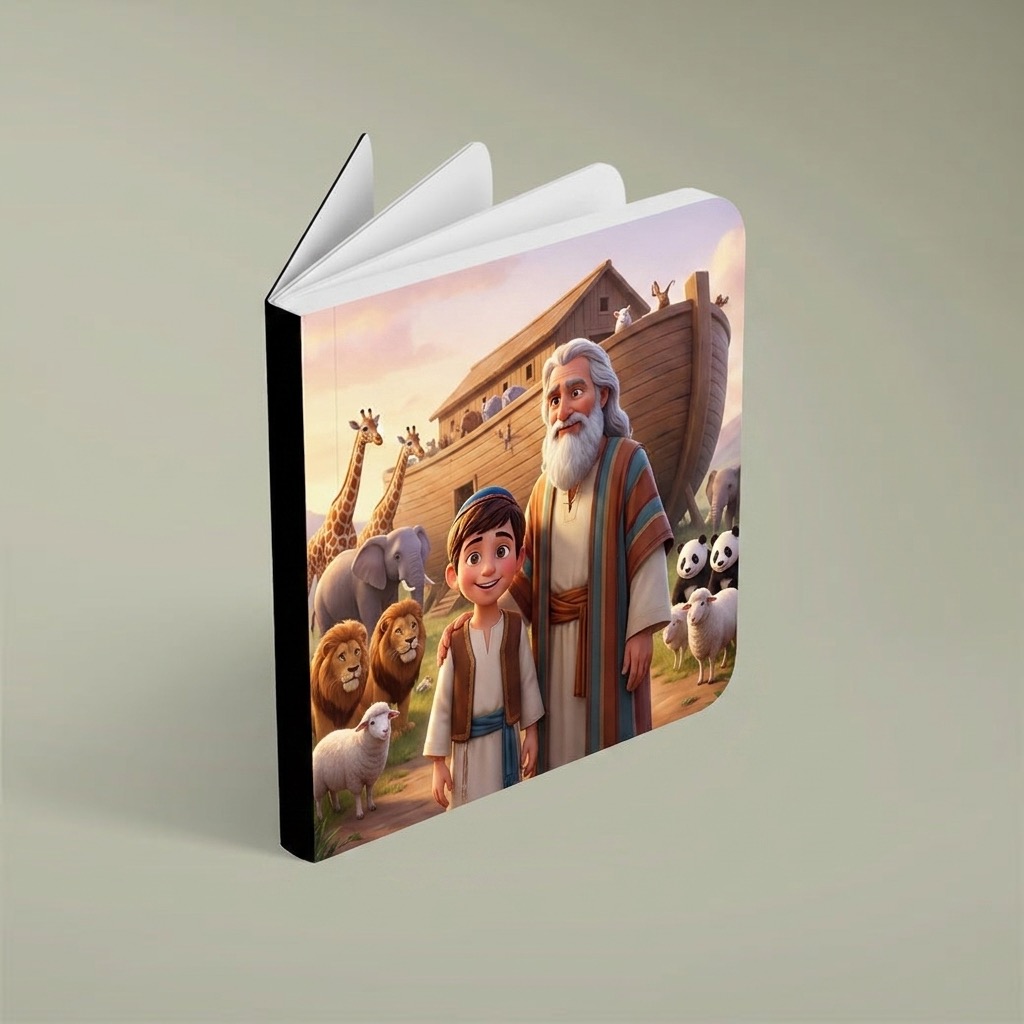
Board book 6″×6″
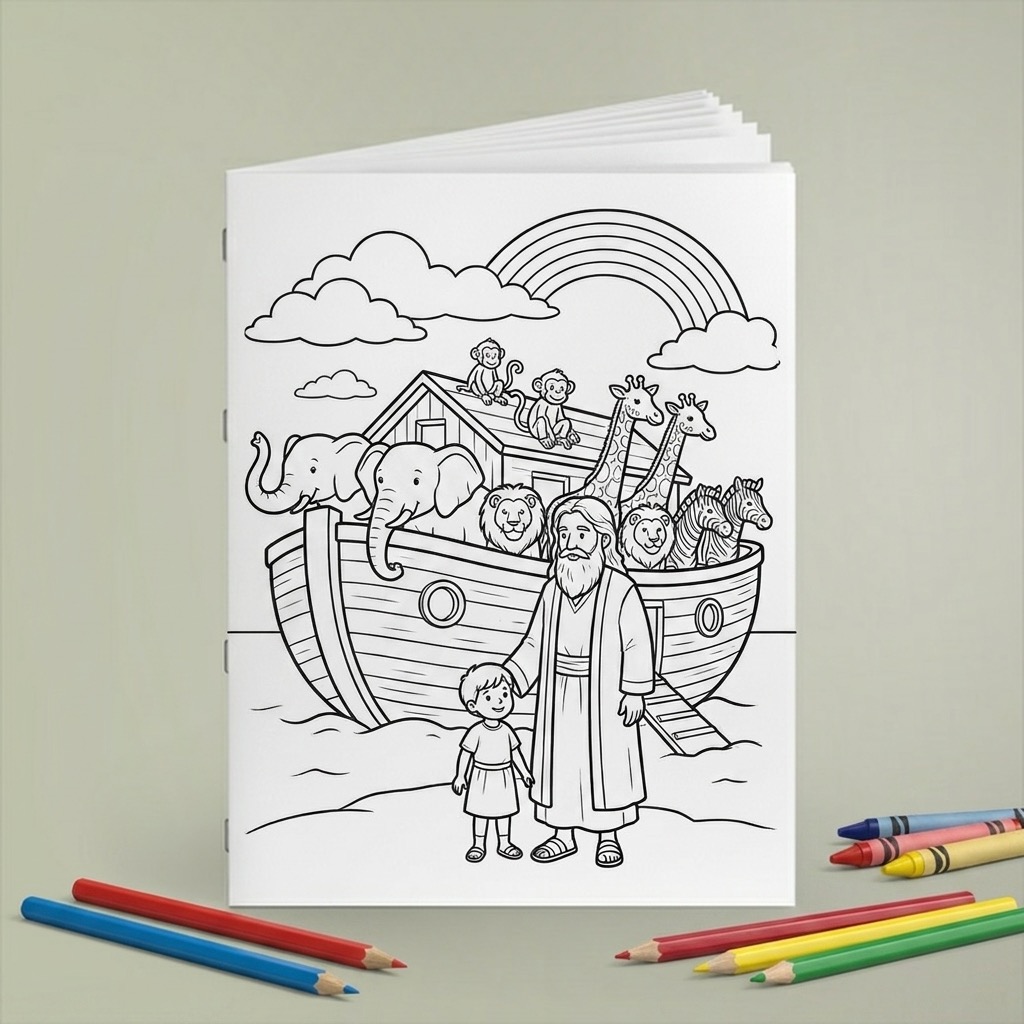
Coloring book 8.5″×11″
Shabbos-table questions and one activity for this week
Five questions, ordered roughly from youngest to oldest:
- Who was standing there when Moshe spoke? Was anybody left out?
- Moshe said the bris was also with people who were "not here today." Who do you think that was?
- If the Torah is not in heaven, where is it? What does "in your mouth and in your heart" mean?
- At Hakhel, even babies were brought. Why bring someone who can't understand yet?
- Moshe wasn't going into Eretz Yisrael. Why do you think he spent his last day making Yehoshua feel strong instead of feeling sorry for himself?
The activity: a family Hakhel. Sometime this Shabbos, call everyone into one room - parents, big kids, toddlers, the baby in someone's arms. One person reads three or four pesukim of the parsha aloud. Nobody is excused for being too small to follow. Then say the point out loud: "That's Hakhel. Everyone comes, even if you don't understand every word yet." It takes two minutes and children remember it for years.
A second option for children who like something in their hands: write "ki karov eilecha hadavar me'od - it is very close to you" on a small card and let them keep it in a pocket or siddur.
What is a personalized Torah Tale book of this parsha like?
In the Torah Tale version, your child is in the gathering. Their name is in the text and their face - illustrated in high-resolution 3D Pixar style from one photo you upload - appears on every page: standing among the Yidden as Moshe speaks, listening as he says the bris includes those who are not there, watching the Torah being placed beside the Aron. Up to four siblings can appear in the same book, which is useful for a parsha whose whole theme is that everyone was present. The last page is a discussion page with ten questions about the story, so the parsha about everyone standing together ends with everyone at the table talking.
Because Nitzavim and Vayeilech are usually read as one parsha, a double-parsha week produces a single book covering both. The book creator suggests next week's parsha with a live countdown to the order deadline for delivery before that Shabbos - so the book arrives in time to be read on the parsha itself. There is more on that timing in our guide to choosing the weekly parsha for your child's book.

Creating one takes eight short questions - name, boy or girl, age, one photo, siblings, story, language, printed format - about five minutes in total. Books come in English, Hebrew or Yiddish, and you can order more than one language. Every book is written with careful rabbinical guidance and strict tznius and reviewed by our team before printing. If you are looking at this as a gift, see our list of personalized Jewish gifts for kids.
Where this parsha leaves a child
Nitzavim-Vayeilech ends the way a parent hopes a chinuch conversation ends: with the child holding something, not watching someone else hold it. Moshe wrote the Torah down, put it in safe hands, told Yehoshua to be strong, and told everyone standing there - including the ones who weren't - that it was close enough to reach.
If you want your child to see themselves standing in that gathering, you can create the book in about five minutes at torahtale.com/create.
Frequently asked questions
What is the main lesson of Parshas Nitzavim for children?
The main lesson is that every single Yid counts and nobody is left out of the Torah. Moshe gathered the great leaders and the wood-choppers and water-carriers into one gathering, and told them the bris with Hashem includes people who were not even born yet. For a child, that means the Torah was given to them personally, not only to famous people long ago.
How do I explain "the Torah is not in heaven" to a child?
Tell your child that the Torah is not locked away in the sky where nobody can reach it, and it is not far across the ocean. Moshe said it is "very close to you, in your mouth and in your heart" - meaning a child can learn it, say it and keep it right where they are. A four-year-old understands this best as: Hashem put the Torah right here, close enough to hold.
What happens in Parshas Vayeilech?
Moshe Rabbeinu tells the Yidden that he is 120 years old and will not be leading them into Eretz Yisrael, and that Yehoshua will take over. He encourages Yehoshua with the words "chazak ve'ematz," writes the Torah and gives it to the Leviim to be placed beside the Aron, and teaches the mitzvah of Hakhel - gathering the whole nation once in seven years to hear the Torah read aloud.
Why are Nitzavim and Vayeilech usually read together?
Both parshiyos are short and both take place on the final day of Moshe Rabbeinu's life, so in most years they are read as one parsha on the Shabbos before Rosh Hashanah. In years when the calendar allows, Vayeilech is read on its own on Shabbos Shuvah, between Rosh Hashanah and Yom Kippur. When Torah Tale makes a book for a double-parsha week, both parshiyos are covered in one story.
What is Hakhel, and why is it good to teach children?
Hakhel is the mitzvah in Vayeilech of gathering all the Yidden - men, women and children - in the Beis Hamikdash after the Shemitah year, on Sukkos, to hear the king read from the Torah. Children love it because they are explicitly included; they are brought even before they can fully understand. It is a strong way to show a child that being present at Torah is itself part of the mitzvah.
Which Torah Tale format is best for this parsha?
For ages 2 to 4, the 6"x6" board book with rounded safety corners handles the simple message that everyone stood together. Ages 4 to 8 do well with the 8"x8" softcover, and ages 5 to 12 with the 8"x8" hardcover in square or landscape. An optional matching coloring book in black-and-white line art is available for children who want to color the same scenes.