Nechemia's Tefillah for Yerushalayim: A Story for Kids
Nechemia heard that Yerushalayim's wall was broken, so he sat, wept, fasted and davened. Here is the story from Sefer Nechemia, its lesson, how to explain it to a 3-year-old, a 7-year-old and an 11-year-old, and questions for the Shabbos table.
Published by Torah Tale.
Create this book for your child
Nechemia's tefillah for Yerushalayim is the story of a man who hears sad news about a city far away and responds by davening, and then by getting ready to help. It lands with children because it is a feeling they know: something is broken, and they want to fix it. This story comes from the first two perakim of Sefer Nechemia, in Kesuvim.
What is the story of Nechemia and the tefillah for Yerushalayim?
The sefer opens with the words of Nechemia ben Chachalya. The pasuk tells us it was the month of Kislev, in the twentieth year, and Nechemia was in Shushan HaBirah. He was the king's cupbearer, as he says himself at the end of his tefillah.
Chanani, one of his brothers, came from Yehuda together with some men. Nechemia asked them about the Yidden who had survived and about Yerushalayim. They answered that those in Yehuda were in great trouble and shame, that the wall of Yerushalayim was broken, and that its gates had been burned with fire.
When Nechemia heard this, he sat down and wept. The pasuk says he mourned for days, fasted, and davened before the Elokei HaShamayim.
What did Nechemia say in his tefillah?
Nechemia began with praise, calling Hashem the great and awesome G-d who keeps the covenant and the chesed for those who love Him and keep His mitzvos. Only then did he ask. He asked Hashem to listen to the tefillah of His servant, which he was davening day and night for Bnei Yisrael.
He confessed the sins of Bnei Yisrael, and he included himself and his father's house. He did not stand apart and point at others.
Then he reminded Hashem of what He had told Moshe: that if Yidden return to Hashem and keep His mitzvos, even those scattered far away will be gathered and brought to the place Hashem chose for His Name. He called them Your servants and Your people. His last request was that Hashem grant him rachamim before "this man," meaning the king.
How did Nechemia stand before the king?
The sefer next tells us it was Nisan, a few months after Kislev. Nechemia was serving the king wine, and the king noticed that his face was sad. The king said he was not sick, so this must be a sadness of the heart. Nechemia tells us he was very afraid.
He answered respectfully. He said that the city of his fathers' graves lay in ruins and its gates were burned. The king asked what he was requesting.
Here is the detail children love: before answering, Nechemia davened to the Elokei HaShamayim. Then he asked to be sent to Yehuda to rebuild. The king asked how long the trip would take and when he would return, and Nechemia gave him a time. The king agreed and gave him letters, including a letter to Asaf, keeper of the king's forest, for beams for the gates. Nechemia says the king gave him all this because the good hand of his G-d was upon him.
The building of the wall itself comes afterward, and we tell it in our article on Sefer Nechemia: rebuilding the walls.
What is the lesson of Nechemia's tefillah for children?
The first lesson is to turn to Hashem first. Nechemia's first response to bad news was tefillah, and even in the quick moment before the king's question, he davened.
The second lesson is caring about something that is not directly in front of you. Nechemia was comfortable in Shushan, yet the broken wall of Yerushalayim mattered to him. He took it personally.
The third is that tefillah and action belong together. He asked Hashem for success, and then he asked the king for what he needed and went. For a deeper look at teaching davening at home, see our article on teaching tefillah to children, and for another tefillah in Tanach, Chizkiyahu's tefillah.
How do I explain it to a 3-year-old, a 7-year-old and an 11-year-old?
Around 3: Use two or three sentences. "Nechemia heard that the wall of Yerushalayim was broken. He was sad and he talked to Hashem. Then he went to help fix it." Add a short tefillah of your own, such as asking Hashem to help someone you know.
Around 7: Add the king. Nechemia was afraid, but he davened in his heart and then spoke. Ask: when are you nervous, and what could you say to Hashem right then?
Around 11: Talk about how Nechemia's tefillah is built: praise first, then confession, then remembering Hashem's promise, then a specific request. Ask why he included himself and his father's house in the confession, and what it means to feel responsible for something larger than yourself.
What is the personalized Torah Tale book of Sefer Nechemia like?
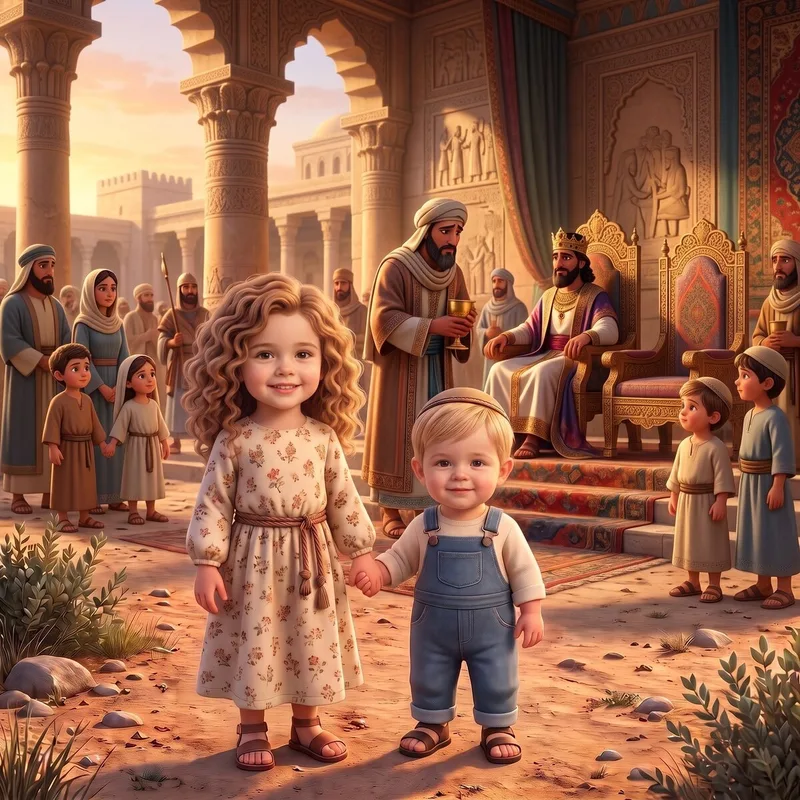
Torah Tale has a book of this story, Sefer Nechemia - A Tefillah for Yerushalayim, in the Kesuvim collection. Your child's name and, from one uploaded photo, their likeness appear on every page, illustrated in high-resolution 3D animated-film style. Up to eight children can appear in one book, ages 0 to 18.
The book is written with careful rabbinical guidance and strict tznius, and it is reviewed by our team before it goes to print. Every book ends with a discussion page of 10 questions, mixing comprehension with middos. That page is what turns the book from something read to a child into something talked about at the table. If you add parents and grandparents, they appear with the children on a closing family page in every format.
Format by age: the 6x6 board book with rounded safety corners is for ages 0-4, the 8x8 softcover is for ages 4-8, and the 8x8 hardcover is for ages 5-18. Softcover and hardcover open with a dedication page. An optional matching coloring book (8.5x11, black-and-white line art) can be added.

Softcover 8″×8″

Hardcover 8″×8″

Board book 6″×6″

Coloring book 8.5″×11″
What can we talk about at the Shabbos table, and what can we do on a weekday?
Reading is just right for Shabbos, and so is talking. Try these questions:
- What did Nechemia do first when he heard the news about Yerushalayim?
- Why do you think he began his tefillah with praise before he asked for anything?
- Why did Nechemia include himself and his father's house when he confessed?
- What do you think Nechemia was feeling when the king asked why his face was sad?
- What can you say to Hashem when you feel nervous?
- Is there something in our own community or family that we can daven for this week?
For a weekday, here is an activity to prepare during the week or before Shabbos, never on it. Have your child pick one thing that needs fixing, a broken toy or a friend who is sad, and say a one-sentence tefillah about it. Then do one small thing to help. The matching coloring book is also a weekday activity, for an afternoon or erev Shabbos, never for Shabbos or Yom Tov itself.
We are in the month of Kislev now, the same month in which the sefer opens, so this is a natural time to read the story together.
Ready to make it your child's story? You can create the book in about five minutes: a free account and a few short questions about your child, the story, your community, the language and the format.
Frequently asked questions
What is the story of Nechemia's tefillah for Yerushalayim?
Nechemia served as the king's cupbearer in Shushan. When his brother Chanani came from Yehuda and told him that the wall of Yerushalayim was broken and its gates burned, Nechemia sat and wept, fasted and davened to Hashem. Later, when the king noticed his sad face, Nechemia asked to be sent to Yerushalayim to rebuild it, and the king agreed.
What is the lesson of Nechemia's tefillah?
The lesson is that when we see something that needs fixing, we turn to Hashem first and then we act. Nechemia cared about a city he was far away from, and his tefillah was followed by real effort. Children can learn that davening and doing go together.
How do I explain Sefer Nechemia to a 3-year-old?
Keep it to a few sentences: Nechemia heard that the wall around Yerushalayim was broken, he felt very sad, and he talked to Hashem about it. Then the king let him go to help fix it. A short, simple tefillah of your own, said together, makes it concrete for a young child.
Where is Sefer Nechemia in Tanach?
Sefer Nechemia is in Kesuvim, the third section of Tanach. Torah Tale places its story in the Kesuvim collection, and it is a different story from the Torah collection's parshiyos.
Can I get a personalized book of the Nechemia story for my child?
Yes. Torah Tale has a personalized book of Sefer Nechemia - A Tefillah for Yerushalayim, where your child's name and likeness appear on every page in 3D animated-film style. Creating it takes a free account and a few short questions, starting at torahtale.com/create.
Is it appropriate to read this book on Shabbos?
Yes, reading a storybook is entirely appropriate on Shabbos. The discussion page at the end of the book has 10 questions, which makes it a good fit for the Shabbos table. Coloring is a weekday activity only.