Mizmor LeSodah for Kids: Tehillim 100, a Song of Thanks & How to Explain It
A parent's guide to Mizmor LeSodah, Tehillim 100: what the five pesukim say, why thanking Hashem is joyful, and how to talk about it with a 3-year-old, a 6-year-old and a 10-year-old.
Published by Torah Tale.
Create this book for your child
Mizmor LeSodah is Tehillim chapter 100, a short song of five pesukim whose message is simple: come before Hashem with joy, and thank Him. Children connect to it because thanking is something they already practice many times a day, and this mizmor shows them that saying thank you to Hashem is the same idea on a bigger scale.
What is Mizmor LeSodah in Tehillim?
Mizmor LeSodah opens with the words "Mizmor l'sodah", a song for thanksgiving. It is chapter 100 of Sefer Tehillim, which is part of Kesuvim. Many people say it as part of Pesukei D'Zimra in the morning davening. Customs differ about which days it is said, so ask your rav or rebbi if you are not sure.
It is one of the shortest chapters in Tehillim, which makes it easy to learn a pasuk at a time with a child. A few minutes a day, one pasuk at a time, is enough for a child to know the whole mizmor by heart within a short while.
What does the song say, pasuk by pasuk?
There are five pesukim, and each one has a clear message a child can hold on to.
- Pasuk 1: "Hari'u laHashem kol ha'aretz." All the earth is called to shout joyfully to Hashem.
- Pasuk 2: "Ivdu es Hashem b'simchah, bo'u lefanav birnanah." Serve Hashem with joy, and come before Him with singing.
- Pasuk 3: Know that Hashem is Elokim. He made us, and we are His people, the flock He shepherds.
- Pasuk 4: Come into His gates with thanksgiving and His courtyards with praise. Thank Him and bless His name.
- Pasuk 5: Hashem is good, His kindness is forever, and His faithfulness lasts for all generations.
Notice the order. First comes the call to be joyful, then the reason (Hashem made us and cares for us like a shepherd with his flock), then the thanks itself, and finally the promise that Hashem's goodness never stops.
What is the connection to the korban todah?
The word todah means both "thanks" and the name of a thanksgiving offering. The meforshim explain that this mizmor is a song of thanks connected with the korban todah, which is why the title says "l'sodah".
The Torah describes the korban todah in Parshas Tzav. The pasuk says it is eaten on the day it is brought, and none of it is left until morning (Vayikra 7:15). You can read more in our article on Parshas Tzav for kids. The Midrash relates that in the future the korbanos will be set aside, except for the korban todah, which tells us how much weight Chazal give to saying thank you.
What is the lesson of Mizmor LeSodah?
The lesson is that thanking Hashem is meant to be joyful. The pasuk does not say "serve Hashem when you remember" or "serve Hashem because you have to." It says to serve Hashem with simchah and to come before Him with singing. We learn from this that gratitude is a happy part of avodas Hashem and not only a duty.
The mizmor also gives a reason. We thank because Hashem made us and because He is good. A child who understands that every meal, every friend and every morning is a gift is already practicing the middah of hakaras hatov. For ideas on building that habit at home, see Saying Thank You for Kids.
How do I explain Mizmor LeSodah to a 3-year-old, a 6-year-old and a 10-year-old?
Ages 3-4: Use one sentence: "Hashem gives us so many good things, so we say thank you with a happy song." Sing or say the second pasuk together, then ask, "What is one good thing today?" Short, concrete answers like supper, a hug or the park are exactly right.
Ages 6-7: Add the reason. Hashem made us and takes care of us the way a shepherd takes care of his flock. Ask what it feels like when someone thanks you, and why Hashem would want us to thank Him with a smile and not with a sigh.
Ages 9-12: Talk about the korban todah and why the mizmor is a song of thanks connected with it. Then bring it to tefillah: when we say thank-you words in davening, are we only saying them or are we noticing what they mean? An older child can also compare how easy it is to ask for things with how much more effort it takes to thank.
What is the personalized Torah Tale book of this story like?
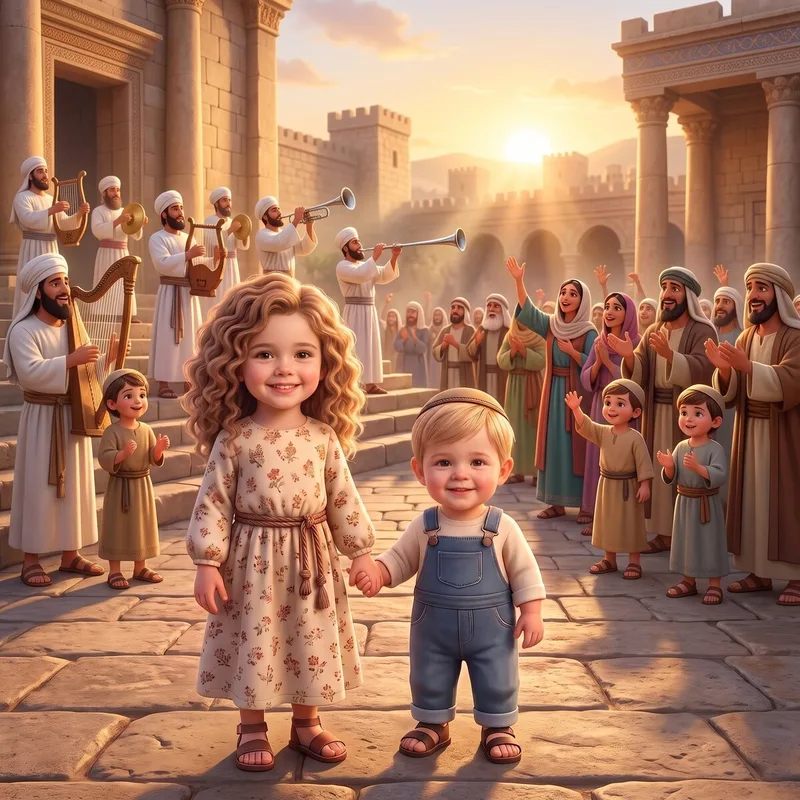
Torah Tale makes a personalized storybook of A Song of Thanks, from the Kesuvim collection. Your child's name and, from one uploaded photo, their likeness appear on every page, illustrated in high-resolution 3D animated-film style, so your child is the hero of the story. Up to eight siblings, ages 0 to 18, can appear in the same book.
Every book ends with a dedicated discussion page of 10 questions about the story, mixing comprehension with middos: what happened, and what it asks of the child. That page is what turns the book from something read to a child into something talked about at the table. If you add parents and grandparents, they appear with the children on a closing family page in every format.
The formats match the child's age: a 6x6 board book with rounded safety corners for ages 0-4, an 8x8 softcover photo book for ages 4-8, and an 8x8 hardcover photo book for ages 5-18. Softcover and hardcover books open with a dedication page. The book is written with careful rabbinical guidance and strict tznius, and reviewed by our team before it goes to print.

Softcover 8″×8″

Hardcover 8″×8″

Board book 6″×6″

Coloring book 8.5″×11″
To order, you create a free account and answer a few short questions: each child's name, boy or girl, age and one photo, any siblings, the story, your community (asked once), the language and the format. Languages are English, Hebrew and Yiddish. The whole flow takes about five minutes.
What can we talk about at the Shabbos table?
A book about thanks is a natural fit for the Shabbos table, because reading is entirely appropriate on Shabbos and Yom Tov. These questions need only talking and singing:
- What does the mizmor say we should do when we come before Hashem?
- Why do you think it says to serve Hashem with simchah?
- Who made us, according to the mizmor? How does a shepherd treat his flock?
- What is something good from this week that you want to thank Hashem for?
- Is it easier to remember to ask or to remember to thank? Why?
You can also sing the second pasuk together at the end of the meal, and let each child add one thing they are thankful for.
What is a weekday activity to go with the story?
This one is for a weekday afternoon or erev Shabbos. Sit down with your child and have them dictate or write a list of five good things from the day, then say thank you to Hashem for them out loud.
The optional matching coloring book (8.5"x11", black-and-white line art) is also a weekday activity, for erev Shabbos, a weekday afternoon or Chol HaMoed. It is a one-time add-on to a book. For another Tehillim story to read alongside this one, see Praising Creation in Dovid HaMelech's words.
Ready to give your child a book where they are the one singing the song of thanks? You can create the book in about five minutes.
Frequently asked questions
What is Mizmor LeSodah?
Mizmor LeSodah is Tehillim chapter 100, a short song of five pesukim in Sefer Tehillim. Its title means a song for thanksgiving. It calls on everyone to serve Hashem with joy, to come before Him with singing and thanks, and to remember that Hashem is good and His kindness lasts forever.
What is the lesson of Mizmor LeSodah for children?
The main lesson is that thanking Hashem should be joyful and not a chore. The mizmor also gives the reason for the thanks: Hashem made us, and He is good. For a child this means noticing the good in an ordinary day and saying thank you to Hashem for it.
How do I explain Mizmor LeSodah to a 4-year-old?
Keep it to one idea: Hashem gives us so many good things, and we say thank you with a happy song. Pick one pasuk, such as the one about serving Hashem with simchah, and sing or say it together. Then ask what good thing your child would like to thank Hashem for today.
What is the connection between Mizmor LeSodah and the korban todah?
The word todah means both thanks and the name of a thanksgiving offering. The meforshim explain that the mizmor is a song of thanks connected with the korban todah. The Torah describes that korban in Parshas Tzav, where it is eaten on the day it is brought and none of it is left until morning.
Is it appropriate to read a Mizmor LeSodah storybook on Shabbos?
Yes. Reading a storybook is entirely appropriate on Shabbos and Yom Tov, and the ten discussion questions at the end of a Torah Tale book are well suited to the Shabbos table. The optional coloring book is a weekday activity, for erev Shabbos, a weekday afternoon or Chol HaMoed.