Making a Siyum (עריכת סיום) for Kids: What It Means & How to Explain It
A siyum celebrates finishing a masechta, a sefer or another section of Torah learning. Here is what happens at one, what it teaches children, and how to explain it by age.
Published by Torah Tale.
Create this book for your child
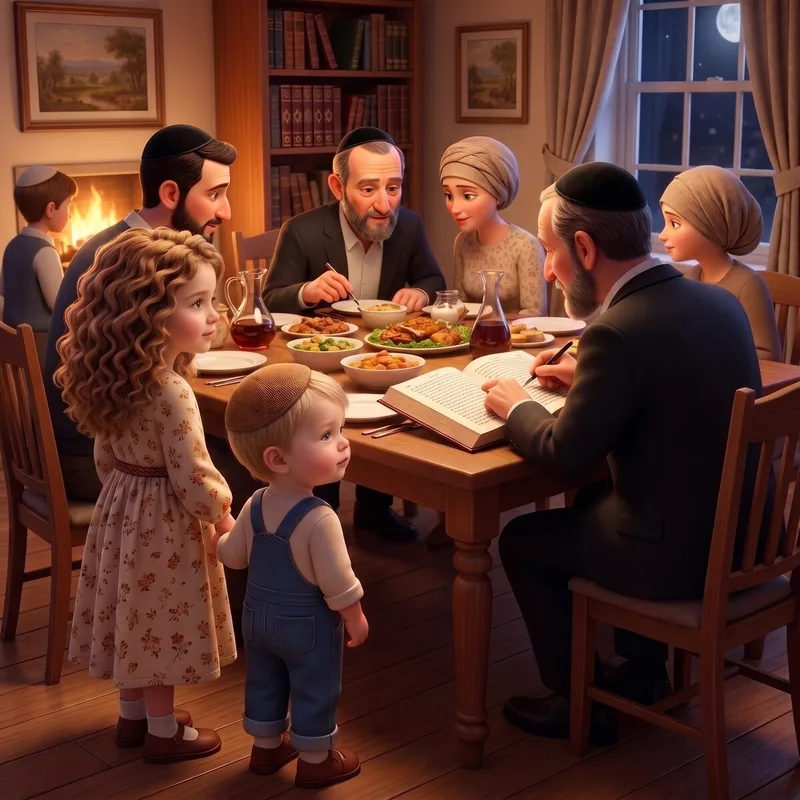
A siyum is a celebration made when someone finishes learning a masechta, a sefer or another complete section of Torah, and a story about making one shows a child that learning has a finish line worth celebrating. Torah Tale's Making a Siyum (עריכת סיום) is in the Jewish Life collection, the simchos and minhagim of a Yiddishe life, and it stars your own child. This article explains the minhag so you can talk about it before, during and after you read.
What is a siyum, and why do we make one?
The word siyum means a completion. It marks the end of a unit of Torah learning, such as a masechta of Gemara or Mishnayos, or a sefer of Tanach. The poskim treat the meal that goes with it as a seudas mitzvah, a meal that is itself a mitzvah.
The simcha has two parts. We are happy about what was learned, and we thank Hashem for the zechus to learn it.
Finishing is also a way of starting again. On Simchas Torah we finish the Torah and go straight back to reading about the creation of the world, and a siyum has a little of that feeling. For more on that, see The Simchas Torah Story for Kids.
What happens at a siyum?
Customs differ from place to place, so treat this as a general picture and ask your rav about details. The one who finished learns the last lines aloud while the others listen. He then says Hadran, a short text whose opening words mean 'we will return to you'. It is a way of saying that we will come back and review what we learned.
Kaddish customarily follows, and then a few words of Torah are often shared. After that comes the seudah, with the family and friends who came to share the simcha.
For a child, the easiest parts to notice are the last page, the singing and the food. Those are good places to start the conversation.
What does a siyum teach a child?
A siyum naturally raises a few middos that children can feel for themselves:
- Finishing what you start. A child who has stuck with a long page of learning knows how good the last line feels.
- Simcha in learning. Learning is something to be happy about, not only a task to get through.
- Hakaras hatov. We say thank you to Hashem, and to the parents and teachers who helped us learn.
- Sharing joy. A siyum is made with other people, and the more who come, the better.
If your child recently started learning in school, First Day in Cheder for Kids is a natural companion to this one.
How do I explain a siyum to a 3-year-old, a 6-year-old and a 10-year-old?
- Around 3: Say one sentence: 'We finished learning something big, so we say thank you to Hashem and have a party.' Let your child turn to the last page of a favorite book and say 'the end'. Then bring out a small treat.
- Around 6: Show a sefer or a masechta with a bookmark near the end. Explain that Abba or Zaidy learned all the way from the first page to the last, and that we celebrate when we reach it. Mention that Hadran means 'we will return to you'. Ask what your child would like to finish.
- Around 10: Explain that the siyum meal is considered a seudas mitzvah, and why we make it with others. Ask why a person says that he will come back to what he learned. A child who is nearing bar or bas mitzvah will also hear about siyumim at those simchos. See A Bar Mitzvah for Kids.
Why do some firstborns go to a siyum on Erev Pesach?
Children often notice that a father or grandfather goes to a siyum on the morning of Erev Pesach. It is a well-known minhag that firstborn sons fast on Erev Pesach, and many take part in a siyum seudah so that they do not have to fast. Exactly who is included and how it works in practice is a question for your rav.
For a child, the simple version is enough: 'Some people go to a siyum on Erev Pesach, and it is a very special seudah.'
What is the Torah Tale book about making a siyum like?
The child is the hero. Your child's name and, from one uploaded photo, their likeness appear on every page, illustrated in 3D animated-film style. Up to eight siblings, ages 0 to 18, can appear in the same book. If you add parents, grandparents or other relatives with their photos, they appear with the children on a closing family page in every format.
Every book is written with careful rabbinical guidance and strict tznius, and is reviewed by our team before it goes to print. Each one ends with a discussion page of 10 questions about the story, mixing comprehension with middos: what happened, and what it asks of the child. That page is what turns the book from something read to a child into something talked about at the table.

Softcover 8″×8″

Hardcover 8″×8″

Board book 6″×6″

Coloring book 8.5″×11″
There are three formats. The 6x6 board book with rounded safety corners is for ages 0-4, the 8x8 softcover is for ages 4-8, and the 8x8 hardcover is for ages 5-18. The softcover and hardcover open with a dedication page. A matching 8.5x11 black-and-white coloring book can be added to a one-time order. The book can be ordered in English, Hebrew or Yiddish.
Reading is welcome on Shabbos and Yom Tov. The coloring book is for weekdays only, such as an afternoon before Shabbos or Chol HaMoed.
Questions for the Shabbos table and a weekday siyum activity
These questions are for talking, so they work well at the Shabbos table:
- What is a siyum, and why is it a happy day?
- Who do we say thank you to when we finish learning?
- What is something you started and finished that you are proud of?
- Why do you think we invite other people to a siyum?
- What would you like to learn all the way to the end?
For a weekday, let your child choose something small to finish with you: a perek of Tehillim, a short section of Mishnayos, or a learning page from school. When you reach the last line, say a few words of thanks to Hashem and share a small treat. If you are unsure how to mark it, ask your child's rebbi or your rav. If you have the coloring book, a weekday afternoon is the time for it.
Ready to make one for your child? It takes about five minutes with a free account and a few short questions: create the book.
Frequently asked questions
What is a siyum?
A siyum means a completion. It is a celebration made when someone finishes learning a masechta of Gemara or Mishnayos, a sefer, or another full section of Torah. The poskim treat the meal that goes with it as a seudas mitzvah.
How do I explain a siyum to a 4-year-old?
Keep it to one picture: we finished learning something, so we say thank you to Hashem and have a party with a treat. Show your child a book with a last page and let them turn to it. For a young child, that is enough.
What is the lesson of a siyum for children?
A siyum raises several middos at once: finishing what you started, finding simcha in learning, and thanking Hashem for the zechus to learn. It also teaches that we share our joy with family and friends. Finishing is not the end, because we keep learning afterward.
Can a child make a siyum?
A child can certainly celebrate finishing a sefer or a section he or she learned, and such a celebration is a real simcha even when it is small. Halachic questions, such as whether a particular siyum counts for a fast on Erev Pesach, are for your rav or your child's rebbi.
Is there a children's book about making a siyum?
Yes. Torah Tale's Making a Siyum (עריכת סיום) is in the Jewish Life collection and stars your child, with their name and likeness illustrated on every page. Every book ends with a discussion page of 10 questions mixing comprehension with middos.
Which format of the siyum book fits my child's age?
Torah Tale offers a 6x6 board book with rounded safety corners for ages 0-4, an 8x8 softcover for ages 4-8, and an 8x8 hardcover for ages 5-18. Your child's age is one of the short questions when you create the book. An optional matching coloring book is also available as a one-time add-on.