Making a Bracha (ברכות הנהנין) for Kids: Teaching Brachos Before Eating
A bracha before eating is one of the mitzvos a child does most often. Here is why we make one, a simple guide to which bracha goes with which food, how to explain it to a 3-year-old, a 6-year-old and a 10-year-old, and what a personalized Torah Tale book on the topic is like.
Published by Torah Tale.
Create this book for your child
A bracha is the short blessing we say before we eat or drink, thanking Hashem for the food He made. It is one of the mitzvos a child does most often, at every snack, lunch and Shabbos meal, which is exactly why it makes such a good story for children: it happens in the middle of ordinary life, and a small child can do it properly.
What is a bracha before eating, and why do we make one?
The brachos we say before enjoying food, drink and other pleasures are called brachos hanehenin, blessings on enjoyment. The Gemara in Maseches Berachos (35a) teaches that benefiting from this world without a bracha is like misusing something that belongs to Hashem. The Gemara brings the pasuk 'laHashem ha'aretz umlo'ah', the earth and all that fills it belong to Hashem (Tehillim 24:1).
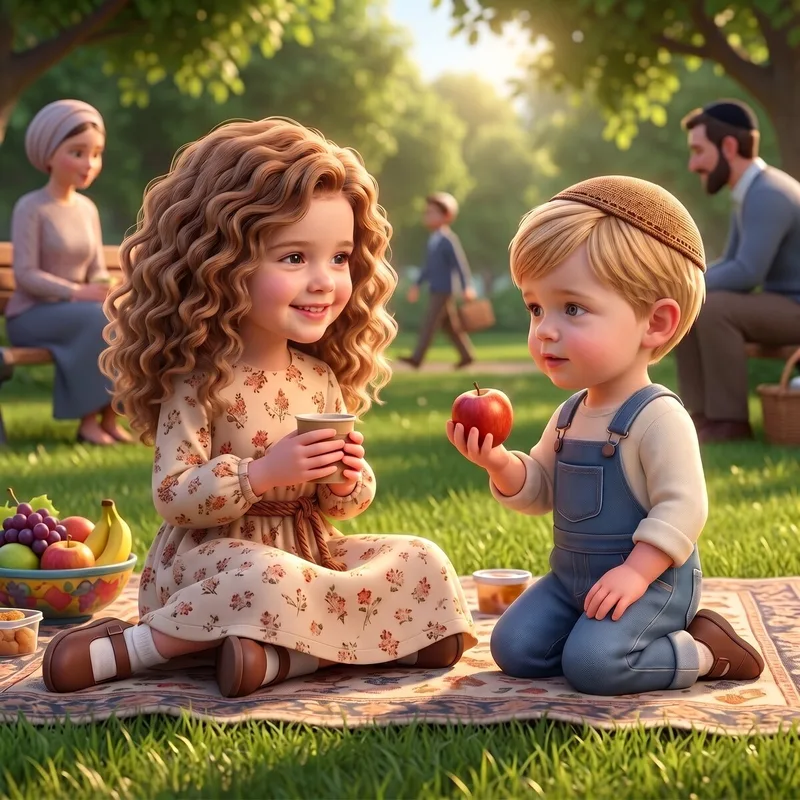
For a child, that big idea becomes something very small and clear. The apple did not appear by itself. Hashem made it, so before the first bite we say thank you.
It is also a close cousin of the thanks we say when we wake up. If you teach Modeh Ani at home, a bracha is the same habit of gratitude, carried to the table.
What does it look like when a child makes a bracha?
A bracha is simple enough to describe in four steps, and young children do well with a steady routine.
- Stop. The food is in front of them, and they wait before the first bite.
- Think. What is this food? What did it grow from, or what is it made of?
- Say the words. The bracha is said out loud, clearly, not mumbled.
- Answer Amen. When someone else makes a bracha, listeners answer Amen, so the bracha becomes something the whole table shares.
The pause is the heart of it. A child who learns to wait for a moment before eating has already learned that the food is a gift and not just something that is there.
Which bracha do I say? A simple guide for kids
Every bracha begins the same way, 'Baruch Atah Hashem Elokeinu Melech ha'olam', and then ends with a few words that name the food. These are the common ones children learn first.
| Food | Bracha |
|---|---|
| Bread (after netilas yadayim) | Hamotzi |
| Cake, cookies, pasta | Borei minei mezonos |
| Grape juice, wine | Borei pri hagafen |
| Apples, pears, oranges (tree fruit) | Borei pri ha'eitz |
| Carrots, cucumbers (grown from the ground) | Borei pri ha'adamah |
| Water, milk, meat, eggs, candy | Shehakol nihyeh bidvaro |
This is a starting list, not the whole halacha. Some foods have details, such as mixed foods, different amounts and foods that are cooked or processed. When you are unsure, ask your rav or your child's teacher, and let your child hear you ask. Before Hamotzi, the hands are washed first, as we explain in Netilas Yadayim for Kids.
How do I explain brachos to a 3-year-old, a 6-year-old and a 10-year-old?
Around 3 and 4: One sentence is enough. 'Hashem made this food, so we say thank you before we eat.' Say the short bracha together, slowly, and celebrate when your child answers Amen to yours. Offer soft or cut-up foods while they practice, so the focus stays on the words.
Around 6 and 7: Children this age love sorting. Ask, 'Did it grow on a tree, in the ground, or is it something else?' That one question is the beginning of choosing the right bracha, and it turns snack time into a small game of thinking before eating.
Around 9 to 12: Tell them the idea from the Gemara, that the world belongs to Hashem and a bracha is how we acknowledge that. Talk about the hard part: saying a bracha when nobody is watching, at a party, on a school trip, or when they are very hungry. A bracha said with kavanah, knowing what the words mean, is the goal. They can also begin learning, with a rav or teacher, about the brachos we say after eating.
What is a personalized Torah Tale book about making a bracha like?
Making a Bracha is a story in Torah Tale's Mitzvos collection, which is set in everyday life today. Your child is the hero: their name and, from one uploaded photo, their likeness appear on every page, illustrated in 3D animated-film style. Up to eight siblings, ages 0 to 18, can appear in the same book.

Softcover 8″×8″

Hardcover 8″×8″

Board book 6″×6″

Coloring book 8.5″×11″
The book comes in three formats, matched to age: a board book 6x6 with rounded safety corners for ages 0-4, a softcover photo book 8x8 for ages 4-8, and a hardcover photo book 8x8 for ages 5-18. Softcover and hardcover open with a dedication page. If you add parents and grandparents, they appear with the children on a closing family page in every format.
Every book ends with a discussion page of 10 questions about the story, mixing comprehension with middos: what happened, and what it asks of the child. For a topic like brachos, that is useful, because the mitzvah is really lived at the table. The book is written with careful rabbinical guidance and strict tznius, and our team reviews it before it goes to print.
What can we do at the Shabbos table, and on a weekday?
A storybook is a good thing to read on Shabbos or Yom Tov. At the Shabbos table, keep it to talking, singing and questions. These work well:
- What is your favorite food on the table tonight, and what bracha do we say on it?
- Why do we say a bracha before we eat, and not after the first bite?
- When is it hard to remember a bracha? What helps you remember?
- Who answered Amen to your bracha today, and how did that feel?
- What are you thankful to Hashem for right now?
For a hands-on activity, choose a weekday afternoon or erev Shabbos, since drawing and coloring are not for Shabbos or Yom Tov. Set out a few real foods on a tray, and have your child pick one, say what it is, and say the bracha with you. Have them add one more food each round. If you add the optional matching coloring book, 8.5x11 in black-and-white line art, keep it for weekdays or Chol HaMoed too.
Brachos also grow from a general habit of noticing what we are given. If your child enjoys that thread, Saying Thank You for Kids goes further into hakaras hatov.
Ready to make it your child's own story? Creating a book takes a free account and a few short questions, about five minutes in all, and you can create the book now.
Frequently asked questions
Why do we make a bracha before we eat?
The world belongs to Hashem, and a bracha is how we acknowledge that the food is His gift before we enjoy it. The Gemara in Maseches Berachos (35a) teaches that benefiting from this world without a bracha is like misusing something that belongs to Hashem, and it brings the pasuk 'laHashem ha'aretz umlo'ah' from Tehillim 24:1. For a child, the simple version is: Hashem made this food, so we say thank you first.
How do I explain brachos to a 4-year-old?
Keep it to one sentence and one action: 'Before we eat, we say thank you to Hashem for making the food.' Say the words slowly together with your child, and let them answer Amen when you or a sibling make a bracha. Soft or cut-up foods are best for little ones while they practice.
Which bracha does a child say on cake, apples and water?
On cake and cookies, the common bracha is Mezonos. On an apple, it is Ha'eitz, because it grows on a tree. On water, it is Shehakol. For anything you are unsure about, ask your rav or your child's teacher, since some foods have details that a simple list does not cover.
Do children also say a bracha after eating?
Yes, there are brachos after eating as well, and after a meal with bread we say Birkas Hamazon. Which after-bracha applies depends on what and how much was eaten, so it is best to learn this step by step with your rav or your child's teacher. Many families start with the bracha before eating, since it is the one a child uses at every snack.
What is a personalized Torah Tale book about making a bracha like?
The book stars your child, with their name and, from one uploaded photo, their likeness in 3D animated-film style. It belongs to the Mitzvos collection, which is set in everyday life today. Every book ends with a discussion page of 10 questions mixing comprehension with middos, and if you add parents and grandparents, they appear with the children on a closing family page.