Kiddush Levana for Kids: Blessing the New Moon & How to Explain It
Kiddush Levana is the bracha Yidden say outside at night, under the moon, to praise Hashem for renewing it. Here is what it means, how to explain it to children of different ages, and questions for the Shabbos table.
Published by Torah Tale.
Create this book for your child
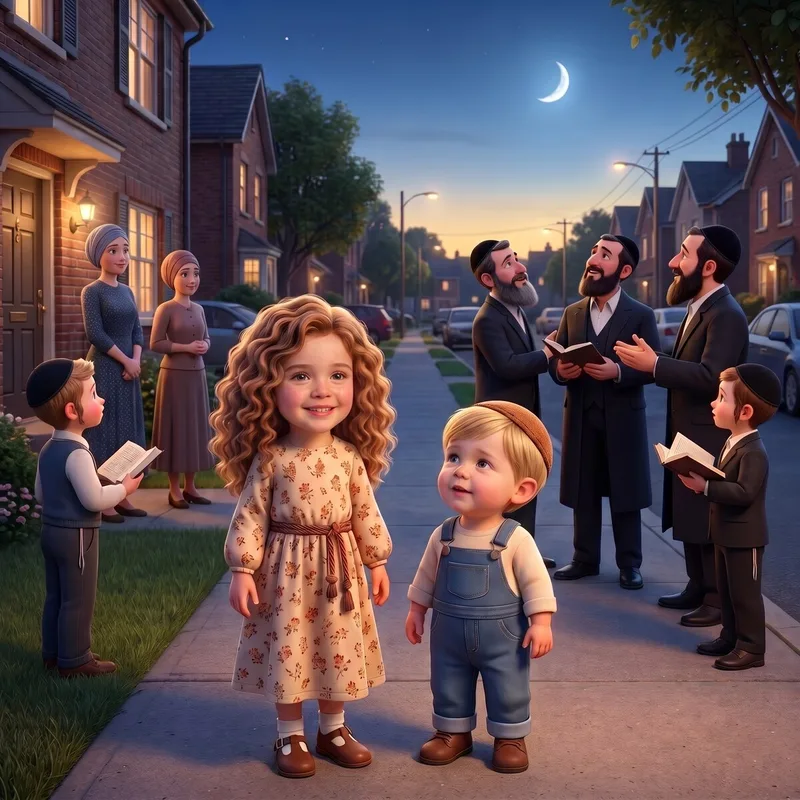
Kiddush Levana is the bracha Yidden say once a month, outside at night under the moon, to praise Hashem for renewing it. It lands with children because it is a mitzvah done under the open sky, with singing, standing together as a family or community, and often a little dancing on tiptoe.
What is Kiddush Levana?
Kiddush Levana, the sanctifying of the moon, is a bracha we say when the new moon can be seen. The Gemara in Sanhedrin 42a is the source Chazal give for it, and the halachos are brought in the Shulchan Aruch.
It is said at night, after nightfall, standing, and ideally outdoors where the moon is visible. It is preferably said with a minyan, though one can say it alone.
Why do we bless the moon?
We do not bless the moon. We bless Hashem, who made it and renews it. In Bereishis, on the fourth day, the Torah tells us Hashem made the luminaries to be signs and for appointed times (Bereishis 1:14), and the moon is what we count our months by.
Rabbi Yochanan says in Sanhedrin 42a that whoever sanctifies the moon in its proper time is as if he greeted the Shechinah. The same page brings the teaching of Beis Rabbi Yishmael that if Yidden merited only to greet their Father in Heaven once a month, it would be enough. That is a lot of weight for a short bracha said under the sky.
The bracha also speaks about Yidden themselves. It says the moon will be renewed like a crown, and that those carried from the womb will in time be renewed like it. This is why the moon is a gentle picture for children of starting fresh.
A note on a possible mix-up: the mitzvah of HaChodesh hazeh lachem, given in Parshas Bo (Shemos 12:2), is about sanctifying the month and the calendar, which beis din does. Kiddush Levana is a different thing: our own bracha at night. You can read about the parsha in Parshas Bo for Kids, and about the luminaries in Parshas Bereishis for Kids.
What happens when the family goes out to say it?
Here is the usual flow, though siddurim and communities differ slightly, so follow your own minhag.
- The family goes outside, under the open sky, once the moon can be seen.
- We begin with praise from Tehillim, starting with Halleluka, halelu es Hashem min hashamayim.
- We say the bracha standing, looking toward the moon.
- We rise on our toes three times, as the siddur describes, saying that just as we leap toward the moon and cannot touch it, may no one who wishes us harm be able to touch us.
- We greet those nearby with Shalom aleichem and they answer Aleichem shalom.
Many families say it on Motzei Shabbos, when we are still dressed nicely and in good spirits after Shabbos. Do check a luach or ask your rav about when the proper time begins and ends each month. There are different customs about starting three or seven days after the molad, and it is said until about the middle of the month.
How do I explain Kiddush Levana to a 4-year-old and to an older child?
Around 3 to 4: Keep it small and visual. "The moon seems to go away and then comes back new. Hashem makes that happen every month. When we see the new moon, we go outside and say thank you." Let your child find the moon first.
Around 5 to 7: Add the "why." We stand because we are greeting Hashem. We go outside so we can see what we are thanking Him for. We say Shalom aleichem because it is a happy moment to share. Ask: "Who are we thanking, the moon or Hashem?"
Around 9 to 12: Go into the meaning. Yidden count their months by the moon. Chazal in Sanhedrin 42a speak of greeting the Shechinah. The bracha speaks of renewal, and the moon is a quiet reminder that a new start is always possible. Older children can follow along in the siddur and notice each part of the text.
What is a personalized Kiddush Levana book from Torah Tale like?
Torah Tale's Kiddush Levana book is part of the Jewish Life collection, which covers the simchos and minhagim of a Yiddishe life. Your child's name and, from one uploaded photo, their likeness appear on every page, illustrated in 3D animated-film style, so the child is the one standing under the moon.
Every book ends with a discussion page of 10 questions about the story, mixing comprehension with middos: what happened, and what it asks of the child. It turns a book you read to your child into something talked about at the table, and it fits naturally around a Motzei Shabbos.

Softcover 8″×8″

Hardcover 8″×8″

Board book 6″×6″

Coloring book 8.5″×11″
There are three formats: a 6"x6" board book with rounded safety corners (ages 0-4), an 8"x8" softcover photo book (ages 4-8) and an 8"x8" hardcover photo book (ages 5-18). Softcover and hardcover books open with a dedication page. If you add parents and grandparents with their photos, they appear with the children on a closing family page in every format. Up to eight children can appear in one book, so siblings can share the same moment.
An optional matching coloring book comes as an add-on. It is a weekday activity for erev Shabbos or a weekday afternoon, never for Shabbos or Yom Tov, since coloring is melacha. The storybook itself is perfect to read on Shabbos.
Shabbos-table questions about Kiddush Levana
These are all talking questions, so they work well at the Shabbos table, or on Shabbos afternoon before Motzei Shabbos.
- Why do we say Kiddush Levana outside and not inside?
- Who do we bless: the moon or Hashem?
- Why do we stand while we say it?
- What does it mean that the moon is renewed, and what is something you would like to start fresh?
- Why do we say Shalom aleichem to the people next to us?
A small plan for the week: before Shabbos, check a luach or ask your rav whether the window for Kiddush Levana is open on Motzei Shabbos. Keep a siddur or a card with the words ready by the door. On the way out, let the children be the ones to look for the moon.
Ready to give your child a book where they are the one under the moon? Start by creating the book. It needs a free account and a few short questions, takes about five minutes, and we will do the rest. Looking for more on how it works? See how to create a personalized Torah storybook.
Frequently asked questions
What is Kiddush Levana in simple words for a child?
Kiddush Levana is the bracha we say outside at night to thank Hashem for making the moon and for renewing it every month. We look up at the moon, say the words together, and sing. It is a way of saying thank you to Hashem for the world He made.
Do we bless the moon in Kiddush Levana?
No. We bless Hashem, who made the moon and gave it its cycle. The moon is only the reason we look up and notice what Hashem does every month.
When is Kiddush Levana said?
It is said at night, after nightfall, when the moon can be seen, and not before the right number of days after the molad. There are different customs about whether to begin three or seven days after the molad, and it is said until about the middle of the month. Check a luach and ask your rav for the exact window each month.
Why do we say Kiddush Levana on Motzei Shabbos?
It is customary to say it on Motzei Shabbos because we are still in our nicer clothes and in a good mood after Shabbos. It can be said on other nights too, as long as it is within the proper time and the moon is visible.
How do I explain Kiddush Levana to a 4-year-old?
Tell your child that the moon seems to go away and then comes back new, and that Hashem makes this happen every month. Then say that when we see the new moon we go outside, look up and say thank you to Hashem together. Keep it to that, and let your child do the looking.