A Bas Mitzvah (בת מצווה) for Kids: What It Means & Why Twelve
A bas mitzvah is a girl who reaches the age of twelve and becomes responsible for the mitzvos. Here is how to explain it to your children, with Shabbos-table questions and a personalized book.
Published by Torah Tale.
Create this book for your child
A bas mitzvah is a girl who has reached the age of twelve and is now responsible for the mitzvos that apply to her. For children it lands because it is something they can see: a big sister or cousin who used to be told what to do begins to carry the mitzvos herself, and everyone around her is proud.
What is a bas mitzvah?
Bas mitzvah (בת מצווה) means a daughter of the mitzvah. It describes a girl who has reached the age at which she is obligated in mitzvos, just as a bar mitzvah describes a boy who has reached his age. You can read about the boys' side in our article on a bar mitzvah for kids.
It helps to say plainly that it is a status, not an event. A girl becomes a bas mitzvah when she reaches the age. A seudah, a speech or a party can mark the day, but none of them make her one.
Why is a girl a bas mitzvah at twelve?
Halacha sets the age of a girl's obligation at twelve and a boy's at thirteen. Chazal in Maseches Niddah (45b) speak of the extra binah, understanding, that was given to women. For exactly how the day is counted for your daughter, ask your rav.
One concrete sign children can understand is Yom Kippur. Girls from twelve fast, as boys do from thirteen. A younger child who sees her older sister fasting for the first time learns more about what a bas mitzvah means than any explanation could teach.
What changes on the day, and what stays the same?
Children often picture a switch flipping. It helps to describe it as growing into something she has already been practicing. A girl of eleven has usually been davening, making brachos and keeping Shabbos with her family for years. At twelve, the mitzvos are no longer practice: they are hers.
Some things stay exactly the same. She is the same daughter, sister and friend. Her family still guides her, and her mother, her teachers and her rav are still there to ask. Becoming a bas mitzvah means taking on more responsibility, not leaving the family behind.
How do I explain a bas mitzvah to different ages?
Children ask about this at very different levels, so here is a short script for each.
- Age 3 to 4: "When a girl turns twelve she becomes a big girl in the mitzvos, and Hashem trusts her to keep them herself." Then point to something she does already, like saying Modeh Ani or helping set the Shabbos table.
- Age 6 to 8: Add the word responsibility. "Before, Mommy and Abba reminded her. Now she is the one who remembers." Mention the Yom Kippur fast as a real example, and let your child ask what she is looking forward to.
- Age 10 to 12: This is the age when a girl is thinking about her own bas mitzvah. Talk about what she wants to take on, whether it is davening with more kavanah, a chesed she would like to do or a part of Torah she would like to learn.

Softcover 8″×8″

Hardcover 8″×8″

Board book 6″×6″

Coloring book 8.5″×11″
What does the Torah Tale book A Bas Mitzvah offer?
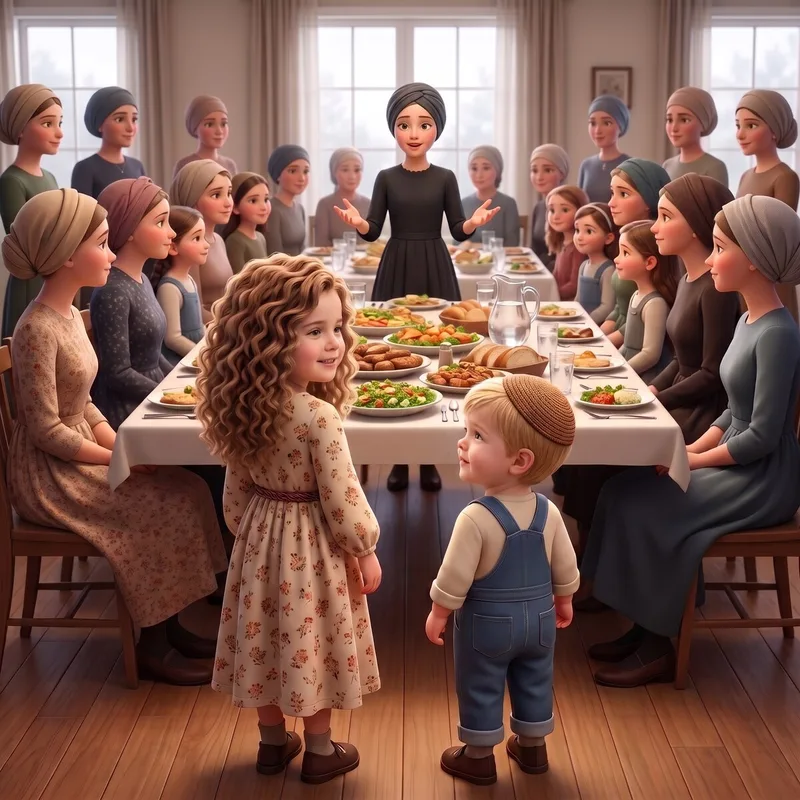
A Bas Mitzvah is part of the Jewish Life collection, the simchos and minhagim of a Yiddishe life. Like every Torah Tale book, it stars the child who receives it: her name and, from one uploaded photo, her likeness appear throughout, illustrated in 3D animated-film style.
For a girl turning twelve, the hardcover photo book, 8"x8" for ages 5-18, is the natural fit. For a younger sister who keeps asking what it all means, a softcover 8"x8" for ages 4-8 or a board book 6"x6" with rounded safety corners for ages 0-4 may suit her better. You can put up to eight siblings in one book, so a bas mitzvah girl and her younger siblings can share it.
Every book ends with a discussion page of ten questions about the story that mix comprehension with middos: what happened, and what it asks of the child. If you add parents and grandparents with their photos, they appear with the children on a closing family page, in every format. The softcover and hardcover also open with a dedication page, a good place for a personal message from you.
Does a girl need a party to be a bas mitzvah?
No, and it is worth saying so to a child who worries that her friend's party was bigger. Customs for marking the day differ, and many families choose a seudah, a dvar Torah, a gathering of relatives or a chesed project. Follow your family's and community's minhag, and ask your rav or mechaneches if you are unsure what is appropriate.
Whatever you choose, it helps to tie it to the idea behind the day. A girl who gives tzedakah, davens for someone, or makes a seudah for friends is expressing the same thing: taking on mitzvos and doing them with simcha. You might also read together about the woman Mishlei praises in Eishes Chayil.
What can we talk about at the Shabbos table?
Reading a book at the Shabbos table is entirely appropriate, and the discussion page is built for talking. These questions need only talking, no writing or drawing:
- What is one mitzvah you already keep that you are proud of?
- Which mitzvah would you like to learn to do better?
- Who taught you to keep it?
- Why do you think a girl is trusted with mitzvos at twelve?
- What can a bas mitzvah do to help a younger sister or brother?
If you want an activity, make it a weekday one. Plan the bas mitzvah gift or a chesed project on a weekday afternoon, and on erev Shabbos you can prepare something for the table. Coloring, drawing and writing are for weekdays only. A matching coloring book, 8.5"x11" in black-and-white line art, is an optional add-on to a book for a weekday afternoon.
When you are ready, you can create the book in about five minutes. It needs a free account and a few short questions: each child's name, boy or girl, age, one photo, any siblings, the story, your community, the language and the format. For the steps in detail, see how to create a personalized Torah storybook.
Frequently asked questions
What is a bas mitzvah?
A bas mitzvah is a girl who has reached the age of twelve and is now obligated in the mitzvos that apply to her. The words mean daughter of the mitzvah. She becomes a bas mitzvah when she reaches the age, and a party or speech does not make her one.
Why is a girl a bas mitzvah at twelve and a boy a bar mitzvah at thirteen?
Halacha counts a girl as an adult a year earlier than a boy, at twelve instead of thirteen. Chazal in Maseches Niddah (45b) speak of the extra binah, understanding, given to women. For the details of how the date is counted, ask your rav.
How do I explain a bas mitzvah to a 4-year-old?
Keep it to one sentence: when a girl turns twelve, she becomes a big girl in the mitzvos and Hashem trusts her to keep them herself. Add something your child can see, such as how she will take care to daven and keep Shabbos the way Mommy does. At this age the idea of getting bigger and more responsible is enough.
Does a girl need a party to become a bas mitzvah?
No. She becomes a bas mitzvah when she reaches the age, whether or not anything is made. Many families mark it with a seudah, a dvar Torah or a chesed project, and customs differ, so follow your family's and community's minhag and ask your rav or teacher if unsure.
Can a Torah Tale book be a bas mitzvah gift?
Yes. A Bas Mitzvah is in the Jewish Life collection and stars the child who receives it, with her name and likeness on every page. The hardcover photo book is 8"x8" for ages 5-18, which fits a girl turning twelve. Delivery to the US by standard shipping arrives in about 12 business days, counted from the order, so it helps to order ahead.