Answering Amen (עניית אמן) for Kids: Teaching a Child to Say Amen
Answering amen is one of the first mitzvos a young child can do with their own voice. Here is what it means, why it matters, and how to teach it at home.
Published by Torah Tale.
Create this book for your child
Answering amen means saying Amen after you hear someone else make a bracha, and it is one of the first mitzvos a young child can do with their own voice. Children take to it because it is short, it happens many times a day, and it makes them part of what the grown-ups around them are doing.
What does amen mean for kids?
Amen is a word of belief and agreement. When a child says it, they are saying: I heard that, and I believe it. The Gemara in Shabbos (119b) explains the word as El Melech Ne'eman, a faithful King.
For a young child, you can put it simply: when someone says a bracha, they are talking to Hashem. When we answer amen, we say, "Yes, I am with you in that."
Why is answering amen such a big mitzvah?
The Gemara in Shabbos (119b) teaches that whoever answers amen with all his strength has the gates of Gan Eden opened for him. That is a striking thing to tell a child, and it is worth telling them: a small word, said with all one's heart, matters.
The Gemara in Berachos (53b) also brings the view of Rabbi Yose that the one who answers amen is greater than the one who makes the bracha. We learn from this that listening carefully and joining in is a mitzvah in its own right.
One way to say it to a child, as an explanation and not a quotation: the person making the bracha is not alone. Everyone who answers amen is part of it.
How do I explain answering amen to children of different ages?
For a 3- or 4-year-old: keep it to one picture. Someone says a bracha, you listen, and then you say Amen, loud and clear. Practice at Friday night Kiddush and at the table when someone makes a bracha on a drink or a fruit. Praise them when they join in.
For a 6- or 7-year-old: add the meaning. Amen means "I believe it" and "it is true." Ask them to wait until the bracha is finished before answering, and to listen to the words, not just the ending. They can now notice that it is a different thing to say amen well than to say it fast.
For a 9- to 12-year-old: bring in the sources. Show them the Gemara in Shabbos (119b) and the view of Rabbi Yose in Berachos (53b). Talk about answering amen in shul, after the brachos they hear, and at Kaddish. Ask them what it means to answer "with all your strength." For specific halachos about when to answer, ask your rav.
What are the everyday moments for answering amen?
Answering amen is a mitzvah that fits into ordinary hours: a brother making a bracha on his snack, a parent making Kiddush, a bracha heard at a simcha or in shul. That is the reason it suits a storybook set in everyday life today. The setting is the child's own day.
It is also a good bridge to the other brachos your child is learning. If they are already working on brachos before eating, see our article on teaching brachos before eating, and for the end of the meal, teaching Birkas HaMazon. A child who knows how to make a bracha and how to answer one has both halves.
How do I teach a child to say amen properly?
The best teacher is your own example. Say amen clearly, after the bracha is finished, and let your child hear you do it. Children copy what they see more than what they are told.
- Wait for the bracha to end before answering.
- Say the word clearly. The halacha cautions against a rushed amen or one that drags on after the bracha has finished, so ask your rav if you want precise guidance.
- Do not correct your child in front of others. A quiet word later keeps the mitzvah feeling good.
- Notice and praise real effort: "I heard you listening for the end of the bracha."
Do not overdo it. A child who loves answering amen will answer more often than one who feels watched.
What is the Torah Tale book about answering amen like?
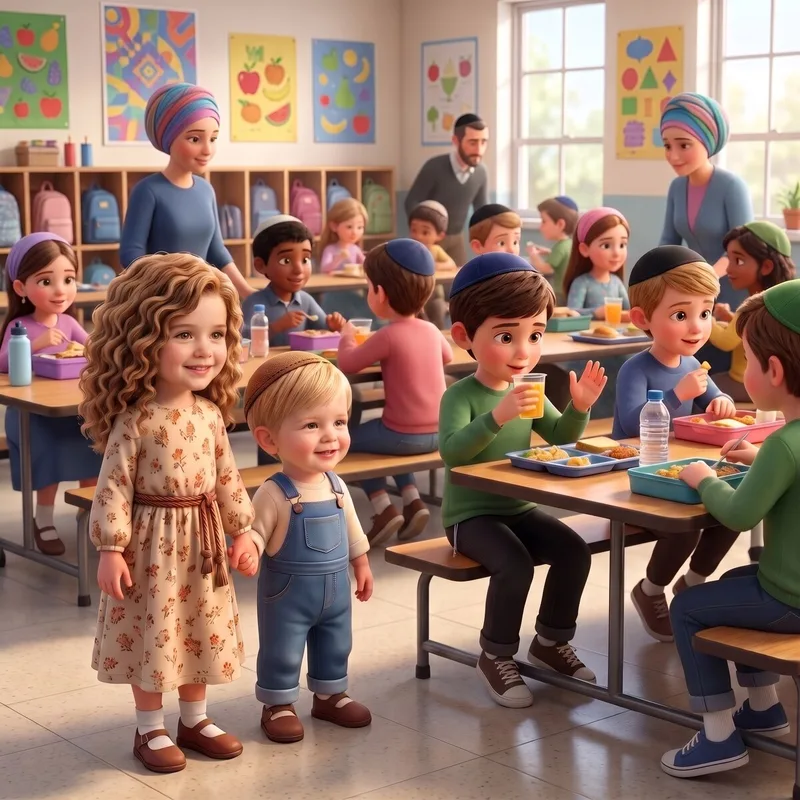
It belongs to the Mitzvos collection, the one for mitzvos a child keeps, set in everyday life today. The story is about this mitzvah, and your child is the hero: their name and, from one uploaded photo, their likeness appear on every page, illustrated in 3D animated-film style.

Softcover 8″×8″

Hardcover 8″×8″

Board book 6″×6″

Coloring book 8.5″×11″
Every book ends with a dedicated discussion page of 10 questions about the story, mixing comprehension with middos: what happened, and what it asks of the child. That is the page that turns a book read to a child into something talked about at the table.
There are three formats. The board book is 6x6 with rounded safety corners, for ages 0-4. The softcover is 8x8, for ages 4-8. The hardcover is 8x8, for ages 5-18. Softcover and hardcover open with a dedication page. If you add parents, grandparents and other relatives with their photos, they appear with the children on a closing family page in every format. A matching coloring book is an optional add-on, and since coloring is melacha, it is for weekdays, such as erev Shabbos or a weekday afternoon, and not for Shabbos or Yom Tov. The storybook itself is perfect for reading at the Shabbos table.
What questions can we ask at the Shabbos table?
These are for talking, not for writing, so they work at the table on Shabbos:
- What does the word amen mean?
- When did we answer amen today?
- Why do you think it matters that everyone listens to the bracha?
- How can we say amen so that it really sounds like we mean it?
- Who made a bracha today that you heard? How did you feel when you answered?
Let the children answer first. A grown-up can then share one moment when they answered amen and felt it. That, more than any explanation, shows a child what the mitzvah is.
How can we practice answering amen this week?
Pick one moment a day to focus on: Friday night Kiddush, a bracha at supper, or a bracha in shul. Ask your child to listen for the end of the bracha and then answer. After a few days, ask what they noticed. If you want a related mitzvah to build on, teaching Krias Shema at home is a natural next step.
When you are ready for a book that puts your own child in the story, create the book. It takes a free account and a few short questions, about five minutes in all.
Frequently asked questions
What does amen mean?
Amen is a word of belief and agreement. When you answer amen to a bracha, you are saying that you heard it and that you believe it is true. The Gemara in Shabbos (119b) explains the word as El Melech Ne'eman, a faithful King.
At what age can a child start answering amen?
Many children begin answering amen as soon as they can say the word, by copying the adults around them at the table and in shul. Start with the brachos your child hears every day, such as Kiddush on Friday night, and let them join in. For questions about a specific situation, ask your rav.
Why is answering amen so important?
The Gemara in Shabbos (119b) teaches that whoever answers amen with all his strength has the gates of Gan Eden opened for him. The Gemara in Berachos (53b) also brings the view of Rabbi Yose that the one who answers amen is greater than the one who makes the bracha. We learn from this that listening and answering is a real mitzvah and not just a filler word.
How do I get my child to say amen clearly instead of mumbling it?
Model it yourself first, saying amen clearly after the bracha is finished. Practice at the table by having your child listen for the end of the bracha before answering. The halacha cautions against rushing amen or letting it trail off, so if you want precise guidance, ask your rav.
What is the Torah Tale book about answering amen like?
It is a personalized storybook in the Mitzvos collection, set in everyday life today, with your child's name and likeness illustrated in 3D animated-film style. Like every Torah Tale book, it ends with a discussion page of 10 questions mixing comprehension with middos, so it can be talked about at the table.