Yirmiyahu Saved from the Pit for Kids: Eved-Melech & the Rags
Yirmiyahu told the truth, was lowered into a muddy pit, and was lifted out by Eved-Melech the Kushi. Here is the story, the lesson, and how to explain it to ages 3-4, 6-7 and 9-12.
Published by Torah Tale.
Create this book for your child
The story of Yirmiyahu in the pit (Yirmiyahu, perek 38) is about a navi who kept telling the truth when it was dangerous, and a man named Eved-Melech who refused to stay quiet while someone was being treated unjustly. Children connect with it because it has a clear problem, a clear rescue, and a hero who thinks of a very practical way to help.
What happens when Yirmiyahu is put into the pit?
Yerushalayim was under siege, and Yirmiyahu kept delivering the words of Hashem to the people. Several of the king's officials heard him and became angry. They went to King Tzidkiyahu and said that this man should not be allowed to speak that way, because his words were weakening the hands of the soldiers and of the people.
The king answered that Yirmiyahu was in their hands, and that he could not stand against them. The officials then took Yirmiyahu and lowered him into the bor of Malkiyahu ben HaMelech, in the court of the prison. The pasuk tells us there was no water in the bor, only mud, and Yirmiyahu sank into the mud.
That is the hard part of the story, and it is enough to tell it plainly. Yirmiyahu did nothing wrong. He said what Hashem sent him to say.
Who was Eved-Melech, and how did he save Yirmiyahu?
Eved-Melech the Kushi was a man in the king's house. The pasuk says he heard that Yirmiyahu had been put into the bor. The king was sitting at the Gate of Binyamin at the time, so Eved-Melech went out of the palace and spoke to him there.
He told Tzidkiyahu that these men had done wrong in everything they did to Yirmiyahu, and that Yirmiyahu would die of hunger where he was, because there was no more bread in the city. The king then commanded Eved-Melech to take men with him and lift Yirmiyahu out of the bor before he died.
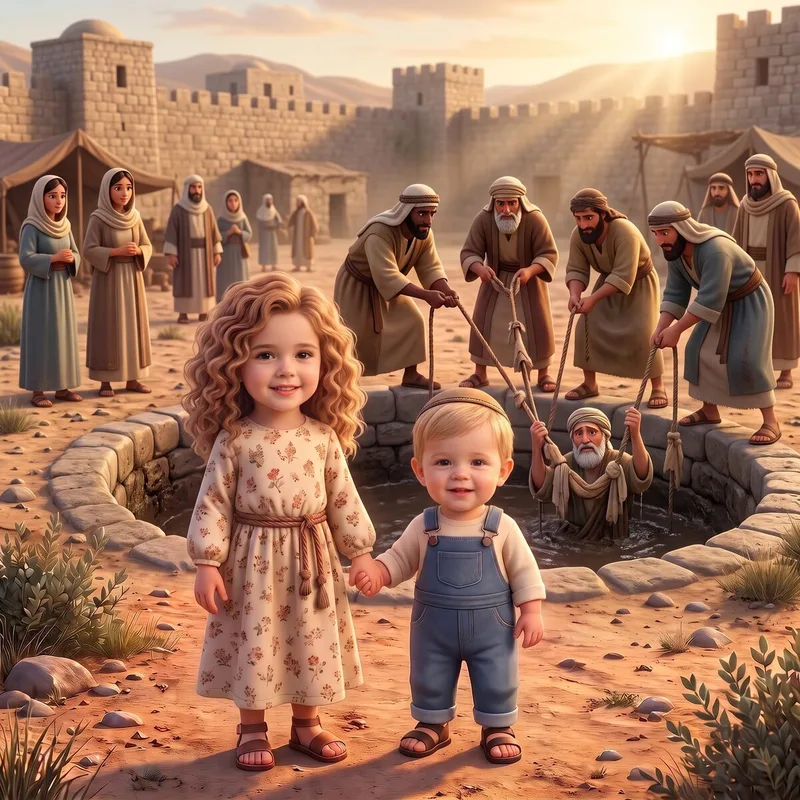
Then comes the detail children love. Eved-Melech went to a place in the king's house under the storeroom and took worn rags and tattered clothes. He lowered them by ropes to Yirmiyahu and called down for him to put the rags under his arms, beneath the ropes. It is easy to see why: so the ropes would not hurt him as he was pulled up. The men drew Yirmiyahu up, and he stayed in the court of the prison.
What did Hashem say to Eved-Melech afterward?
In the next perek, while Yirmiyahu was still in the court of the prison, Hashem sent him a message for Eved-Melech. He would be saved when the city fell, and he would not be handed over to the men he feared. The reason the pasuk gives is that he had trusted in Hashem.
This is worth telling children. Eved-Melech was not a general or a navi. He saw something wrong, spoke to the king, and did the practical thing that needed doing. Sefer Yirmiyahu records it, and Hashem remembered it.
What is the lesson of this story for children?
There are two lessons, one from each person in the story.
- From Yirmiyahu: telling the truth is not always comfortable. A navi says what Hashem sent him to say, even when people are angry at him. For a child, this can be as simple as telling the truth when it would be easier to stay quiet.
- From Eved-Melech: when someone is being treated unfairly, we speak up and then we help in a way that actually works. He did not only complain. He went to the king, and then he thought about the ropes and brought soft cloths.
If you want to go further on the truth side, our article on always telling the truth has everyday ideas, and Yirmiyahu's call shows how he began as a young navi who felt unsure of himself.
How do I explain Yirmiyahu in the pit to my child by age?
Ages 3-4
Keep it to a few sentences. Yirmiyahu told people what Hashem wanted them to hear. Some people did not like it, and they put him in a deep muddy hole. A kind man named Eved-Melech asked the king for help, brought soft rags, and pulled Yirmiyahu out. You can end with: Eved-Melech helped, and Hashem remembered.
Ages 6-7
Tell the full order of events, and let your child notice the rags. Ask why Eved-Melech sent rags down before the ropes finished their job. Children this age enjoy finding the thoughtful detail in a story, and it opens a conversation about helping in a way that really helps.
Ages 9-12
Here you can talk about courage and about the difference between the two men in the story. The officials had power and used it against a navi. Eved-Melech was a man in the king's house who used his closeness to the king for something good. Ask what it takes to speak up when others are silent, and why Hashem's reason for saving Eved-Melech was his trust in Hashem.
What is a personalized Torah Tale book of this story like?
Torah Tale makes a personalized storybook of Yirmiyahu being saved from the pit, from the Nevi'im collection. Your child's name and, from one uploaded photo, their likeness appear on every page, illustrated in 3D animated-film style. The book is written with careful rabbinical guidance and strict tznius, and our team reviews it before it goes to print.
Every book ends with a discussion page of 10 questions about the story, mixing comprehension with middos: what happened, and what it asks of the child. For a story like this one, that page is what turns reading into a conversation about speaking the truth and helping someone in trouble.

Softcover 8″×8″

Hardcover 8″×8″

Board book 6″×6″

Coloring book 8.5″×11″
There are three formats: a 6"x6" board book with rounded safety corners (ages 0-4), an 8"x8" softcover photo book (ages 4-8), and an 8"x8" hardcover photo book (ages 5-18). If you add parents and grandparents with their photos, they appear with the children on a closing family page in every format. An optional matching coloring book is a weekday activity, for erev Shabbos, a weekday afternoon or Chol HaMoed, and never for Shabbos or Yom Tov.
What questions can we ask at the Shabbos table?
Reading is a wonderful thing to do on Shabbos, and so is simple talking. These questions need nothing but a story and a table:
- Why were the officials angry at Yirmiyahu, even though he was only telling them what Hashem said?
- What do you think Eved-Melech felt when he heard what had happened?
- Why did Eved-Melech bring rags, and not only ropes?
- Is there a time when it was hard for you to say something true? What helped?
- If you saw a friend being treated unfairly, what is one thing you could do?
For a younger child, pick the third question and let them act out putting the rags under their arms. It is a small moment that stays with them.
Ready to make it personal? You can create the book in about five minutes: a free account, a few short questions, and one photo.
Frequently asked questions
What is the story of Yirmiyahu in the pit?
During the siege of Yerushalayim, officials of King Tzidkiyahu's court were angry at Yirmiyahu for the words of Hashem he was telling the people. They had him lowered into a bor with no water, only mud, where he sank into the mud. Eved-Melech the Kushi spoke to the king, received permission to lift Yirmiyahu out, and pulled him up with ropes and rags (Yirmiyahu 38).
Who was Eved-Melech in Sefer Yirmiyahu?
The pasuk calls him Eved-Melech the Kushi, a man in the king's house. He is the one who spoke up for Yirmiyahu and organized the rescue. Later Hashem sent Yirmiyahu a message for him, promising that he would be saved because he trusted in Hashem.
What is the lesson of Yirmiyahu in the pit?
There are two lessons children can take from it. A navi keeps telling the truth that Hashem sent him to say, even when people are angry at him. And when someone is being treated badly, we do not stay quiet, as Eved-Melech did not.
How do I explain Yirmiyahu in the pit to a 4-year-old?
Keep it short and gentle. Yirmiyahu told people what Hashem wanted them to hear, some people did not like it, and they put him in a deep, muddy hole. A kind man named Eved-Melech went to the king and helped pull him out safely, using soft rags so the ropes would not hurt.
Is there a Torah Tale book about Yirmiyahu being saved from the pit?
Yes. It is part of the Nevi'im collection, and the child's name and likeness, from one uploaded photo, appear on every page in 3D animated-film style. Every book ends with a discussion page of 10 questions mixing comprehension with middos. You can start at torahtale.com/create.